
Over 60 vendors greet “Wells River’s “So Long Summer, Hello Fall!”
Event honcho Richard Roderick announced on Saturday noon, September 5, 2026 that he has been “in town and on the street for every event for the past 14 years and this year is the biggest I have seen yet,” he exclaimed to The Bridge Weekly as we strolled by his table under a tent that protected him from the sun’s rapidly heating rays.
He said the businesses and organizations that have been a part of the gala have enjoyed it over the years. He said this year he counted over 60 of them had signed up, a full 10 more than last year.
Bernie Marvin
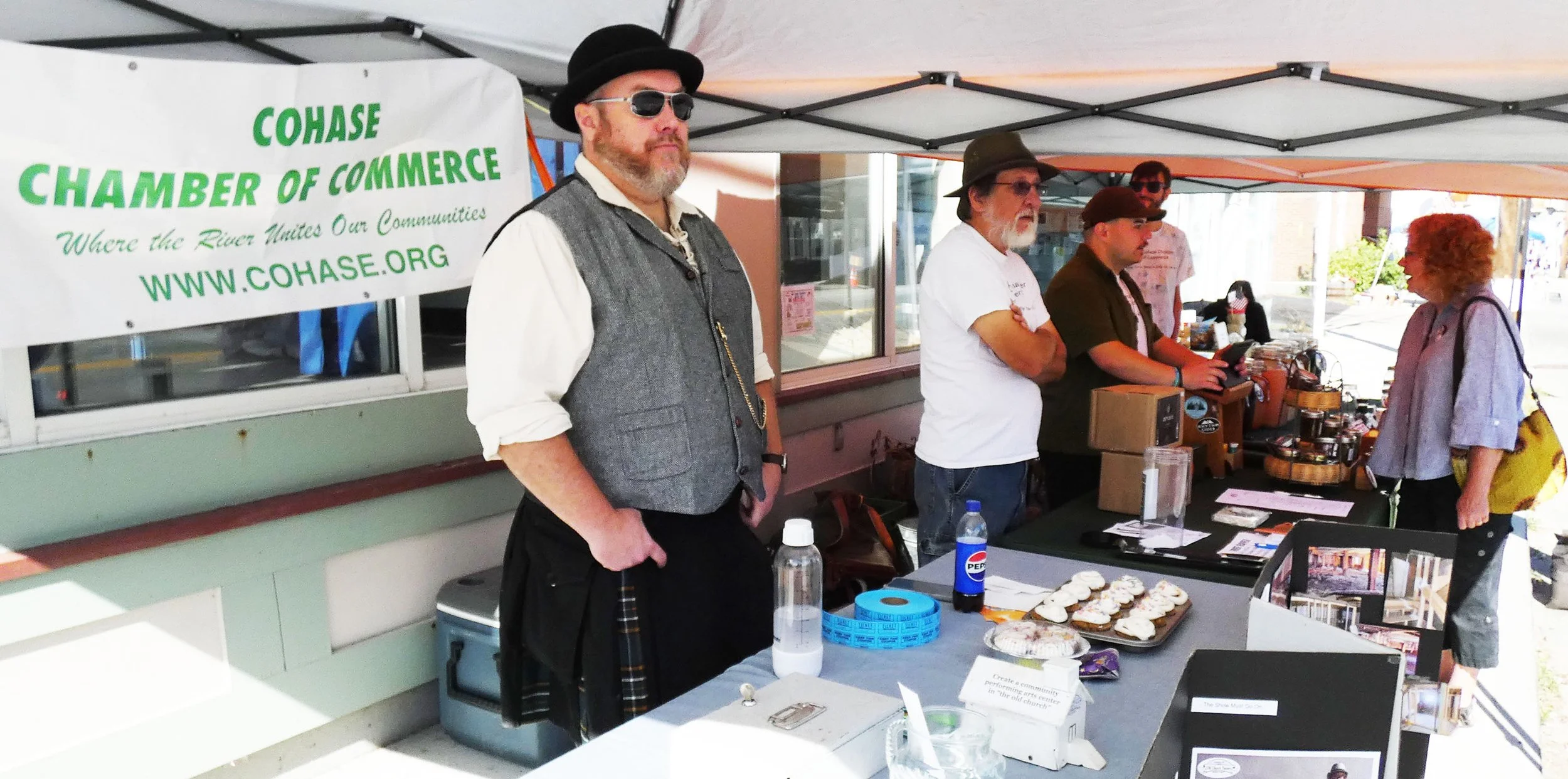
Lined up along Main Street in Wells River for the end of summer gala festival held last Saturday, September 5, 2026, are, left to right, John Hunt representing the Old Church Theater, and three members of the Cohase Chamber of Commerce Board, Gary Scruton, Joe Mitchell and Darren Sherburne. It was a busy time for all vendors stretching along Main and Railroad Streets. The Bridge Weekly/Bernie Marvin
Wells River, VT – Car and truck traffic on Route 302 and streams of people traffic on the sidewalks marked the 14th Annual “So Long Summer, Hello Fall” Festival, the happy child of the Wells River WRAP Program that has been growing larger ever since it began 14 years ago with just 10 entries.
Event honcho Richard Roderick announced on Saturday noon, September 5, 2026 that he has been “in town and on the street for every event for the past 14 years and this year is the biggest I have seen yet,” he exclaimed to The Bridge Weekly as we strolled by his table under a tent that protected him from the sun’s rapidly heating rays.
He said the businesses and organizations that have been a part of the gala have enjoyed it over the years. He said this year he counted over 60 of them had signed up, a full 10 more than last year.
And it showed. Traffic through town slowed as walkers used both the sidewalks and roads to mosey up and down Main and Railroad Streets taking in the wide variety of everything imaginable that was presented to the public that day between 9AM and 2PM.
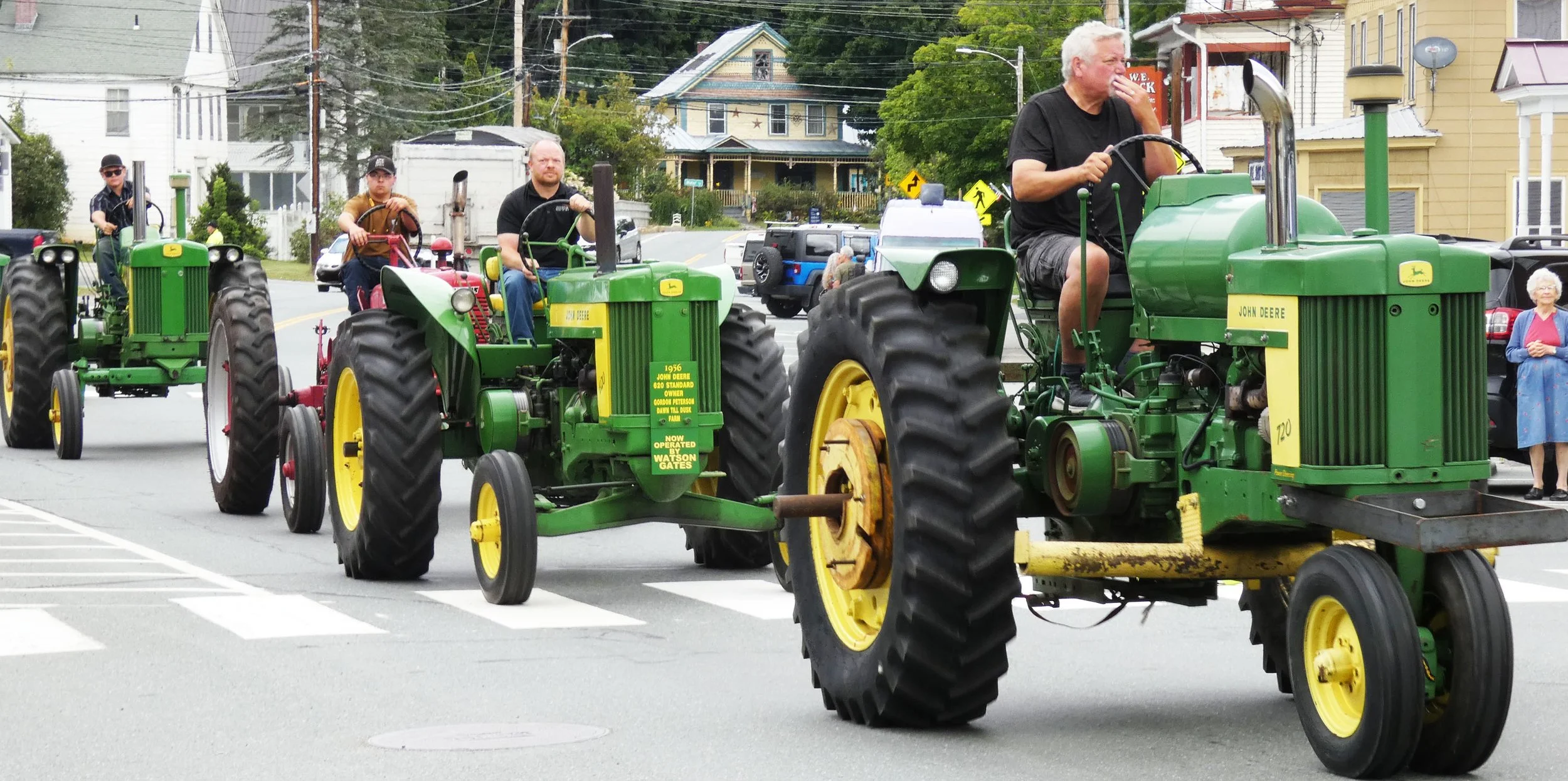
At 11AM, a super show of farm tractors, end to end came slowly through town on route 302 in the west and proceeded to parade over to the Wells River Chevrolet parking lot where they assembled for the crowd to visit and inspect the ag giants.
He was helping hand out tickets for three different raffles, one including the July 4th Woodsville/Wells River activities, also the American Legion was sponsoring a raffle, he said, adding that it was always good to see a lot of people and family activity in the Wells River Village as they all say “So Long to Summer.”
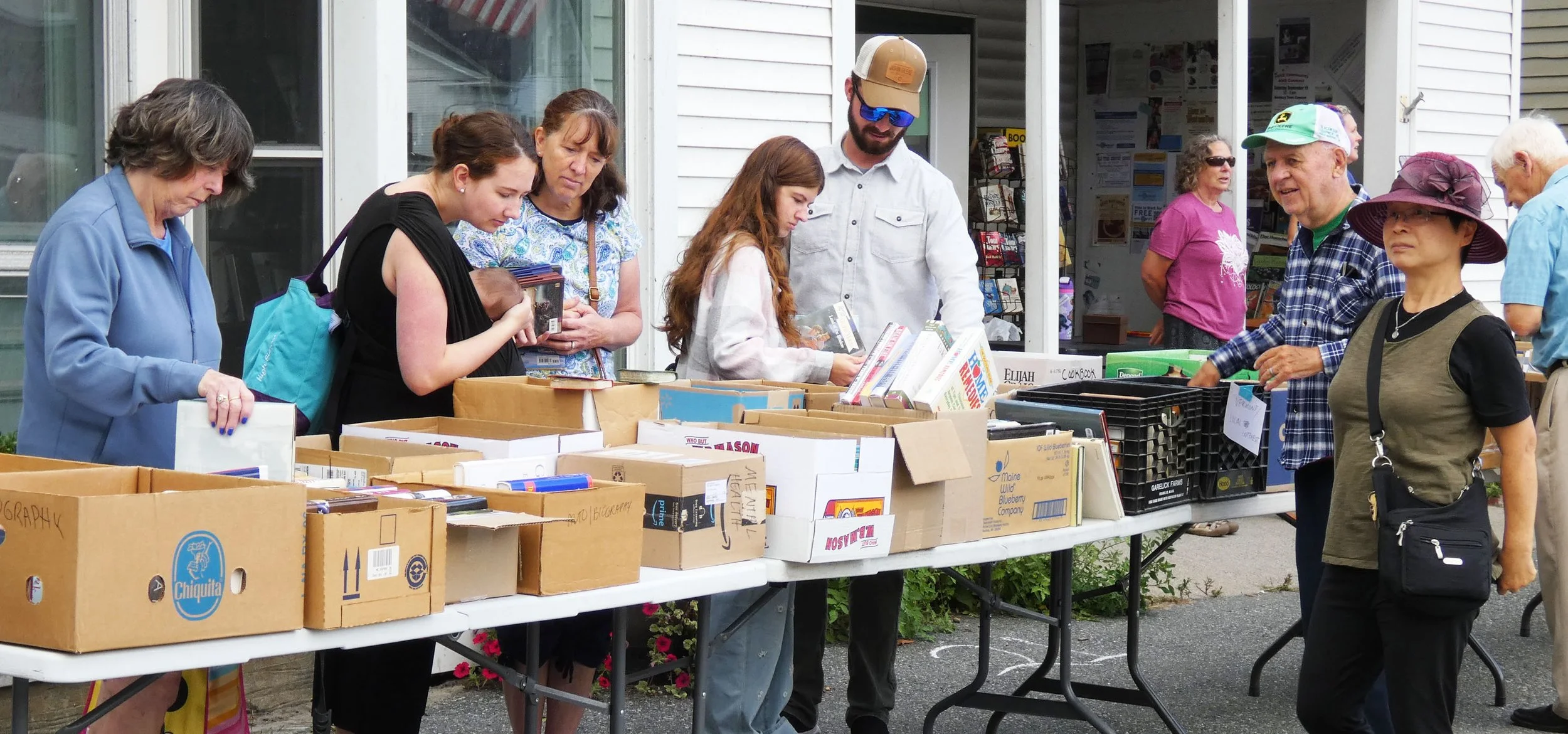
Book lovers gather at the Baldwin Memorial Library each festival year to look over hundreds of books placed for sale out front. It was a busy place all day. The Bridge Weekly/Bernie Marvin
A long line of tractors paraded through Wells River last weekend during the Wells River "So Long Summer, Hello Fall" event, drawing large crowds. The Bridge Weekly/Bernie Marvin.
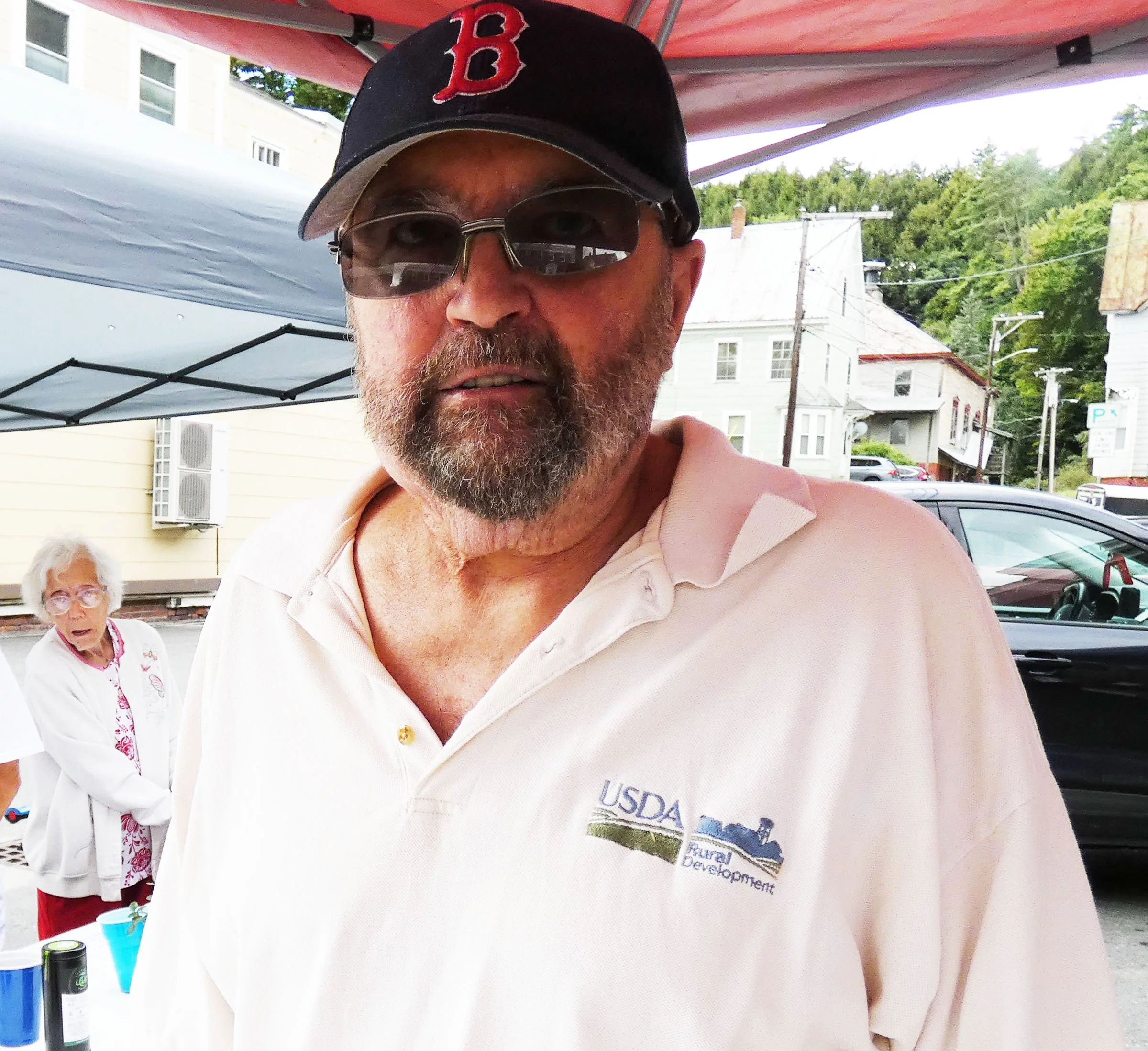
Long-time helper and boss Richard Roderick tends the raffle table and information booth during the Wells River "So Long Summer, Hello Fall" Festival held last weekend in Wells River. The weather was perfect, and Roderick said it was the largest event in their 14-year history. The Bridge Weekly/Bernie Marvin.
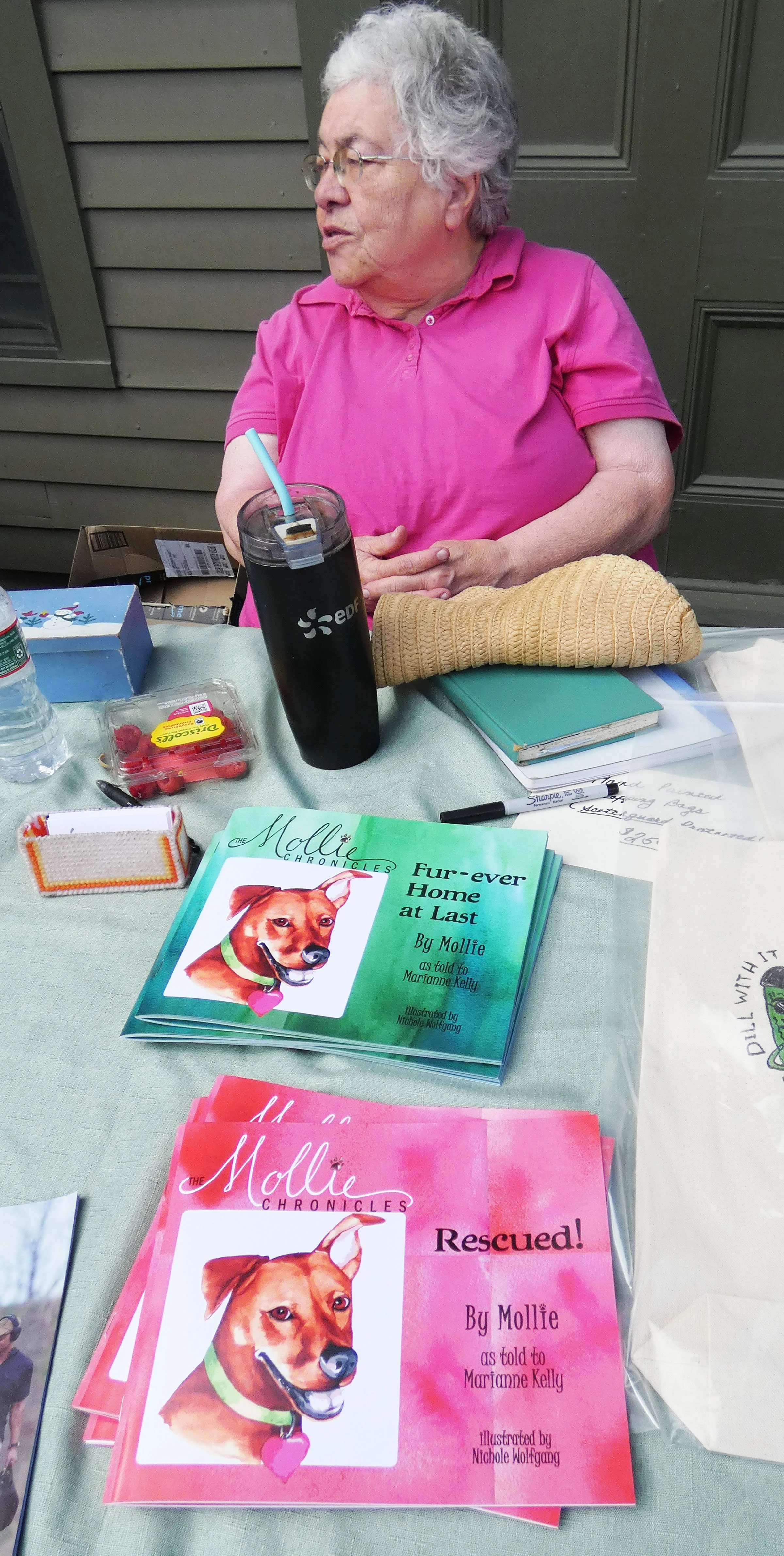
Author Marianne Kelly, a long-time exhibitor at local festivals, book sales, and author events, sells her books and other goodies during the Wells River "So Long Summer, Hello Fall!" Festival, September 5, 2026. The Bridge Weekly/Bernie Marvin
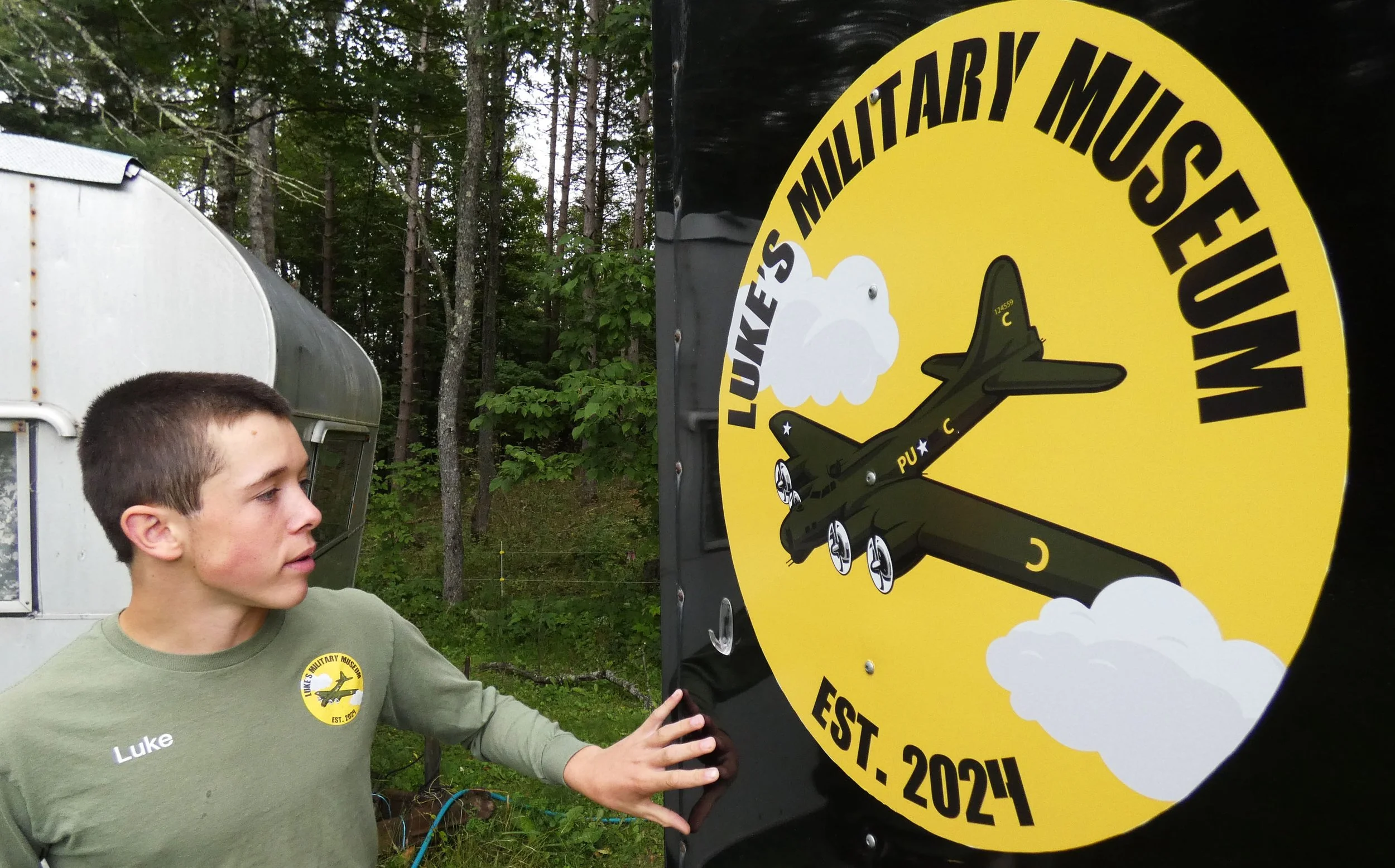
Danville's Luke Morrison, 15, Is A Bright, Young Military Collector With His Own Museum.
Morrison is 15 years old and a Ninth-Grade student at the nearby Danville School. His marks are good, he tells me, even though over the past year or so his chores and job tasks at home have increased many times over. Luke seems very able to promote his new military museum, and he has met with early stardom after the New York Times published a story a month or so ago, "The 15-year-old Keeping War Memories Alive."
Bernie Marvin
Luke Morrison looks over the logo he designed for his unique military museum at his home in Danville, Vermont. The Bridge Weekly/Bernie Marvin.
Danville, VT – In this small, handsome, typical Vermont town, there are many things visitors find attractive: a variety of small and large animal farming, not much vehicle traffic, a variety of good restaurants that serve breakfast, and a popular military museum.
That's the thing that surprises folks who travel through town on Peacham Road and Harvey's Hollow: there really is a museum in this town, and it carries its own fascinating story about Luke Morrison, the founder and manager of the museum.
Morrison is 15 years old and a Ninth-Grade student at the nearby Danville School. His marks are good, he tells me, even though over the past year or so his chores and job tasks at home have increased many times over. Luke seems very able to promote his new military museum, and he has met with early stardom after the New York Times published a story a month or so ago, "The 15-year-old Keeping War Memories Alive."
The story highlights donations Luke received from area veterans who had personal stories to share about the items. Luke can repeat a story about any piece in his museum, including the story of the Ploesti Oil Fields bomber crew member who somehow survived one of those terrifying raids on what was, in 1943, Hitler's main oil supply depot in Romania.
Luke's military museum is located inside a small camping trailer adjacent to the family's tidy goat farm. The trailer, by the way, is now the first of two trailers, needed because of the increasing number of military items donated to Luke's efforts to feature an even wider spectrum of warrior clothing, photographs, unit patches, media stories, helmets and implements, and a whole lot more!
There it is, laid out there among the parked four-wheel drive recreational vehicles, a dirt bike, animal trailer, 20 goats, a neatly cut yard area, a wooded pasture, and a brace of young oxen Luke's brother Caleb was trying to coax into the pasture.
Luke's little sister Natalie was in the house helping his mom, Carolyn Morrison, and Dad, Earl Morrison, was at work tending to the business efforts of Morrison's Garden Store in St. Johnsbury and the Feed Mill in Barnet among the family businesses the family and many employees tend to.
Both parents get a load of credit from Luke for helping him keep the military museum running smoothly and lugging him and his wares around the area when necessary. Luke has no vehicle operator's license, so their help is essential, he told me.
Early one morning last week, my son, Spencer, and I visited Luke and his mother, Carolyn, at their home and farm area. Luke's main military museum trailer sits with the other smaller travel trailer unit and is also filled with military paraphernalia Luke showed during four grueling days at the nearby Caledonia Fair.
Luke said several hundred guests toured his Caledonia Fair display space, and many promised return visits when his museum opens, usually on weekends. Although he said it seems he has always had an interest in the military, he began his serious military collecting in 2024. He said he has been pleased with the acceptance his museum is receiving so far.
His plan includes accepting donations he will use for expenses and to purchase additional military materials and equipment for the museum. Looking to the future, Luke said he is hoping to eventually find or build a structure to hold his fast-growing inventory. When or where that will be is unknown at this early point.
The trailer that holds most of the museum's artifacts at one time belonged to his great-uncle Dright Cooley, a World War 2 veteran. Luke has nearly doubled his capacity by spending $2500 on another trailer that sits proudly nearby, bulging with war mementos offered by Luke for his military museum.
Anyone who wants to contribute to Luke's military museum efforts or would like to set up a visit can contact him by email at lukesmilitarymuseumvt@gmail.com.
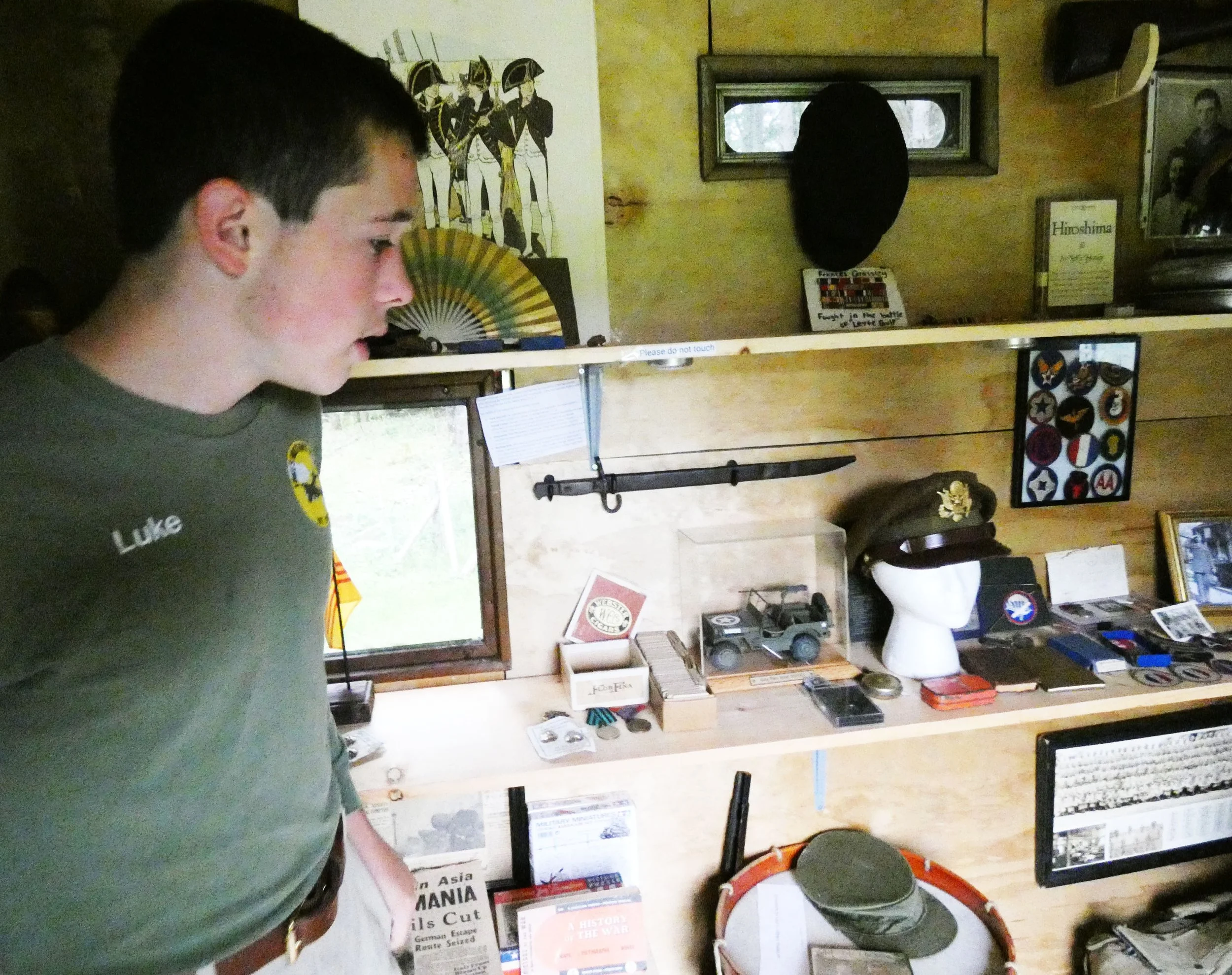
Luke Morrison, 15 years-old, checks on one of the many displays in his military museum. The Bridge Weekly/Bernie Marvin.
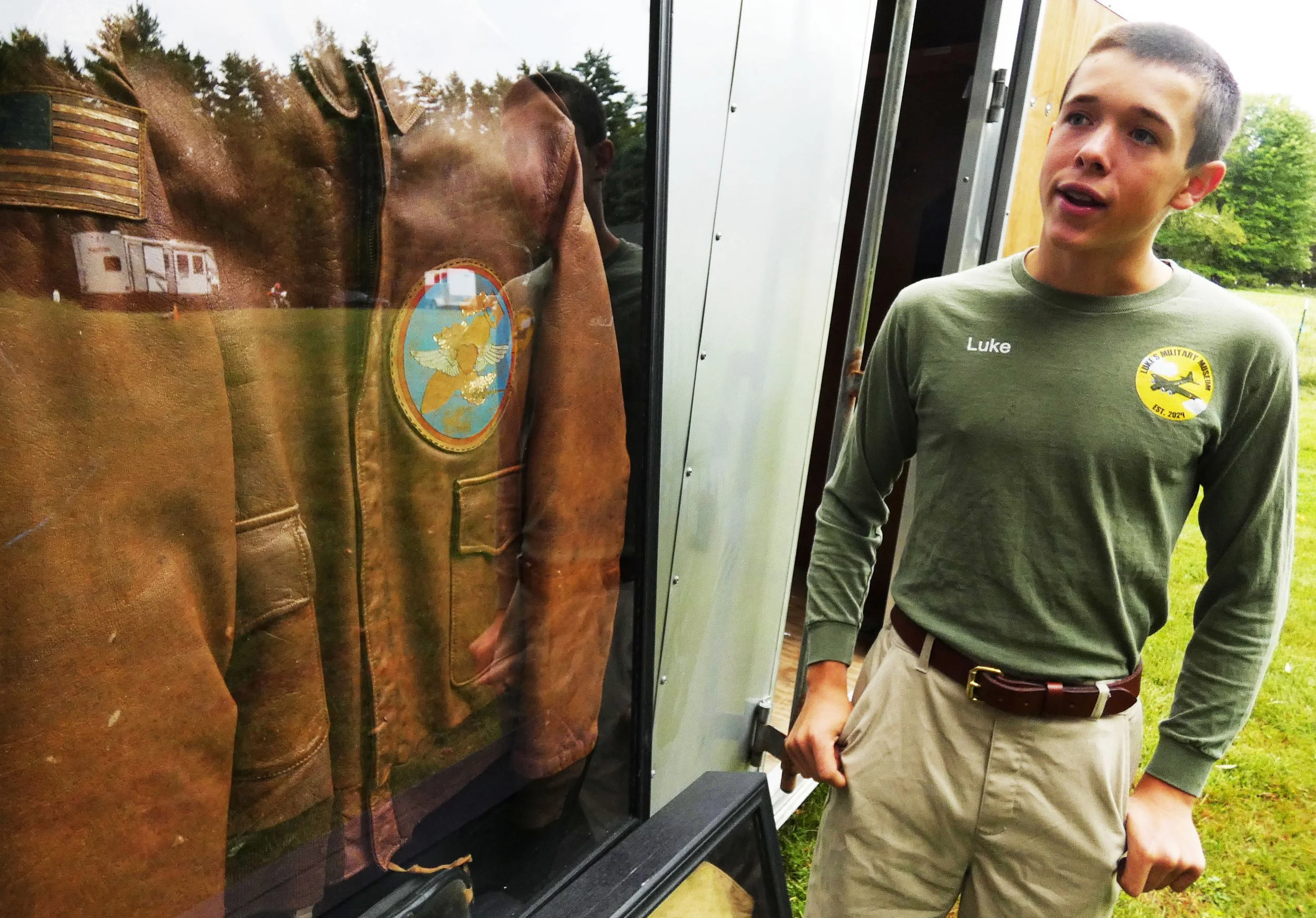
Luke Morrison admires a B-24 bomber crew member’s leather flight jacket worn during bombing raids on the Ploesti Oil Fields in Romania during World War 2. The Bridge Weekly/Bernie Marvin.
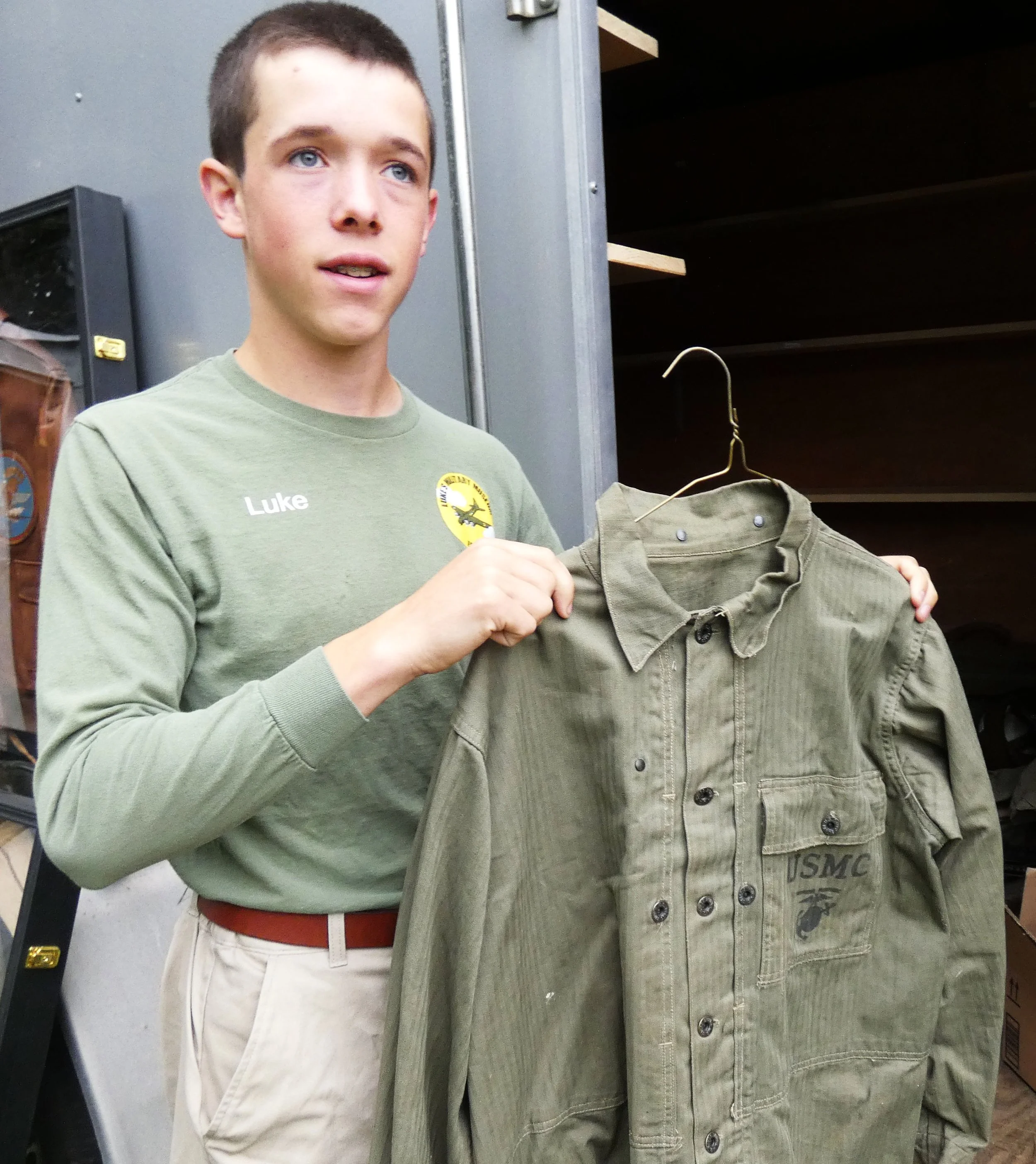
Military Museum owner Luke Morrison holds a prized authentic US Marine Corps herringbone twill utility jacket. The Bridge Weekly/Bernie Marvin.
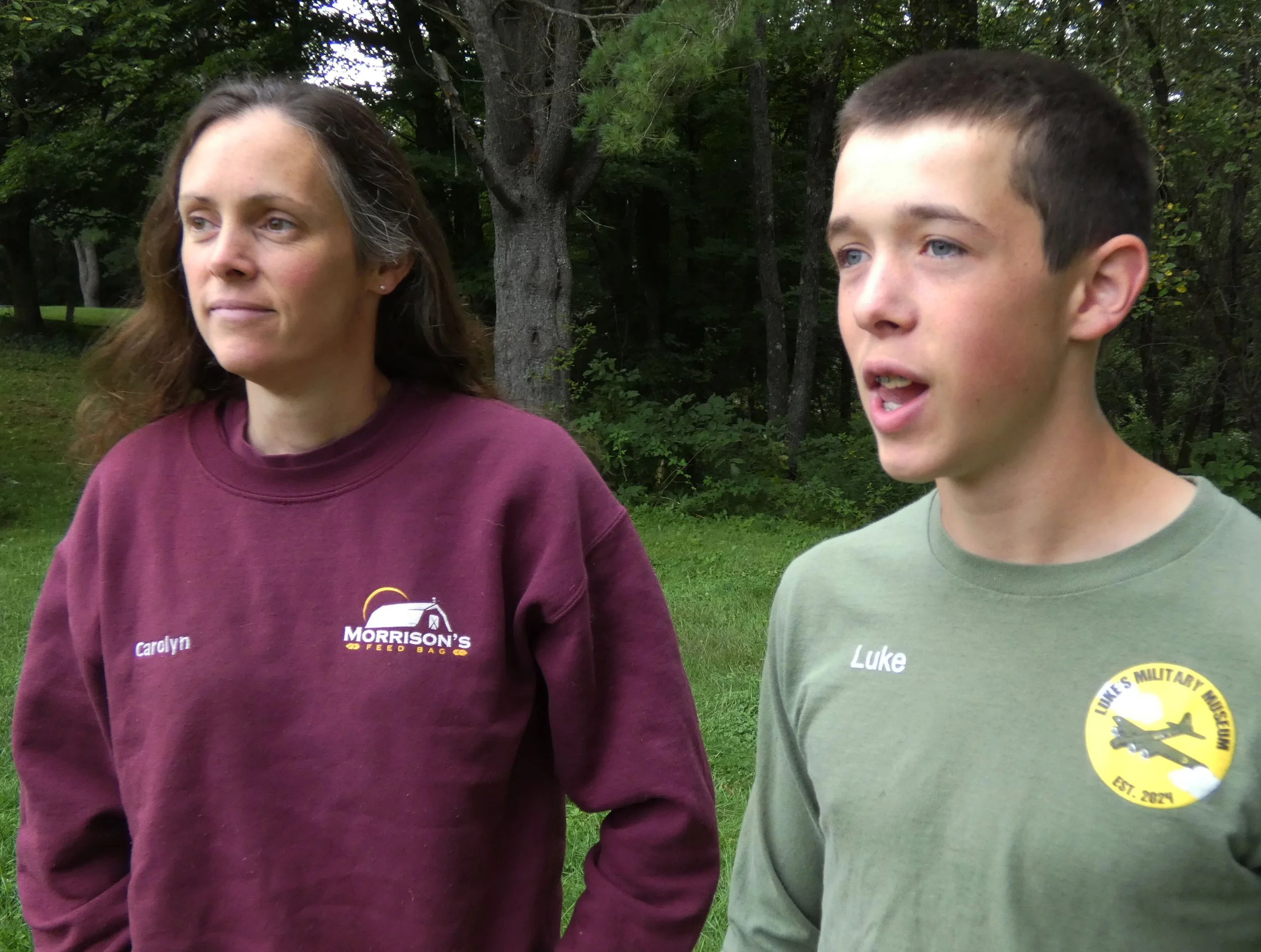
Carolyn Morrison, at left and her son, Luke Morrison. He is the 15-year-old owner of Luke’s Military Museum in Danville, Vermont. The Bridge Weekly/Bernie Marvin.
Apples, Old Implements, Music, and Logging: It Was All There For Tucker Mountain Day
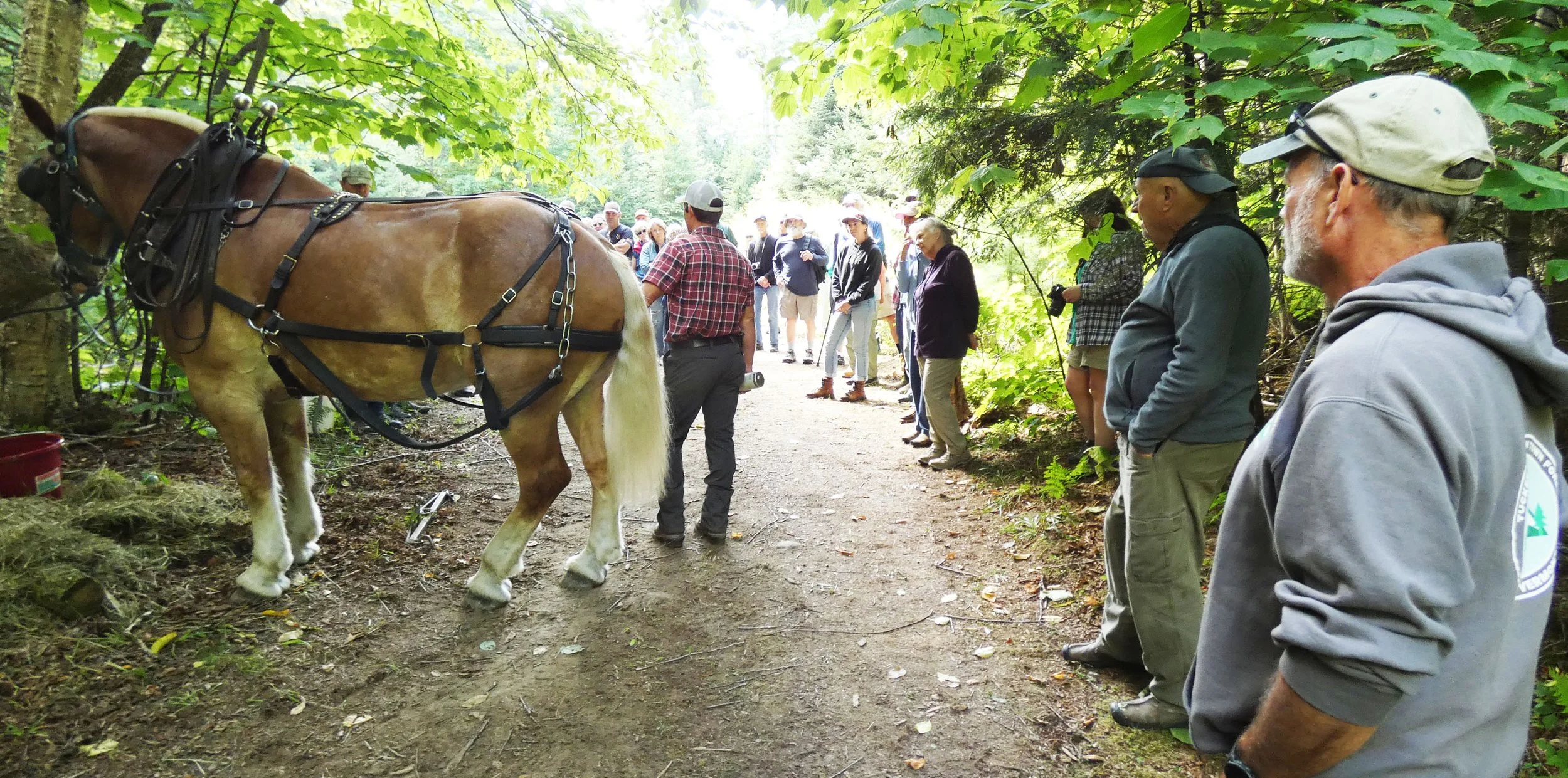
This free event was a great excuse for lawn chairing and just plain sitting or standing around and chatting with neighbors or newcomers as the kids explored or watched any number of demonstrations with a working draft horse named Leaf, artifacts found in local barns, or a chance to see and discover just how an ox team can listen to and obey commands from its driver, Miles Conklin.
Bernie Marvin
Visitors and Tucker Mountain Town Forest Board Member Jeff Goodell, on the right, observe draft horse logger John Jayne of Newbury as he speaks to the crowd about low-impact horse logging and ecologically sensitive timber harvesting at last weekend's Tucker Mountain Day. The Bridge Weekly/Bernie Marvin
West Newbury, VT – With great weather and those high Vermont puffy clouds most of last Saturday, August 29, 2026, nothing could go wrong that would mar another perfectly executed Tucker Mountain 250th Anniversary Day.
For four busy hours, the East Parking Lot saw a steady stream of people coming aboard the neat layout of the grounds and enjoying themselves in the shadows of majestic Tucker Mountain. The program was brought to the public by the talented members of the Newbury Historical Society and the Tucker Mountain Town Forest Committee.
This free event was a great excuse for lawn chairing and just plain sitting or standing around and chatting with neighbors or newcomers as the kids explored or watched any number of demonstrations with a working draft horse named Leaf, artifacts found in local barns, or a chance to see and discover just how an ox team can listen to and obey commands from its driver, Miles Conklin.
A full trip down memory lane was in store for visitors to Tucker Mountain Day, as people connected with the Grande Montagne made sure there was enough of everything on location to have a very successful program that was supposed to end at 2:00 PM, but hung over that final limit because folks did not want to leave.
Music was also at hand, as the Tucker Mountain Boys and the Sacred Heart Singers entertained guests during the day. Picnics were enjoyed as groups participated in fun projects such as apple pressing with Rick and Emmy Hausman and learning about the wonderful geologic history of the rugged grounds everyone had come to see from County Forester AJ Follensbee..
Organizers did not forget the rich history of Tucker Mountain, as they celebrated 250 years of this mountain's heritage as part of the town's incorporation in the long years of experience from its founding in 1763 to today's vibrant Newbury township in 2026.
Newbury and its outer territories of South or West Newbury, and Wells River, have long attracted an interesting base of people from throughout the United States. Read the 2018 story, “A History of Tucker Mountain” by Tom Kidder and you will get the complete story of Tucker Mountain Town Forest as it was honored last weekend.
It's the people that make events in the Newbury environs so interesting, whether it is a Goodbye Summer program in Wells River, a superb sit-down home-cooked turkey dinner at the West Newbury Town Hall, or a busy land-based education program on the wonders of the 635-acre Tucker Mountain Town Forest.
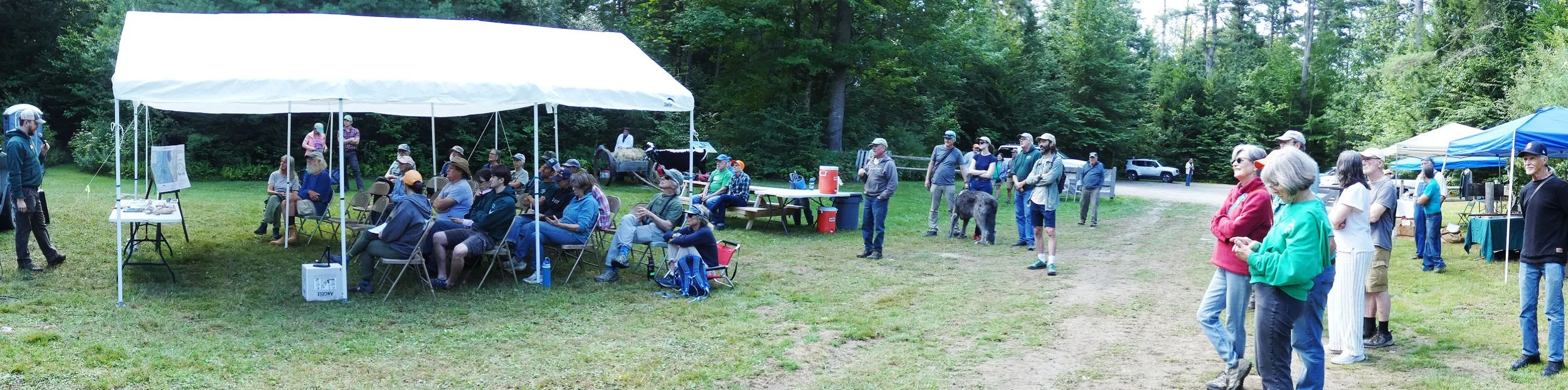
County Forester AJ Follensbee of the Vermont State Forest, Parks and Recreation, at left, speaks to an early group of visitors attending Tucker Mountain Day about the highlights of the forest and fauna that can be found throughout the grounds of the Tucker Mountain Town Forest. The Bridge Weekly/Bernie Marvin.
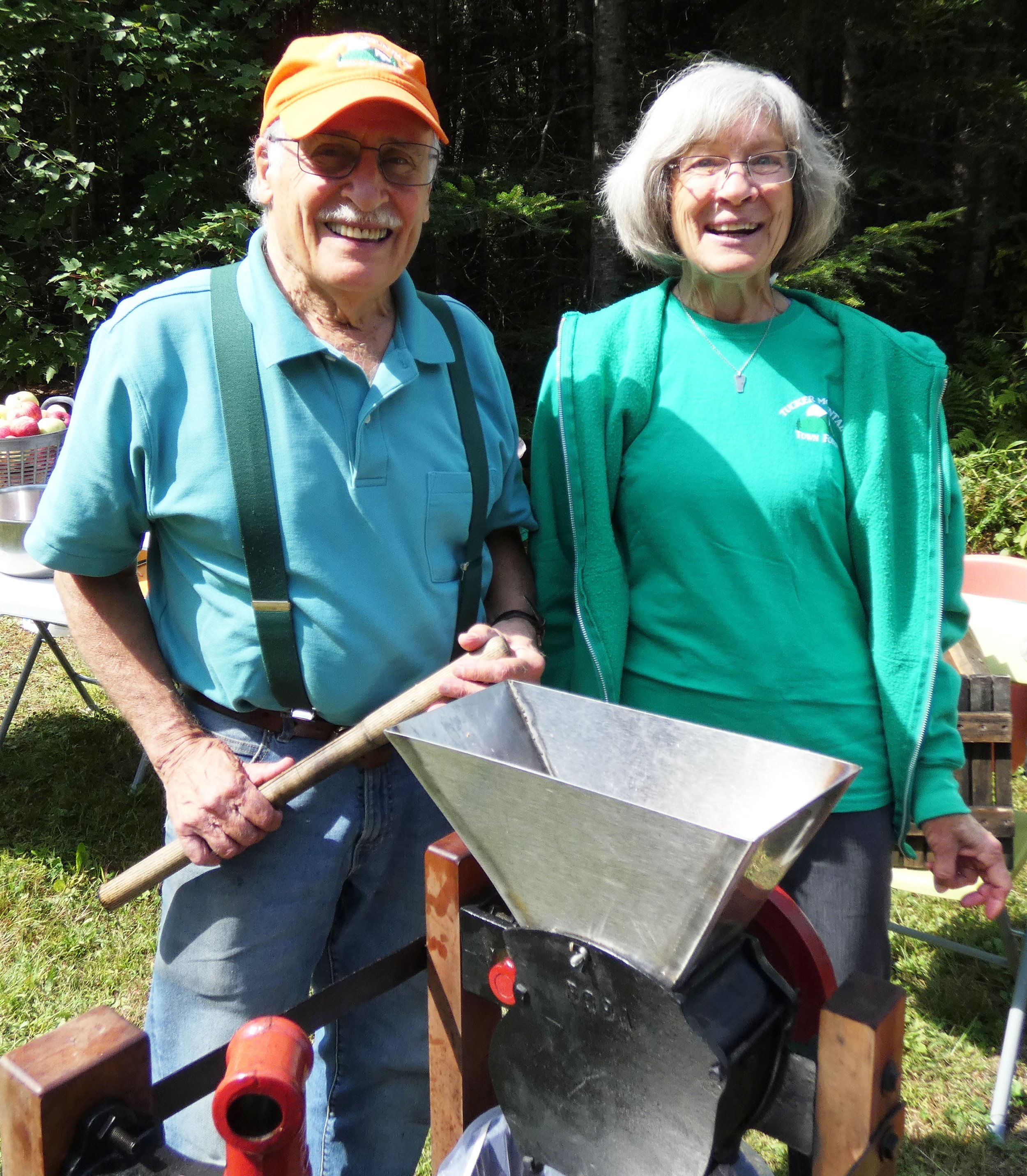
Rick and Emmy Hausman assisted visitors with the fine art of crushing first-of-the-season apples. They are experienced in making quality fresh Vermont apple cider. The Bridge Weekly/Bernie Marvin.
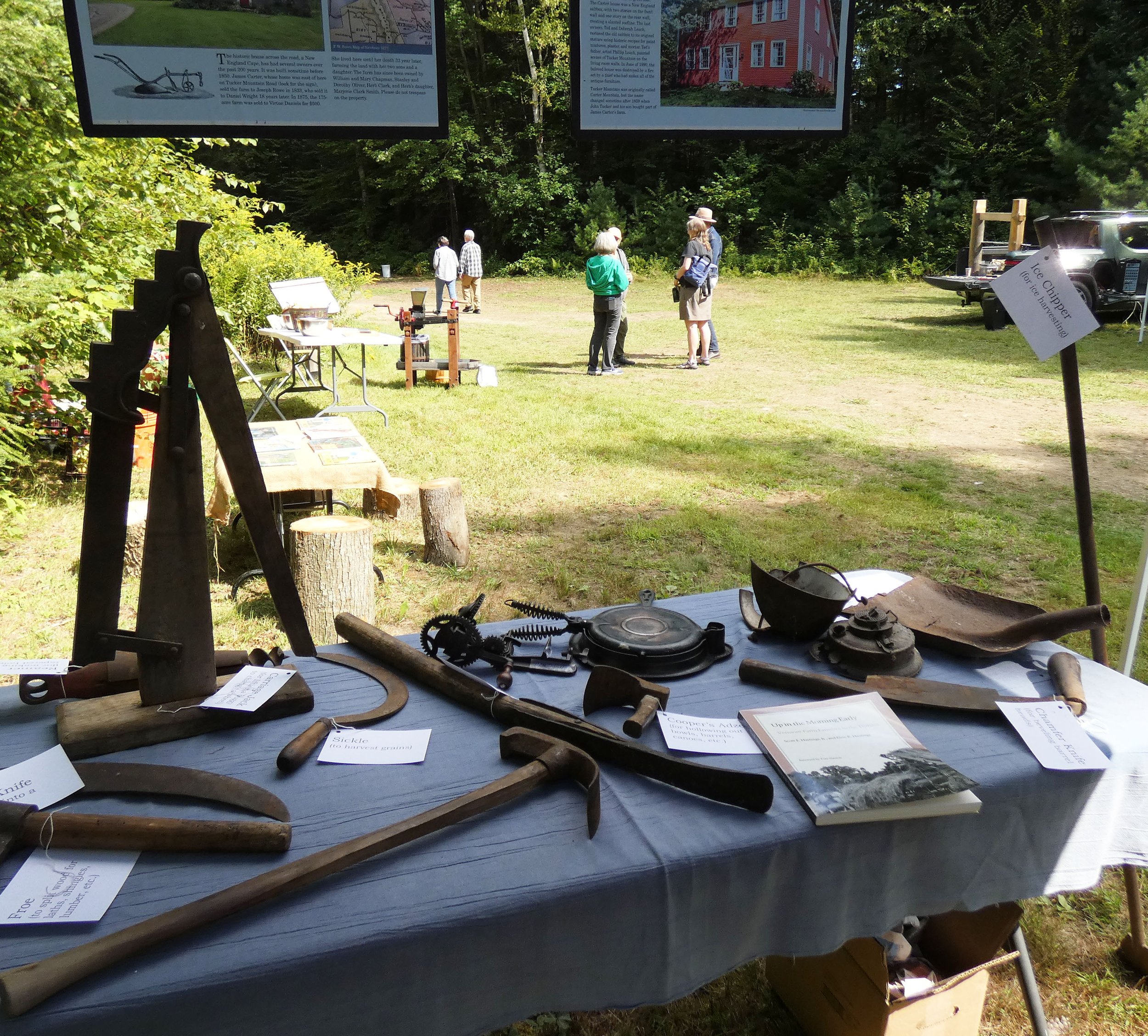
An interesting display of early farming implements and books that visitors found interesting at the Tucker Mountain Day program. The Bridge Weekly/Bernie Marvin.
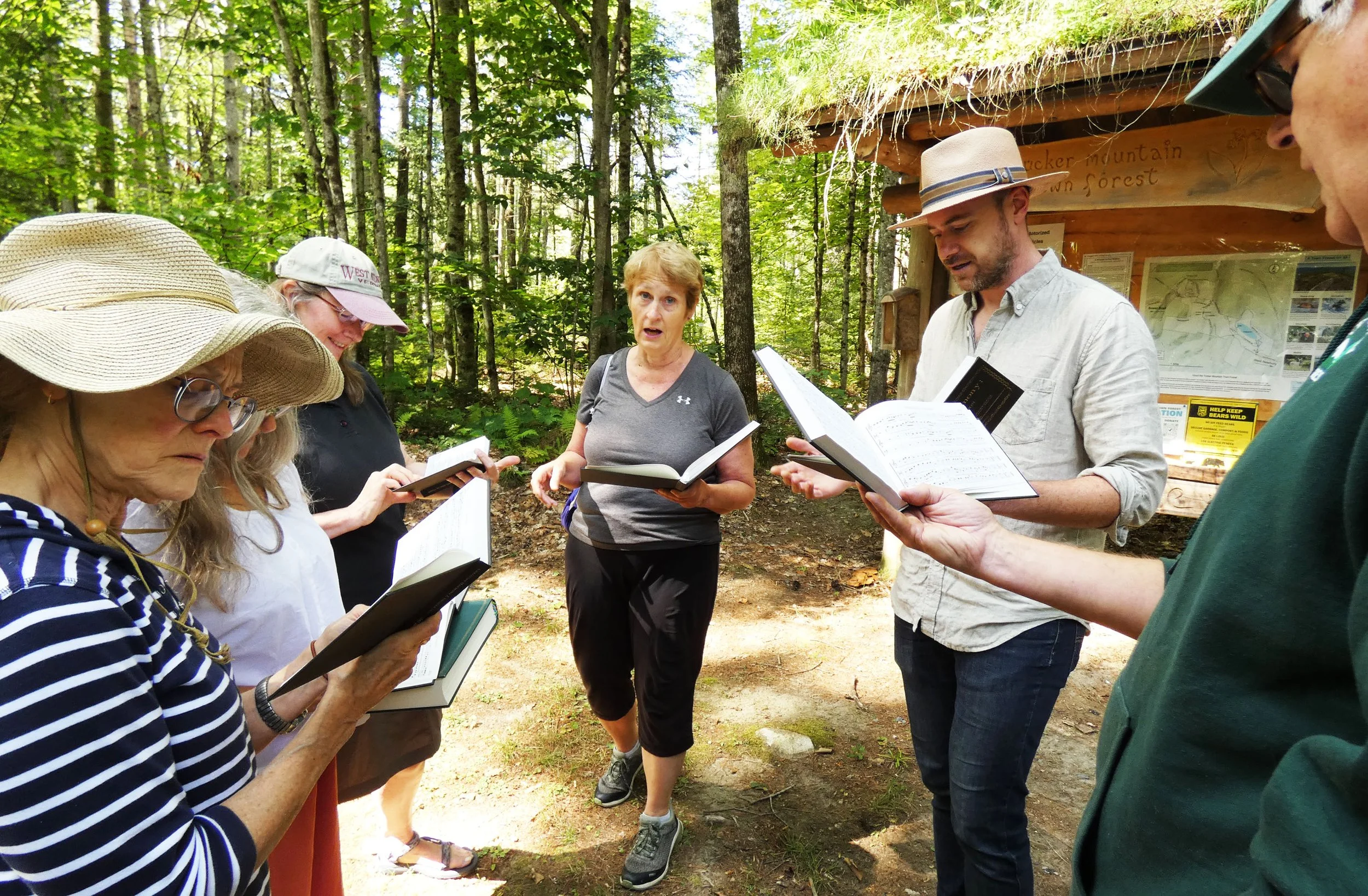
This talented group of Sacred Harp Singers was getting ready to present a complete set of vocal music to the Tucker Mountain Day visitors last Saturday, August 29, 2026. The Bridge Weekly/Bernie Marvin
Cherished Quilt of Valor presented to WW2 veteran Earl Aremburg
Aremburg, a popular and well-known lifelong resident and retired businessman in the area who is approaching his 100th birthday, was there with a large group of family, friends, and veteran well-wishers, including his daughter Marie Bigelow and son Raymond Aremburg.
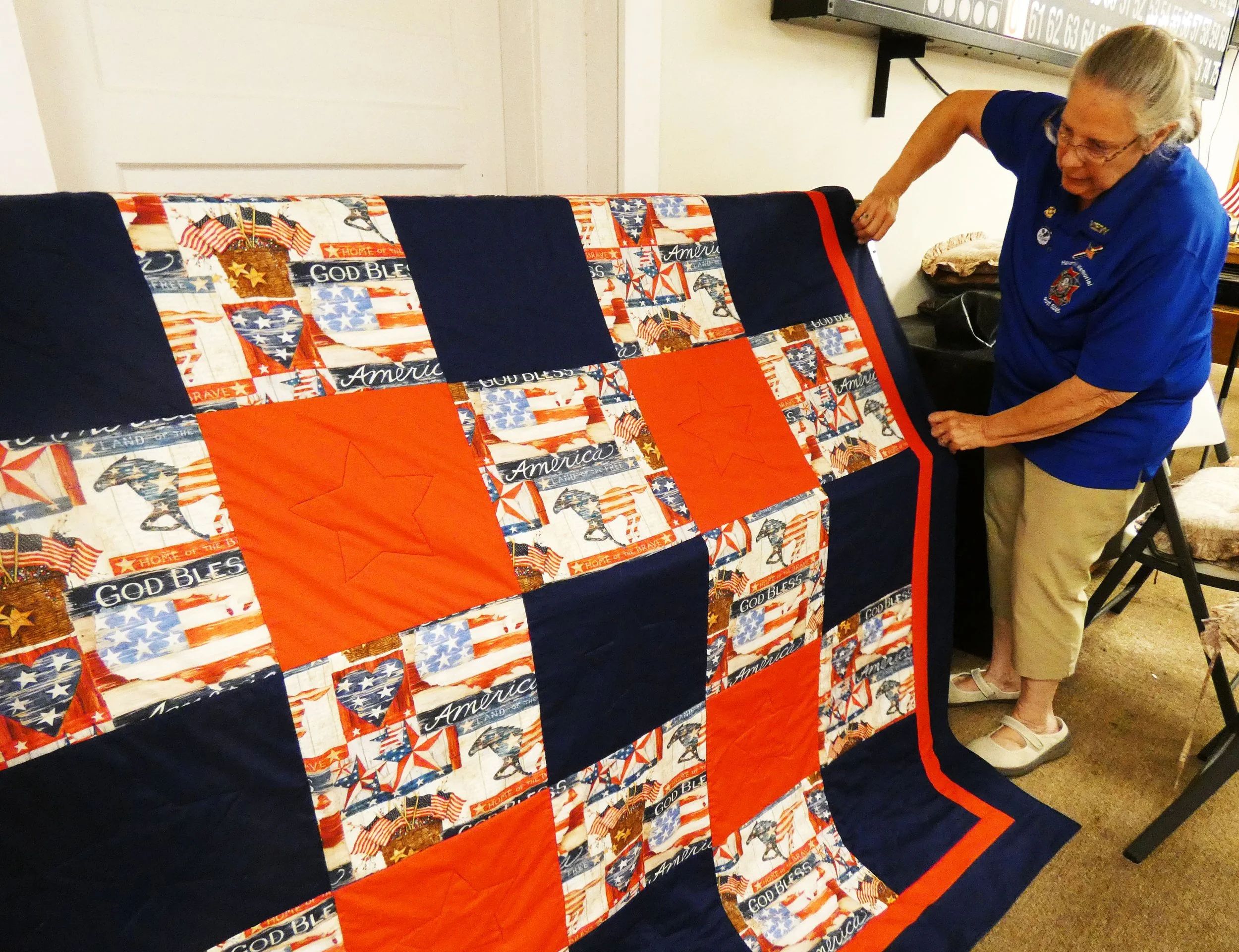
The large quilt, resplendent in bright and patriotic colors, was hand-stitched by VFW Auxiliary member Bonnie Burroughs. She was present for the ceremony, as were Jane Graham and Carolyn Bruckner of the QOV organization.
Bernie Marvin
Veterans of Foreign Wars Auxiliary member Bonnie Burroughs, who created the Quilt of Valor that was presented to WW2 Sailor Earl Aremburg last week, displays the quilt for all to see and admire. The Bridge Weekly/Bernie Marvin.
North Haverhill, NH – The honored Quilt of Valor (QOV), a homemade quilt presented to WW2 Veteran Earl Aremburg as a way to say "Thank You" for your service to our country by members of the National Quilts of Valor organization, was presented at an impressive service at the Veterans of Foreign Wars building on Thursday evening, August 20, 2026.
Aremburg, a popular and well-known lifelong resident and retired businessman in the area who is approaching his 100th birthday, was there with a large group of family, friends, and veteran well-wishers, including his daughter Marie Bigelow and son Raymond Aremburg.
The large quilt, resplendent in bright and patriotic colors, was hand-stitched by VFW Auxiliary member Bonnie Burroughs. She was present for the ceremony, as were Jane Graham and Carolyn Bruckner of the QOV organization.
Members of the Sew Far North Quilt of Valor group of Littleton displayed and presented the quilt. The QOV organization was founded in 2003. The organization's mission is to honor veterans and active service members who have been touched by war, with a quilt to say thank you for your service to our country.
The local group was organized in 2021, and to date they have awarded 130 quilts; nationally, 454,000 quilts have been awarded, and more than 11,000 QOV members make and award these highly praised quilts.
A Quilt of Valor is a reminder that those of us who made them remember all who have made the sacrifice of service for our freedoms. The QOV has three layers; the top layer has many colors and shapes of fabric. These represent the communities and the individuals who stitch the quilts, representing the love, gratitude, and sometimes the tears of the maker.
The center layer, the batting, provides warmth and represents hope, comfort, and peace, offering healing to the individual who receives the quilt. The back layer, called the backing, is the strength of the quilt, and the binding that holds all the layers together.
The Quilt of Valor is priceless; it cannot be bought, sold, or raffled. It is not a birthday or Christmas gift. The value is a thank you for your service and your sacrifice.
The VFW Honor Guard, under the command of Jr. Vice Commander Bill Burroughs, began the ceremony; there was a call to order, and the Pledge of Allegiance was recited. Chaplain Fred Delman offered prayers, with the ceremony being conducted by Jane Graham and Carolyn Bruckner of the Quilts of Valor organization. Assisting in the ceremony and with the display of the Quilt of Valor, Bonnie Burroughs was the VFW Auxiliary member who created and sewed the Quilt of Valor that was presented to Earl Arenburg.
During the ceremony, Earl Aremburg was wrapped in the quilt to symbolically show how it will provide warmth and comfort to the recipient.
Fireman First Class Earl Arenburg joined the U.S. Navy in 1943 at the age of 17. He trained as a gunner in Norfolk, Virginia, and was assigned to a 36-man unit on the SS Taylor, a cargo ship. His first trans-Atlantic trip was in a convoy of 100 ships carrying troops, equipment, and supplies to the Mediterranean. During the 30-day voyage, German submarines posed an ever-present danger and sank many of the convoy's vessels.
His ship was then assigned to carry cargo around the Mediterranean from North Africa to Naples, Italy, before returning to the United States. In Baltimore, he was transferred to a second Liberty ship with a mission to refuel ships that were on their way to action in northern Africa.
After the war in Europe ended, Earl was transferred to the Pacific theater in advance of the planned invasion of Japan. He served as a gunner and a machine gunner aboard the USS Manila Bay. Earl continued his service in the Marine Corps Reserves until August 1956, when he retired as a Sergeant of Marines.
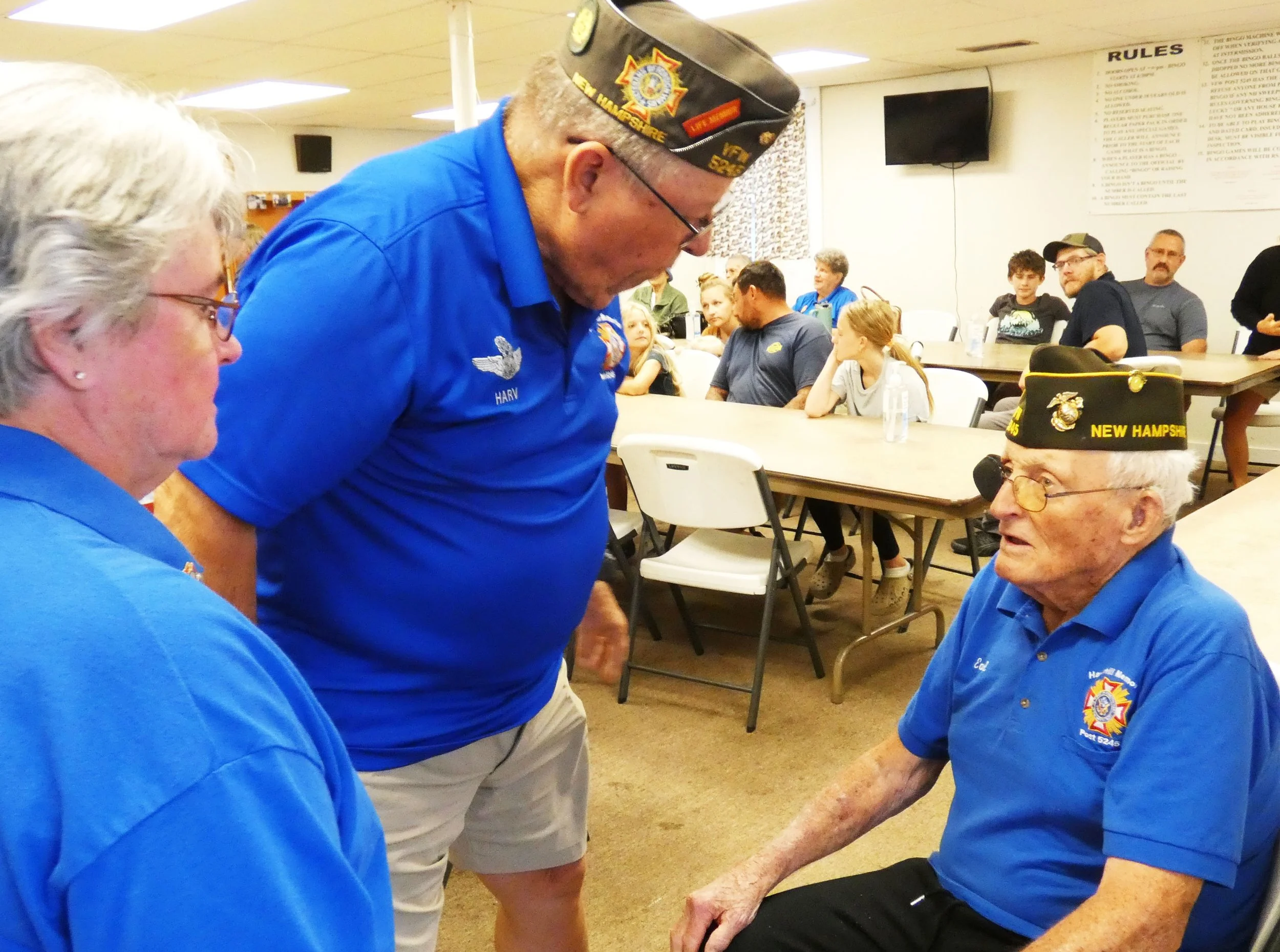
Earl Aremburg of North Haverhill, at right, received an award of a Quilt of Valor at ceremonies last Thursday night, August 20, 2026. With him are his daughter, Marie Bigelow, on the left, and fellow VFW member Harvey Keyes. The Bridge Weekly/Bernie Marvin
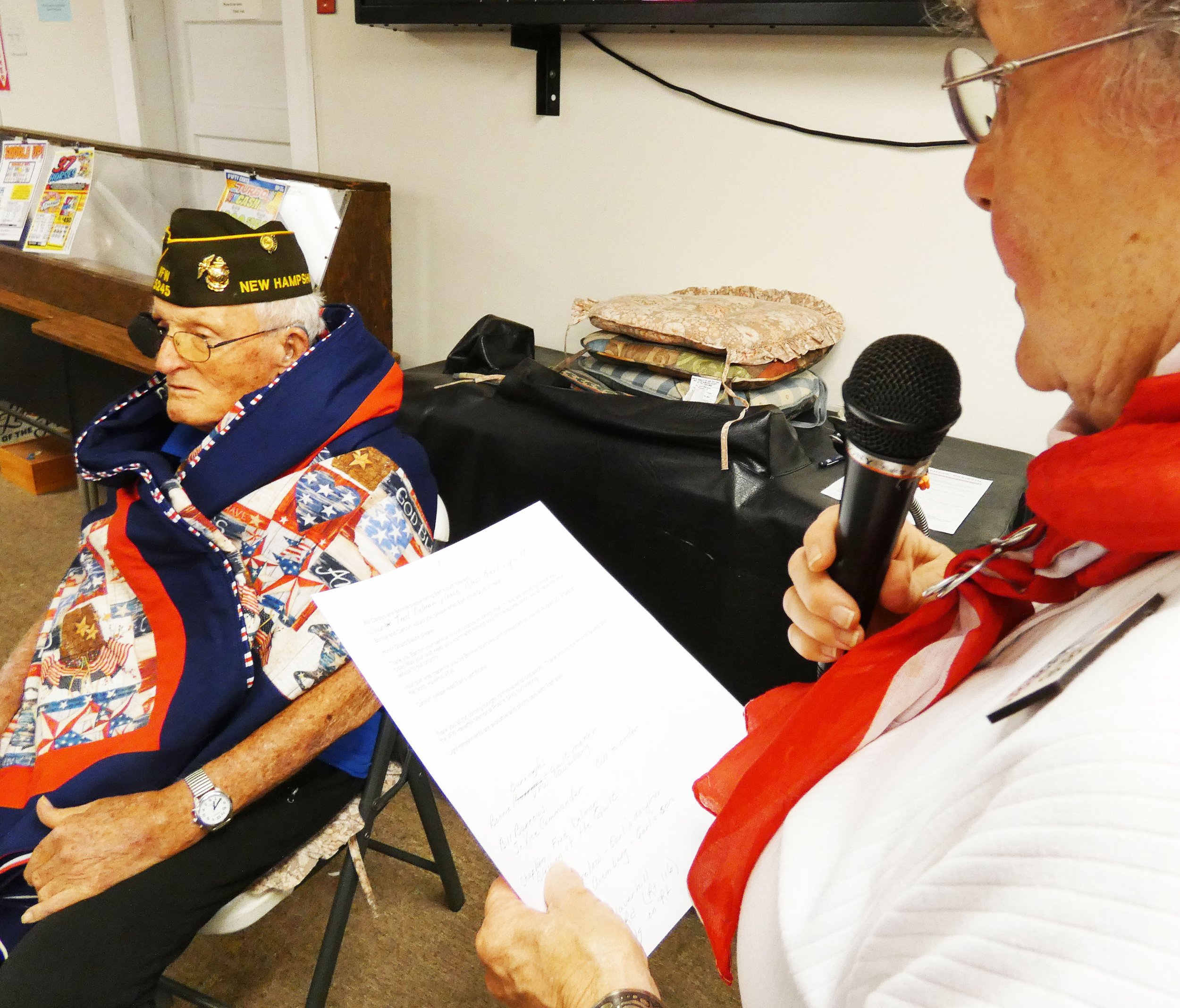
Wrapped in the Quilt of Valor in ceremonies at the Veterans of Foreign Wars building in North Haverhill is WWII US Navy veteran Earl Aremburg, with Quilt of Valor official Jane Graham at right as she narrates the presentation program. Aremburg received the Quilt of Valor for his service during WW2 in two different theaters. The Bridge Weekly/Bernie Marvin.
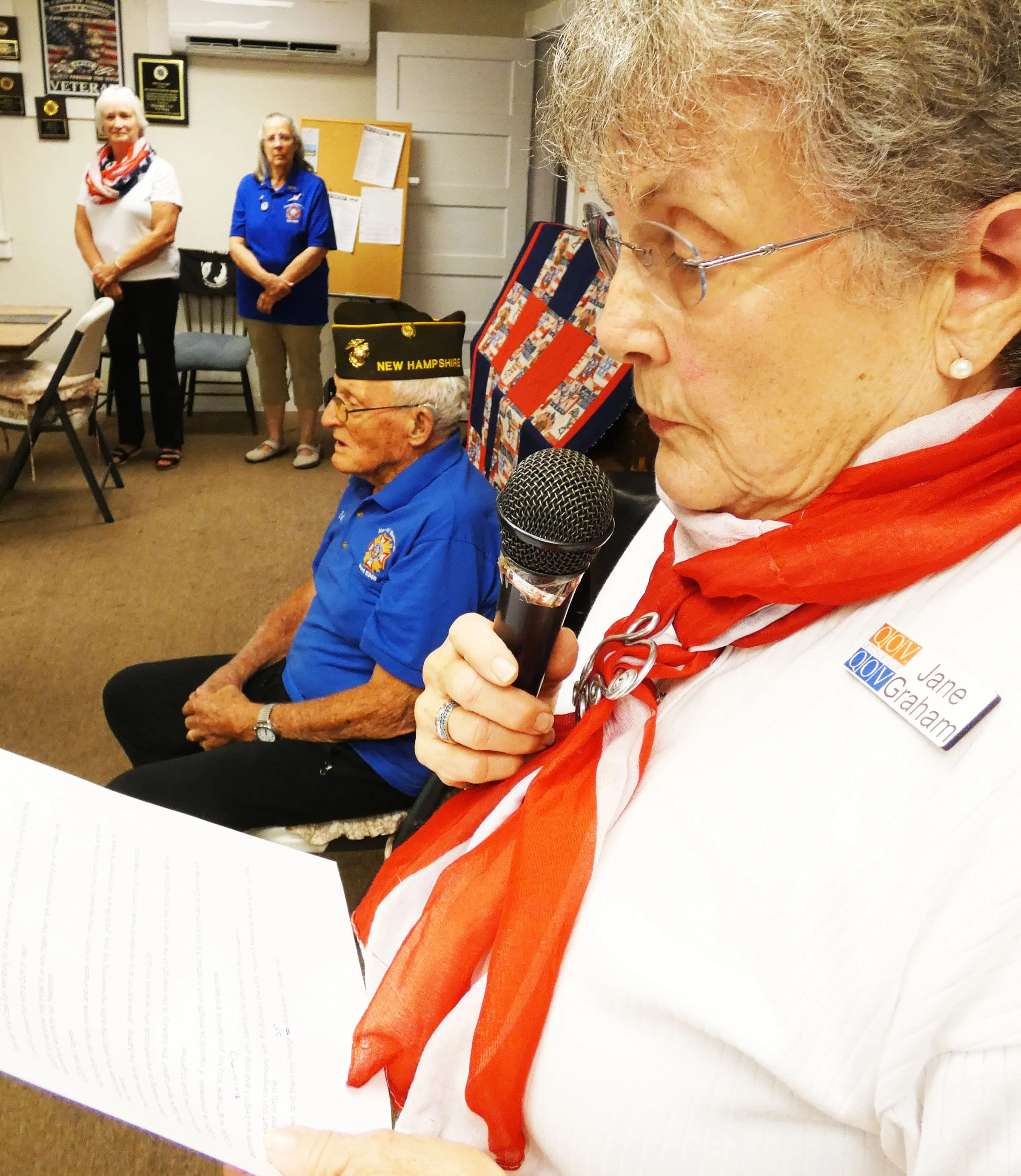
Presenting the cherished Quilt of Valor at recent ceremonies to WW2 US Navy veteran Earl Arembiurg, seated at center, were Quilt of Valor official Jane Graham, at right. Also at rear, Quilt of Valor official Carolyn Bruckner, at left, and the quilt creator, Bonnie Burroughs, at right. The Bridge Weekly/Bernie Marvin.
Civil Air Patrol Members Hit The Ropes
There was plenty of activity on the perfect summer day. Throughout the area, visitors enjoyed the vendor booths, listening to several political candidates chat with voters, and hearing some great music by the group Counting by Sevens during the picnic session.
An interesting historical exhibit by the Newbury Historical Society was enjoyed at the one-room schoolhouse just down the road from the Hall.
Bernie Marvin
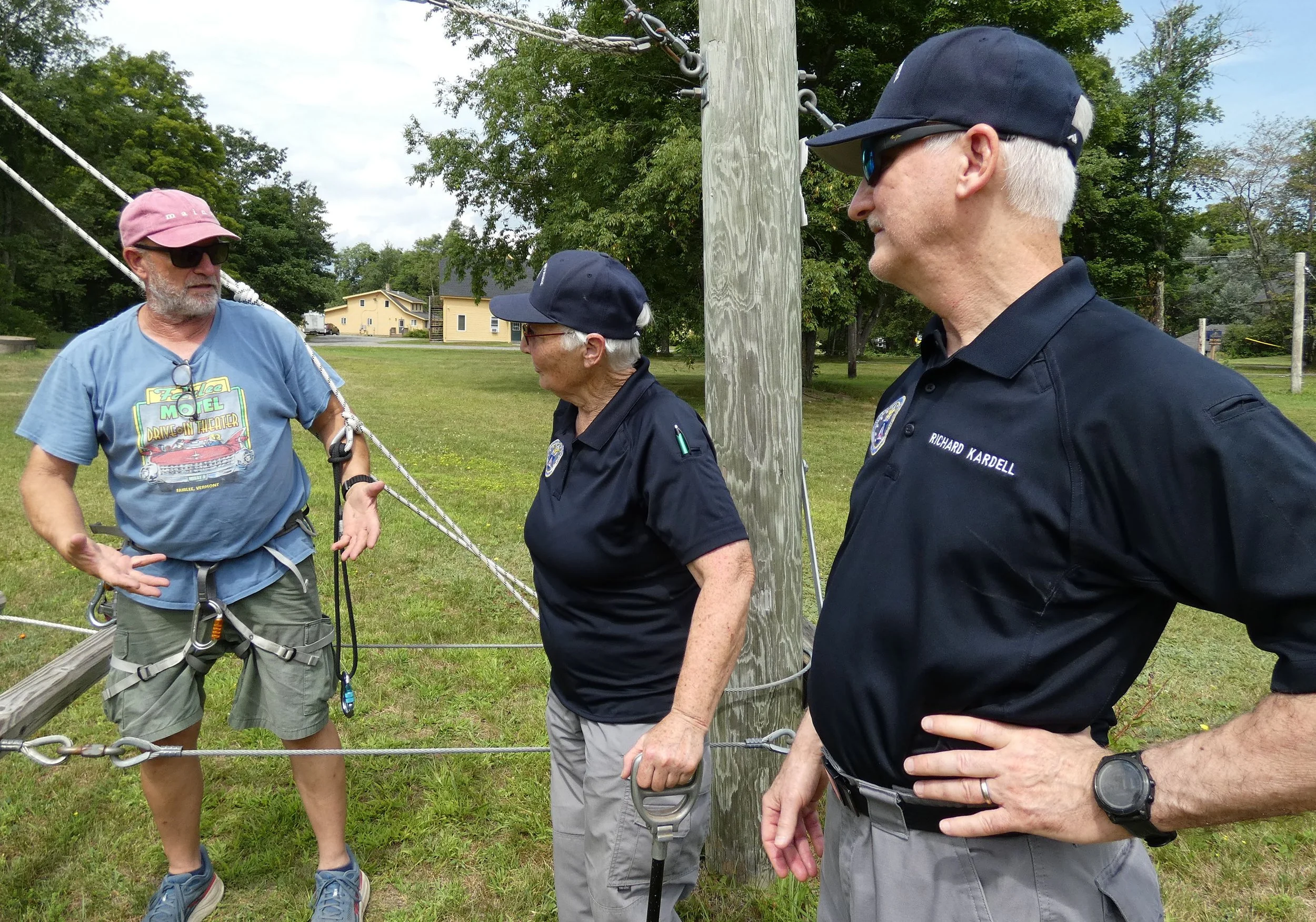
Upper Valley Stewardship Center’s Ropes Course Instructor Mike Adamkowski, at left speaks with Civil Air Patrol officers during a recent session on the intensive course. Seen from left to right are Adamkowski, Captain Evelyn Chadwick and Major Richard Kardwell. The Bridge Weekly/Bernie Marvin
East Haverhill – A total of 15 Civil Air Patrol Cadets from three squadrons in the New Hampshire North Country hit the intense ropes course located at the Upper Valley Stewardship Center in East Haverhill two weeks ago, and according to people passing by or who participated, it was a spirited and eager participation by enthusiastic Cadets.
Captain Evelyn Chadwick told the Bridge Weekly during a roadside interview that her Cadets had been working on the ropes course for the past five years, and they were happy to be back there learning more techniques.
Captain Chadwick was there with cadets from squadrons in Whitefield, Woodsville, and Laconia. She said each year the group grew larger; it was only the White Mountain Cadets back then, but as word spread about how exciting the ropes course was, more attended each year.
Major Richard Cardell said that the ropes course provides an excellent chance for Cadets to practice leadership and teamwork skills, as they spend their day assisting others to do more, go higher, and improve their rope techniques. He had great praise for the ropes course director, Mike Admakowski, who has worked with the Cadets for the past five years.
Navigating the ropes course directly fulfills the CAP's weekend activity mandates for character development, team building, and rigorous physical fitness training. The Cadets were challenged to solve complex physical and technical problems as a team, building mutual reliance and overcoming personal fears.
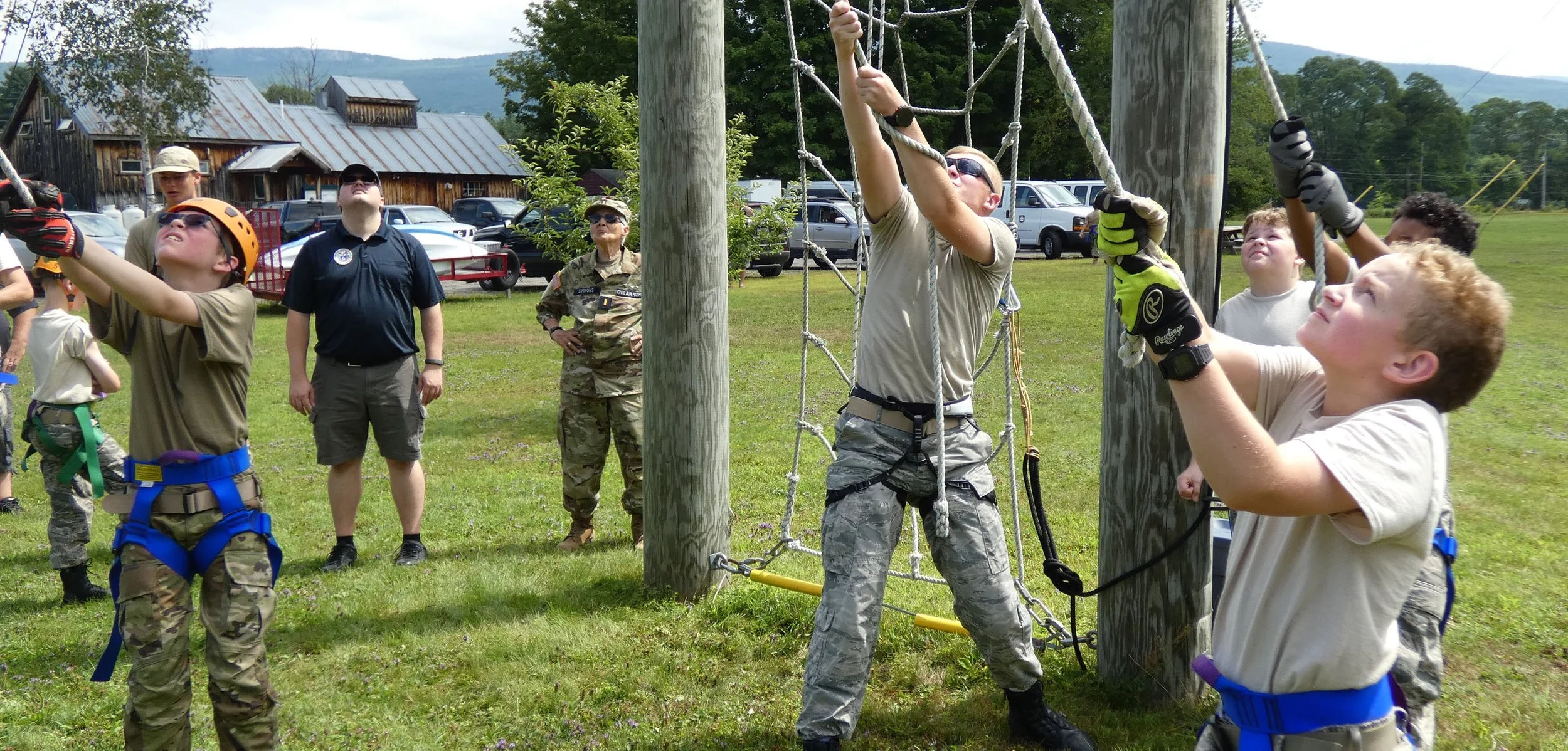
Members of three Civil Air Patrol Cadets Squadrons at work doing the ropes course at the Upper Valley Stewardship Center in East Haverhill. The students work on ropes that guide and belay other Cadets who are high atop the pole structures, accomplishing various aerial maneuvers to move from one station to another. The Bridge Weekly/Bernie Marvin.
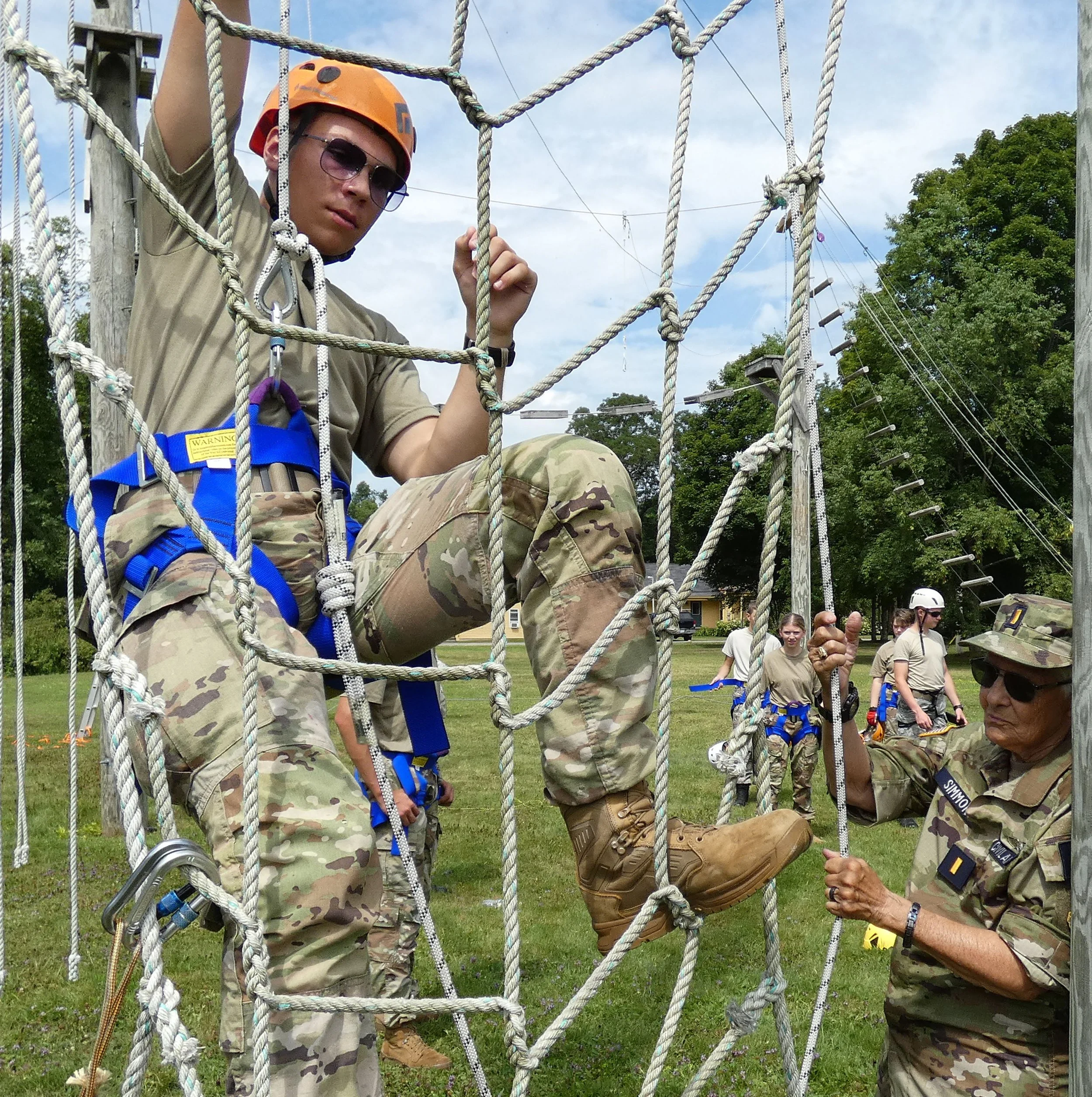
A Civil Air Cadet Instructor completes his session on the ropes course located in East Haverhill at the Upper Valley Stewardship Center. Checking his progress is the Squadron Commanding Officer, Captain Evelyn Chadwick, at right. The Bridge Weekly/Bernie Marvin.
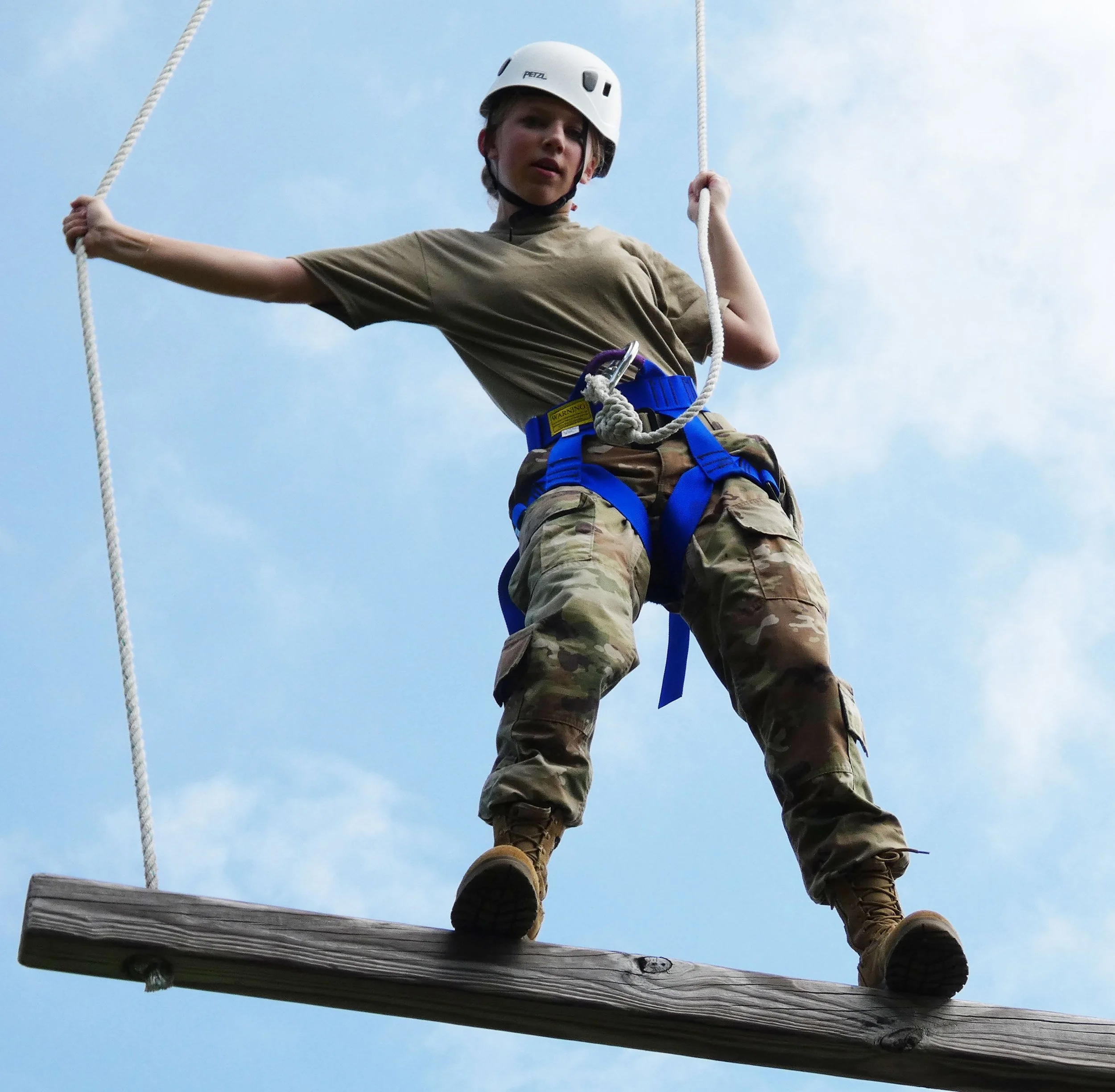
A tricky act of balance and confident ropes work are guiding this Civil Air Patrol Cadet onto her next station at the Upper Valley Stewardship Center Ropes Course, where three different Squadrons of Cadets trained on the course on a recent weekend. The Bridge Weekly/Bernie Marvin.
Big turnout for West Newbury Summer Festival events
There was plenty of activity on the perfect summer day. Throughout the area, visitors enjoyed the vendor booths, listening to several political candidates chat with voters, and hearing some great music by the group Counting by Sevens during the picnic session.
An interesting historical exhibit by the Newbury Historical Society was enjoyed at the one-room schoolhouse just down the road from the Hall.
Bernie Marvin
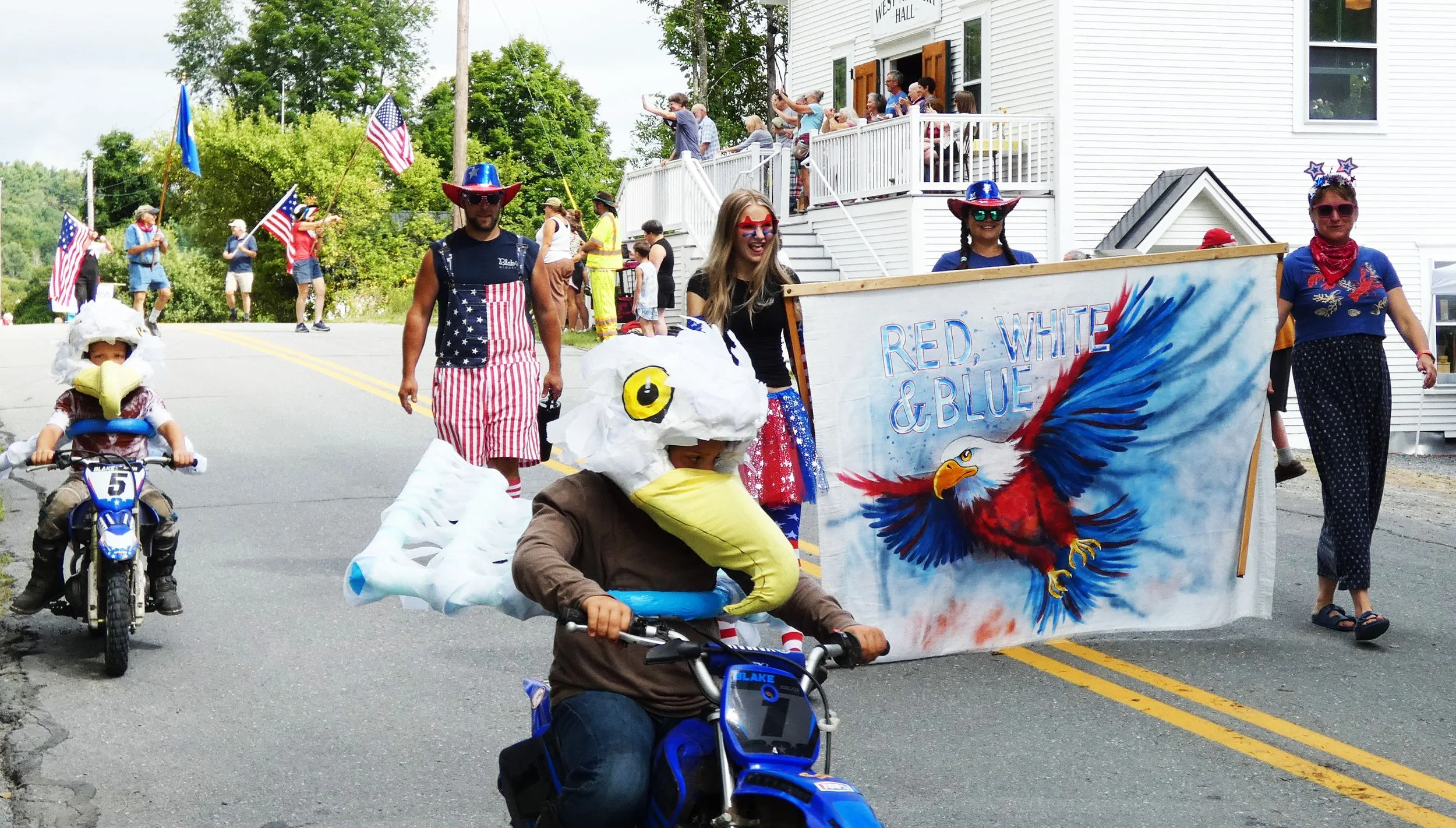
Banner carriers, at right and left, Elsie and Alison Kidder parade proudly in the before noon sunlight as they are flanked by others in the lead unit of the Summer Fest Parade. Seen at left are two baby eagles, Tucker and Burke as they circle about the group. Their mom, Betsy Blake created the parade banner and dad, Cortney Blake, are with them. The Blake family lives in West Newbury and Betsy have been making the parade banners for at least 10 years. The Bridge Weekly/Bernie Marvin
West Newbury, VT – On Saturday morning, August 8, 2026, you could hear the happy laughter of the kids, the neat drumrolls of the Summertime Marching Band, and the rumbles from those bright red Newbury Fire Department trucks as they rolled up Tyler Farm Road in another grand parade announcing that the West Newbury Summer Festival was in town.
And indeed, it was. From their usual huge White Elephant Sale and Silent Auction to the pulled-pork sandwich lunch, there was a day of warm-weather activity throughout the West Newbury Hall and church area.
There was plenty of activity on the perfect summer day. Throughout the area, visitors enjoyed the vendor booths, listening to several political candidates chat with voters, and hearing some great music by the group Counting by Sevens during the picnic session.
An interesting historical exhibit by the Newbury Historical Society was enjoyed at the one-room schoolhouse just down the road from the Hall.
Cathy Kidder told The Bridge Weekly that “this year was remarkable for the amount of buy in from our larger community. The three trucks from Newbury Fire Departments came, Newbury Women's Club, Newbury Recreation Committee, local Indivisible and Third Act Chapters, six candidates for House Rep and Senate, Court Street Arts, Clara Martin, EC Fiber, Old Church Theater Summer Youth Troupe all came, to join our regulars: the Summertime Marching Band from many points north, Window Dressers, Tenney Library, Wells River Savings Bank, and local makers and producers.”
And then there was “the tremendous support from local businesses and individuals for Silent Auction donations. We grossed over $9,200, but even better, the Festival brought together people and organizations from a wider area, working together for a common goal: to keep the West Newbury Hall a place where community is celebrated and, with our new elevator, a place that is truly open to all.”
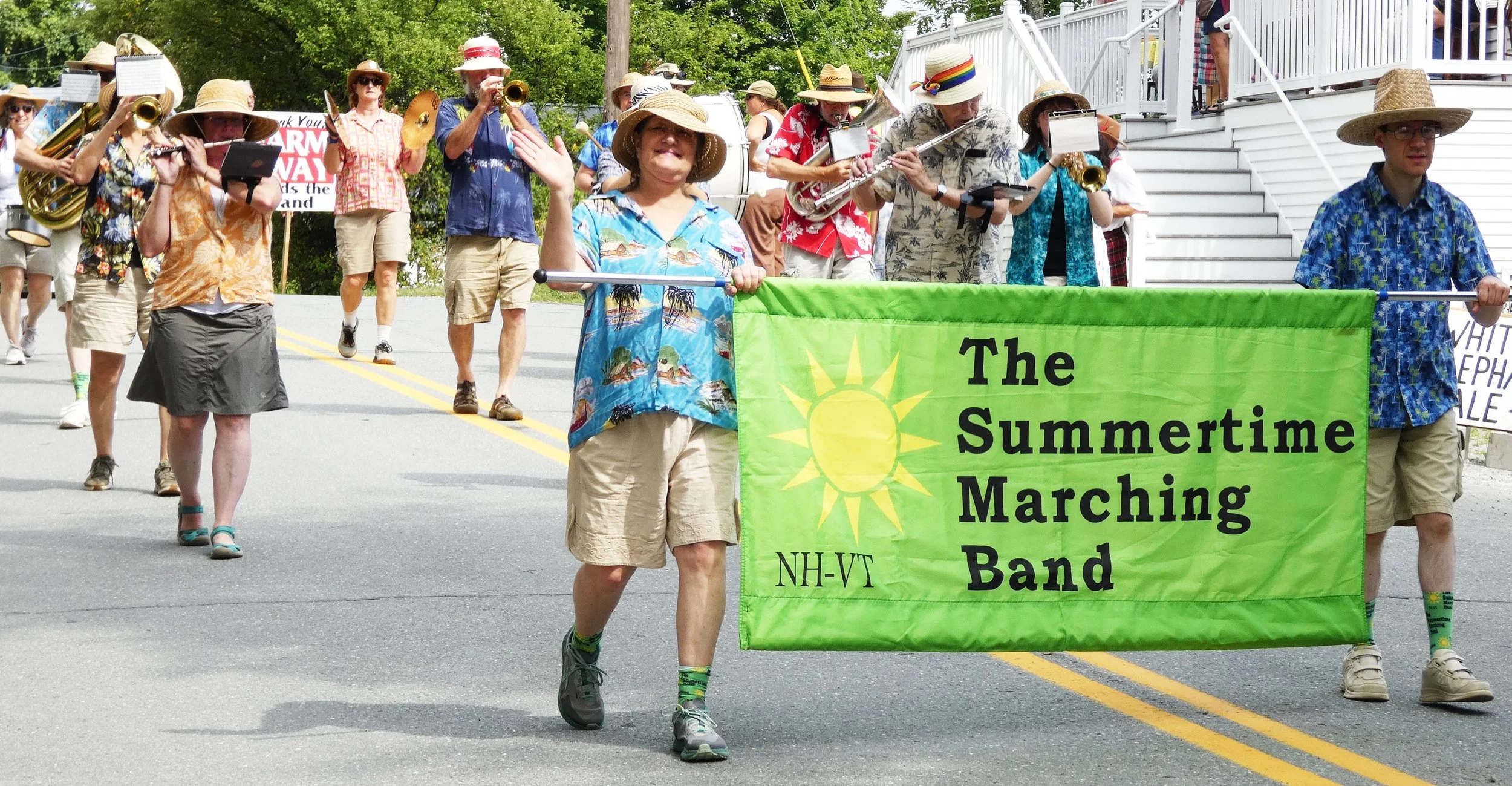
The Summertime Marching Band is always a hit at local parades and ceremonies. One thing the crowds love is that this spirited group marches. They are all in step and have been drawing rave reviews for many years. Always the favorite part of any parade! The Bridge Weekly/Bernie Marvin.
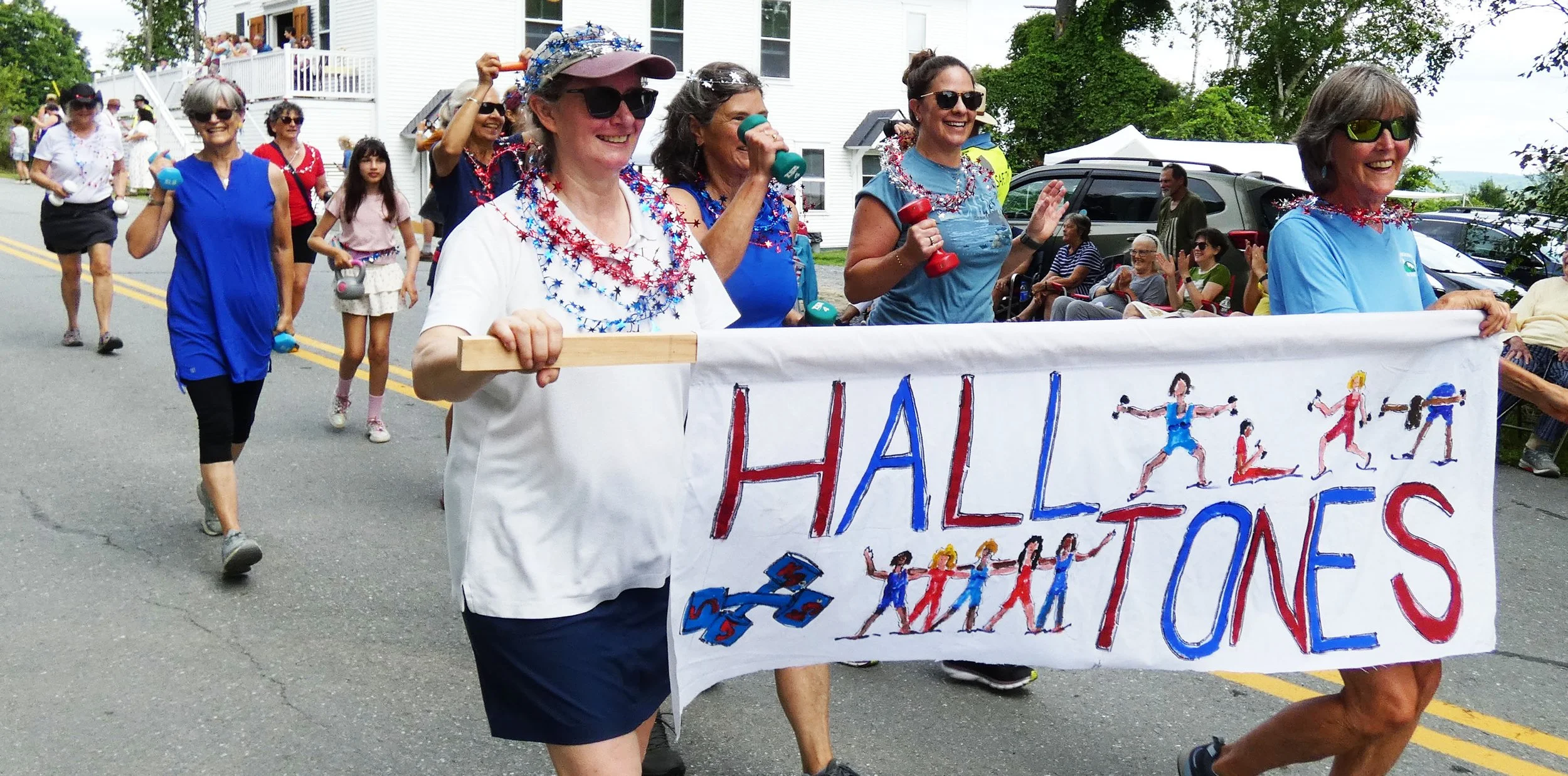
The Hall Tones are a homegrown strength training class held twice weekly at West Newbury Hall and led by Carolyn Marsh, seen 2nd from left. Holding the banner are, left, Laurie Williams and Caroline Nininger. The Bridge Weekly/Bernie Marvin.
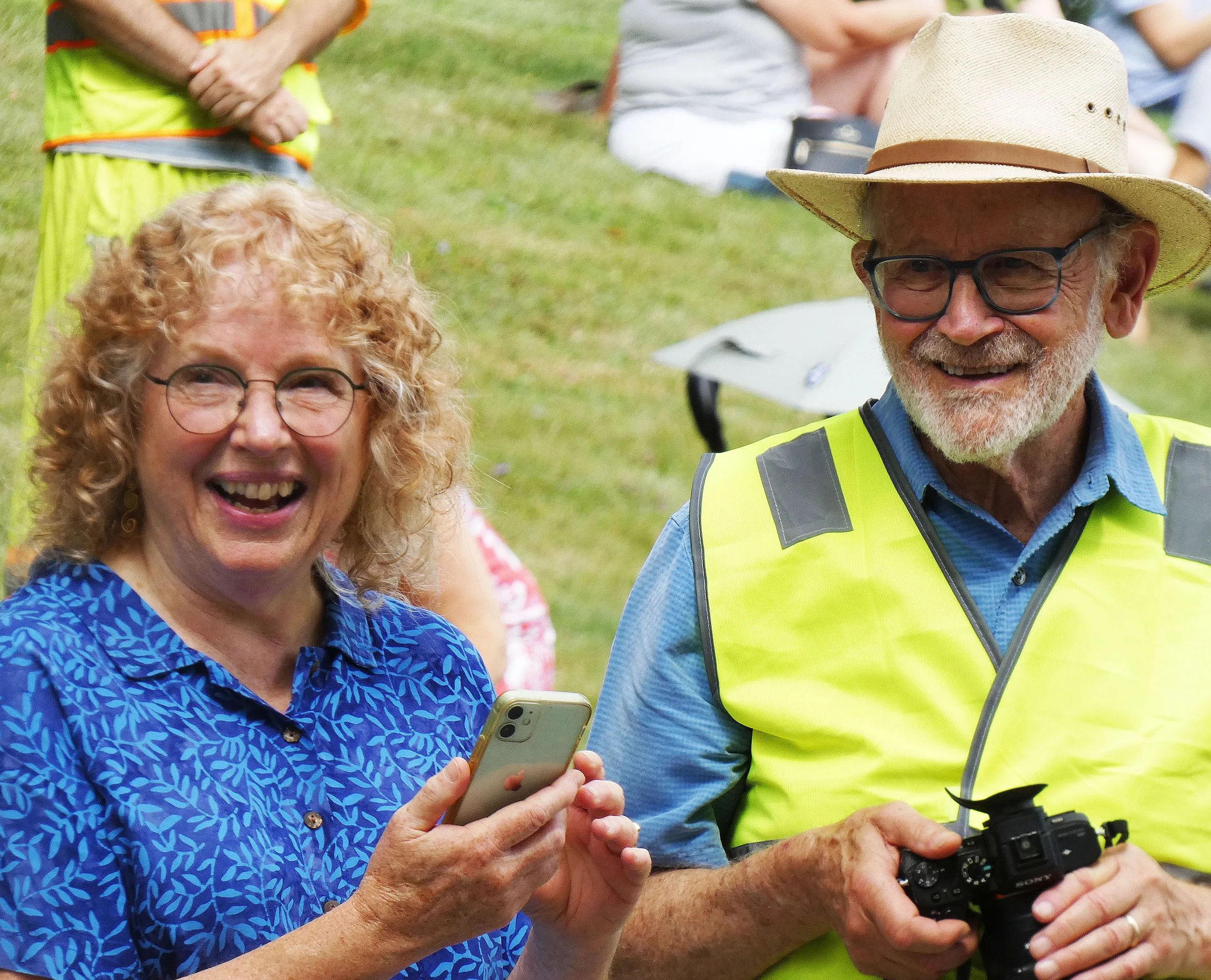
Cathy and Tom Kidder, who do so much to make the West Newbury Festival such an annual success. They also help with many other events, too! Thanks to you two!! The Bridge Weekly/Bernie Marvin
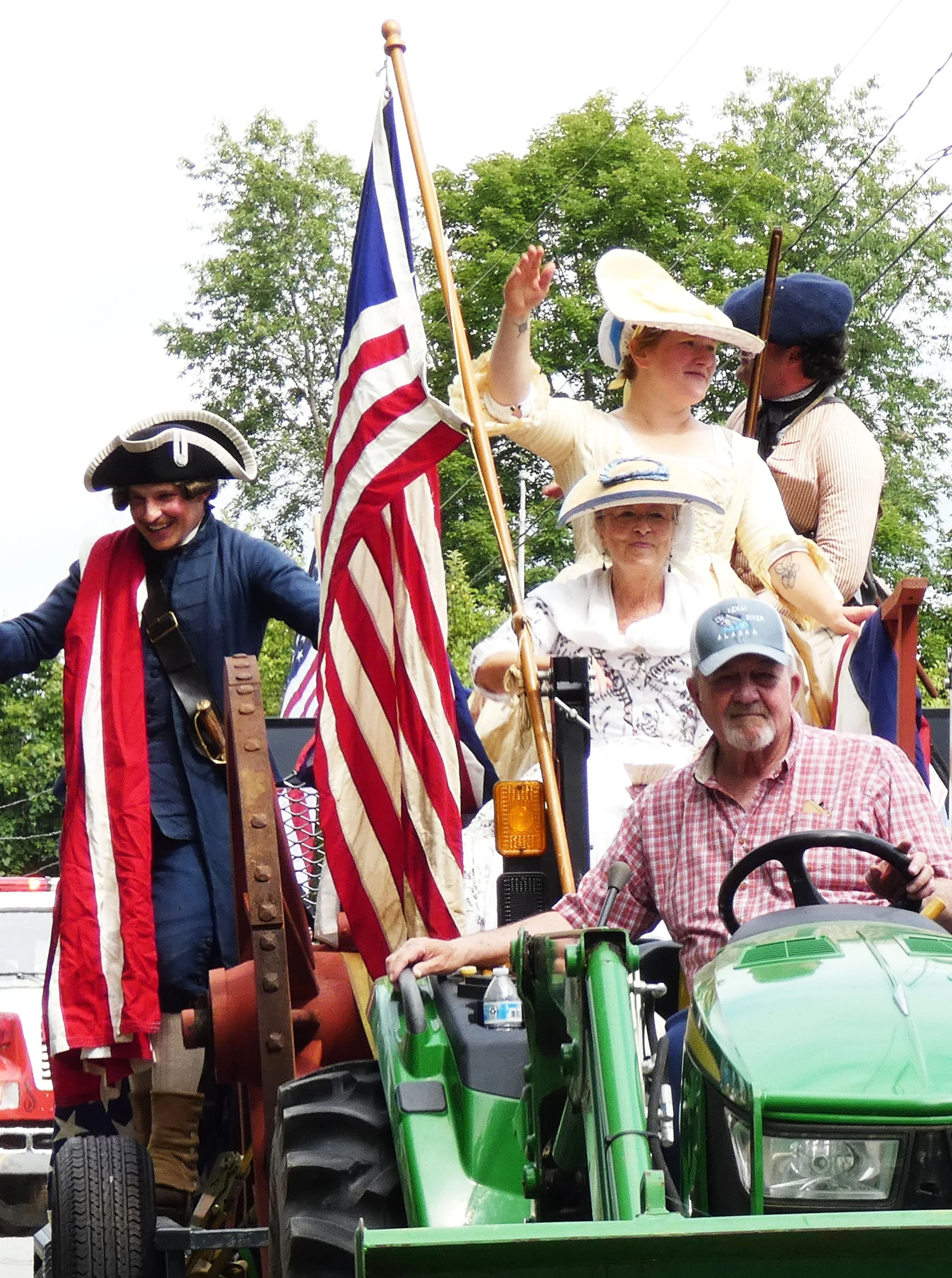
The 250 group is an outgrowth of the Backroad Warriors trivia team of West Newbury folks and friends. Adam and Esther Hodge-LeClair, of Haverhill Corner but currently residing in West Newbury, are reenactors with an extensive collection of period clothing they're happy to share, as well as an antique ox cart (on a trailer pulled by a tractor). Left to right are Gavin Cole, Lisa Jones, Esther Hodge-LeClair, Steve Cole (driving), Adam Hodge-LeClair. The Bridge Weekly/Bernie Marvin
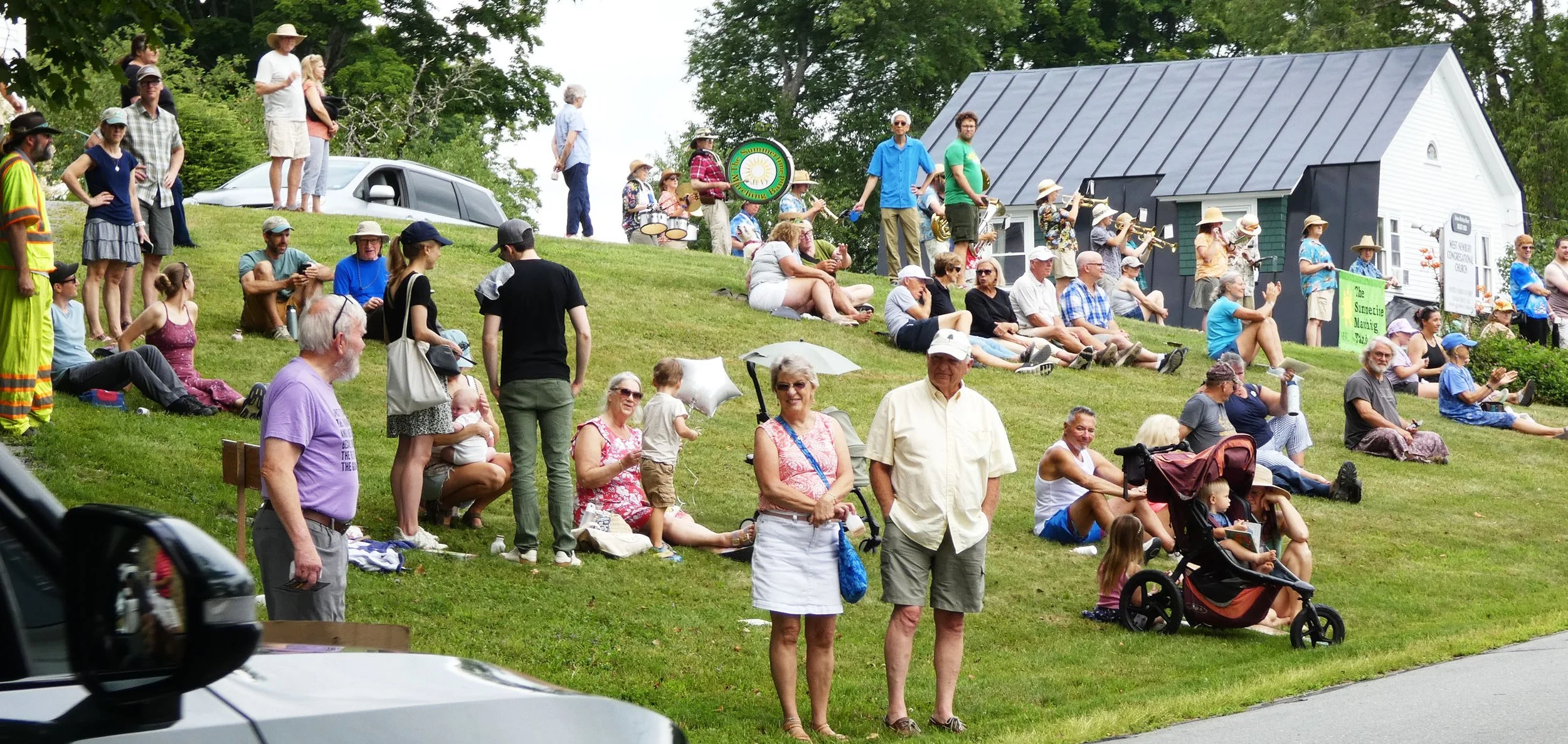
Lounging on the lawn in front of the West Newbury Congregational Church has always been the pastime when the annual West Newbury Summer Festival parade passes by. The Bridge Weekly/Bernie Marvin
19th Annual Mikey Williams Soccer Game: Alumni Leading The Assist
Mikey was 26 years old when he lost his life in a 2006 car accident. Turning grief into purpose, Dave partnered with teammate Matt Ackerman and Coach Ackerman to launch the inaugural Mikey Williams Alumni Soccer Game in August of 2007. With full support from Mikey’s parents, Bob and Darlene, the annual match-up honors his passion for soccer and his love of people.
By Trish Griswold
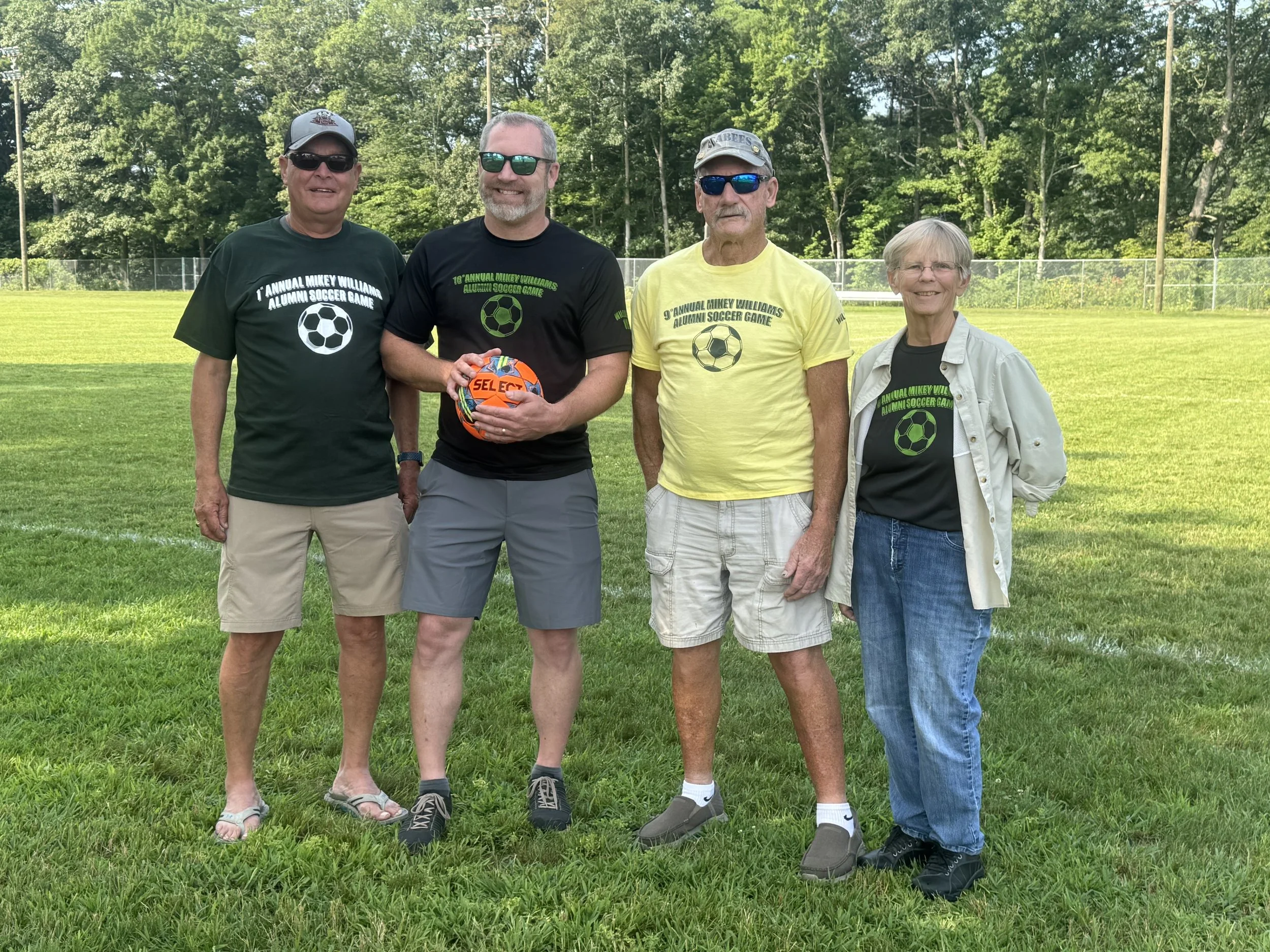
Twenty years ago, the inaugural Mikey Williams Alumni Soccer Game kicked off on King’s Plain in memory of the late Michael “Mikey” Williams. This year marks the 19th annual game, as the event was cancelled in 2020 due to the COVID-19 pandemic. Founders of this memorial fundraiser (L-R) include Mike Ackerman, Dave Robinson, Bob Williams, and Darlene Williams. Missing: Matt Ackerman. TBWS/Trish Griswold
Woodsville, NH—Mikey Williams was a standout soccer player at Woodsville High School (WHS). A four-year varsity player, the outside fullback anchored his team’s defense, helping guide the Engineers to a semi-final bid under the tutelage of Coach Mike Ackerman. Known for his speed, tenacity, and incredible work ethic, Mikey’s prowess on the soccer field earned him the respect of both his teammates and his opponents.
“Soccer meant everything to Mikey,” his mom, Darlene, fondly recalls. “He had a hard time in school. It was a challenge for him academically, but soccer made him feel important. That’s where he shined.”
The fervor and intensity Mikey showcased on the soccer field was a mirror image of his passion for people and for life. Known as an adventure-seeker, Mikey lived life to the fullest. “He was one of those bigger-than-life type of human beings. He was always up for an adventure, and he cared about every human being around him,” remarks Dave Robinson, Mikey’s best friend and teammate. “Everybody loved Mikey. He was just one of those people that everybody gravitated toward. He didn’t judge anybody. He made people who weren’t friends, friends. Mikey brought people together. That was just his personality.”
Mikey was 26 years old when he lost his life in a 2006 car accident. Turning grief into purpose, Dave partnered with teammate Matt Ackerman and Coach Ackerman to launch the inaugural Mikey Williams Alumni Soccer Game in August of 2007. With full support from Mikey’s parents, Bob and Darlene, the annual match-up honors his passion for soccer and his love of people.
According to Dave, the event began as a single contest between WHS alumni and the WHS boys’ soccer team. Within a few years, however, former girls’ soccer coach Ann Loud rallied enough players to add a separate alumni game against the WHS girls’ team. While the event traditionally took place on the last Saturday in August, last year marked a historic shift when games were played under the lights on King’s Plain. The lights, Darlene explains, were paid for through the Mikey Williams Memorial Fund, a 501(c)(3) non-profit organization established to provide financial support for local athletes. “I have been watching soccer on this field since 1960, and it’s always been a dream of the soccer community to have lights here.”
The force behind all of this, Darlene says, is Dave Robinson. “He’s got it down to a science, and he’s done such a wonderful job. He was such a good friend to Mike. That whole crowd of boys—Michael, David, Jason [Roy], and the Ackerman boys [Matt and Ryan]—that whole group, they stayed friends forever, and a lot of it was from growing up playing soccer, being included, and being with the same people. No matter what their ability was in school, they were equal on the field.”
Classmates, family, friends, and community members come from miles away each year to share stories, celebrate Mikey’s legacy, and raise funds to support future generations of athletes, linking the WHS soccer program – past, present, and future. Local businesses generously donate food items for the concession stand as well as gift certificates and other items for a basket raffle. The funds raised through concession sales, 50/50 raffles, basket raffles, and direct donations help provide scholarships for local athletes who wish to attend individual or team camps/clinics, such as Team Week, a weeklong soccer camp hosted by Keene State College.
“Fundraising efforts have ignited opportunities for soccer players, including attending soccer camp. This year, nine players from the girls’ soccer program attended camp in efforts to, what we hope, will reestablish the tradition in years to come,” remarks WHS girls’ soccer coach Sara Lang. “Many thanks to the family of Mikey, who not only strive to keep his memory alive but also support our youth in his honor.”
“This event is about the sport itself, but it’s also about community. It’s about how the community rallies around each other and around something we care about,” Dave adds, explaining that extracurricular activities, such as athletics, band, chorus, etc., can play an important role in a child’s life. “While you can learn in the classroom, [extra-curriculars] teach things that go to the next level. It is leadership, integrity, teamwork… all the things you need in the real world to succeed.”
The 19th Annual Mikey Williams Alumni Soccer Game will be held this Saturday, August 22, under lights on King’s Plain. The men’s game is slated to begin at 6:00 pm, followed by the women’s game at 8:00 pm. For more information or to make a donation, please contact Dave Robinson via email at drobinson3314@gmail.com or by phone at (603) 359-9330. Youth interested in applying for a scholarship should contact WHS Athletic Director Lori Taylor at (603) 747-2781 or ltaylor@sau23.org.
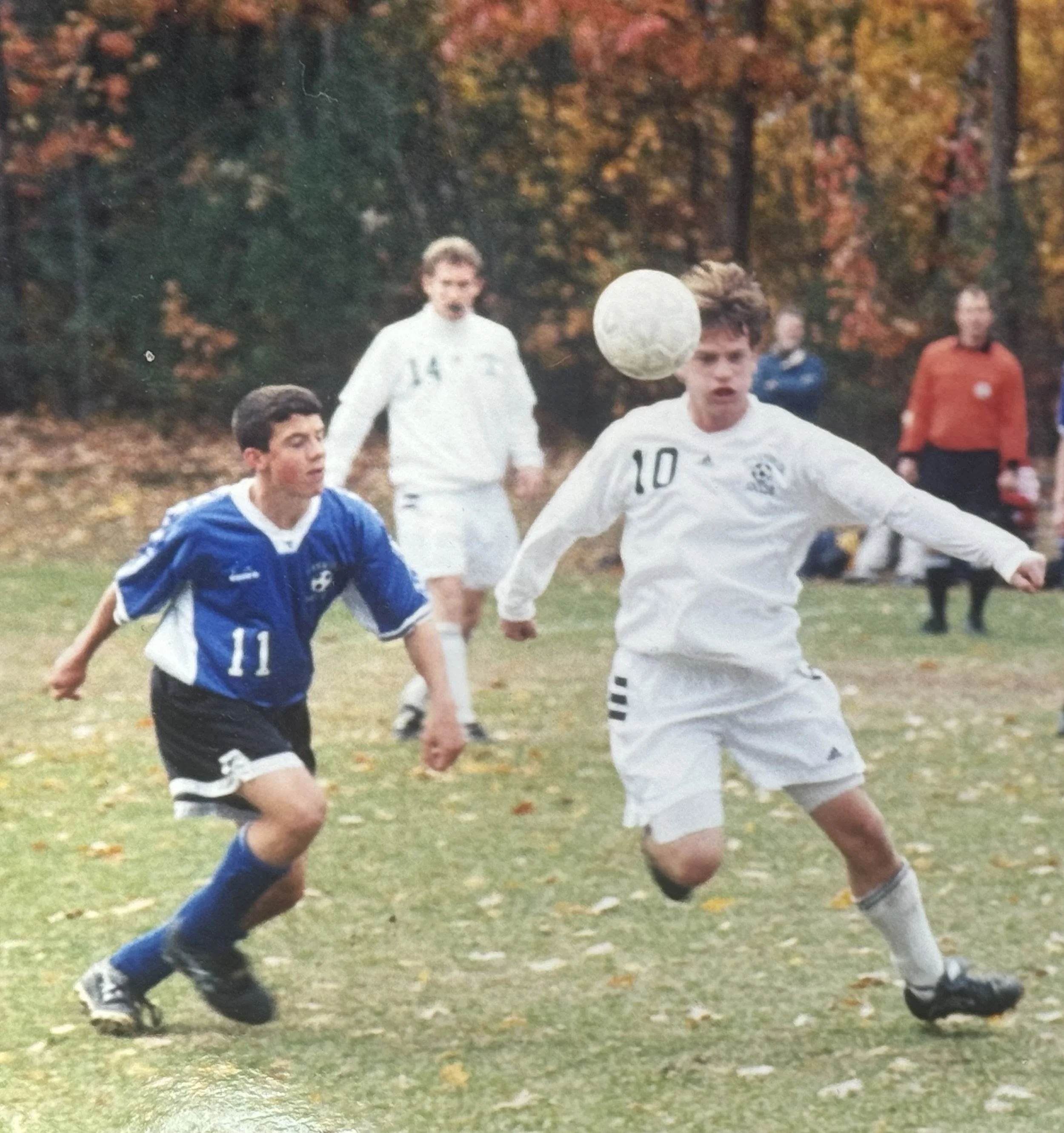
Mikey Williams, seen in his #10 jersey, gave his all every time he stepped on the soccer field. “Mikey played 100% every single practice and game,” Coach Ackerman recalls. “I made him and Dave Robinson captains their senior year because of their work ethic.” - Courtesy photo
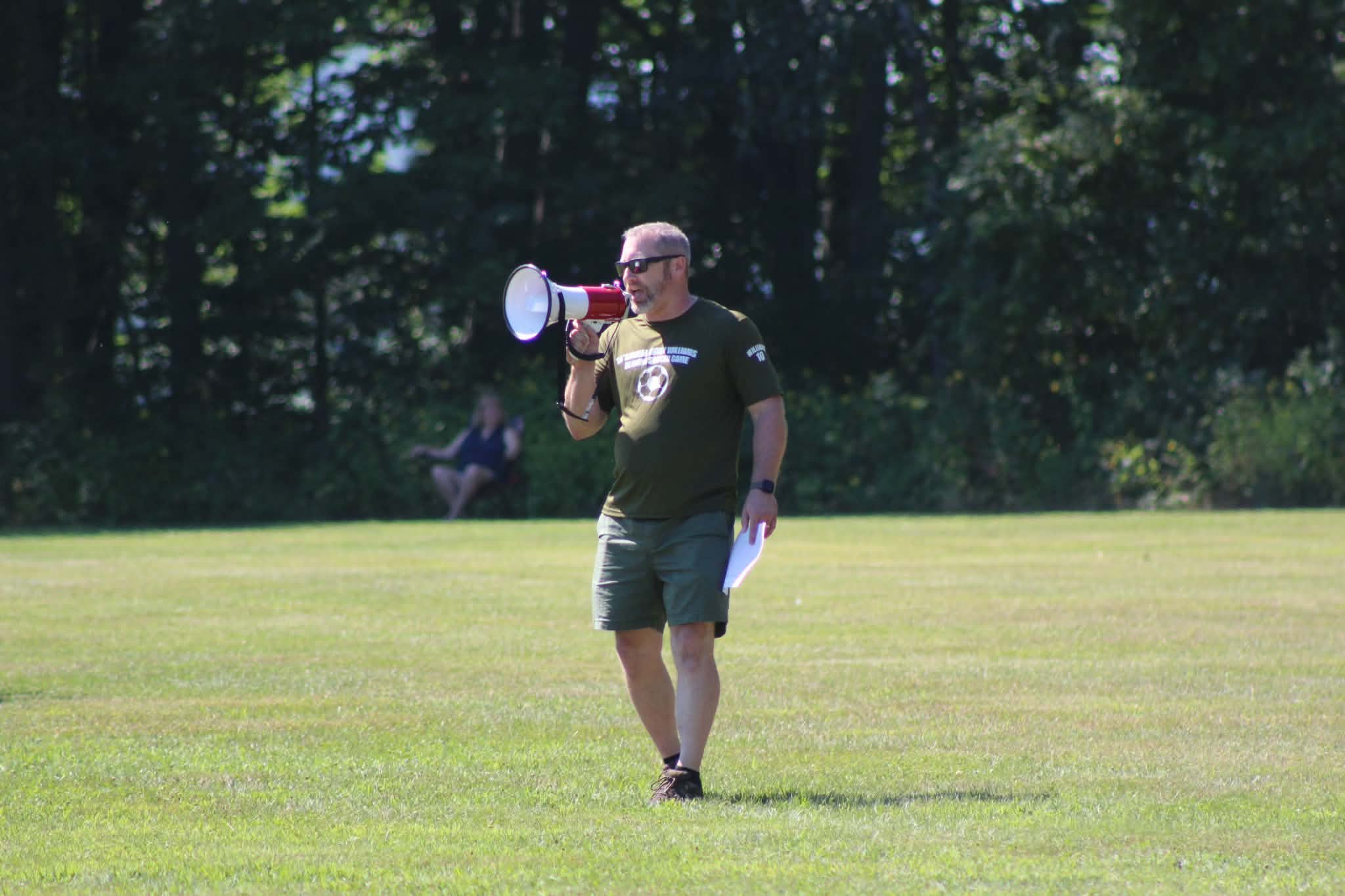
Dave Robinson has spearheaded the Mikey Williams fundraising event since its inception in 2007, doing all of the legwork behind the scenes. “He has done a super job,” Coach Ackerman says, applauding Dave’s commitment. Other volunteers include Regis Roy, Jason Roy, Ashley Roy, Amanda Roy, Zach Smith, Mindy Lusby, Ashlee Robinson, Dave Robinson, Sr., Sara Lang, and the Williams family. -Courtesy photo
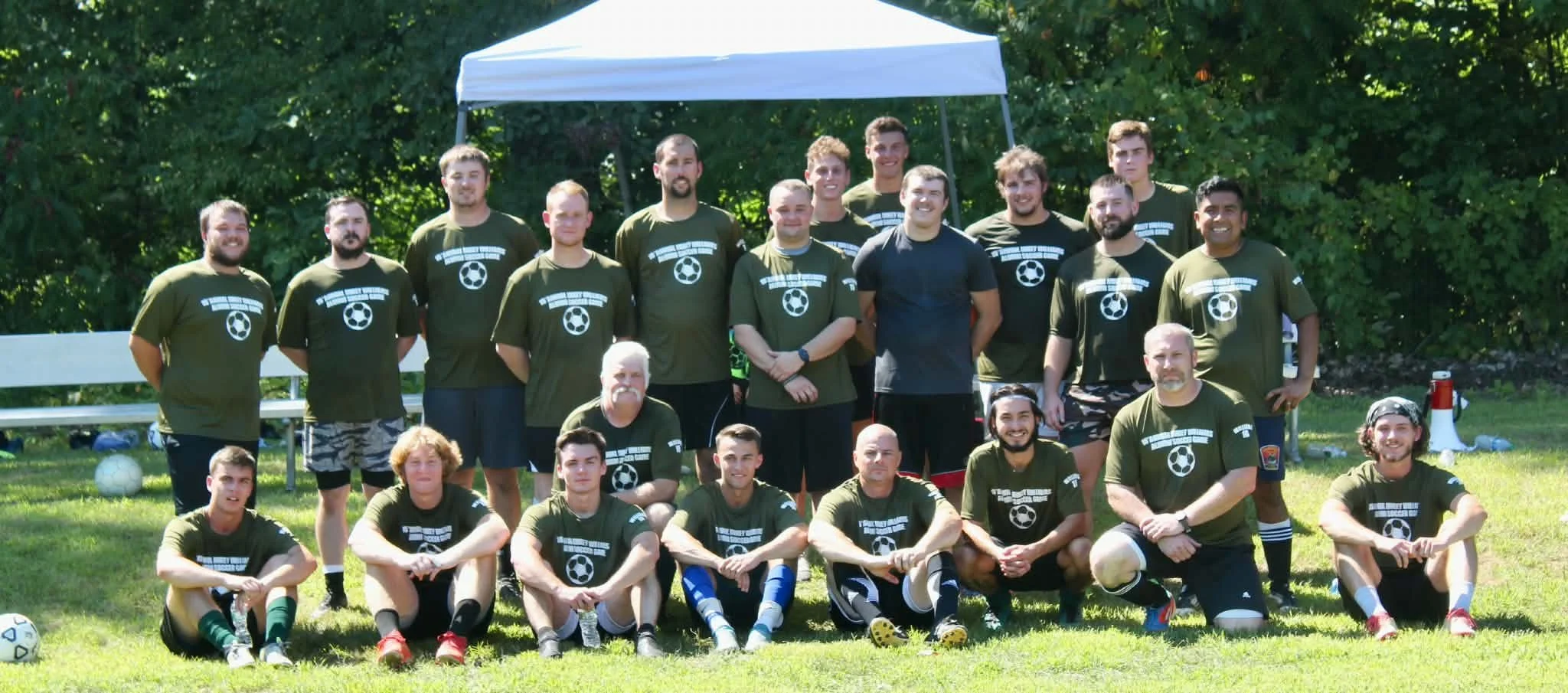
Alumni gather for a team photo prior to the start of the 15th Annual Mikey Williams Alumni Soccer Game. - Courtesy photo
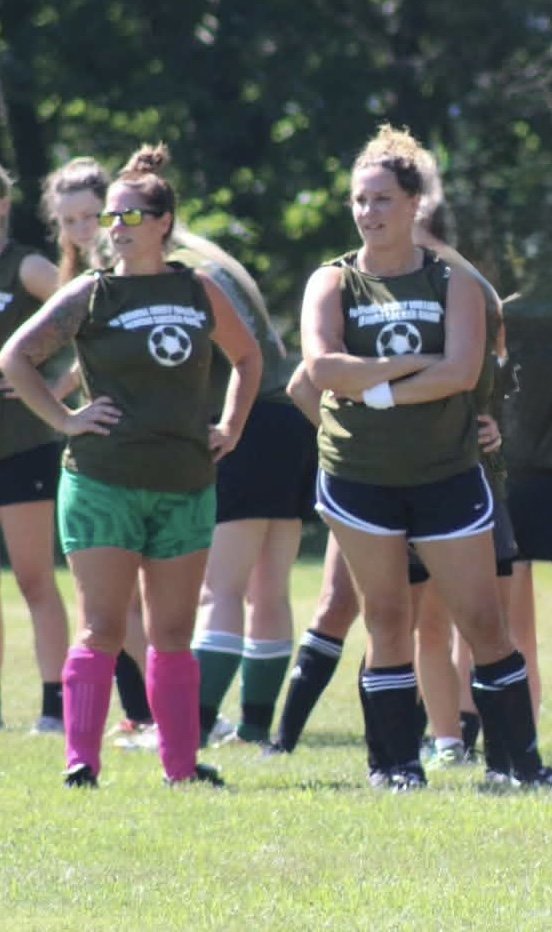
Mikey’s sister, Dana Williams (L), Class of 1997, and Sarah Lyons-Duncan, Class of 1998, talk strategy prior to the start of the 15th Annual Mikey Williams Alumni Soccer Game. - Courtesy photo
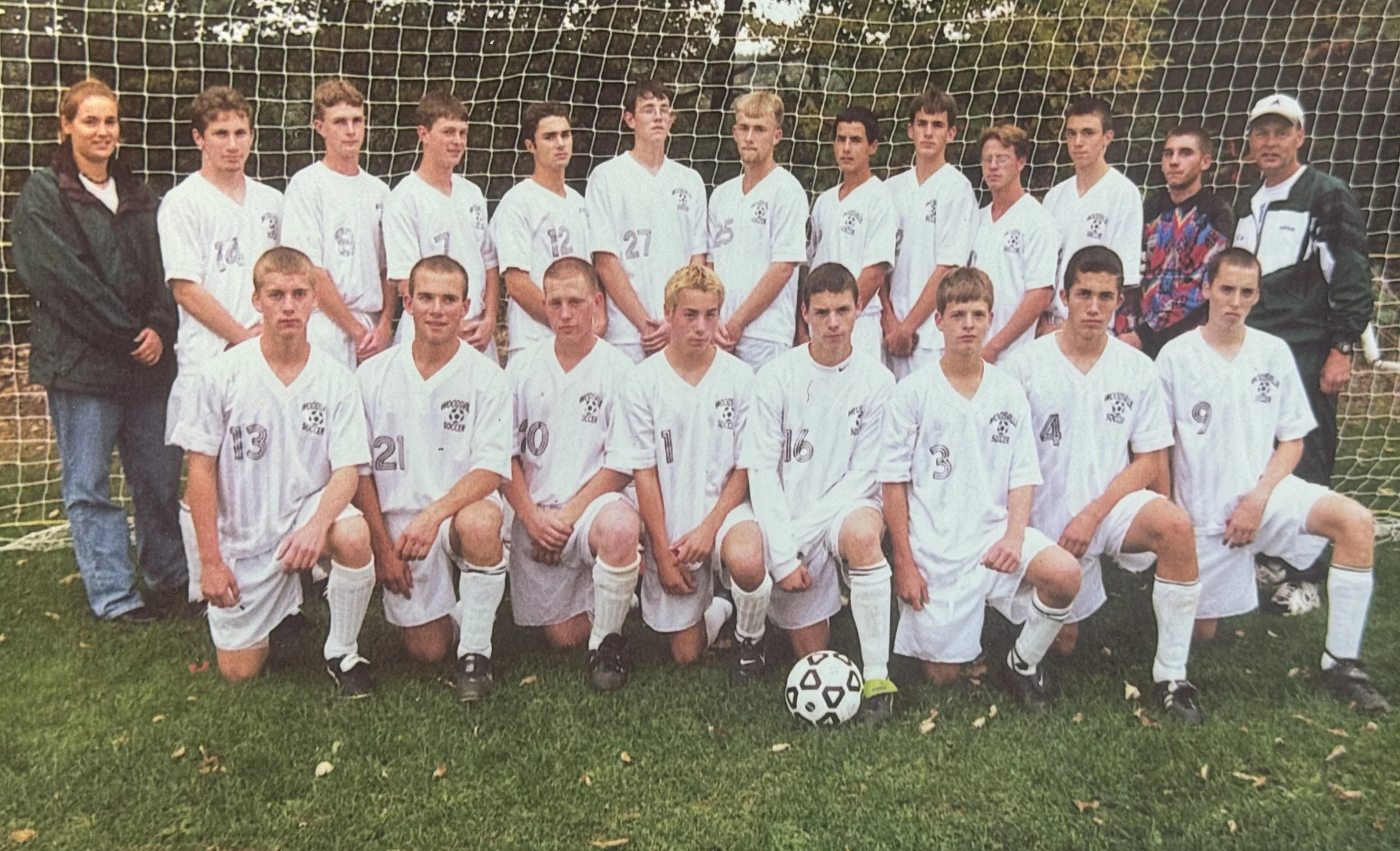
The 1998 WHS varsity soccer team included teammates Mikey Williams and Dave Robinson. The Engineers lost in the semi-finals that year but had a stellar season. - Courtesy photo
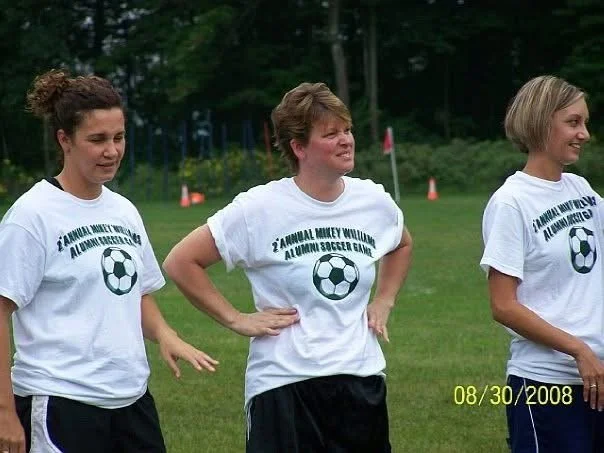
“The Mikey Williams alumni game has become a hallmark in our community,” Sara Lang says. “Over time it has evolved to mark a remembrance dear to us all but also serve as a kickoff to the fall seasons in a way that brings our community together.” Pictured (L-R) are Sarah Lyons-Duncan, Lorie-Ann Noyes, and Sara Lang. - Courtesy photo
Girouard Family Breathes New Life Into Bath’s Historic Brick Store
Built in the early 1800s, The Brick Store has been a fixture in the Bath community for nearly two centuries. Operating as a general store, which also housed the town’s post office until 1943, The Brick Store has served as a social hub for generations. The store closed in 2021 due to the COVID-19 pandemic and was vacant until April of this year, when the Girouard Family reopened its doors, breathing new life into this iconic North Country landmark.
By Trish Griswold
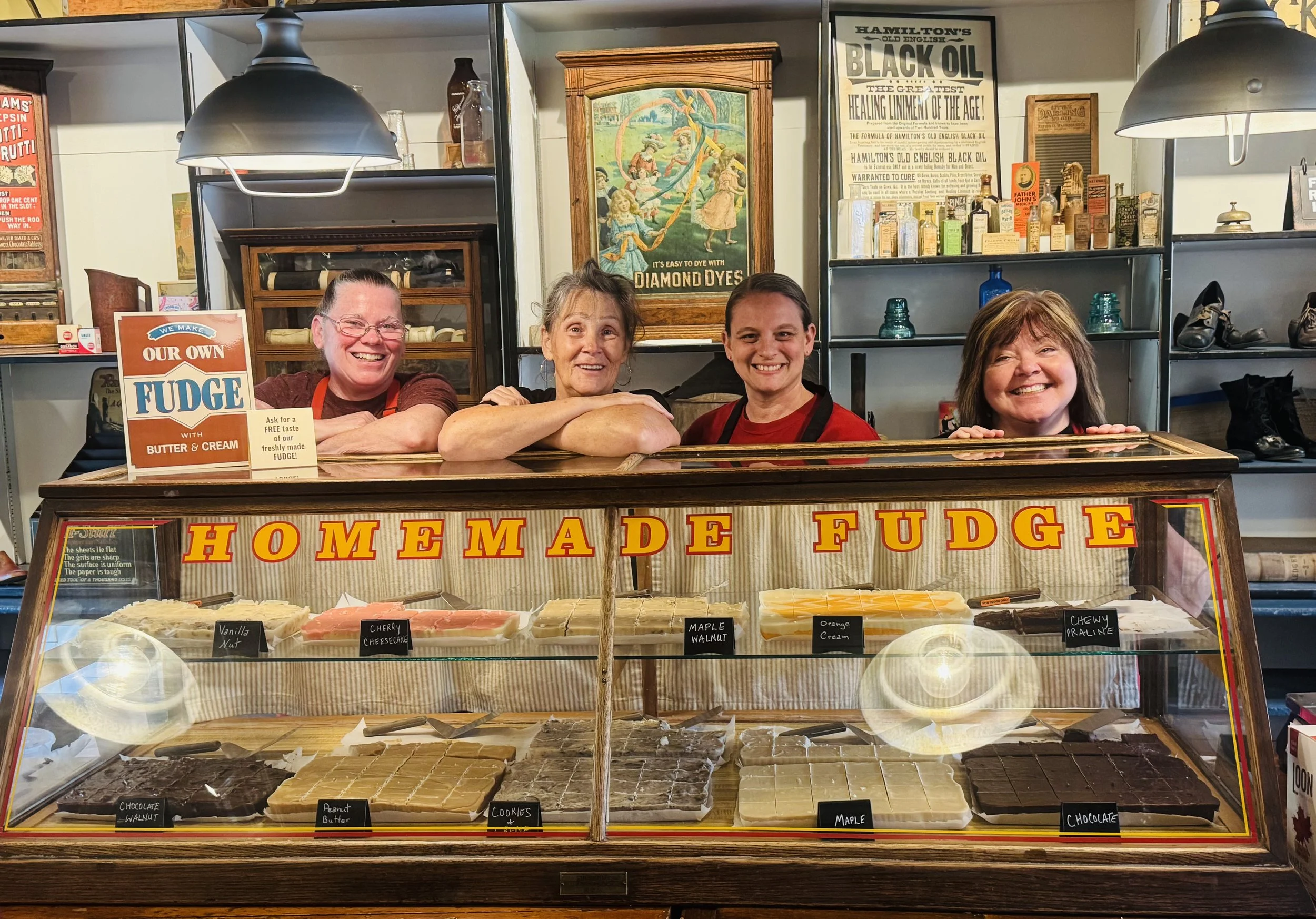
Kelly Nelson, Jeanne Corbinand, Elisabeth Girouard, and Monica Stapleton (L-R) are four of the friendly faces you might see behind The Brick Store’s fully stocked fudge counter. Using former owner Nancy Lusby’s famed recipe, the store offers a variety of fudge options from classic peanut butter and chocolate to more unique and/or seasonal flavors, such as cherry cheesecake and orange cream. TBWS/Trish Griswold
Bath, NH - Built in the early 1800s, The Brick Store has been a fixture in the Bath community for nearly two centuries. Operating as a general store, which also housed the town’s post office until 1943, The Brick Store has served as a social hub for generations. The store closed in 2021 due to the COVID-19 pandemic and was vacant until April of this year, when the Girouard Family reopened its doors, breathing new life into this iconic North Country landmark.
“I think about what the general store was 200 years ago. It was a place for people to gather and connect as a community. It was a place of provision and steadiness,” remarks Elisabeth Girouard, who recently purchased the store, together with her husband, Paul. “Over the last several years, that has not been the case here. We have lost that on this corner, and we really desire to bring that back.”
For the past seven years, the Girouard Family has left their Burlington, MA, home to spend their summer vacations at Twin River Campground, just one mile from The Brick Store at the corner of US Route 10 and NH Route 112. Each year, the Girouards were saddened to see that the store remained closed. Elisabeth’s vision for reviving The Brick Store evolved from there.
“Retail is new for us,” states Elisabeth, who has a degree in sociology and years of experience in business operations, graphic design, and photography. “We felt like this place needed to be saved. Somebody needed to do it, and we wanted to take that step of faith. We said, ‘Let’s try it,’ not just for our family because we wanted to live here, but for Bath. We wanted to give the store back to Bath.”
The past few months have been a learning curve for the Girouards as they talk with customers about the products they would like to see in the store. “We really want to find a balance between serving the tourists, of course, because we need that to keep the store open but also being a place for the locals to stop and not have to travel all the way to Woodsville or Lisbon.”
In response to countless requests, the Girouards have brought back a few signature items, including homemade fudge, smoked cheeses, and smoked meats. Elisabeth says that former owners Mike and Nancy Lusby have been incredibly kind and generous in supporting them with their new business venture.
“Nancy offered them the same advice that we received from a previous owner when we bought the store in 1992,” Mike explains. “Doris Whitcomb, a member of the Armstrong family, said that each new owner puts their own stamp on the store, making it their own, and that's just how it should be. We always strove to honor the traditions of the store while adding our own touches. I would say that, having met with Liz and Paul, we are so happy that they are the ones taking over the responsibility and tradition of owning the store. The village has been so dead, not having the store thriving, so it's wonderful seeing it come to life again.”
In fact, the Lusbys have shared their recipes, vendors, and product lines with the Girouards. Elisabeth is using Nancy’s famed fudge recipe to stock the display with various options from traditional chocolate and peanut butter to more modern flavors, like cookies and cream, orange cream, and cherry cheesecake. Their smoked cheese is also proving to be a hot commodity. Paul smoked 10 lbs. one day, and it was sold out two days later. The specific brand of pepperoni the Lusbys used, however, has been difficult to source. The Girouards have ordered a few samples, and if everything works out, they’ll have smoked pepperoni on the shelves within a week or so. “We’ve been told we aren’t The Brick Store without the smoked goods,” Elisabeth jokes.
Other homemade foods prepared by Elisabeth and her mother-in-law with the help of a few staff include breakfast sandwiches, muffins, donuts, cookies, and lunch sandwiches. The store is stocked with dairy products and shelf-stable grocery items, such as bread, jams, condiments, toilet paper, and freshly ground nut butters. Their New Hampshire-sourced products and memorabilia, including mugs, t-shirts, magnets, keychains, and old-time games, make wonderful gifts and collectibles. New to the store are fresh flower bouquets made by Bath resident Tina Comstock. “I would love to connect with local farms and get some fresh produce too,” Elisabeth says. “I’m still working on the best way to do that.”
The Brick Store will be open year-round from 7:00 am to 7:00 pm Monday through Saturday. They are proud to announce a loyalty program that offers patrons $5.00 off their purchase for every 10 visits. Their ice cream shop, known as The Creamery, will also reopen on Friday, August 7th. They will serve hard and soft ice cream cones as well as floats and sundaes. The Creamery will be open from 11:00 am to 9:00 pm Monday through Saturday.
Stop by The Brick Store or give the Girouards a call at (603) 991-1716. They welcome your support in honoring the store’s heritage and ensuring that it continues to serve the community for generations.
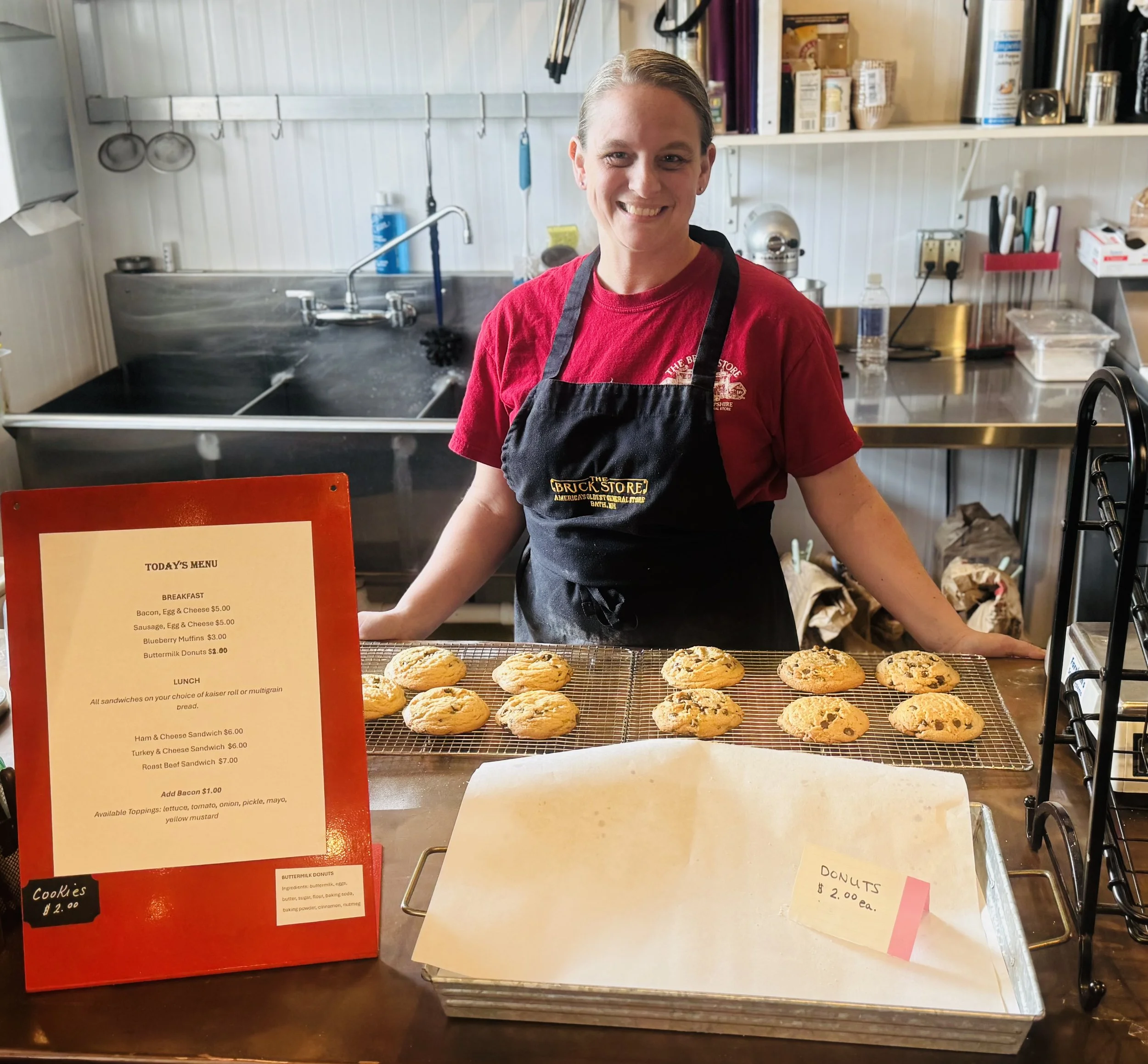
Elisabeth Girouard, new owner of The Brick Store, removes a batch of freshly baked chocolate chip cookies from the oven. Elisabeth and her husband, Paul, purchased the business earlier this year. Together with their four children, the Girouards are reviving the century-old historic store that has been dormant for the past five years. TBWS/Trish Griswold
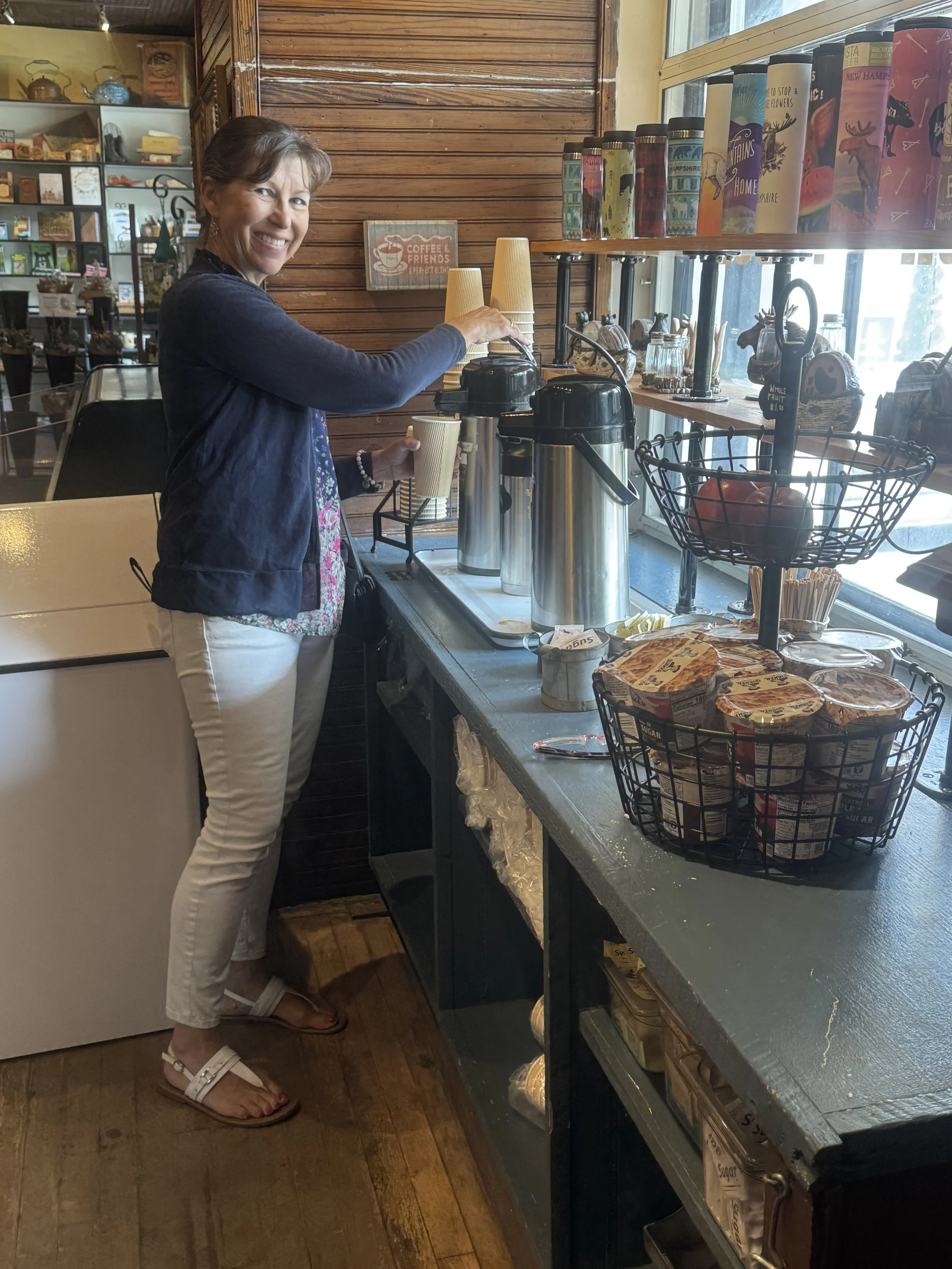
On her way through town, Sandy Parker, owner of Cottage Creations in Woodsville, stops by The Brick Store to make a cup of freshly brewed coffee to go. TBWS/Trish Griswold
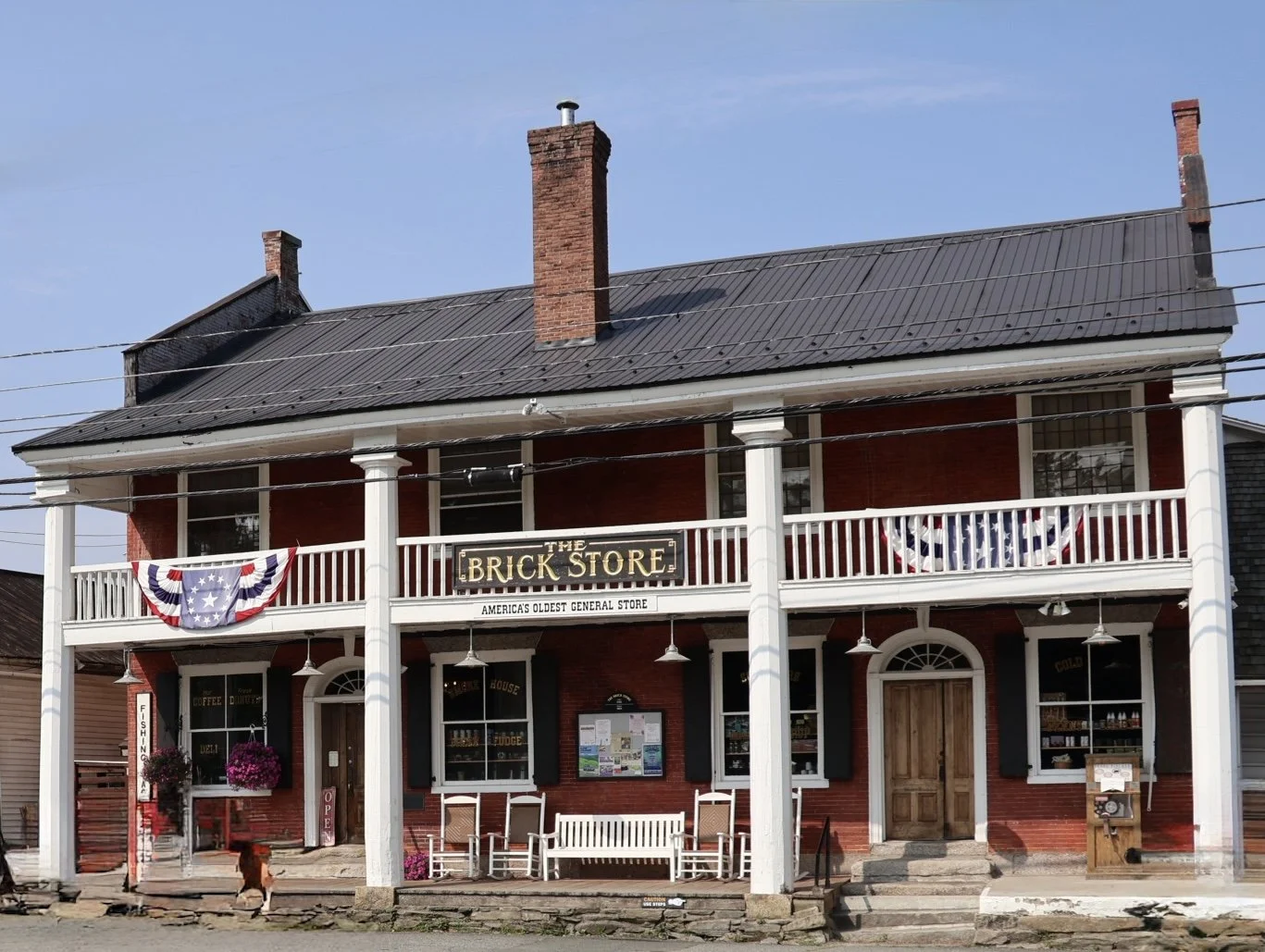
Built in the early 1800s, The Brick Store has served as a community hub for generations. Its proud new owners, the Girouard Family, hope to safeguard the store’s timeless charm and heritage as a general store while introducing new products and giving it their own personal touch. TBWS/Trish Griswold
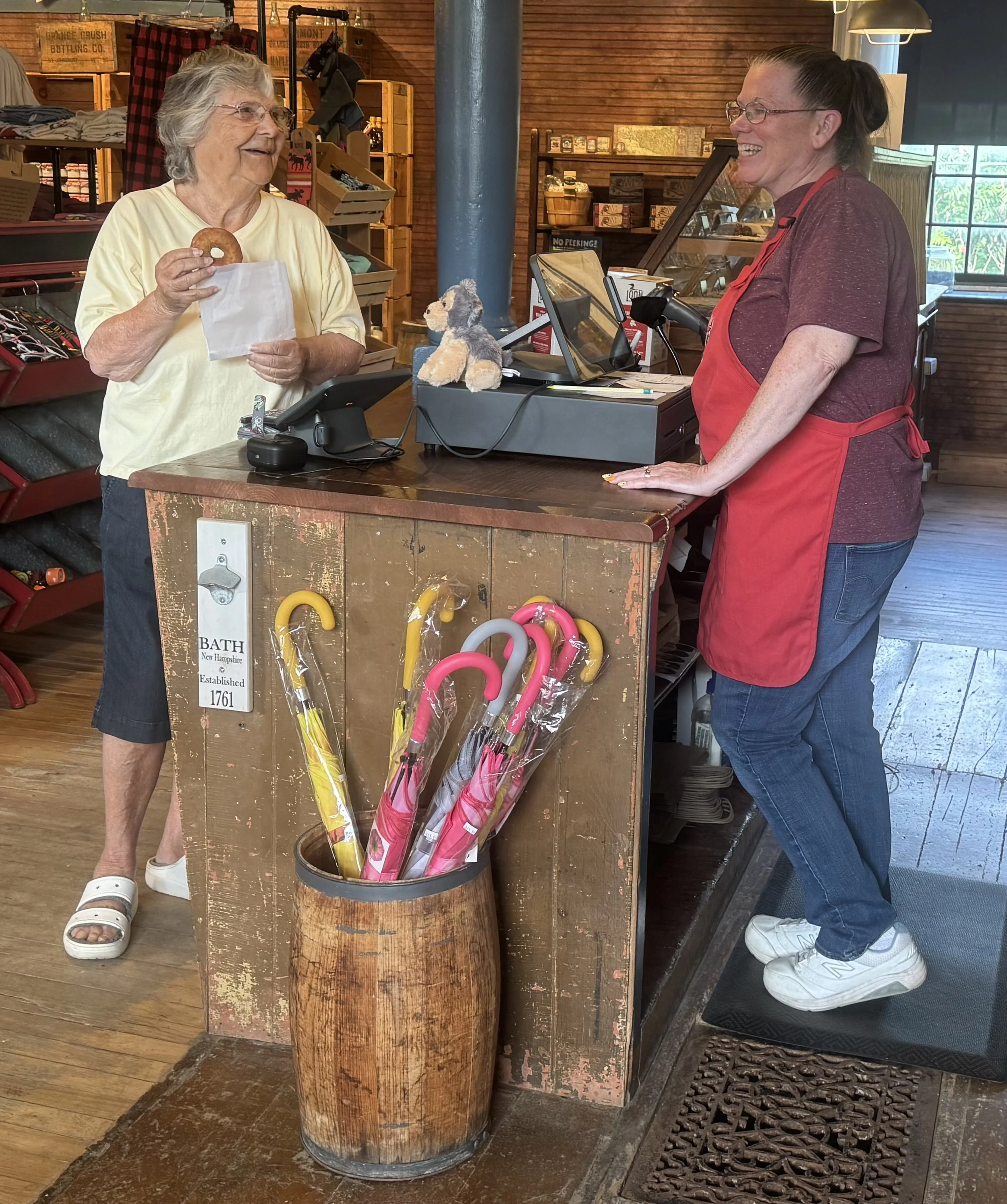
Cashier Kelly Nelson (R) chats with June Paige, of Lisbon, who stopped by last week to purchase a homemade old-fashioned donut—her favorite. “People don’t make donuts the way they used to,” June says. “[The Brick Store] has been closed for too long. I certainly hope they continue to do well.” TBWS/Trish Griswold
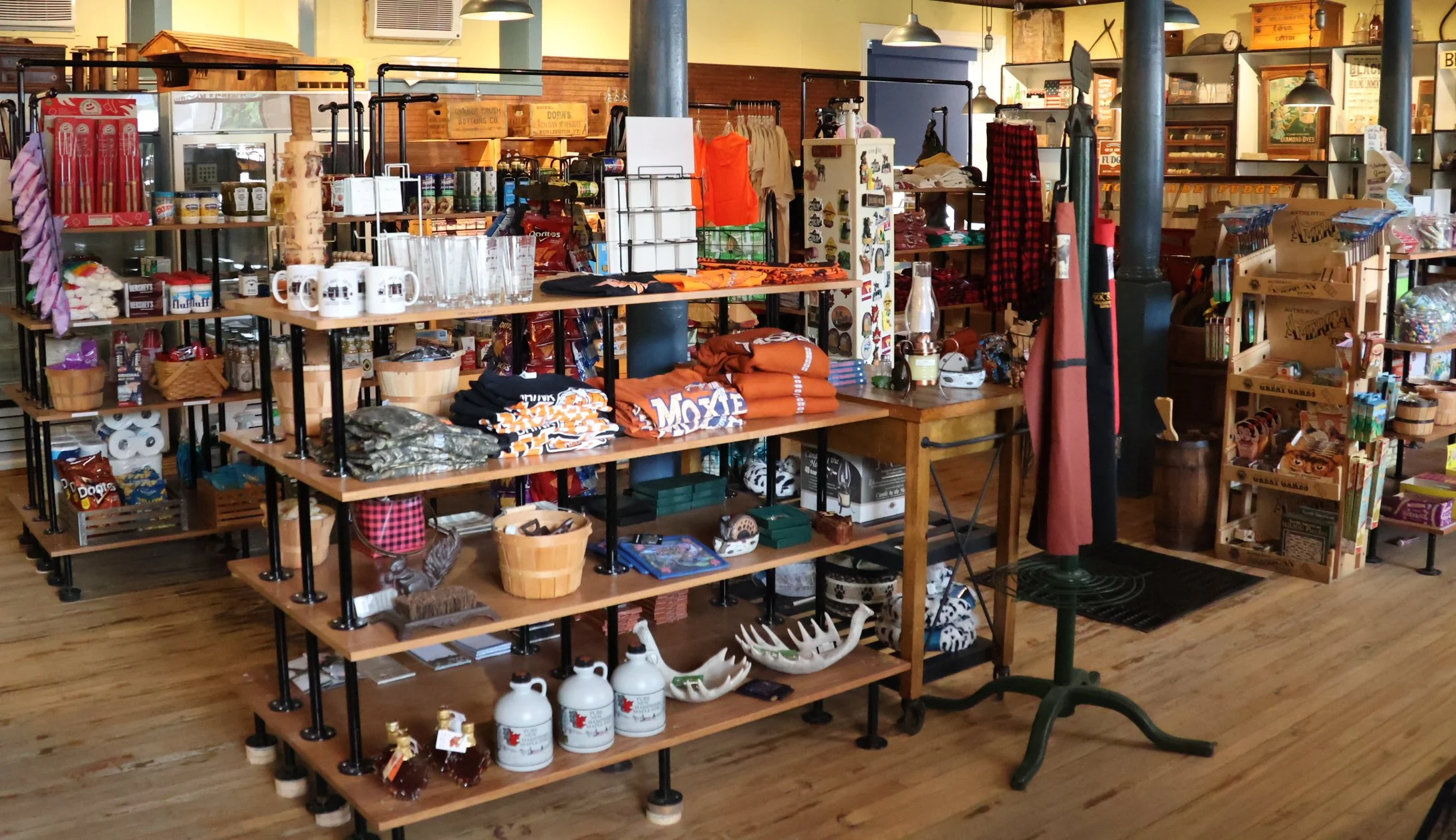
The Brick Store offers a collection of New Hampshire memorabilia, cards, gifts, toys, books, games, jams, honey, sauces, maple syrup, and much more. TBWS/Trish Griswold
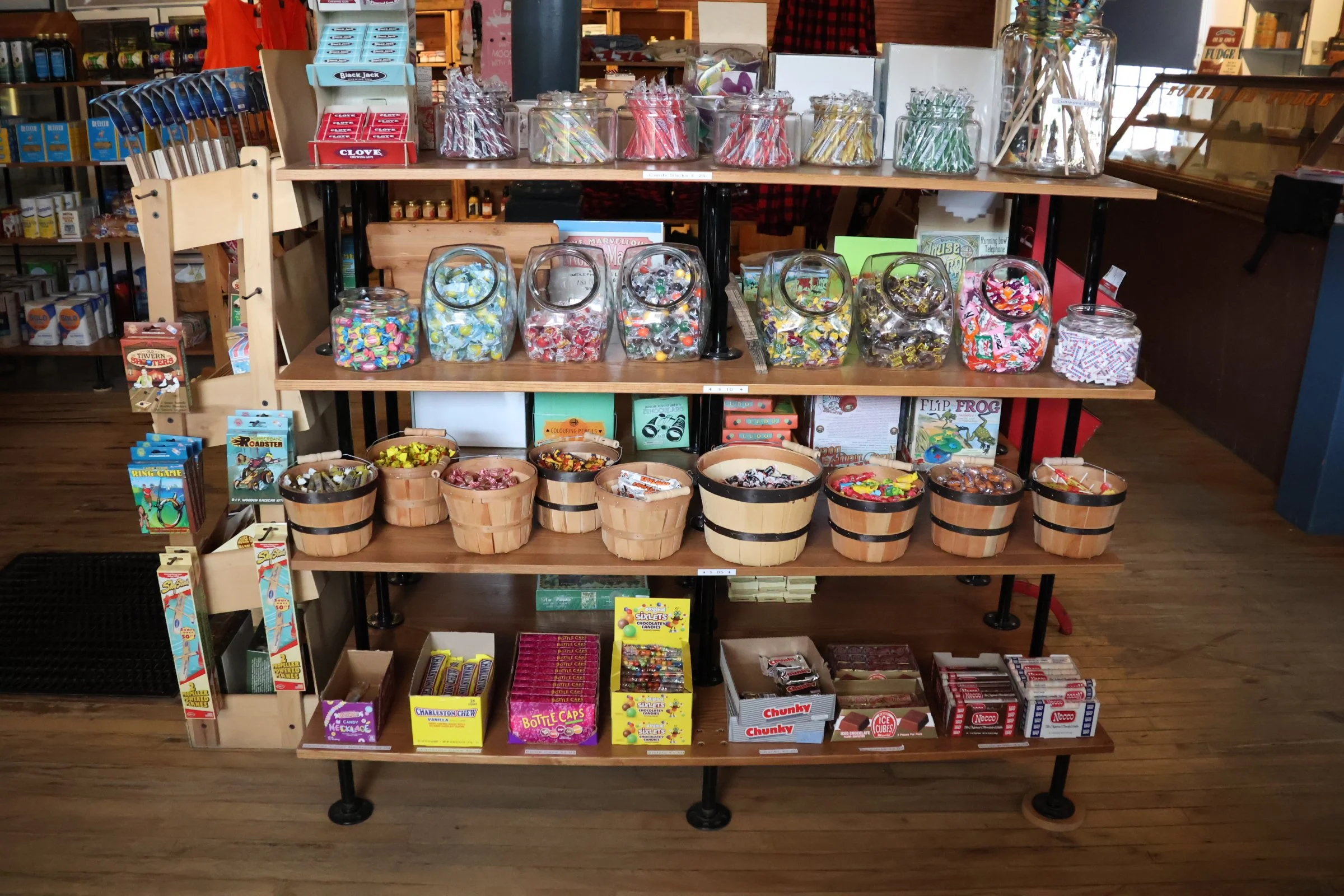
The Brick Store’s ever-popular candy counter is back. Single pieces of candy are available for five and ten cents apiece. TBWS/Trish Griswold
Karen’s Kare: Celebrating A Legacy of Love, Laughter, and Learning
In August, Karen Norcross, owner of Karen’s Kare in North Haverhill, NH, will close the doors to her home-based daycare; however, the legacy of love, laughter, and learning that …
By Trish Griswold
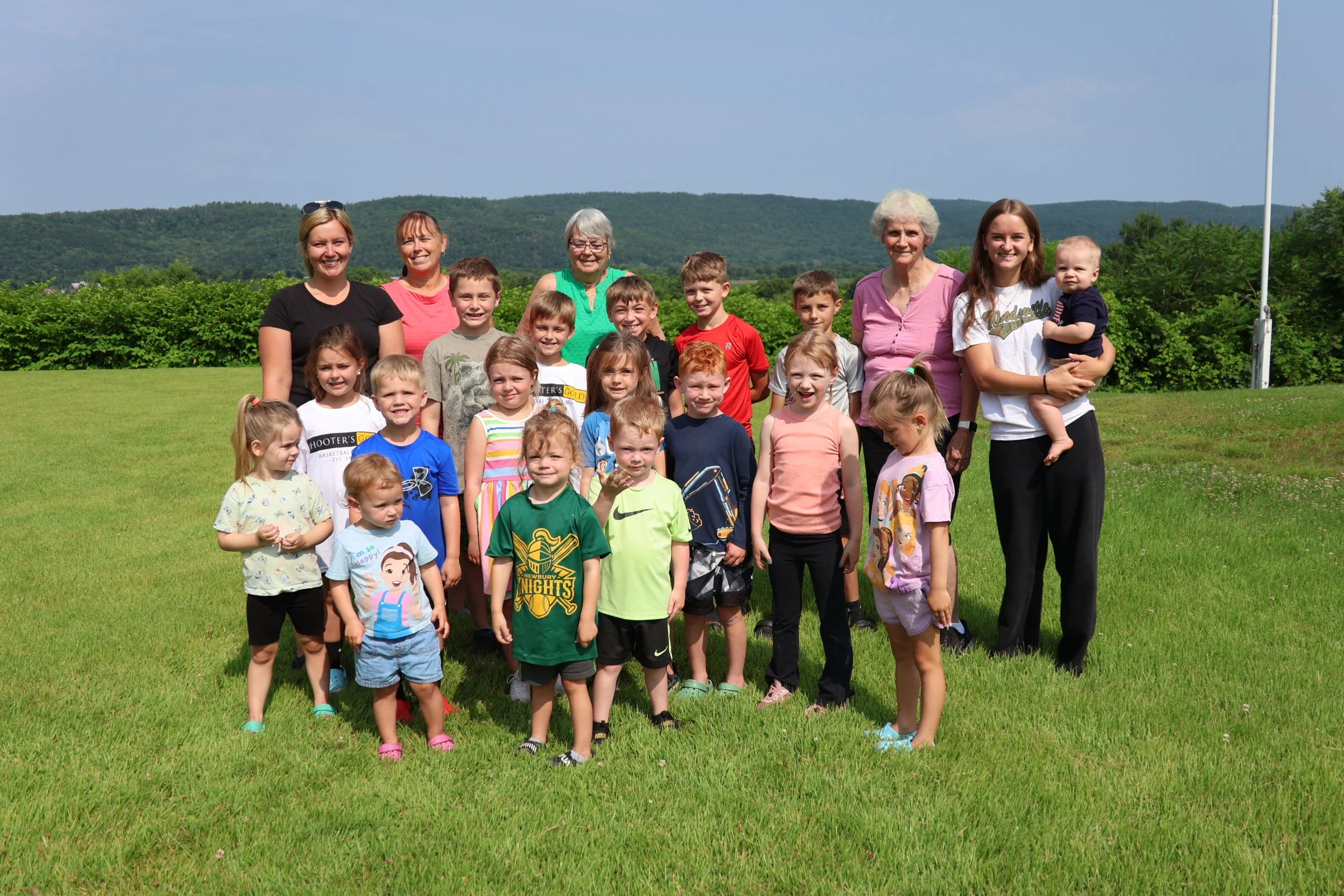
Karen Norcross, owner of Karen’s Kare, has been serving children and families in the North Haverhill area for the past 37 years. Karen’s Kare staff recently gathered for a group photo with current enrollees and a few local alumni on the lawn where so many children learned teamwork, cooperation, leadership, and good sportsmanship through group games and outdoor play. TBWS/Trish Griswold
North Haverhill, NH - In August, Karen Norcross, owner of Karen’s Kare in North Haverhill, NH, will close the doors to her home-based daycare; however, the legacy of love, laughter, and learning that she leaves behind will reverberate throughout the community and beyond, as Karen has been instrumental in helping more than 120 children learn and grow over the past 37 years.
“Few people possess the considerate, unselfish, unconditional, loving heart [Karen] has. She develops a relationship with her kids and her parents. She is honest and straightforward. She provides a ‘nest’ of comfort, belonging, safety, and learning,” remarks Diana Fadden, whose children and grandchildren have attended Karen’s Kare. “Whether it is structured or just in her every day, she has provided a place of teaching, playing, creating, and life lessons. Her expectations are just right! Good manners, discipline, strong values, and cooperation are instilled whether the kiddos realize it or not. None of this happens without love and caring… She raised my kids with me, and I will forever be grateful to her.”
When Karen graduated from Blue Mountain Union School in 1985, she set her sights on becoming an educator, attending the University of Vermont for her freshman year of college. “I wanted to be a kindergarten teacher, but I was very much a homebody. I had a hard time being over there, so I decided to come home.”
Karen worked for three years as a customer service representative at Indian Head Bank, previously located in the unoccupied building next to Bar Harbor Bank and Trust in Woodsville. When her elder son was born in November of 1988, Karen opened Karen’s Kare. “My aunt and my mother-in-law were taking turns taking care of him, and then my aunt decided she wanted the summer off. I said, ‘I don’t know anybody else, and I don’t trust anybody else, so I have to stay home.’”
For the first 15 years, Karen ran her business as a private in-home daycare, which included her sons, Michael and Christopher, as well as a handful of neighborhood children. Karen had accrued a collection of toys and manipulatives to assist with the children's fine and gross motor development. She also planned a wide range of arts-n-crafts projects and other educational activities to help boost the children’s early literacy skills.
“Karen always provided such a safe and fun place for my children,” recalls Vicki Olsen, whose two sons, Ryan and Garrett, attended Karen’s Kare. “As a working mom, this gave me such comfort. I knew that she loved my children as much as she loved her own and gave them a safe, disciplined, and loving environment. She didn’t just ‘watch’ the children, but she engaged with them in countless crafts, activities, field trips, reading, group play, light preschool lessons, and lots and lots of hugs.”
In 2002, Karen went through the process of becoming a fully licensed daycare with New Hampshire’s Child Care Licensing Unit, specializing in children ages 5 and under. The daycare is currently open Monday through Friday from 7:15 am to 5:15 pm. Karen provides two balanced and nutritious meals as well as morning and afternoon snacks for the children. She is a member of the Early Care and Education Association (ECEA), a 501(c)(3) non-profit organization that provides a partnership among childcare directors. Karen attends monthly Zoom meetings and participates in a variety of workshops centered around a broad range of topics, including but not limited to CPR/first aid, Sudden Infant Death Syndrome (SIDS) prevention, administering medications, indoor and outdoor safety, swim safety, fire safety, and shelter-in-place protocols. She also utilizes a play-based preschool curriculum to help ensure that the children are ready for the social, emotional, and academic rigors of kindergarten.
“It’s tricky when you’re doing all ages in a family daycare, but it’s fun. It’s a good challenge,” Karen says, explaining that she believes children learn best through play. “I have to do a lot of modifications because I want my two-year-olds to be able to do [projects] with us. We also do a lot of dramatic play, clay, and Play-Doh, which is really good for their fine motor skills.”
However, the best part of caring for the children, Karen says, is the children themselves. “It’s the connection I make with them. I just love them! I love seeing the excitement when we do things, and I like that they feel comfortable with me when they're injured or sad or anything.”
Woodsville High School standout Mikayla Walker is one of many area youth who have benefited from Karen’s love, compassion, and expertise. In fact, the Karen’s Kare alumnus currently works alongside Karen at the daycare. “It’s so sad [to see the daycare closing]. I’m just grateful,” Mikayla says, reminiscing about her childhood experiences. “I’ve basically grown up here. It’s my second home, and I get to work with someone who helped raise me.”
Karen’s Kare kiddos, past and present, rave about Karen and the care she has provided them over the years. Mikayla maintains that “Karen’s food is the best!” In fact, she says, her twin brother, Ryan, still talks about it.
“And if you ask my children (even to this day), no one was better than Karen,” Vicki says. “Her cinnamon toast, her macaroni and cheese, and her cookies. It was always requested at my house. ‘Can you please make it like Karen?’ I’d always laugh and say, ‘But it’s toast!’ Apparently Karen‘s toast was always much better than mine. My youngest son even asked one year if Karen could come to our house and make macaroni and cheese and hotdogs for his birthday dinner. I was never offended but always laughed. I just love the connection that they had with her.”
When asked what they love most about their daycare experience, the children’s answers are similar and range from cupcakes and birthday celebrations to arts-n-crafts projects, playing outside, napping, and spending time with friends. Eight-year-old Trent’s immediate, heartfelt response, however, is short, sweet, and to the point. “Her.”
Anyone who enters Karen’s Kare will see the children everywhere, laughing, playing, creating, and connecting with their daycare family. The love, the excitement, and the joy are palpable. Karen’s Kare is truly their home away from home. So why is Karen’s Kare closing after 37 years of incredible service to children and families in this community?
“It’s been my life,” Karen explains, “but it's time to get my house back. I’m open 10 hours a day, but then you add the cleaning and shopping and all of the other stuff. It’s a huge commitment, but I have loved it. It’s been perfect for me because I just love the kids, but I’m also excited to maybe try to do something different.”
Karen is still considering her options, but substitute teaching and baking are among the possibilities. “…I like the idea of having the freedom to take my grandkids to things or stay home with them if one of them is sick so their parents can still work. I want all that, but I’m still looking for the perfect piece, I guess.”
As she ponders her next steps, Karen is working diligently to ensure that safe, loving childcare opportunities continue to be available to local children and their families in the future. According to Karen, the ECEA has asked her to serve as a mentor for childcare providers who are interested in opening new daycares and as a substitute in daycares throughout the area. Karen is committed to ensuring that two and three-year-olds have access to the socialization they need prior to entering kindergarten.
Whatever the future holds for Karen, one thing is certain. The profound impact she has had on area youth is beautifully woven into the fabric of this community. It can be seen in the bright, smiling faces of our kindergarteners on their first day of school; in the drive and determination of our high school athletes as they step onto the basketball court or baseball field; and in the hearts and minds of young parents who aspire to raise their children with the same love, safety, discipline, and family values Karen bestowed upon them.
“The happy childhood memories her daycare has given [to our children],” Vicki contends, “are priceless.”
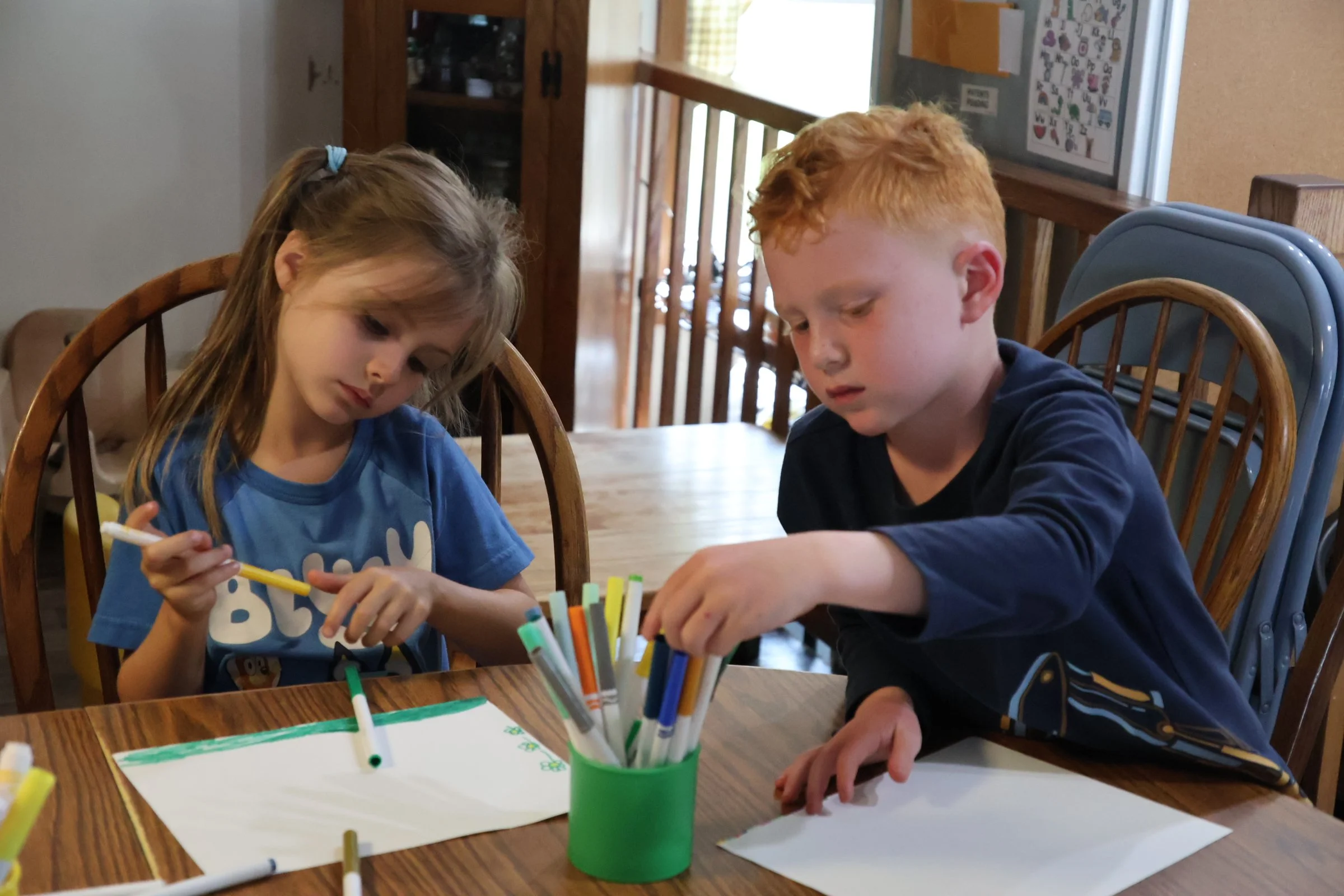
Payton (L) and Lincoln turn their blank pieces of paper into colorful works of art as they imagine, share, and create ideas together. TBWS/Trish Griswold
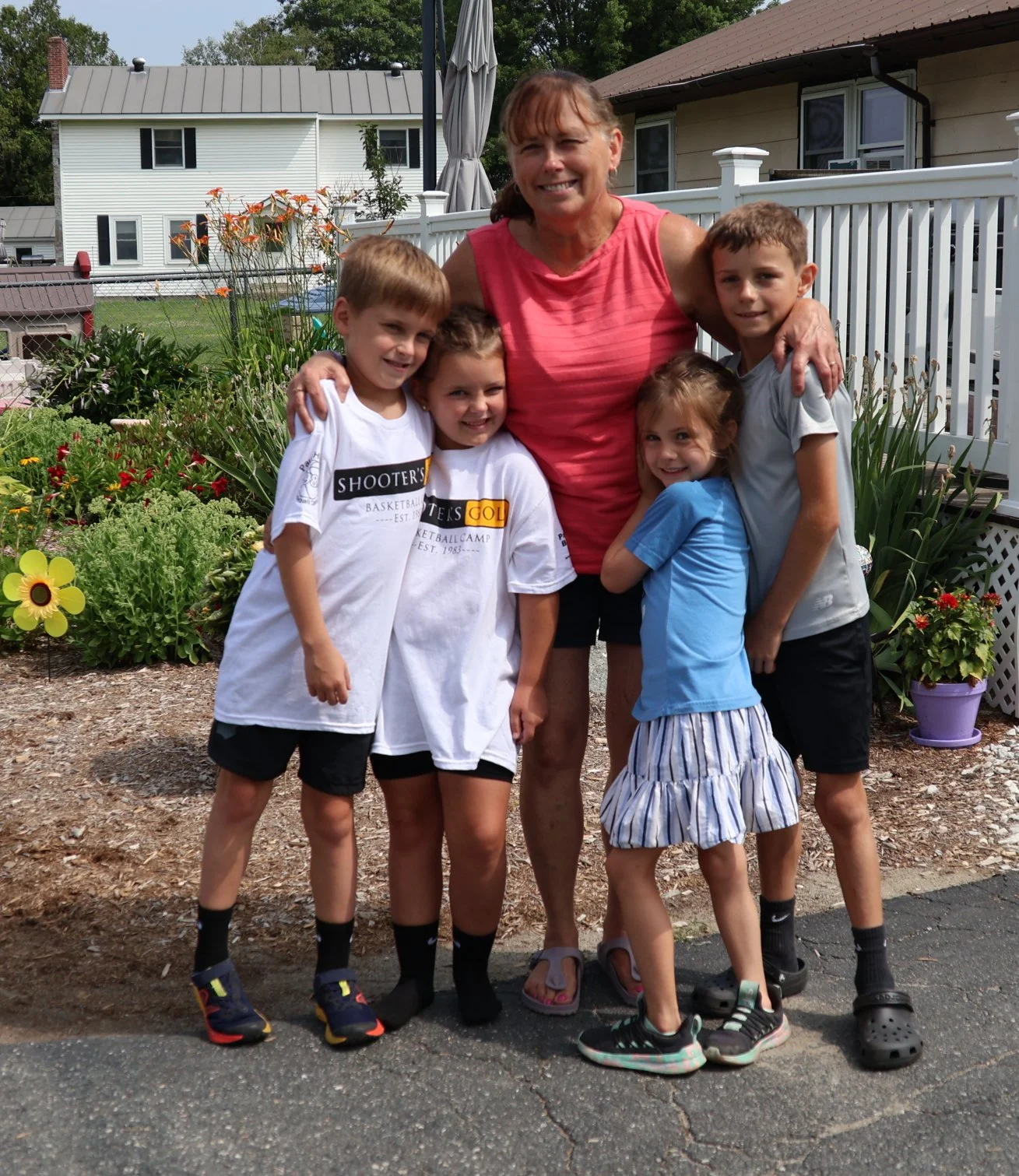
Karen Norcross opened Karen’s Kare in 1989, but now that her children are grown and her grandchildren are attending school full-time, she is ready to embark on new adventures. Karen is pictured with her four grandchildren (L-R): Trent, Hayden, Payton, and Hunter. TBWS/Trish Griswold
Local VFW Post named one of five top posts in NH
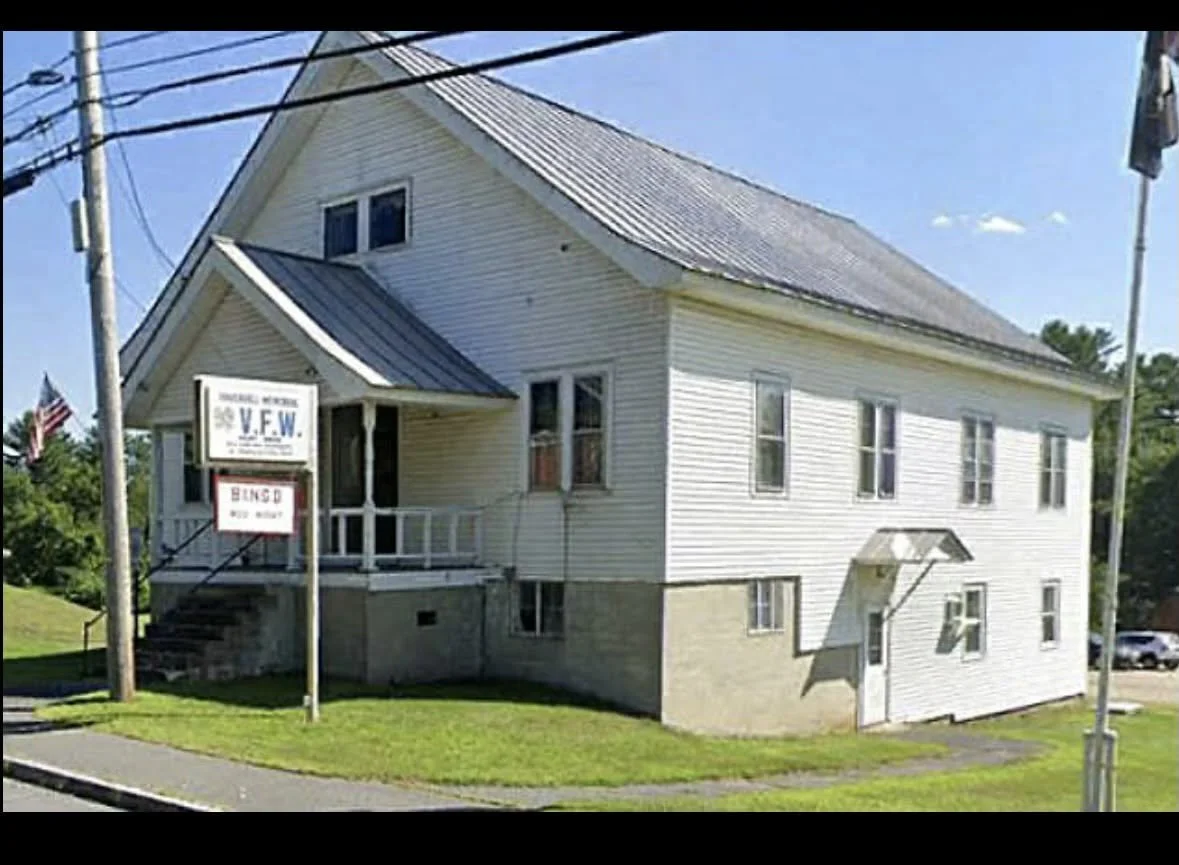
Word has been received that the local Post 5245 of the Veterans of Foreign Wars has been selected as one of five top posts in New Hampshire in their outstanding programs of giving back to the community.
Bernie Marvin
Courtesy Photo
North Haverhill, NH – Word has been received that the local Post 5245 of the Veterans of Foreign Wars has been selected as one of five top posts in New Hampshire in their outstanding programs of giving back to the community.
Post member Harv Keyes, himself a veteran of 32 years in the US Air Force and one of the active members, told The Bridge Weekly that because of the distinction of their busy schedule of giving to the community and to their fellow veterans, the organization has been named as an "All American Post."
Keyes said recently that the post maintains a list of about 80 members, many of whom are active; others are unable to participate because of their age, work schedules, or availability. No matter, Keyes said, they all contribute what they can to make the post one of the top posts in the state and nation.
He noted that the Veterans of Foreign Wars is America's oldest major organization of overseas combat veterans. VFW was established to secure rights, medical care, and benefits for service members returning from foreign wars.
VFW traces its roots back to September 1899, following the Spanish-American War; returning service members arrived home wounded or sick to a nation that had no veteran pensions or dedicated medical care system. To advocate for themselves, veterans formed local chapters across the country.
Today, the VFW operates as a huge advocacy network with over 1.5 million members across more than 6000 VFW posts throughout the world. Keyes said that Post 5245 is easy to join for veterans who qualify with overseas service.
More information can be obtained from Commander Larry Elliott 802-249-5878; N. Haverhill, Steve Wheeler 603-236-2754, and Dale Pierson 603-616-7106. Both are in Woodsville. In the North Haverhill area, there is Joy Henson 937-797-7471 and Gary Hebert 603-359-8830.
Out in Mountain Lakes area, contact Bill Burroughs 603-787-2911, down in the Orford area Dave (Tim) Cole 603-353-4359 will gladly help. Mike Conrad 603-989-5980 in Pike or East Haverhill, then down in Glencliff and Warren area is Eddie Ball 603-989-5528. Or call Harv Keyes in Haverhill Corner 603-359-4030.
Harv Keyes says “Our motivation comes from the motto ‘No Man Left Behind’ and that translates into our dedication to our community through local support. We invite you to join us if nothing more than just be with us through your membership. Remember it’s not the cost of an annual membership but the ‘Sacrifice you’ve already made just to be eligible.’
In reviewing some of the post's accomplishments that gained it the distinctive award recently, members sell $3000 to $5000 worth of lapel “Buddy Poppies” each year to help fund some of the community work they do. According to the records, members volunteered 2500 hours and drove 11,000 miles serving others.
He said the post also has provided honor guards and flag details for more than 15 funerals each year and cares for and pays for four Little League sports fields for teams that include 60 local kids, plus two soccer fields that host 1000 young players.
The local Post 5245 members provide services for their care and rehabilitation. He said that members of the post have made 70 visits to area hospitals in support of veterans, and nearly 4,000 hours were given to veterans’ service programs.
He said that VFW members gave a total of about $117,455 to the community for school scholarships and financial assistance.
He said that the care and maintenance of the VFW Field in North Haverhill includes two ball fields, a playground, bathrooms, and a maintenance shed. Ball fields host over 17 local communities with more than 36 teams, with each team fielding nine to 15 players plus coaches and staff.
At other times during the year, the ball fields are converted to soccer fields, with the average maintenance and mowing, plus upkeep and cleaning of the seals and bathrooms, requiring volunteer work of up to 22 hours weekly. All this is done by members of the post 5245 and its auxiliary at no cost to the taxpayers of Haverhill, Keyes said.
He said the post maintains no bar or alcohol facilities. The post's only income is from Wednesday night bingo programs. He said the post does have one annual raffle with the proceeds being dedicated to local youth activities.
The North Haverhill Fair celebrates its 82nd year with perfect weather
It was about a mile from that spot that the fair was born, as the Pink Granite Grange Fair, in 1946, after being set up for a couple of years as a one-day agricultural event for local kids and their 4-H animals.
Bernie Marvin
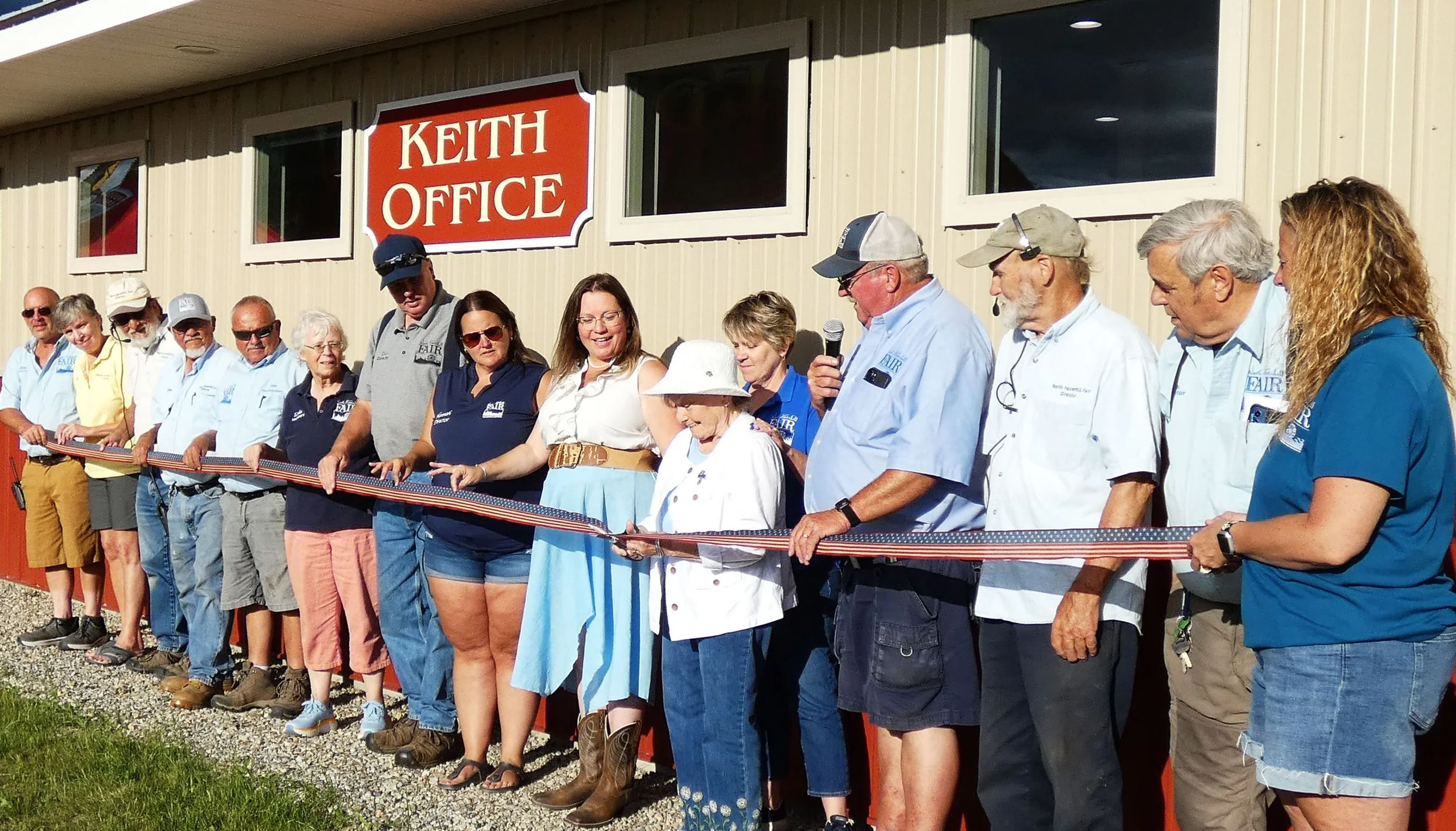
North Haverhill Fair directors and visitors lined up for the official ribbon cutting that opened the new Keith Office were, left to right Mike Perkins, Diane Ingalls, Gary Scruton, Jim Aldrich, John Aldrich, Linda Stoddard, Chris Dellinger, Hannah Leland, Executive Councilor Karen Liot-Hill, Debbie Bigelow, Linda Keith, President David Lackie, Bob Stoddard, Tim Clough and Amy Crocker. The Bridge Weekly/Bernie Marvin.
North Haverhill, NH – It was a rare weekend last week that allowed the North Haverhill Fair to be in town for five straight rainless, stormless days. It was perfect fair weather, and the crowds attending this 82-year-old North Country family tradition were happy with all they could see, eat, and ride on over the five days from July 11 to 26, 2026.
The 45-acre fairgrounds were first occupied by the fair and its associated buildings in 1982 after leaving its former home behind the present-day James R. Morrill Municipal Building on Route 10 just north of North Haverhill Village.
It was about a mile from that spot that the fair was born, as the Pink Granite Grange Fair, in 1946, after being set up for a couple of years as a one-day agricultural event for local kids and their 4-H animals. Nothing has changed as far as that goes, but the entire fair management organization and its volunteer base have grown significantly to accommodate and host the annual North Haverhill Fairs, which draw hundreds of support personnel.
Over the years, under a series of fair directors, presidents, and other fair helpers, it has blossomed into one of the North Country's premier early-summer events, attracting thousands from across New England and beyond.
As I look back at my participation with the North Haverhill Fair, I actually began my commitment that has lasted from 1979 to the present, first as a member of the Haverhill Police Department, one of several officers walking the beat throughout the fair's presence in town.
Back then it was only a couple of days in the early fall; then they added days here and there; now it is in session for nearly five full days. When you look over the schedule of exhibits, activities, contests, competitions, and other events, you sometimes wonder how they did it all in two or three days.
This year, the entertainment included Taylor's Story, a musical narration of Taylor Swift's greatest hits, as well as performances by the up-and-coming local hometown artist Karri Blood. Along with Thayer Stage entertainment, fairgoers enjoyed a truck show, a log-loading contest, a big-wig truck pull, many motorized events, daily animal-pulling contests, the ever-popular racing pigs, and live music shows every day.
Throughout the five days of the fair, visitors wandered through art and photography shows, crafts and collections, scarecrow art and Lego creations. There were a multitude of contests and shows, including the popular King Arthur baking contest, a classic car show, a demolition derby, a glowing competition, and other popular shows throughout the vast fairgrounds.
The animal programs are exciting for the public and for 4-H participants, with continued programs inside the Rutherford Building, one of the most popular structures on the fairground acreage.
This year, as the new Farm Museum fills up with an amazing array of implements, tools, and early American farming machinery, it has proved to be a very popular area for fair visitors to visit, often at the same time as the Doc and Katharine Blaisdell Maple Museum.
The highlight of the fair was the construction and opening of the new Keith Office, a sterling building with ample space for the staff who manage the fair's activities. From the outside, it looks a bit like a long barn and is a handsome addition to the buildings already there that have been either moved there or built there since the fair relocated to that field in 1982.
Kevin Fagnant and crew built the new Keith office, which features a typical New England structure atop the roof amidships (in the middle), known by many as a cupola. As David Lackie will tell you, it is not a cupola; it is a belvedere.
He offered that Mr. Fagnant commented that it was a belvedere. Although it looks like a cupola, a belvedere is an Italian word meaning a structure on the top of a building that provides an elegant view. Of course, a view of the fairgrounds is an elegant view and will remain so for many years to come.
It was a happy occasion, with many of the Keith clan gathered to salute the family's involvement, along with many other families who have taken the time to volunteer for this very nice program, born and raised in North Haverhill, NH.
The actual cutting of the ribbon at the start of this year's fair on Wednesday evening came after some introductory words and a brief fair history. On hand for the event were many former directors and their families, friends of the fair, and a few others with connections to state government in Concord.
They included Executive Councilor Karen Liot-Hill and Haverhill resident Rick Ladd, who, for many years, was an education leader in Concord and served for 18 years as an elected representative. He announced his retirement earlier in the evening to the surprise of many. He was a friend of the Town of Haverhill, where he lives, and of the North Haverhill Fair.
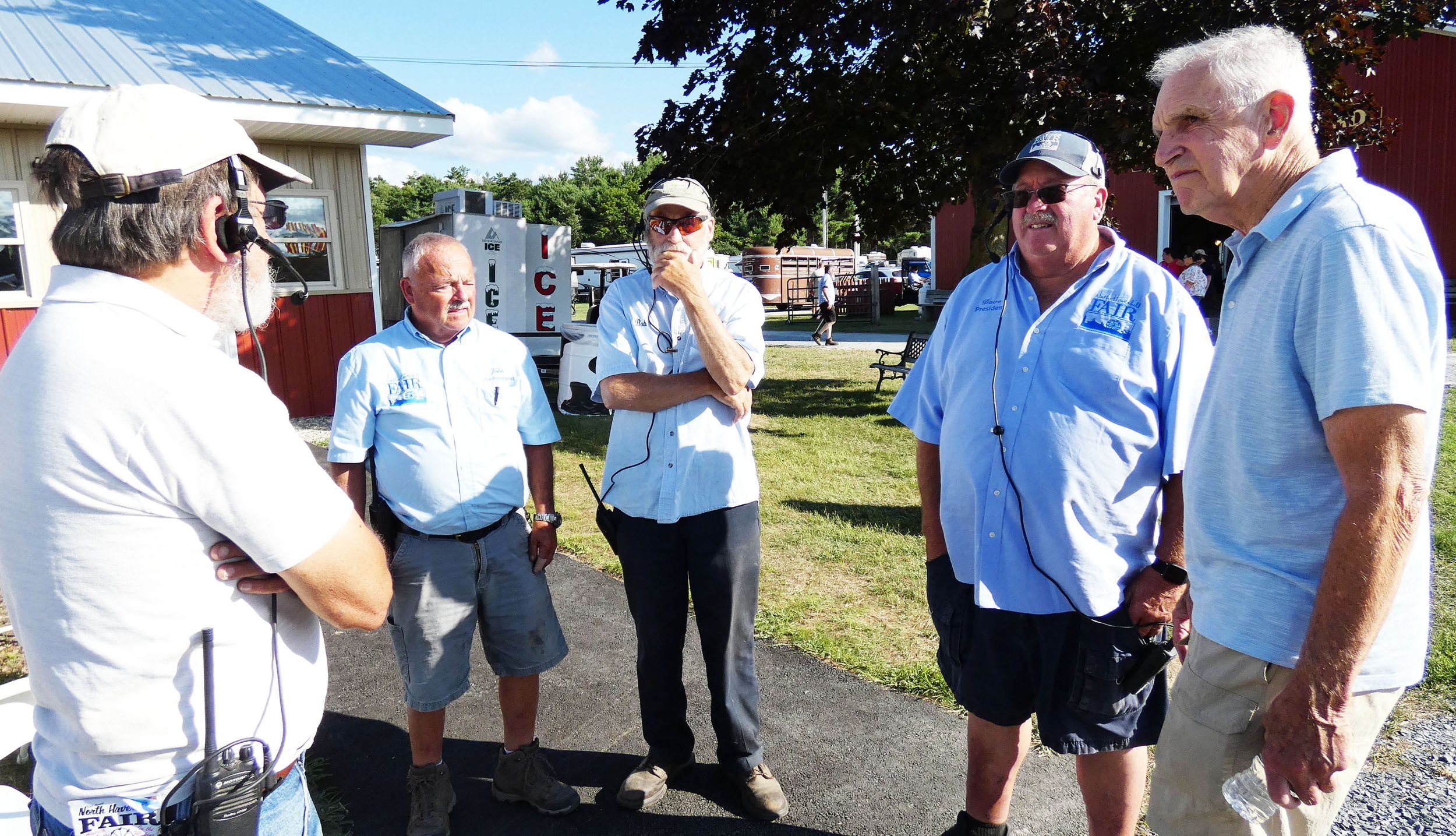
Taking a little time to speak about the great weather and crowds who flocked to the fair over last weekend, are fair directors, left to right Gary Scruton, John Aldrich, Bob Stoddard, President David Lackie and NH Representative Rick Ladd. The Bridge Weekly/Bernie Marvin
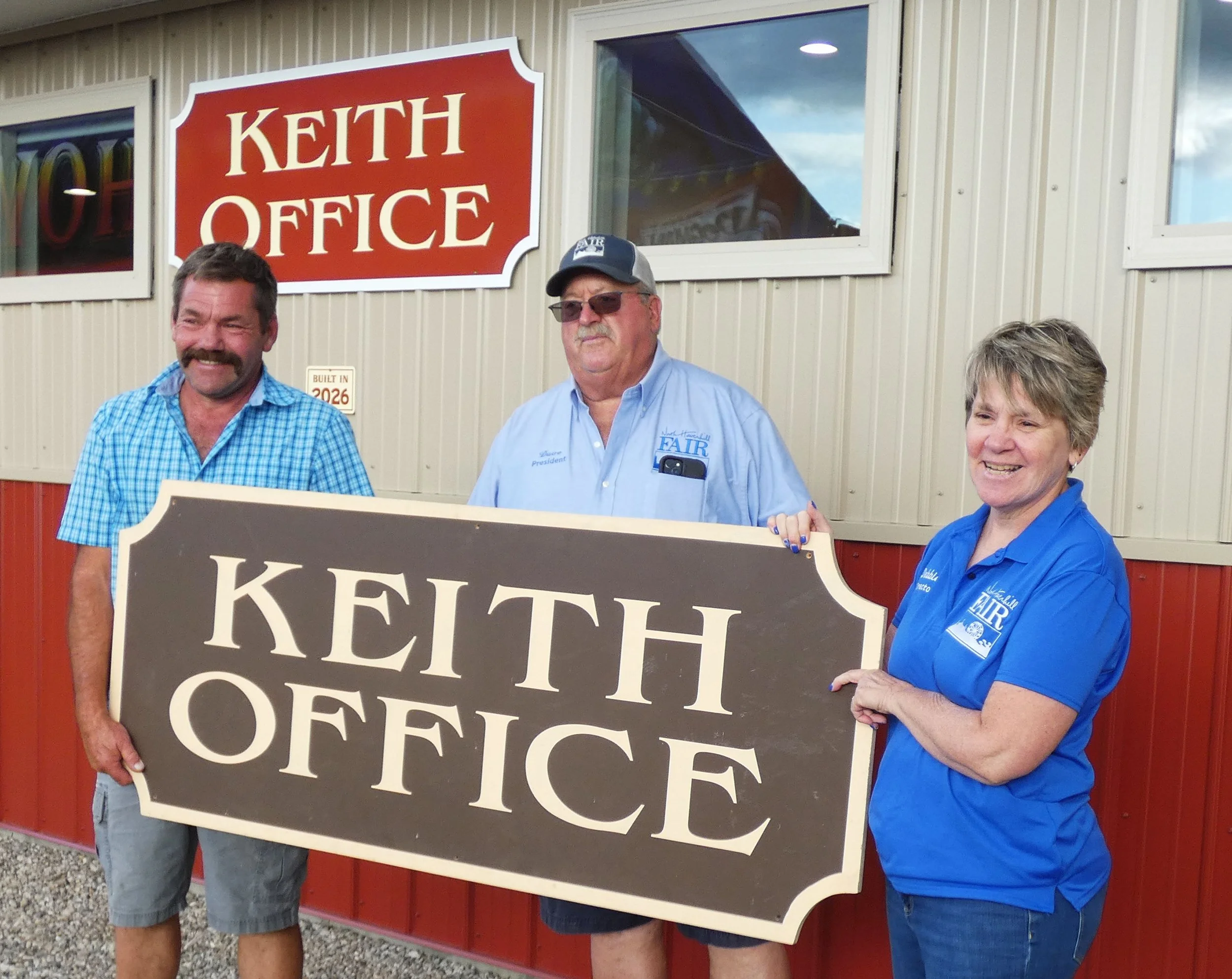
Showing a new sign for the Keith Office that will be permanently displayed on a newly constructed administration building at the North Haverhill Fairgrounds are left to right, a Keith son, Tom, Fair President David Lackie and a Keith daughter, Debbie Bigelow at the North Haverhill Fair that was in town from Wednesday through Sunday last week. The Bridge Weekly/Bernie Marvin
Local Singer-Songwriter Karli Blood Headlines At North Haverhill Fair
Karli’s journey into the music spotlight is beyond inspirational. She is ambitious, passionate, humble, and kind. She is also a positive role model and a beacon of inspiration for those who have the courage to dream big dreams. Karli’s advice to budding young artists is simple and genuine.
By Trish Griswold
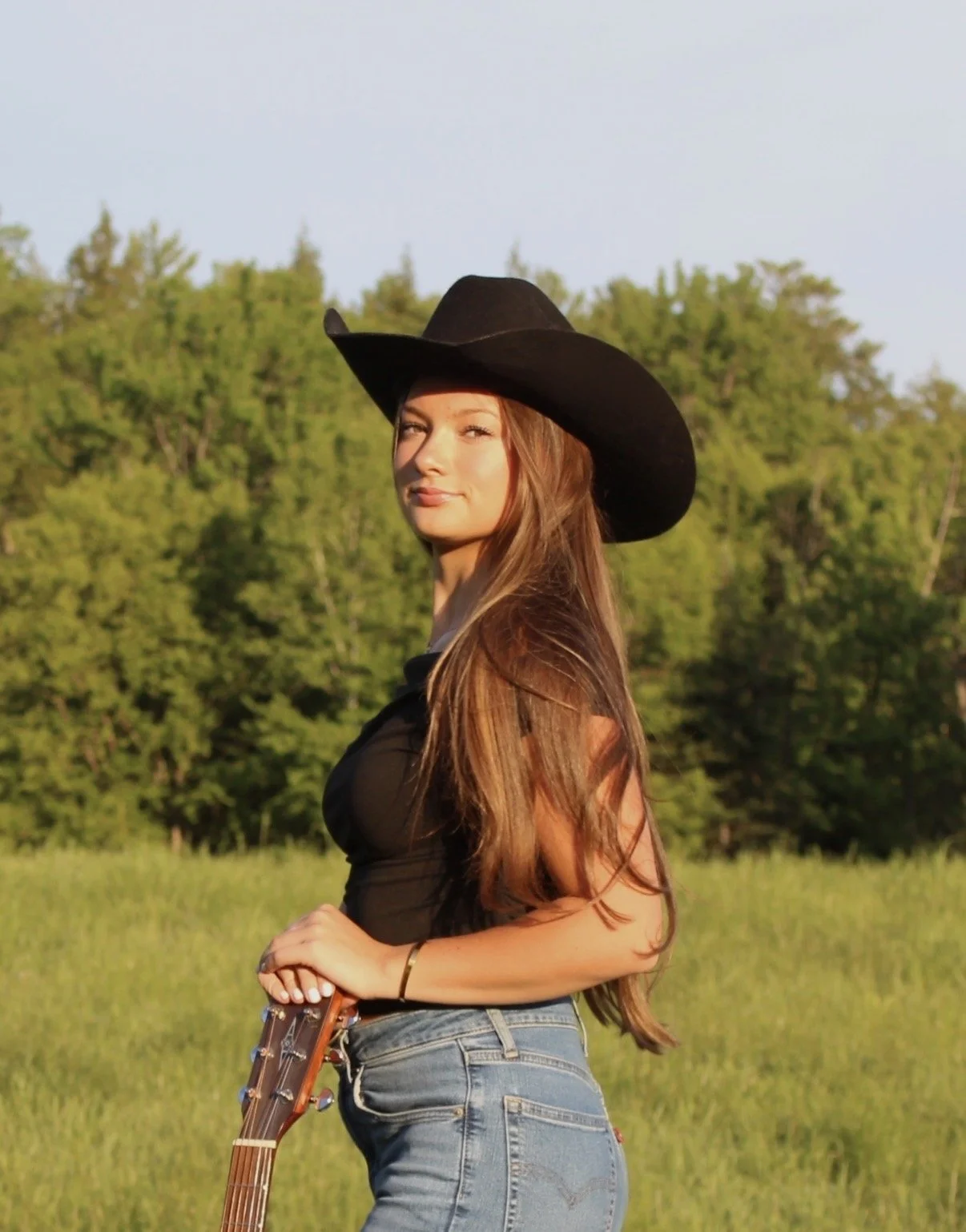
Karli Blood is the featured performer at this year’s 82nd Annual North Haverhill Fair. Karli is a Ryegate, VT, resident and a Blue Mountain Union School graduate. She is currently enrolled as a public relations major at Belmont University in Nashville, TN, where she is also pursuing a career in country music. - Courtesy photo
North Haverhill, NH - On Saturday, July 25th, Ryegate’s very own Karli Blood will light up Thayer Stage at the North Haverhill Fair with her positive energy, musical talent, and country vibe. For the 20-year-old college student, this opportunity is one she never thought possible. “Growing up, I never imagined I’d get the chance to take the main stage at such a special event,” Karli says, “and I’m so grateful for the opportunity.”
Karli’s passion for music began at an early age, giving private performances for her family. Ironically, however, it was the COVID-19 pandemic in 2020 that sparked her drive to create music. Like many people, Karli found herself struggling with the lack of social interaction outside her immediate family, so she turned to music as an outlet. Karli set up her dad’s old DJ equipment in a loft above her parents' garage, a cozy little space she fondly dubbed “the barn,” and began belting out a myriad of well-known hits from country to pop, rock, and even theater music. She started teaching herself to play the ukulele and began writing songs as an emotional escape, transforming her negative feelings into something more positive.
“[The pandemic] was definitely a hard time,” Karli says, reflecting on the perils of quarantine. “I found that music really helped me through that. It was definitely an outlet for me to express how I was feeling, and I was able to put some of those feelings into lyrics.”
A few years later, at age 16, Karli gave her first public performance—a duet at her school’s spring concert. In August of that same year, with her dad running sound and lights, Karli gave her first solo performance when she opened for Bad Horsey at Sunset Rock RV Park in Isle La Mott, VT. “I couldn’t have done it without my parents, brother, aunts, uncles, grandparents, and friends,” Karli says. “They never fail to show up and support me. Without them being there, I probably wouldn’t have the courage to get up on stage.”
From that moment on, Karli’s music career blossomed. Bryce McNall, the lead singer of Bad Horsey, connected Karli with a producer, who is originally from Vermont but travels back and forth to Nashville helping find up-and-coming talent and assisting them in the process of producing tracks with in-studio bands. This introduction was a catalyst for what came next.
In October 2022, during her sophomore year of high school, Karli ventured off to Nashville, the heart of Music City, where she recorded her first original song, titled “What We Used To Be.” The following February, Karli played her first official gig with a backing track and her guitar at the Iron Rail in Woodsville. She continued to perform locally at bars, campgrounds, and various community events before returning to Nashville three months later to record “Nashville Cowboys,” one of her most popular songs to date. According to Karli, “Nashville Cowboys” was released in September 2023 as part of an extended play mini-album with a collection of songs from her two recording sessions. To date, Karli has released eight songs in total.
When asked to choose her favorite original song, Karli ponders for a moment. “I think ‘Nashville Cowboys’ because it’s fun to dance to, and that’s the kind of music I’m hoping to release if I ever get more opportunities to record. But I also like ‘Doin’ Good.’ Those are probably my top two.”
Without question, Karli Blood’s music career has skyrocketed since those early years of belting out KIDZ BOP-type playlists for her family. Following her graduation from Blue Mountain Union School in June of 2024, Karli moved to Nashville, where she currently attends Belmont University while simultaneously forging her path in the music industry. Karli originally enrolled as an education major, as she was uncertain about her long-term career aspirations. “I needed to start somewhere,” she remarks. “I thought that might lead me into music education or becoming a teacher, but I went into it knowing that I was probably going to change my major.”
While networking with other students through various organizations that she had joined, Karli learned about public relations (PR). “I didn’t even really know that was a thing when I was searching for majors in high school, and then I talked to a lot of other students who spoke so highly of the program and the professors and explained what PR was. I said, ‘I need to try this.’”
At the beginning of her sophomore year, Karli switched majors and is pleased with her decision. “I had a reflection moment of, ‘Why am I in Nashville spending so much money for an education degree when I can do that anywhere for a lot cheaper?’ I feel like I should be taking advantage of the connections and the professors and the programs related to music.”
Though PR is not an official major within Belmont’s School of Music, Karli explains, public relations is certainly an integral part of the music industry. “PR is important from an artist’s perspective with the age of social media, but there’s so much that you can do with PR even beyond music. If I wanted to learn how to promote myself or other artists and stay in the music industry, I 100% could, but if my goals in life change, I will have job security in other parts of the workforce because PR is so broad.”
The life-changing opportunities afforded to Karli in Nashville, both personally and professionally, have been plentiful. As part of Dolly U, a partnership between Belmont University, Dolly Parton and CTK Enterprises, Karli recently took a class called “Dollyology: Branding, Leadership & Strategic Communication to Customer Relationship Management in the Dollyverse.” This course focused exclusively on Dolly Parton’s branding as an artist and her journey in the public eye.
In addition to a rigorous course schedule, Karli is a member of Phi Mu, the second-oldest female sorority in the United States, as well as Towering Traditions, an orientation council that supports incoming Belmont University freshmen on move-in day and throughout the school year. She co-leads the Belmont Boulevard Team, a small group of students who create all of the social media content for Belmont’s Instagram and TikTok pages. Karli also spent 16 days with a group of fellow PR majors traveling through Europe, starting in Madrid, Spain, with additional stops in Lisbon and Porto, Portugal.
In her spare time, Karli is on stage in Nashville. In April 2025, she auditioned for the Honky Tonk School, a highly acclaimed training and development organization. Karli earned a spot filling in for singers who perform on Broadway. She plays consistently with a multitude of bands on the “Tootsies Circuit,” a network of venues that include Tootsie’s Orchid Lounge, Kid Rock’s Big Honky Tonk, Honky Tonk Central, and Rippy’s Honky Tonk. Karli performs at various times of day and in different environments. She also “runs the bucket,” taking song requests and accepting tips from the audience. “It has been a great way to connect with people in the music industry in Nashville and artists that are chasing the same dream that I am.”
Karli’s journey into the music spotlight is beyond inspirational. She is ambitious, passionate, humble, and kind. She is also a positive role model and a beacon of inspiration for those who have the courage to dream big dreams. Karli’s advice to budding young artists is simple and genuine. “Keep going if music is something you truly love. It won’t always be easy, but it is so much better to take the chance than to look back years later wishing you'd been brave enough to try.”
While Karli is chasing her dreams in Nashville during the school year, she spends her summers in Vermont with her family, pursuing those same dreams here at home. Karli recently opened for Waterbury, VT, native Jamie Lee Thurston at The Dispensary in St. Johnsbury. Other venues on her summer tour included 98 Mill, McIndoes Academy Community Center, Sunset Rock Lake Shore, and Kingdom Campground, with her final stop being Thayer Stage at the North Haverhill Fair.
“I feel nothing but pride to represent my community and put on a really fun show for everyone who shows up and supports me,” Karli says. “I think it’s going to be a great time, and I’m really looking forward to it.”
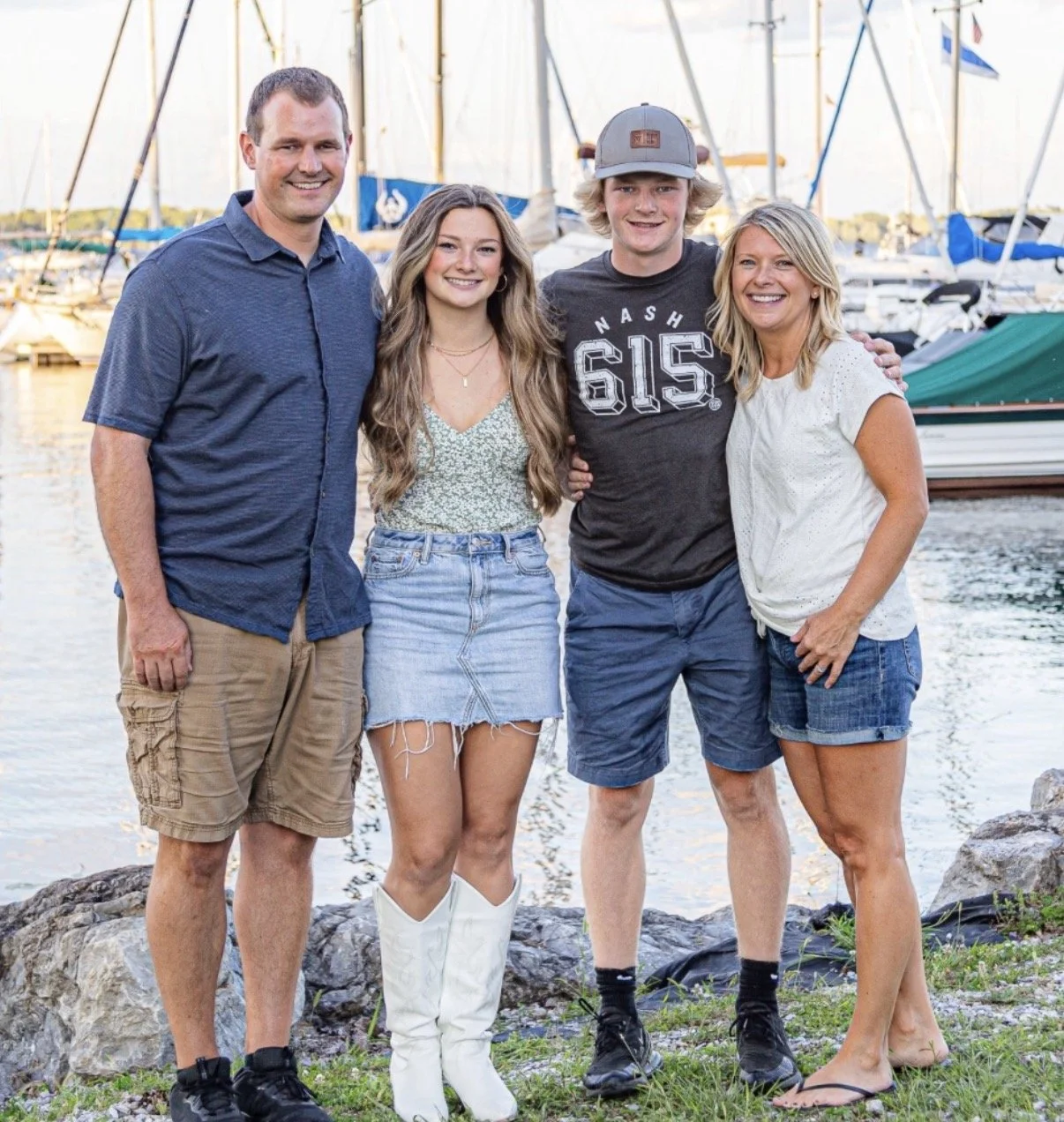
Karli Blood (second from left) has received unwavering support from her family throughout her musical journey. Her dad, Scott (far left), is her lighting and sound technician. Her mom, Melissa (far right), is her manager, and her younger brother, Kason (second from right), helps Scott with set-up and tear-down.“It’s definitely not a one-woman show, even if it appears that way,” Karli says. - Courtesy photo
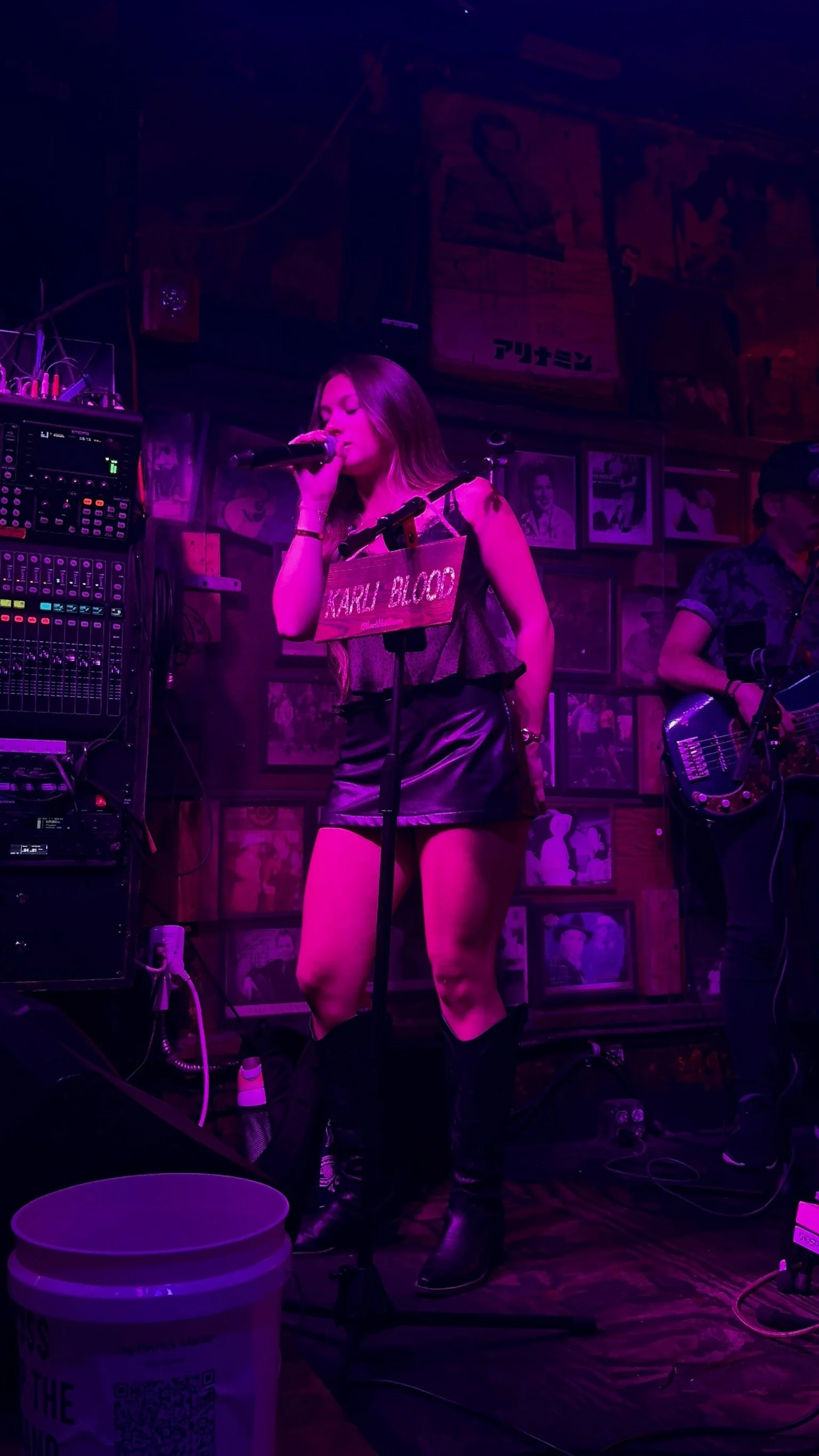
Karli Blood serves as a “fill in” for singers who perform on the “Tootsies Circuit,” a collection of honky- tonks in Music City. She is seen singing on stage at the legendary Tootsie’s Orchid Lounge on Broadway.- Courtesy photo
In its 50th year, the Orford Flea Market still offers a variety of food and neighborly fun.
The area has been in love with the Orford Flea Market for 50 years. It has taken place on the spacious Orford Common, and as they say, "If it is not at the Orford Flea Market, it ain't nowhere!"
Bernie Marvin
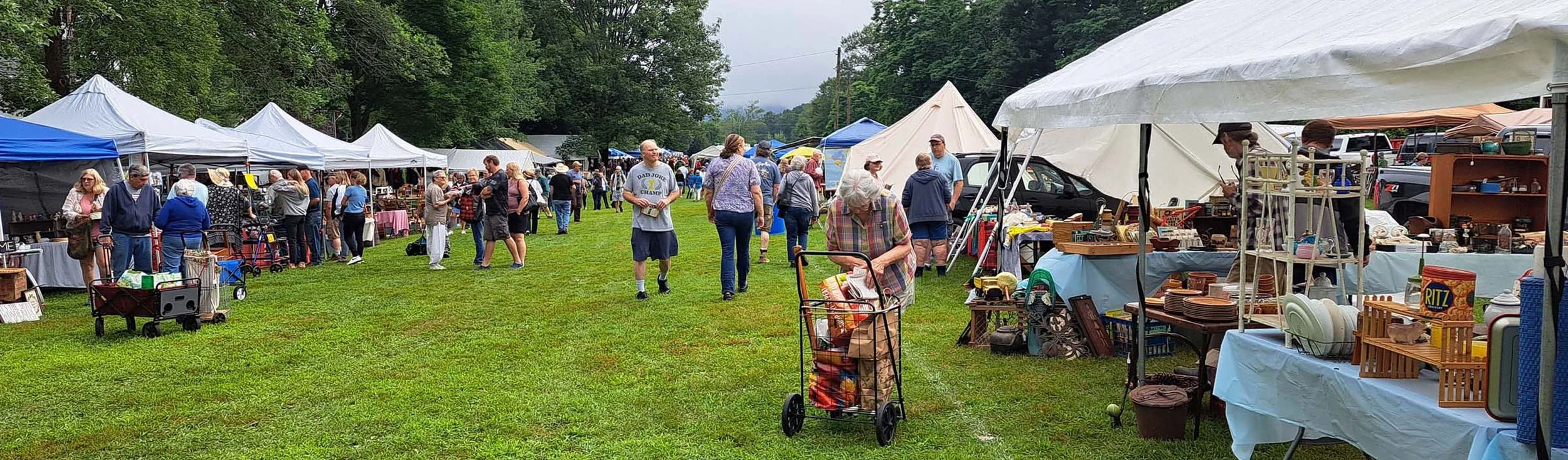
Here is a typical view of the Orford Flea Market showing folks walking around the area chatting, bargaining, and telling tales. It is a great two days of social fun and visiting. The Bridge Weekly file photo/Bernie Marvin.
The area has been in love with the Orford Flea Market for 50 years. It has taken place on the spacious Orford Common, and as they say, "If it is not at the Orford Flea Market, it ain't nowhere!"
The event is coming up on Saturday and Sunday, August 1 and 2, from 9 AM to 5 PM on Saturday and from 9 AM to 4 PM on Sunday. It is a very different kind of show, and it is vast, creative, and usually crowded with people who really enjoy browsing and buying.
We have personal experience with the Orford flea market. For the past five years, we have been a participant there, selling my volumes One, Two, and Three of Bernie's Beat books, plus selling Humanitarian Food Rations (HFR) and Meals Ready to Eat (MRE).
As always, we had success selling books and meal pouches. The military food drew many interesting comments from veterans who stopped by our display, including "I remember those hockey pucks we had in our MREs!" He was referring, of course, to the hamburger or pork patty, a delightful round portion of meat that looked and tasted (most) like a hockey puck.
That was only one of the fond remembrances of military food we heard while at the flea market. There were many others, and the comments were fun and quite creative, most of which I cannot repeat here in this family newspaper. The military and humanitarian food comments from some flea market shoppers evoked memories of their days far from home in the military, when they had the opportunity to love or hate MRE meals.
Time spent with Bernie's Beat books and visitors to the Orford Flea Market was delightful, as always. The stories in the books are about local people I know or have met along the way. They are not fiction or opinion pieces. They are stories about life, work, family, and situations. The Bernie's Beat columns and books are fun to write, and they are fun to talk about because people not only buy them, but they also talk about stories of their own that were prompted by just having the books on the table being offered to the public.
But even more fun than that are the opportunities to meet friends who come to the Orford Common for these two days each summer and wander around looking and admiring all those things laid out before them. Acres of stuff, some really old and valuable, and not much junk.
The Orford Flea Market is 50 years old. It is a success and is provided for the benefit of the Orford Volunteer Fire Department. It is a mammoth occasion where the vast, majestic Orford Common is filled with vendors selling everything under the sun and moon. For the past 50 years, the stretch of Route 10 from way beyond the old Equity Publishing building to the north, down to the Orford fire station in the south, is dedicated to flea market parking for the two days of the flea market.
The common is filled with 200 dealers, each planted in their 20-by-20-foot space. For each flea market day, thousands of people meander up and down the aisles, checking out the myriad of wares all along the way. During their visit, they will find anything they want or don't need, but they buy it anyway.
The Orford Volunteer Fire Department offers food at its booth, and the church offers an assortment of breakfast sandwiches and, later, pie and ice cream.
They come armed with shopping lists, backpacks, and shopping carts. They make offers, they bargain, and they buy, or they don't buy. Sellers spend hours loading their wares at home, then unloading them in Orford. As Sunday approaches, many will tell you they don't have to worry about packing the stuff back into their vehicles because they've sold most of it.
The event runs smoothly, and one reason it does so without problems is that Ruth Hook was at the helm of this enormous project for many, many years. She was the go-to lady, the head boss of the flea market, and had done a great job for many years. She cruised the main corridors, plus the nooks and crannies of the flea market in her Gator vehicle. She took names and assigned spaces, and if you had a question about anything at the Orford Flea Market, she was the one who answered your questions.
The Orford Flea Market is an exciting place to visit. You can't escape from the common without taking home some oddity, an unusual knick-knack, a real piece of China, heirloom table wear, or an old photo.
It is a wonderful weekend experience, and as in the past, the weather promises to be beautiful (we hope!)
Nice Weather, Happy Crowds Greet Warren Old Home Day Weekend Events
Grand Marshal for this event was the Warren Historical Society, and two members of that great organization were on hand in one of the lead-off parade vehicles. The Grand Marshal vehicle in the parade featured Historical Society Vice President Don Bagley at the wheel—a nice honor for a group that has done so much to preserve Warren's long history.
Bernie Marvin
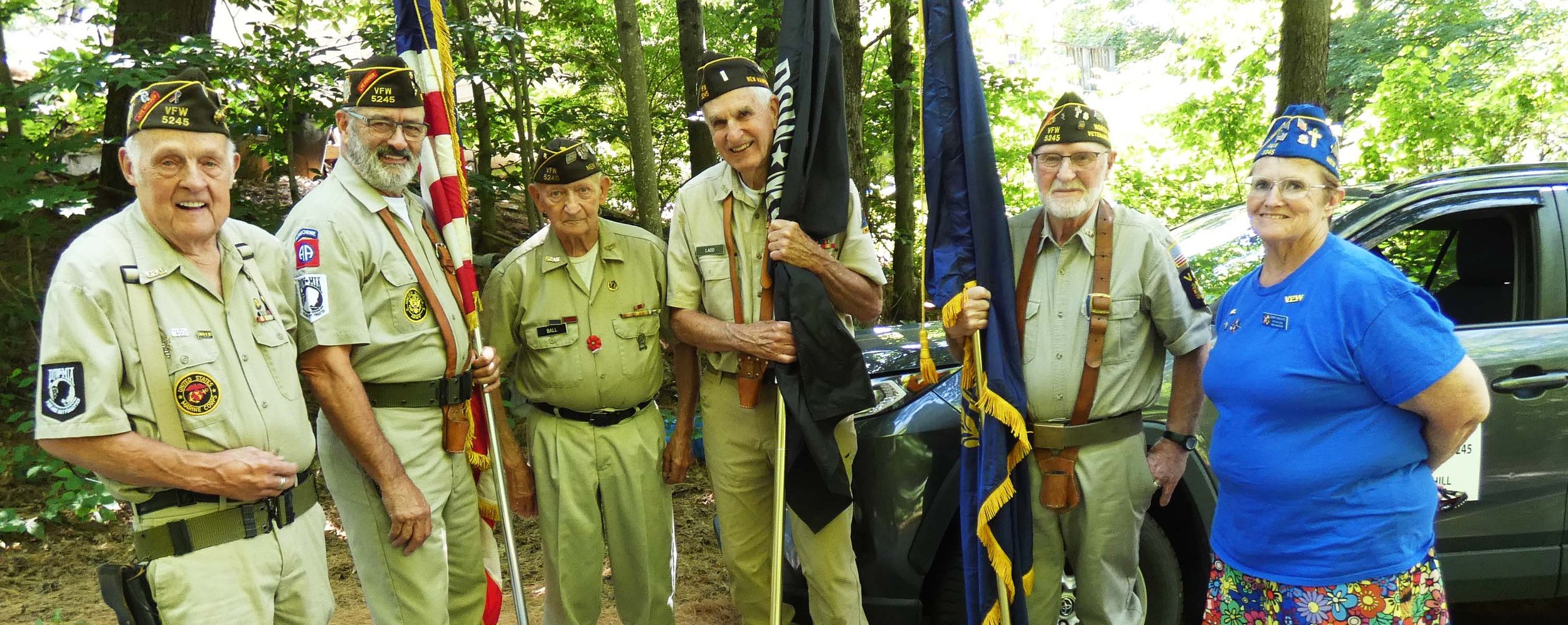
Preparing to march the Warren Old Home Day Parade route last Saturday, July 11, 2026, were members of Post 5245, North Haverhill, Veterans of Foreign Wars, left to right: Commander Larry Elliott, Sr., Gary Hebert, Edward Ball. Rick Ladd, Fred Delman, and VFW Auxiliary member Terry Knights. The Bridge Weekly/ Bernie Marvin
Warren, NH – The Founding Fathers-themed Warren Old Home Days weekend was chock-full of activities, starting on Friday at 4 PM, as the Warren Volunteer Fire Department fired up the BBQ grills and hosted their Chicken Barbecue behind the Warren Village School. From there on, the weekend was non-stop Warren Old Home Days right through to Noon on Sunday, July 12, when they scheduled kids' games on the Common.
Friday evening also saw music played on the Common with fireworks later presented by Whitcher's at dusk.
Saturday's activities for the Warren Old Home Days started early with the Kyle Mooney Prouty 5K walk that stepped off at the fish hatchery. Helicopter rides were scheduled to begin at 9 AM, and the Founding Fathers Parade stepped off at the Sanford Memorial Field on Lund Lane at 11 AM sharp.
Grand Marshal for this event was the Warren Historical Society, and two members of that great organization were on hand in one of the lead-off parade vehicles. The Grand Marshal vehicle in the parade featured Historical Society Vice President Don Bagley at the wheel—a nice honor for a group that has done so much to preserve Warren's long history.
The Mount Moosilauke ATV Club presented a noon poker run, and on the Common there was live music by the Red Hat Band.
Again, this year, there was a very well-attended open house at the Warren Historical Society Museum and other activities that included strawberry shortcake, the annual corn hole tournament, a Taekwondo demonstration, candy bar bingo, and an open mic program hosted by Jim McHugh, and at 6:30 PM, the Colonial Wrestling Alliance presented a wrestling show on the Common.
Sunday's event began at 7 AM with breakfast at the Masonic Lodge, a kids' fishing derby at the Morse Museum Pond got underway at 9 AM, and the Warren traditional Old Home Day Pig Roast on the Common began serving at noon.
During the Pig Roast, there was also live music on the Common by The Roll on Buddies Bluegrass Band, and the weekend events ended with kids' games there.
The parade that rolled out of Sanford Memorial Field included a wide array of family floats and decorated ATVs, a nice selection of classic vehicles, and we saw some political folks running for a variety of offices. They were assembling at the field, getting ready for their trip into town, walking or riding along the parade route. They were Democrats Brie Choate, seeking the Grafton County Register of Deeds office; Paul Goundrey of Orford, running in the Democratic Primary, and Dusty Vigneault, who is running for the Representative seat from the Haverhill area.
Also seen at the parade were Grafton County Commissioner Katie Hedberg and State Senator David Rochefort.
Leading the parade was the usually fine, spirited music of the Baker Valley Band and the stalwart war heroes of the North Haverhill Veterans of Local Wars Post 5245, carrying the national and state colors proudly down the street, as they have for so many years at the Warren Old Home Day Parade.
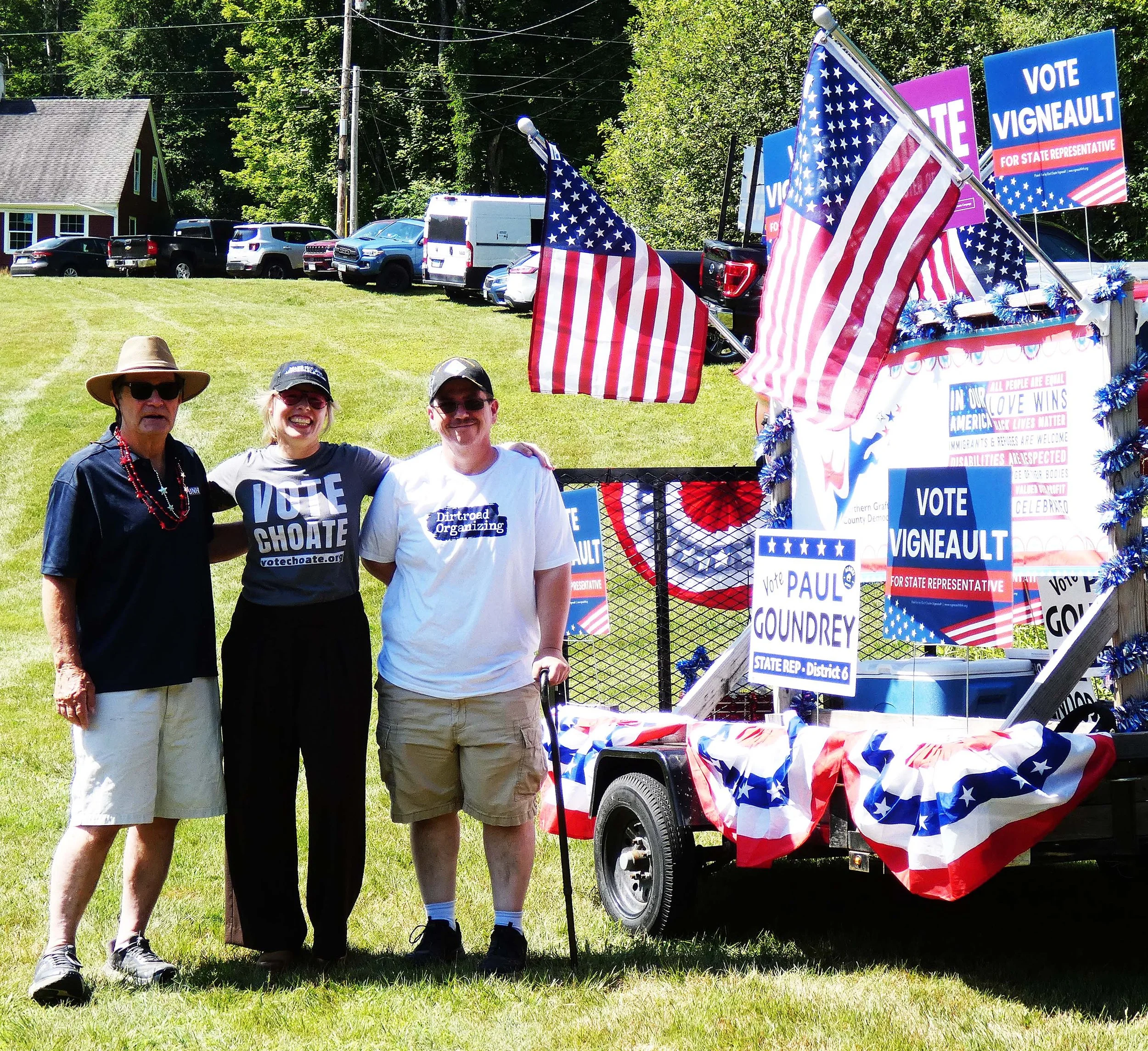
Three candidates appearing in the Warren Old Home Day Parade last Saturday, July 11, 2026, are, left to right, Paul Goundrey, District 6 Representative of Orford; Brie Choate, for the Grafton County Register of Deeds and Candidate for the Haverhill area State Representative Dustin Vigneault. The Bridge Weekly/Bernie Marvin
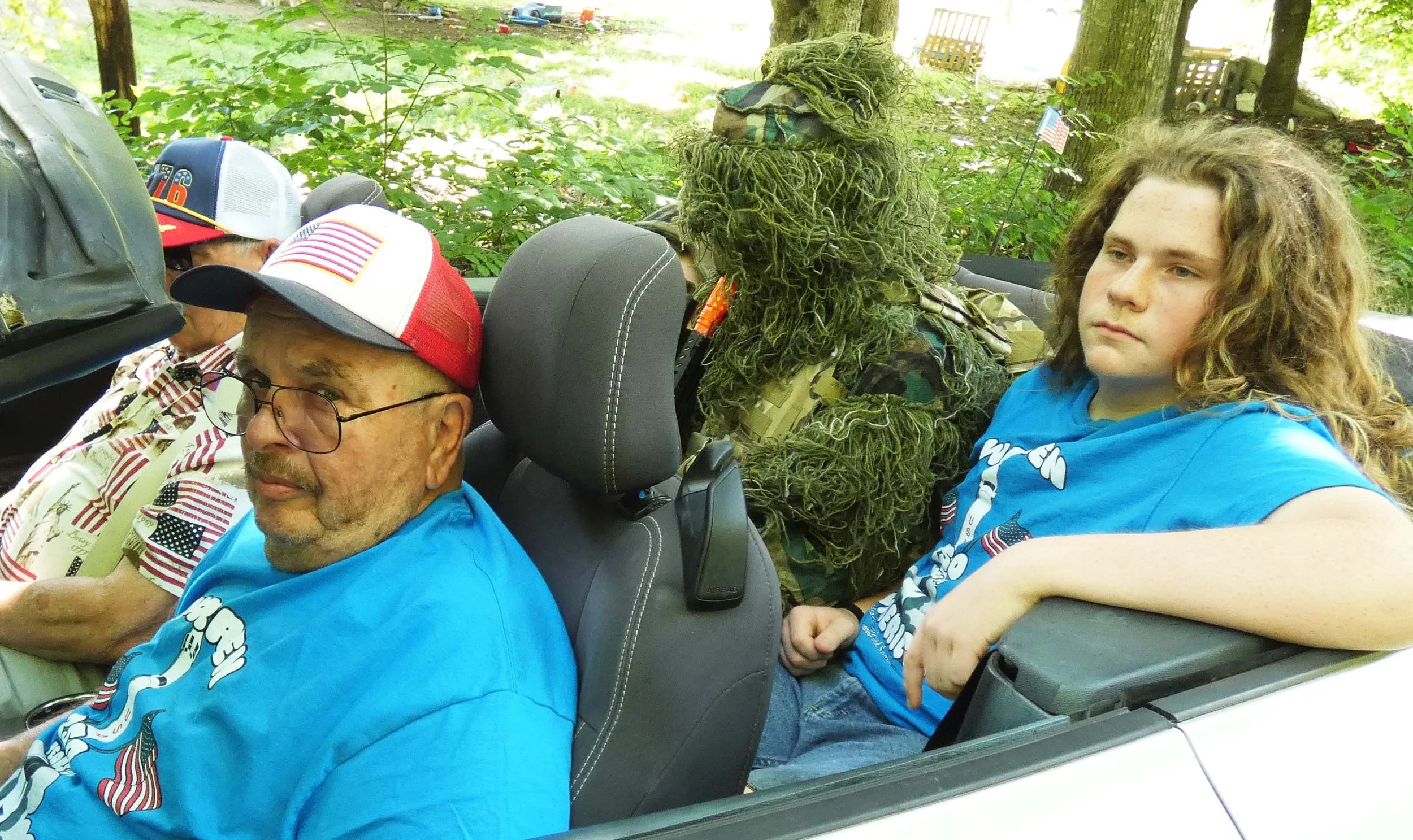
The Warren Old Home Day Parade Marshals included, front left vehicle driver, Don Bagley, Vice President of the Warren Historical Society. Others in the vehicle with Bagley were along for the ride to enjoy the beautiful parade weather. The Bridge Weekly/Bernie Marvin
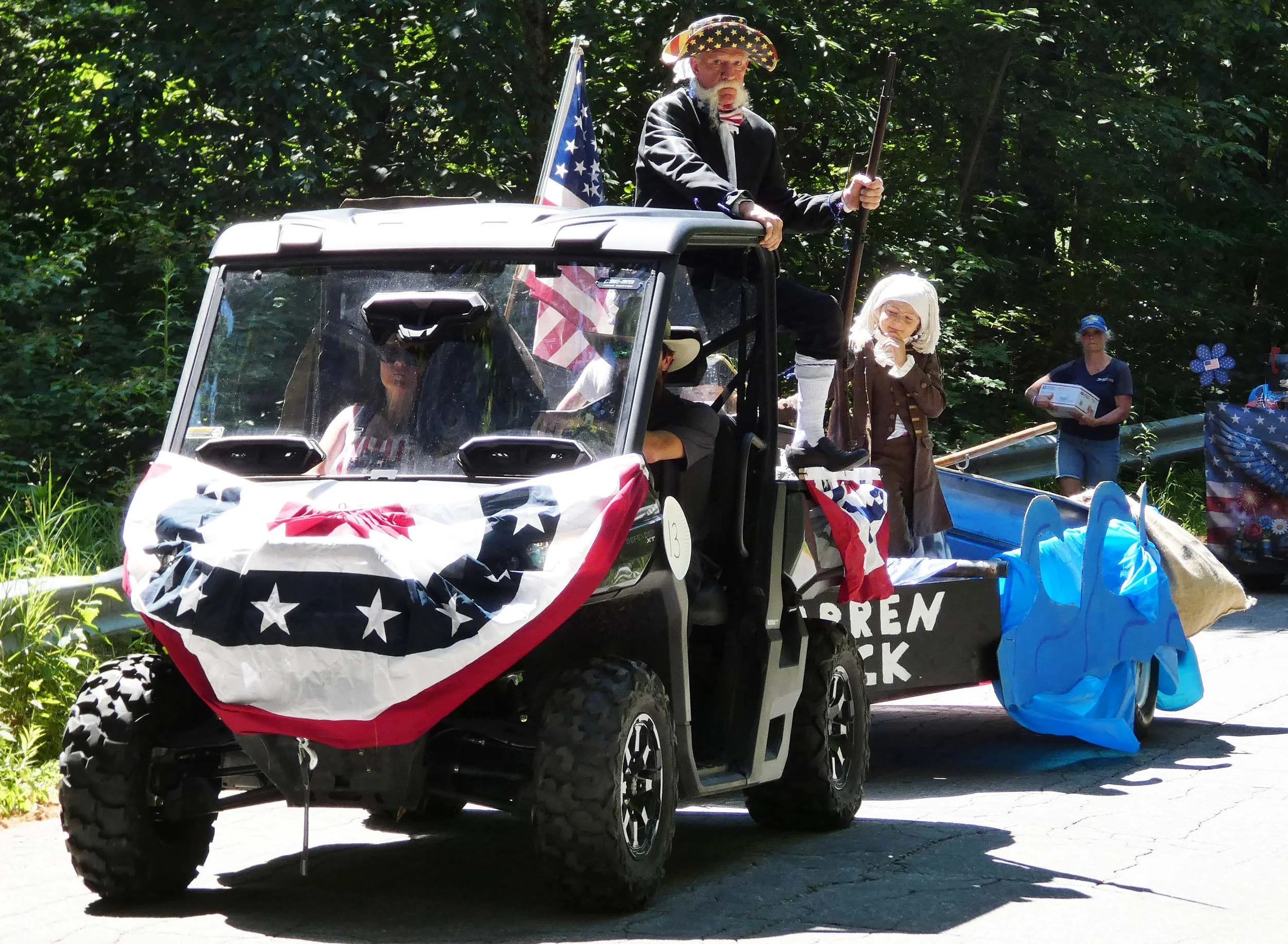
The Godfrey Clan on their float as they begin their ride last Saturday morning in the Warren Old Home Day Parade. The Bridge Weekly/Bernie Marvin.
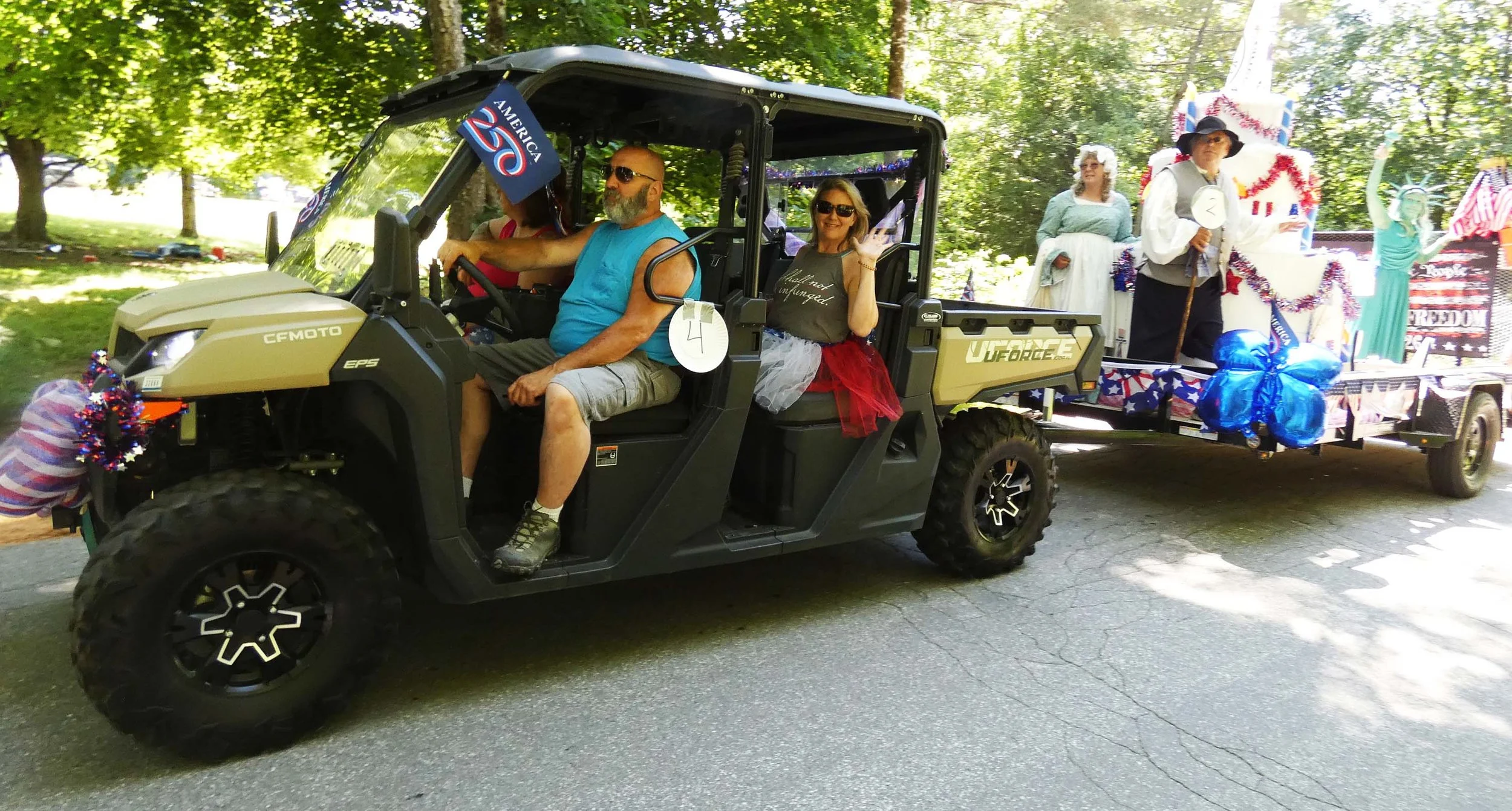
The Warren Old Home Day Parade featured several groups on their family floats. The Bridge Weekly/Bernie Marvin
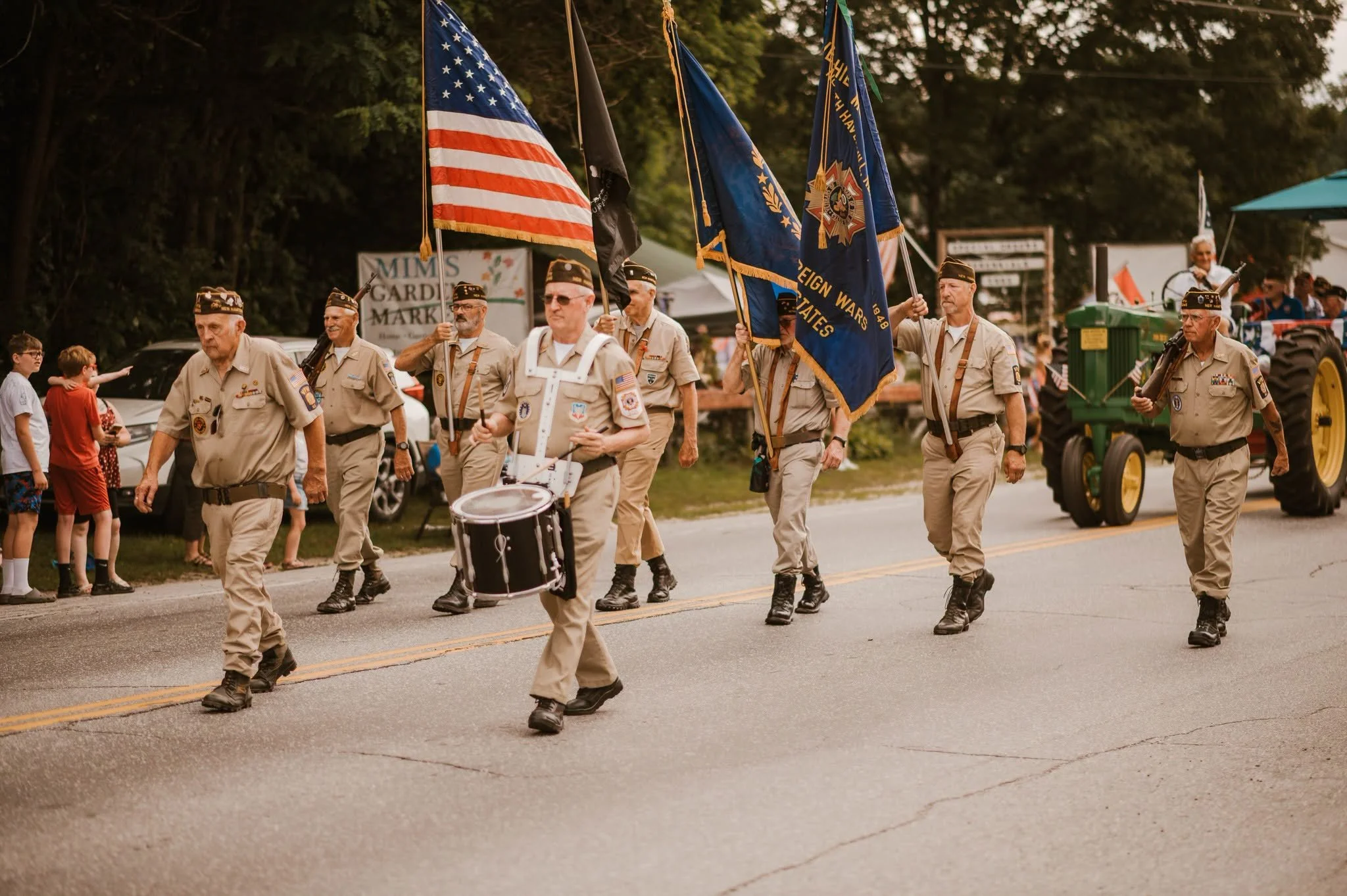
Big Crowds Greet July 4TH Parades In Woodsville, Orford And Fairlee
The weather was seasonally hot, and the massive crowds that traveled to the communities to see their parades were filled with spirit and best wishes for the country's future.
Bernie Marvin
Woodsville, Orford, NH and Fairlee, VT – For these three patriotic villages that lie along a defining border created by the Connecticut River, the message to the rest of the country and the world on the nation's July 4 250th birthday was, "Happy Birthday, America!"
The weather was seasonally hot, and the massive crowds that traveled to the communities to see their parades were filled with spirit and best wishes for the country's future. Crowds strolled the sidewalks of the three parade-hosting communities, with each of the three towns hosting BBQs. Historic events and a long list of activities continued into the night, culminating in fireworks in Woodsville and Fairlee.
All along both sides of town sidewalks in Orford and Fairlee, visitors flocked an hour or more before the 11 AM parade kickoff at the Rivendell School entrance road and Route 10 area.
As always, the Orford-Fairlee July 4th Parade included a variety of local people in all types of floats, skits, and groups. A special series of floats and military vehicles were dedicated to local veterans who rode proudly as part of the parade, receiving hearty welcomes all along the way.
At the conclusion of the parade that ended in Fairlee on South Main Street beyond Wing's Market, there was a special program on the Fairlee Town Common at the Soldiers Monument and Flagpole.
For that ceremony, there was a Welcome by Bruce Taylor, Master of Ceremonies for the program. The flag was raised by American Legion members, with the National Anthem sung by Veteran Brad Shedd and his son, Blair Shedd.
There was a Historical Society Welcome by Society President Don Weaver, followed by Vermont State Representative Monique Priestley. Pastor Dick Hodge of the Fairlee Community Church offered a prayer. The American Legion Ceremony at the monument included Thetford Post 79 Ron Ward, Fred Adams, Nate Pero, Jim Brigham, and Jim Holbrook—also, Norwich Post 7 members Jim Harlow and DeCosta.
There was also a closing performance with band music by Maple Leaf Seven.
Meanwhile, up the Connecticut River a dozen miles, it was a busy time in Woodsville, as the parade passed along Route 302 from Woodsville into Wells River, where it terminated, and the units returned to Woodsville to retrieve personal vehicles for their trip back home.
As has been the case for many years, planes flying overhead have provided a protective roar of freedom to parade-goers lining the streets below, while a variety of combat aircraft have thrilled the crowds with exciting flyovers for the past 25 or so years.
This year, F-35 fighter aircraft from the Vermont Air National Guard flew overhead in the Orford-Fairlee airspace for a quick pass as they continued to their next community to wow those crowds. It is always a thrill to see America's protective aircraft overhead on her birthday!
It was anticipated that planes from the same or a similar unit would also fly over the Wells River-Woodsville Parade. The parade included the opening honor guards from the Veterans of Foreign Wars Post 5245 in North Haverhill and the American Legion Ross-Woods Post 20 in Woodsville.
From there until nearly an hour later, the parade featured many floats, sports teams, marchers and, of course, the Shriners and their exciting array of fire vehicles and small motorcycles. Also this year, the North Haverhill VFW Post sponsored a float carrying veterans along the parade route.
Grand Marshal of the Wells River-Woodsville Parade was community leader and former Peace Corps member Richard Roderick. The following two reports on the day's guests of honor were featured in the Wells River-Woodsville July 4 Committee's publication for this year's events.
The Bridge Weekly appreciates the use of their reports in this story. They wrote: "The Woodsville Wells River 4th of July Committee annually selects a Grand Marshal for the parade. This year's honoree is Richard M. Roderick, who lives on Bible Hill in Wells River. Though Richard is not a Newbury native, he will tell you that he has been visiting Newbury since before he was born. His parents had friends in town, and they visited them for the 4th of July holiday week most summers. Richard even attended Vermont Technical College and the University of Vermont. Then, in 1974, he joined the Peace Corps and taught agriculture to students in grades 8-11 in Jamaica. He continues to have contact with some of his students and has returned to his volunteer site over the years. He co-founded the Green Mountain Returned Peace Corps Volunteers group in 1982. Richard's next adventure led to a 28-year career with FmHA/Rural Development in Caledonia County, Vermont; the U.S. Virgin Islands; Grafton County, NH; and Micronesia in the Western Pacific. During that time frame, Richard moved to North Haverhill and then bought his home in Wells River in 1992. But Richard's involvement with the community didn't stop there. He was an 11-year member of the Newbury Planning Commission and the Newbury Historical Society. In 1992, when the Wells River Action Program (WRAP) began, Richard was part of the group and served as President for 3 years. He is also known as one of the driving forces behind Wells River's So Long Summer, Hello Fall Festival and as the editor of the WRAP-UP Newsletter. Richard's newsprint experience also includes a childhood paper route, selling ads for his high school and college yearbooks, and for Trendy Times. Richard is also familiar with 250-year celebrations. He was part of the Newbury/Haverhill team in 2013 and is currently serving on the Newbury US 250 Celebration Planning Committee. Be sure to say thank you to Richard when you see him and give him a big wave when he passes by as the 2026 Grand Marshall of the Woodsville Wells River 4th of July Parade.”
And earning the title of Parade Marshal this year was well-known Haverhill resident and US Air Force veteran Harvey Keyes. “Command Chief Master Sergeant Harvey W. Keyes has been selected as the 2026 Parade Marshal for the Woodsville Wells River 4th of July celebration. Born in Haverhill, NH, Harvey began his military service while still in high school, enlisting in the Vermont Air National Guard before joining the United States Air Force in 1959. What followed was a remarkable 32-year career defined by courage, leadership, and unwavering dedication, from his early days as a B-52 crew chief during the Cuban Missile Crisis to his becoming one of the youngest Strategic Air Command crew chiefs. Chief Keyes quickly distinguished himself through skill and determination. He later served as an inflight refueling specialist aboard a KC-135 aircraft before answering the call to combat rescue missions in Southeast Asia. During the Vietnam War, Harvey flew 101 missions as a crew chief and door gunner aboard HH-3E "Jolly Green" rescue helicopters, participating in seven life-saving rescues. During the Tet Offensive in 1968, his crew rescued three downed Navy pilots under enemy fire—an act of extraordinary heroism that earned him the Distinguished Flying Cross. He would go on to complete a total of 237 combat missions and log more than 5,000 flying hours. Rising to the rank of Chief Master Sergeant, he was selected as Command Chief of the 305th Air Refueling Wing, the largest refueling wing in the free world—and was among a select few chosen to serve beyond 30 years. He retired in 1990 after more than 3 decades of distinguished service. Even in retirement, Chief Keyes continued his lifelong commitment to others—serving 18 years with the Grafton County Sheriff's Department, supporting veterans as a DAV driver for over 50,000 miles, and dedicating countless hours to community organizations including the American Legion, VFW, and the Lions Club. Above all, he is a proud father of three daughters and a man whose life reflects service not only to his country but also to his community and his family. Chief Harvey W. Keyes represents the very best of dedication, sacrifice, and American service."
East Corinth
Photos by Kim Morrison
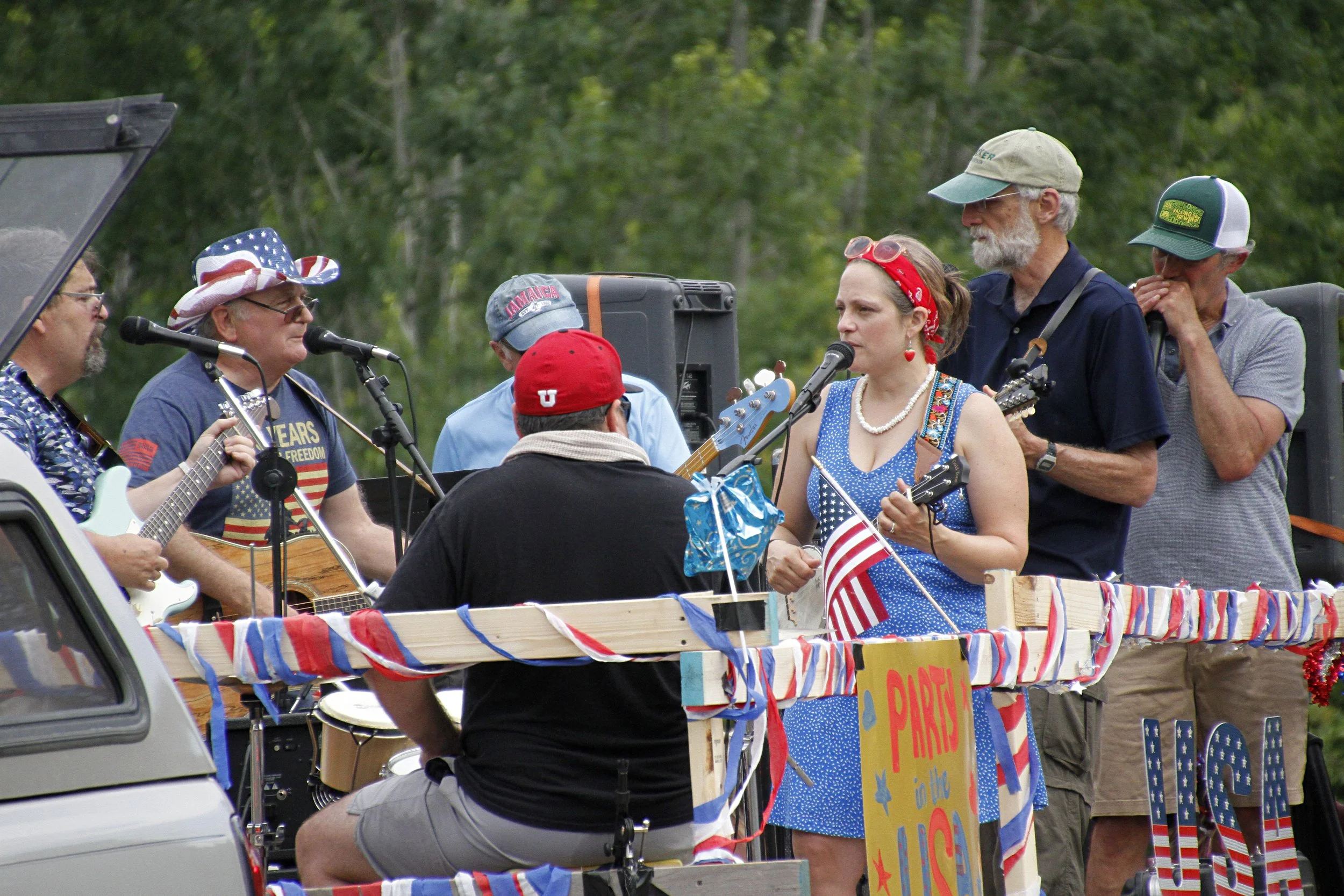
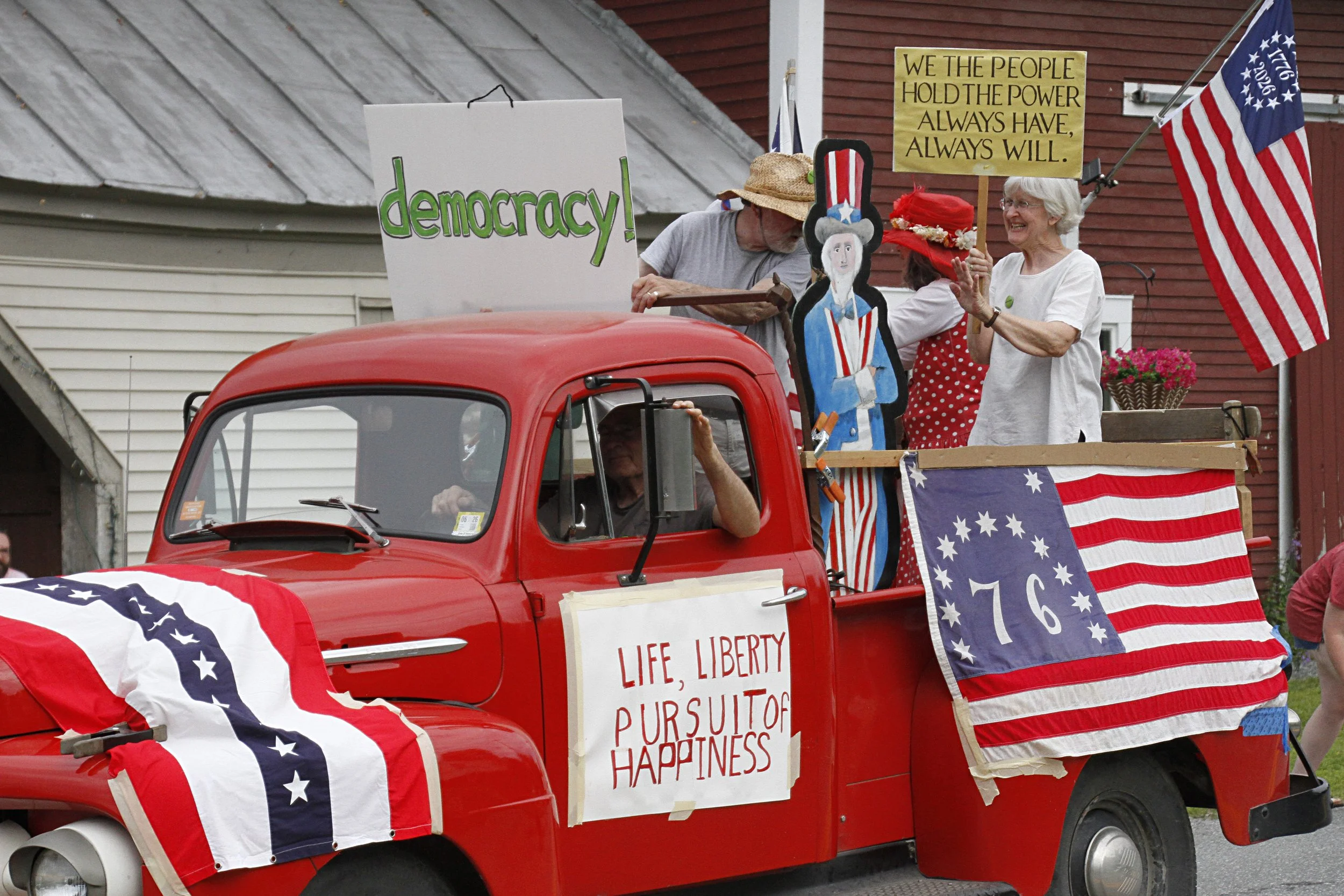
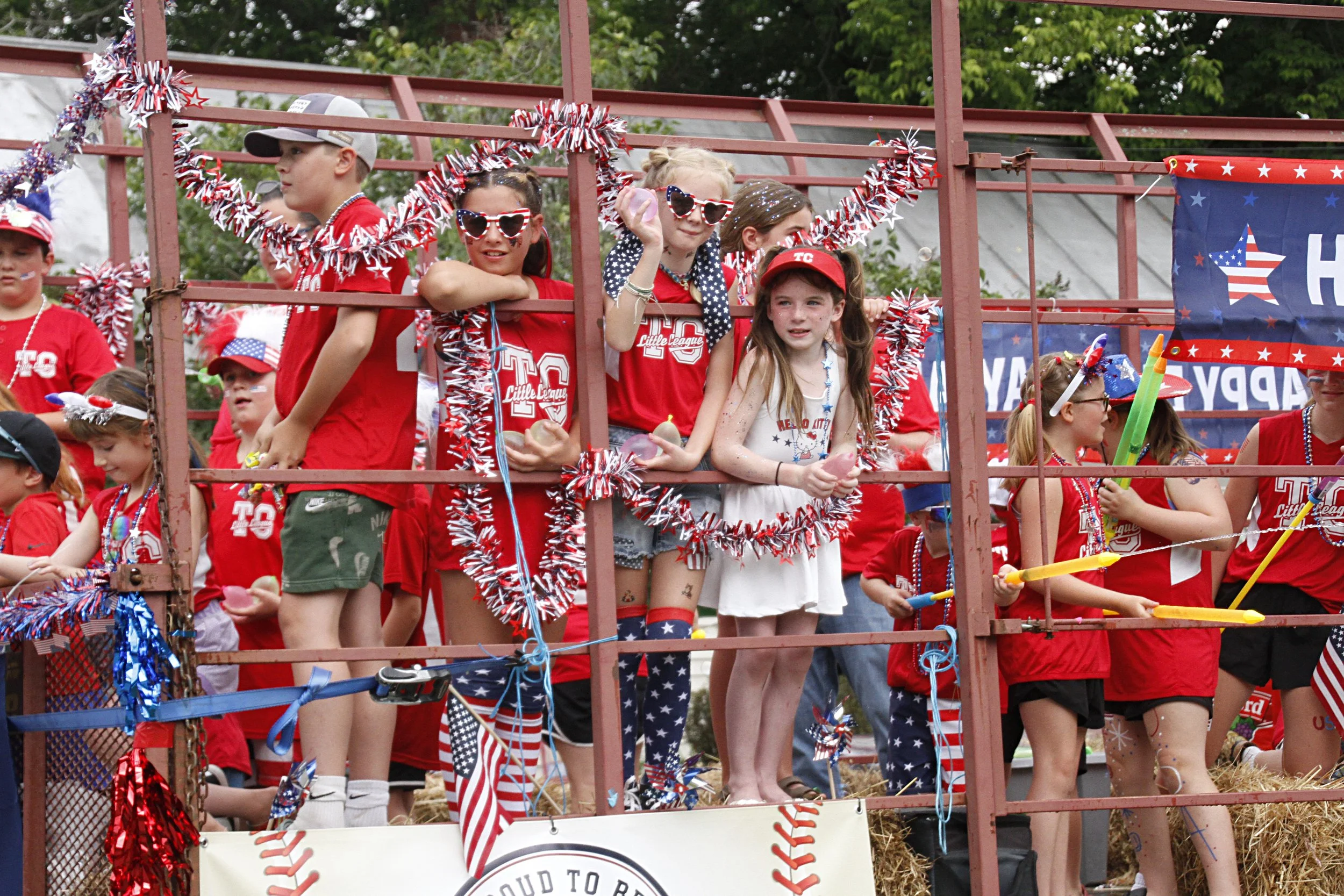
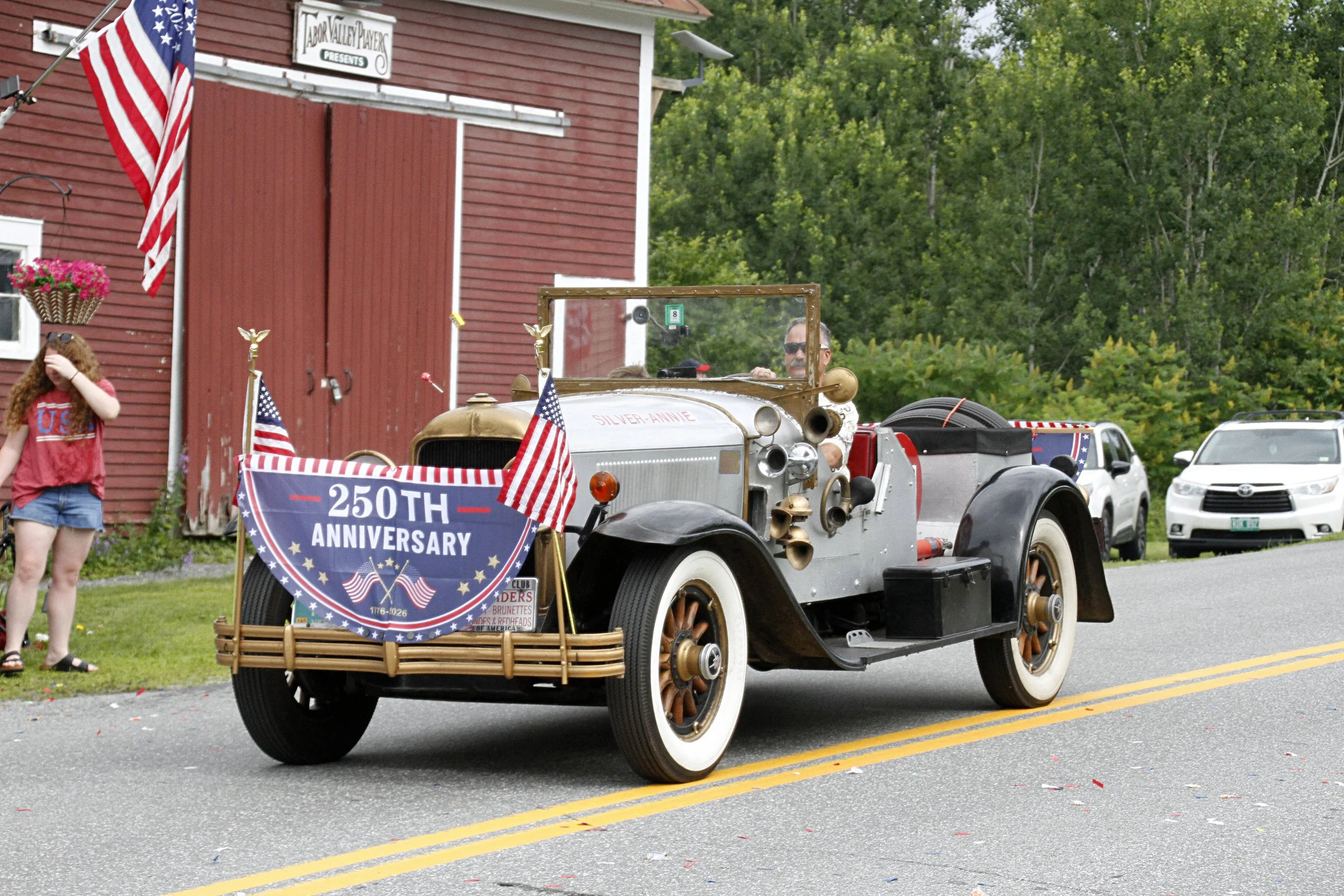
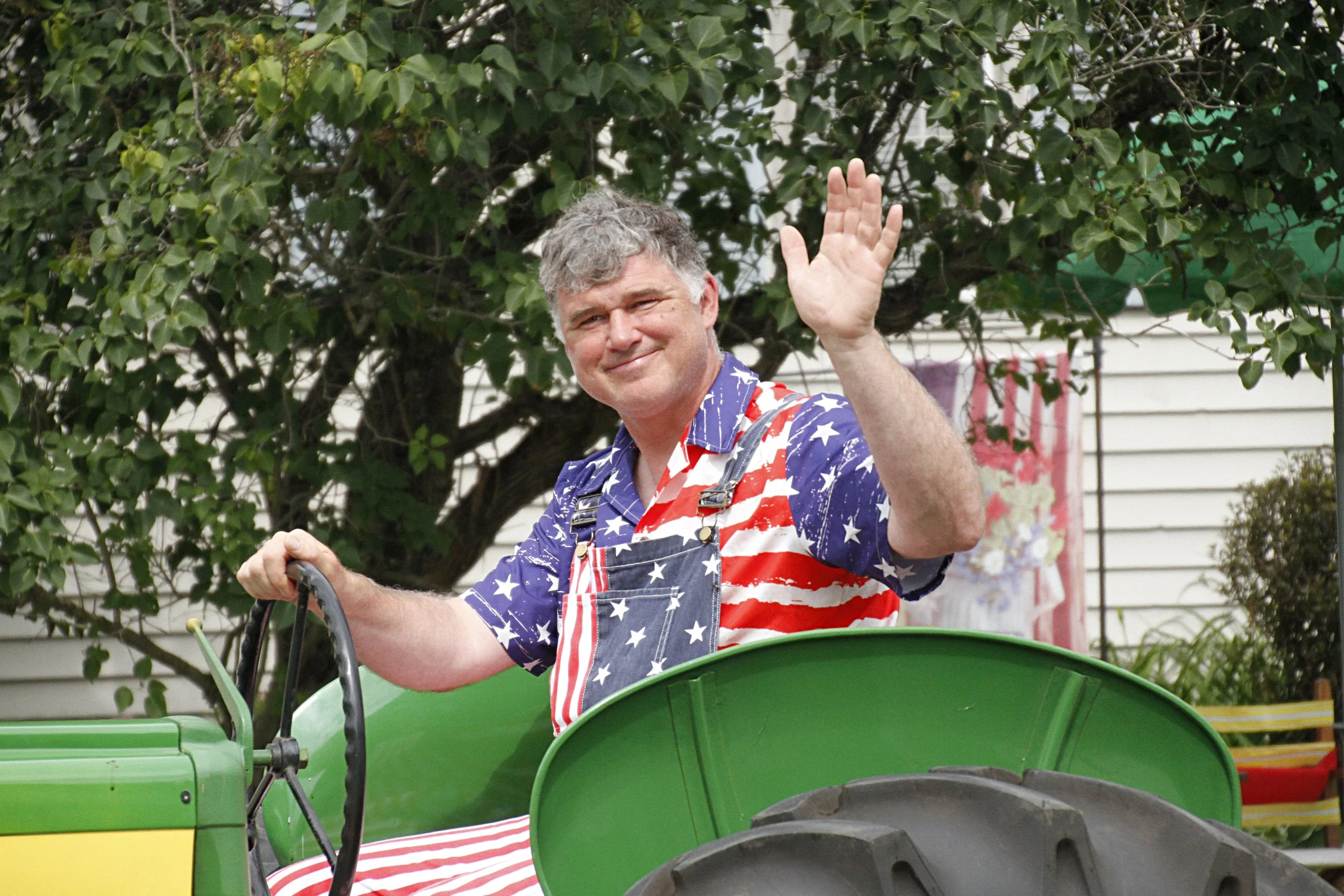
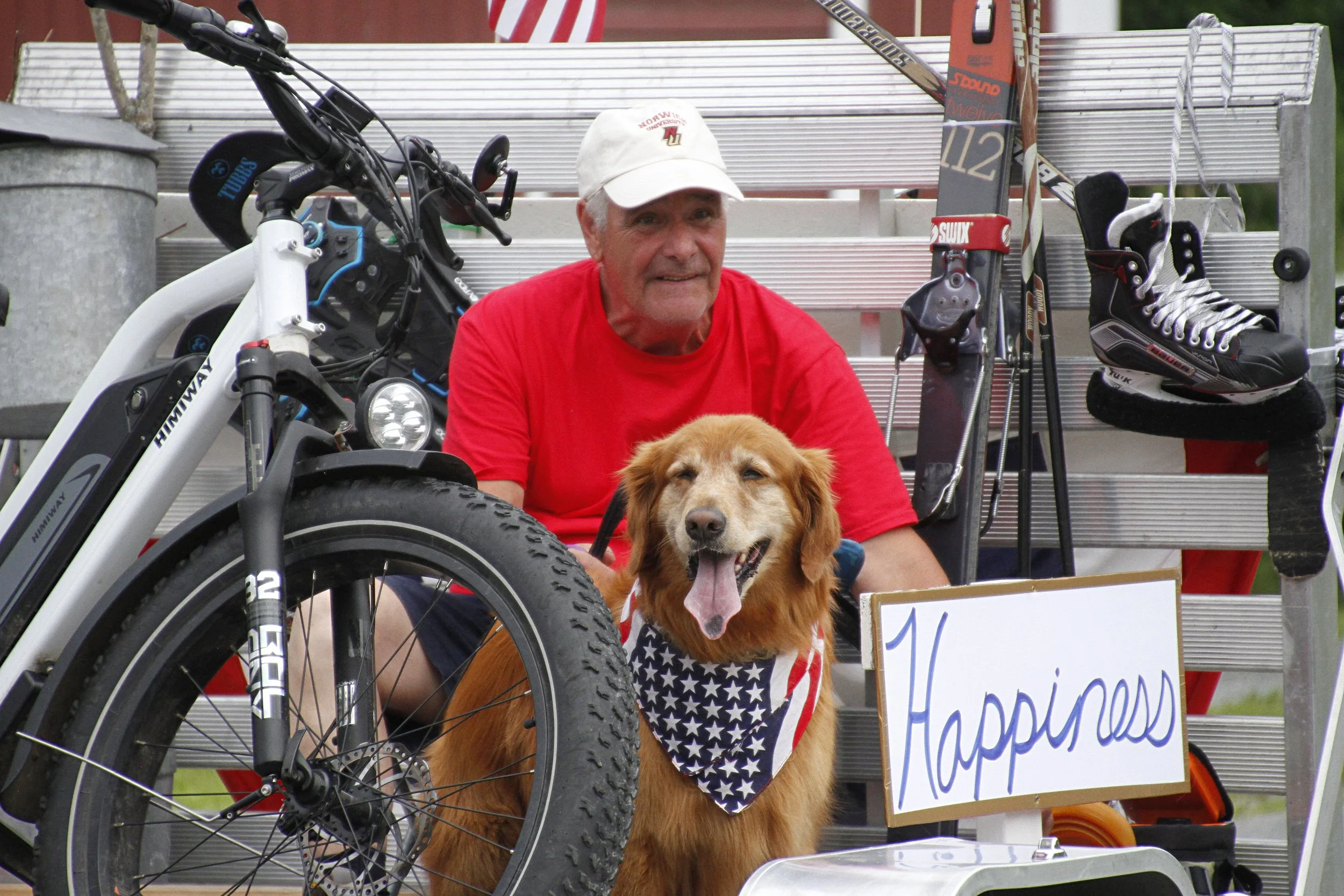
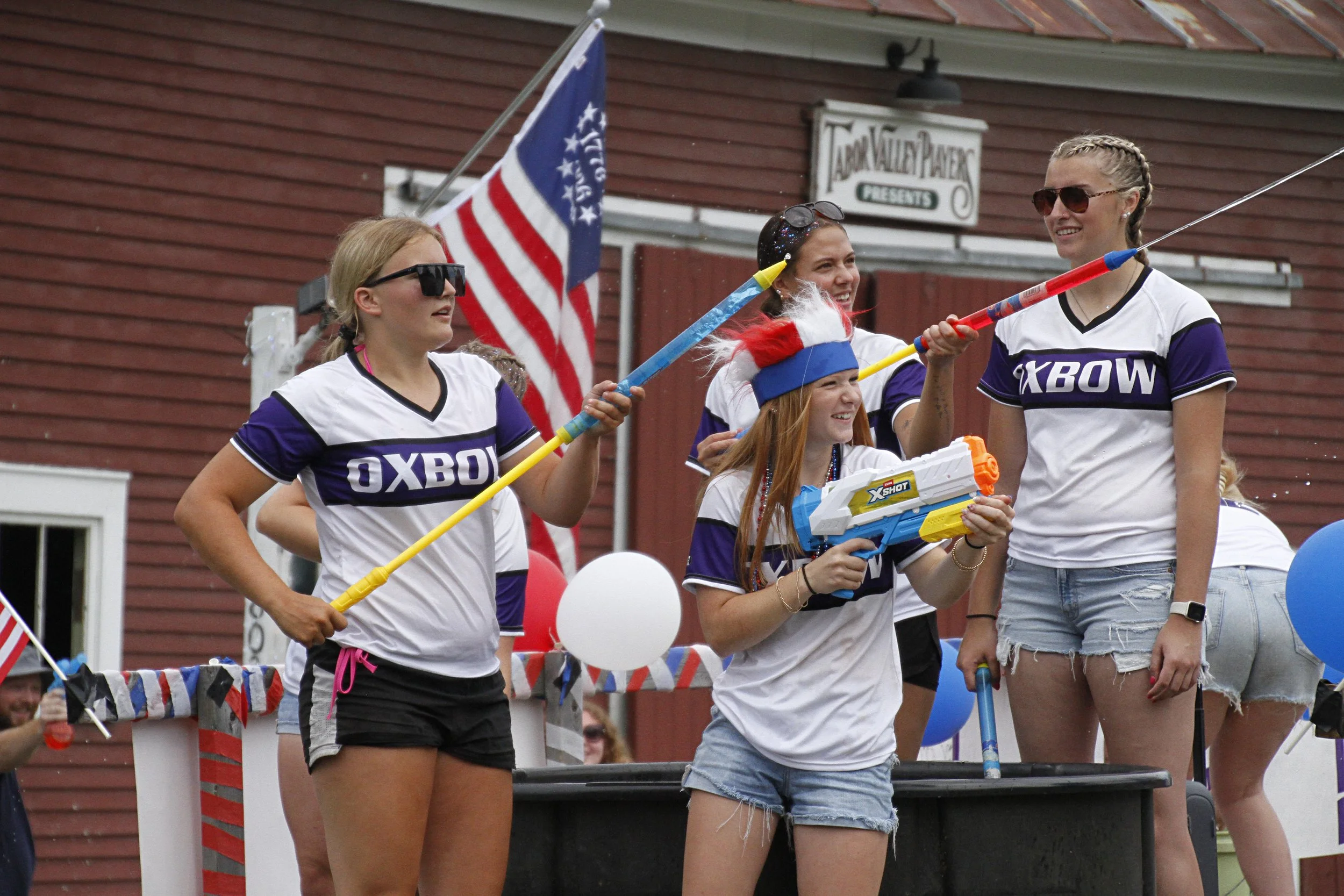
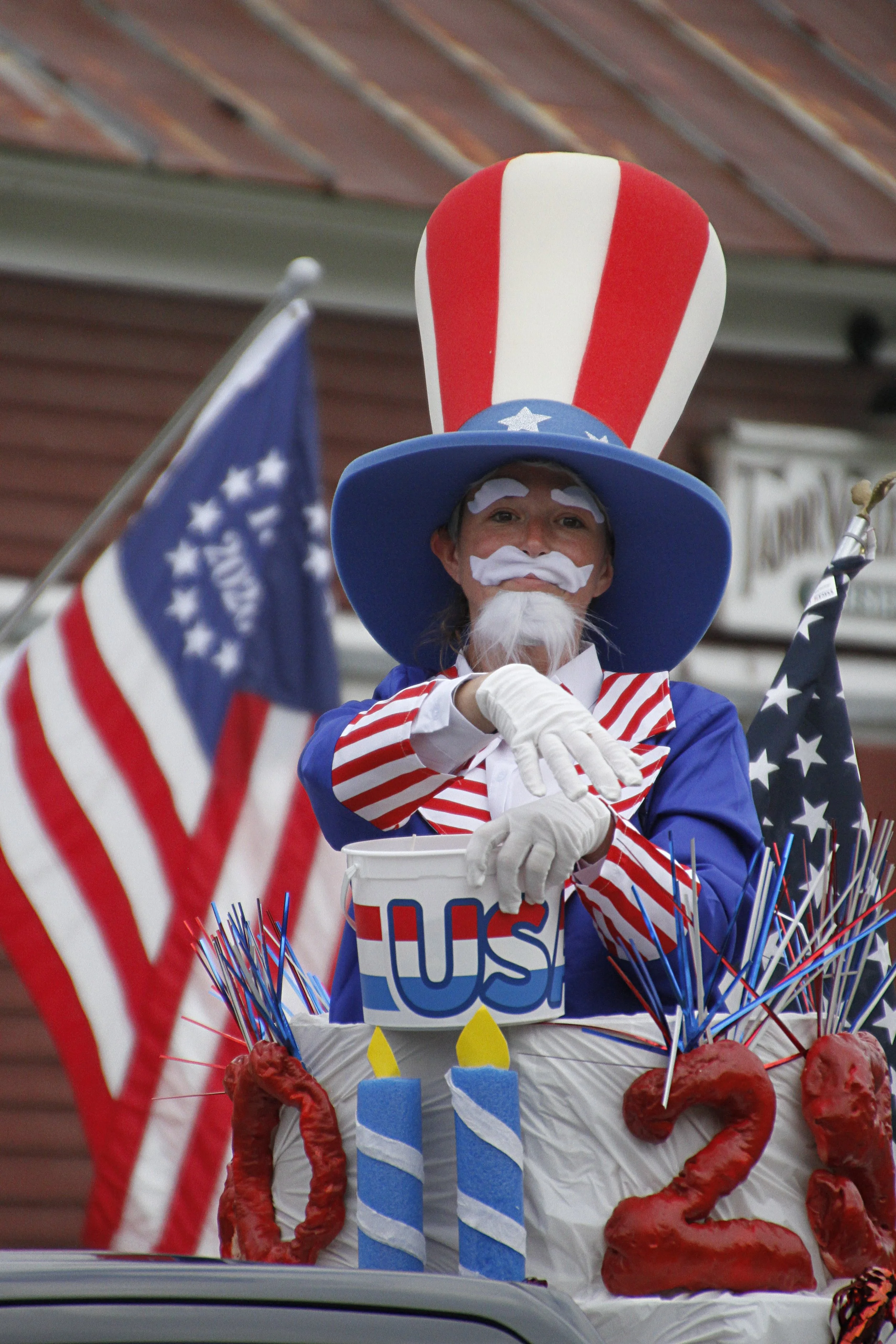
Peacham
Photos by Antonia Munson
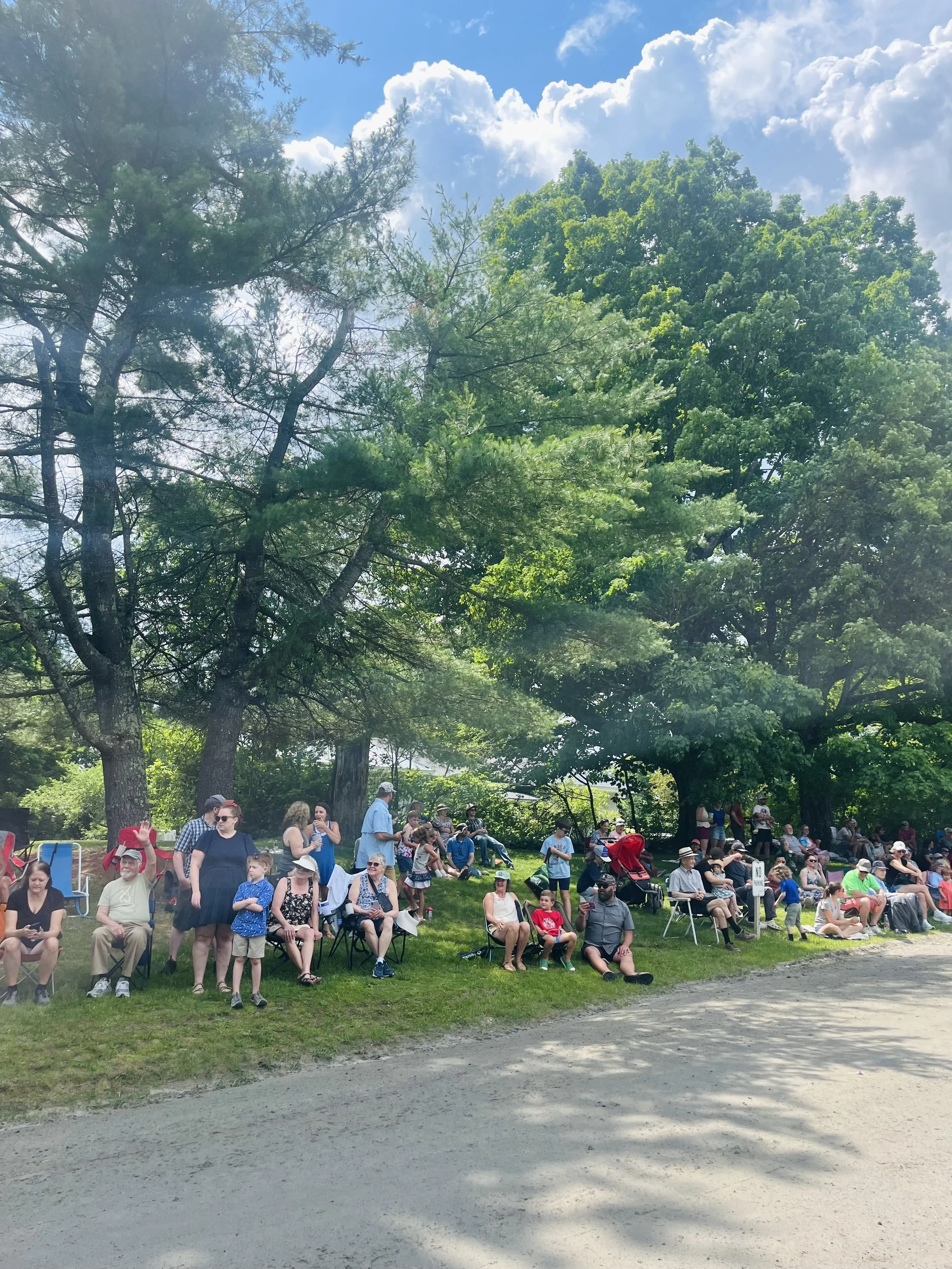
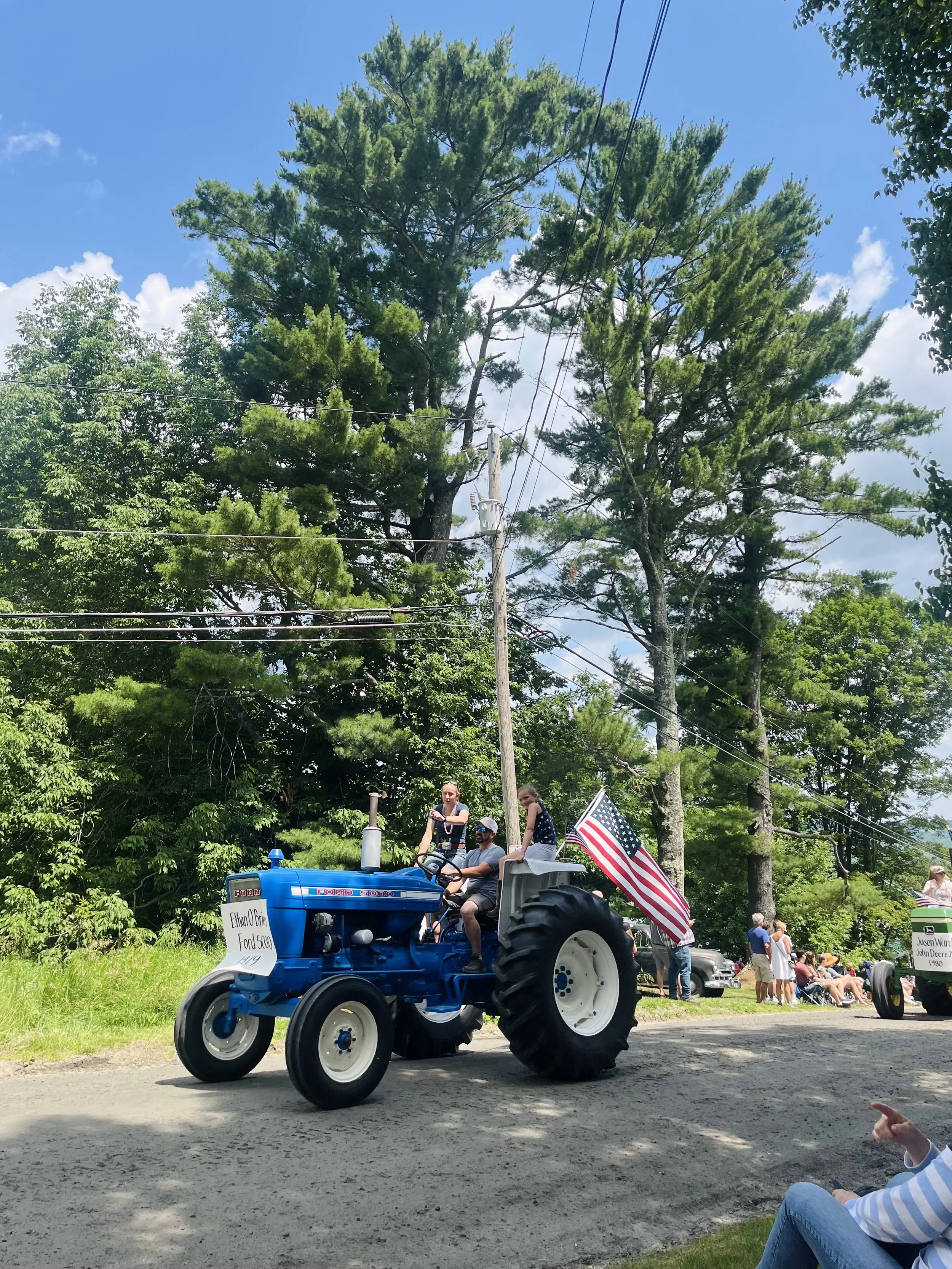
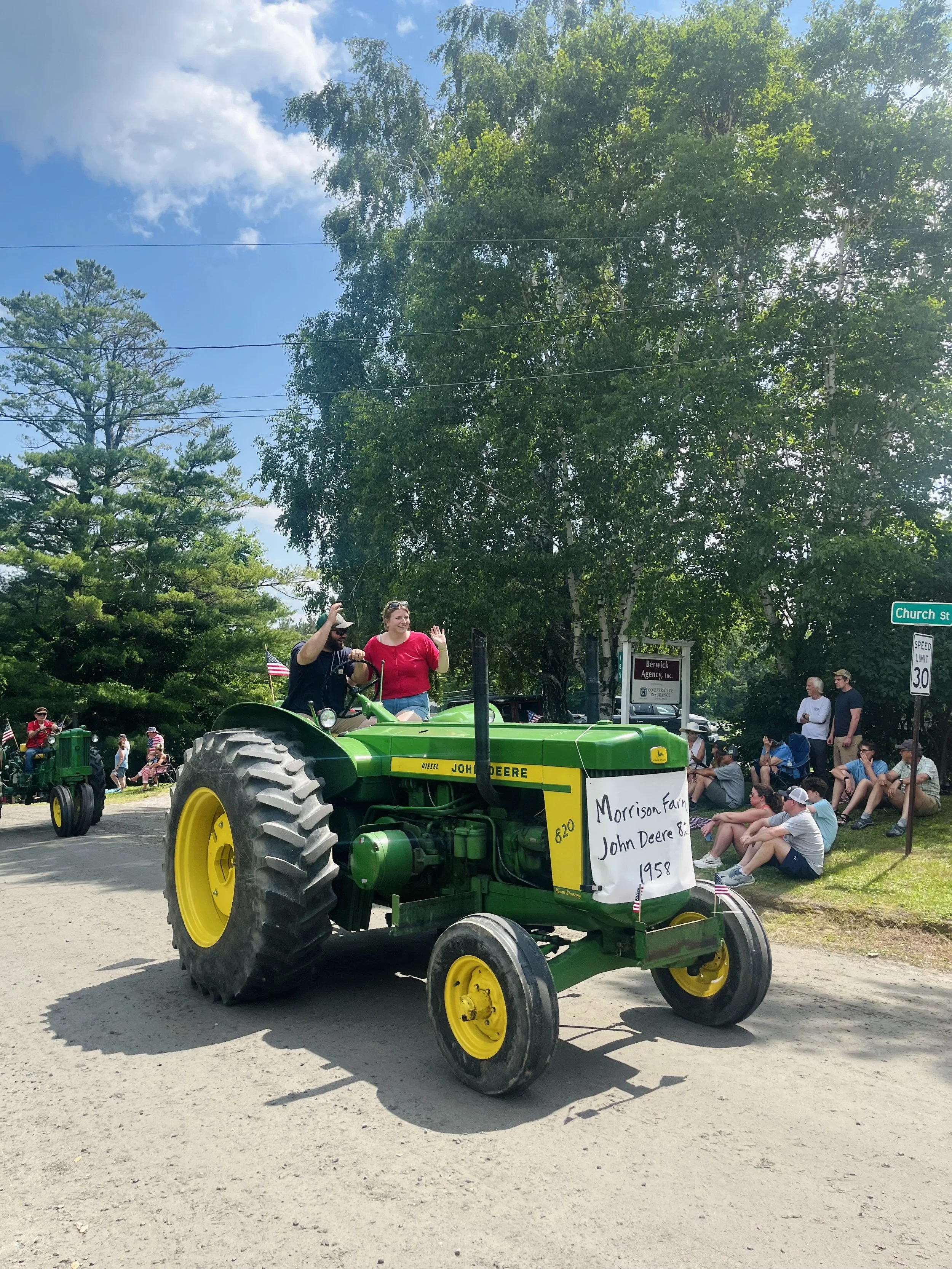
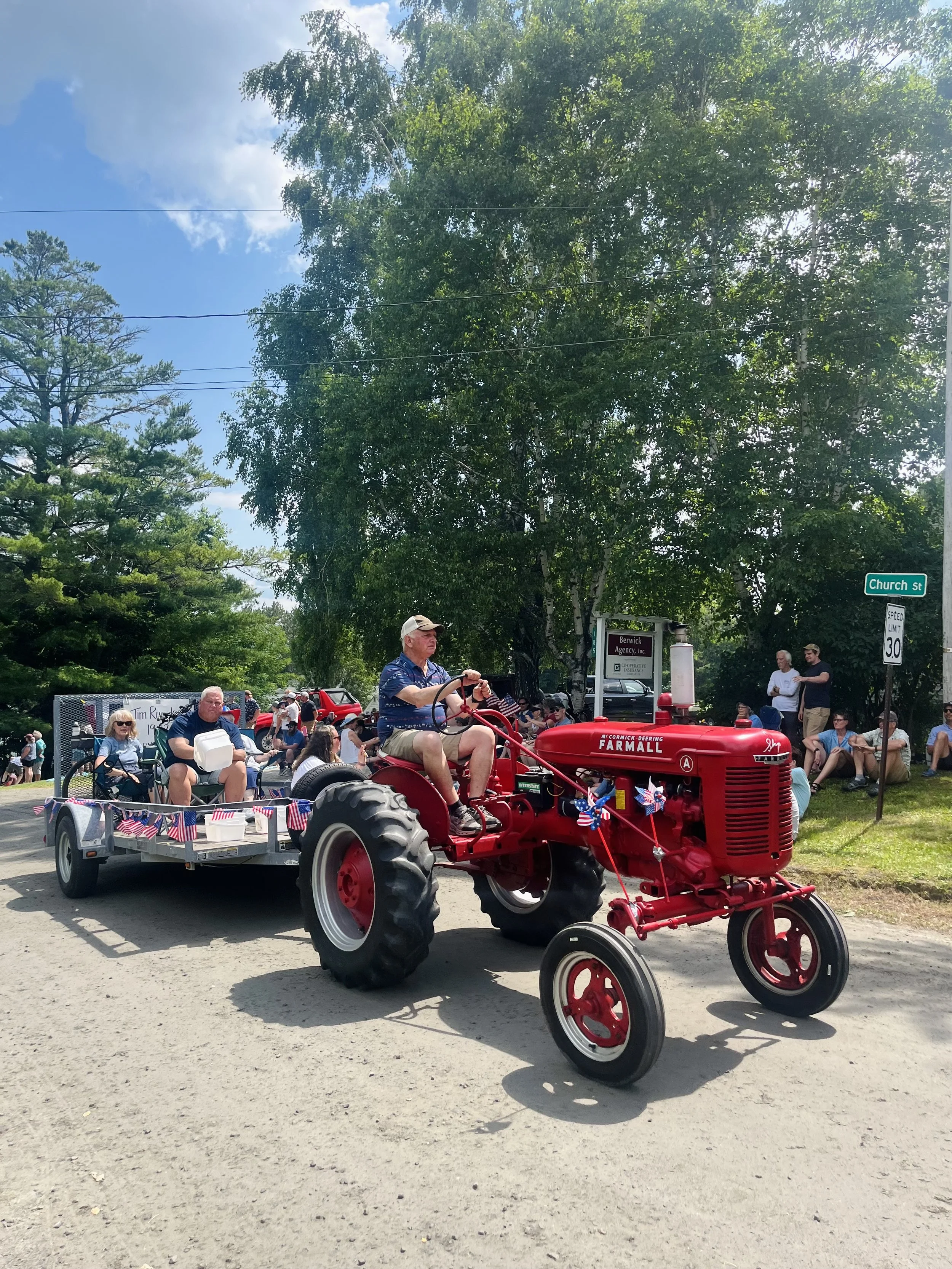
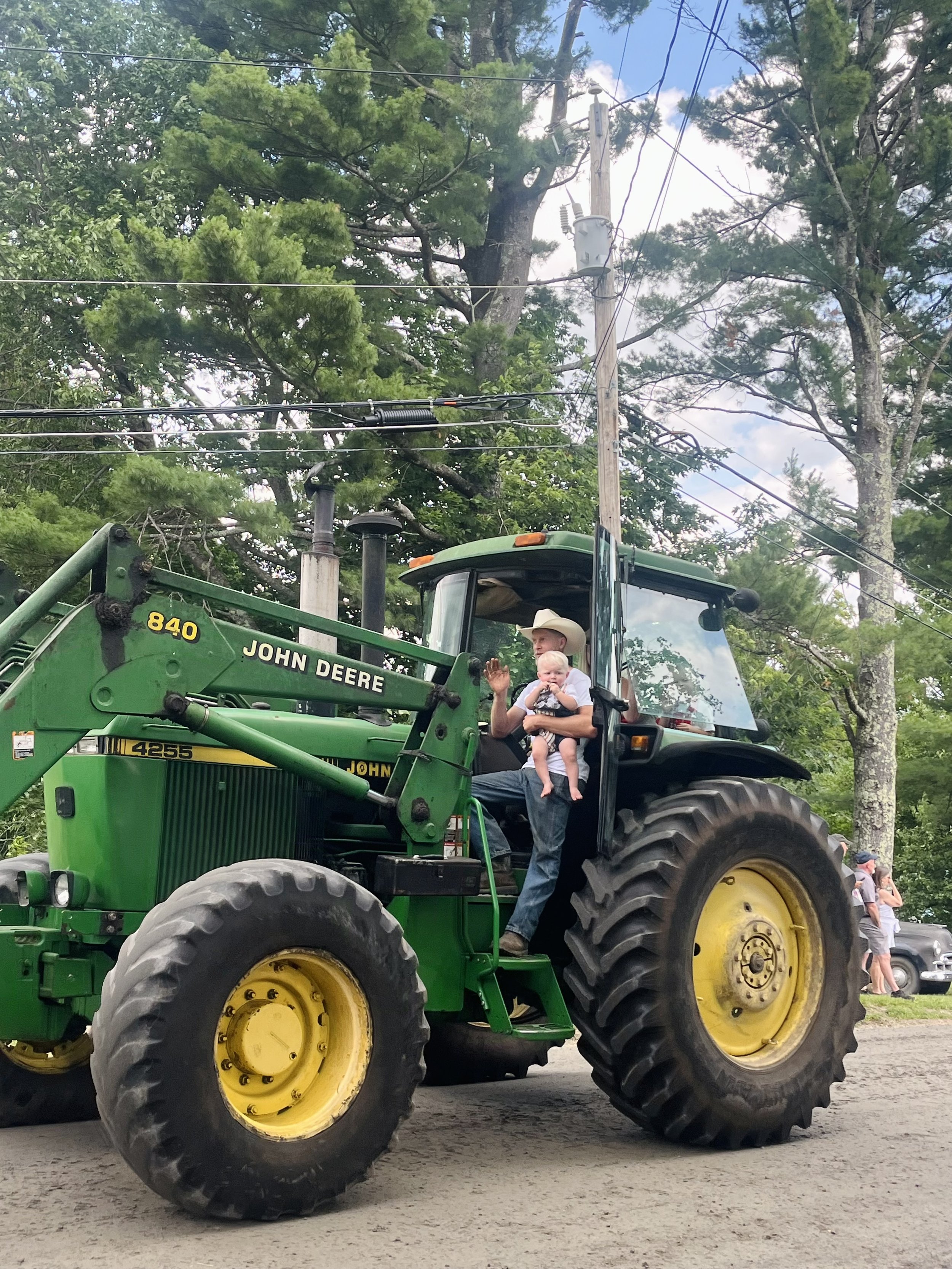
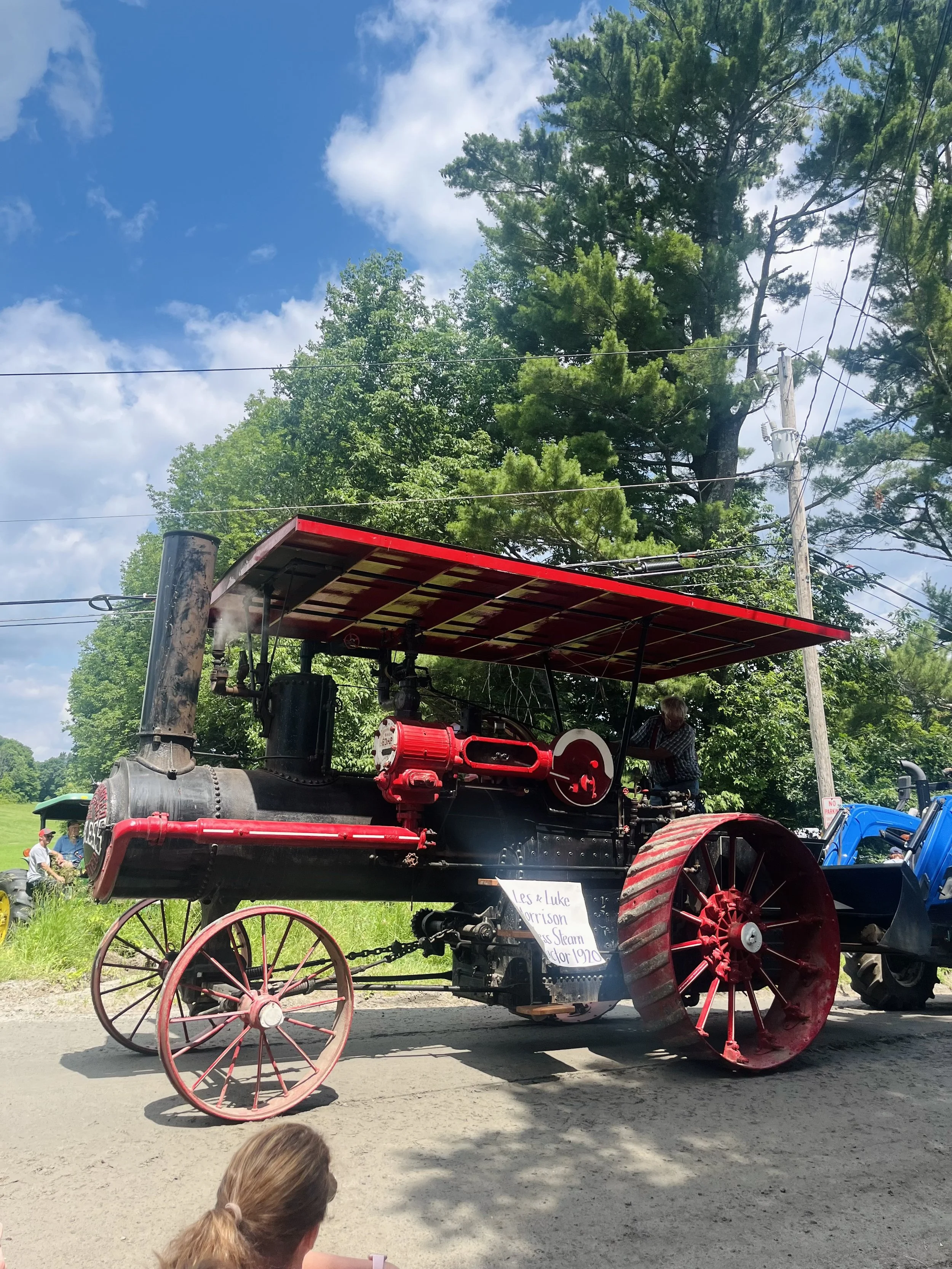
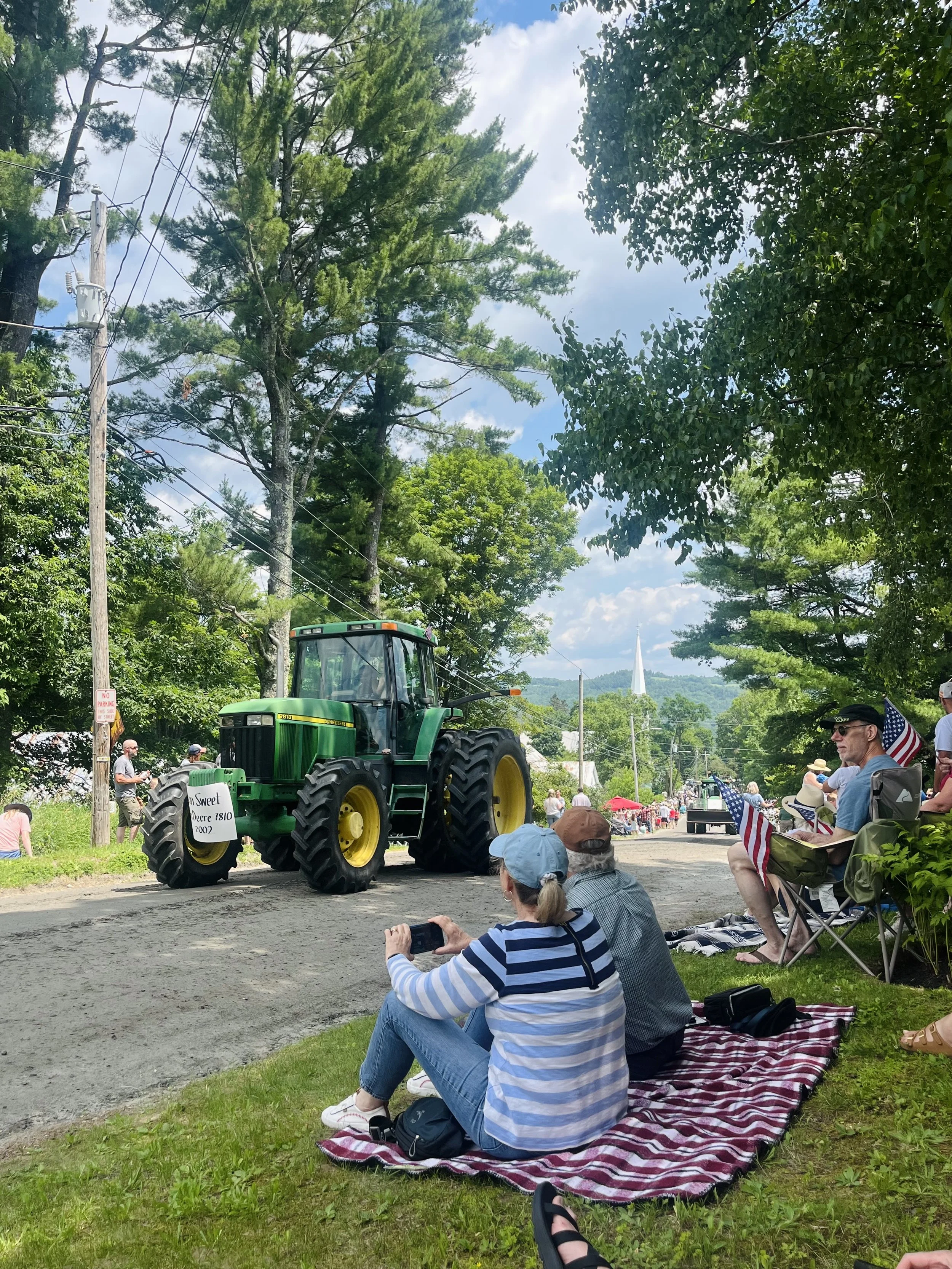
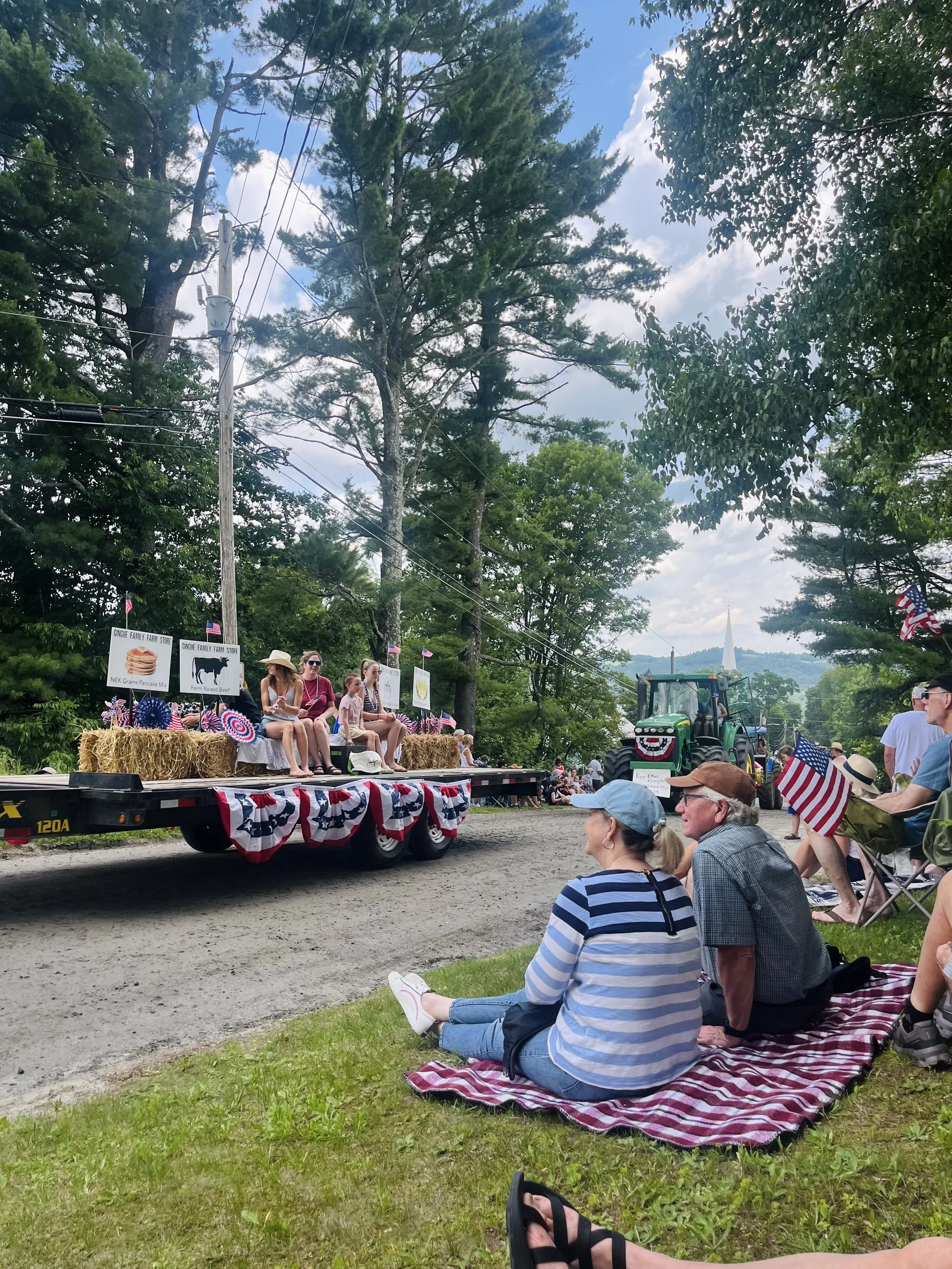
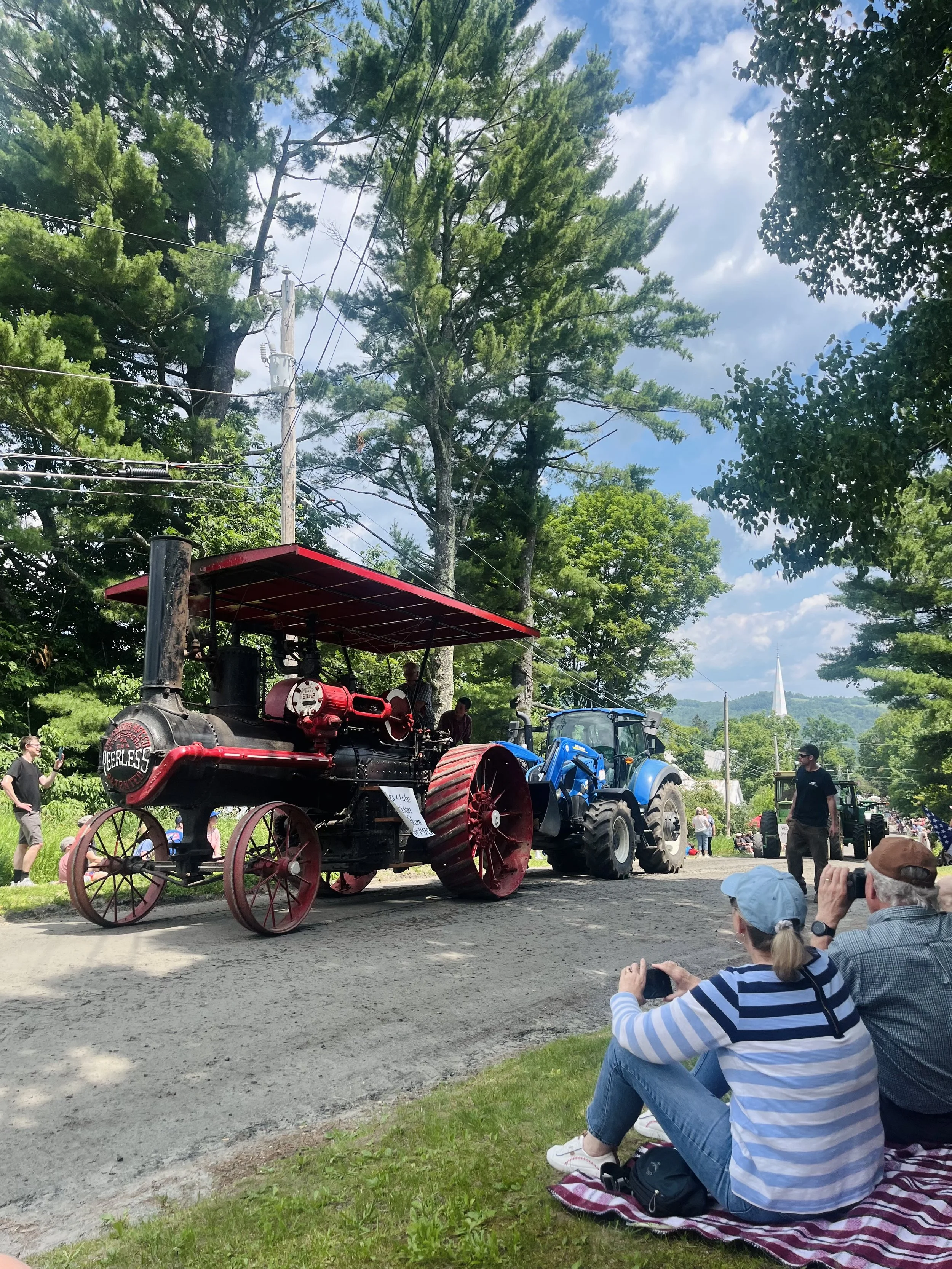
Woodsville & Wells River
Photos courtesy of NEK Photography
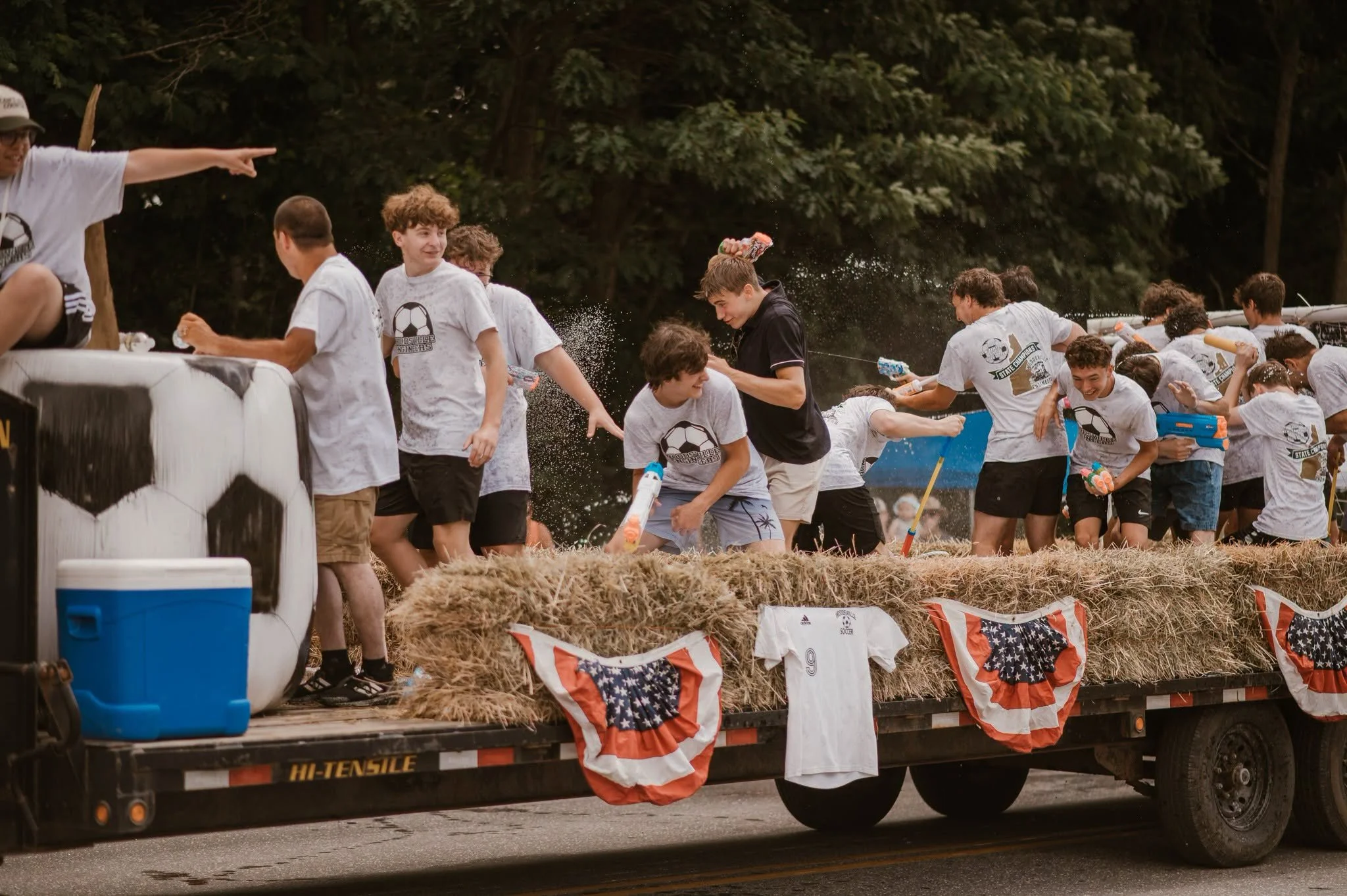
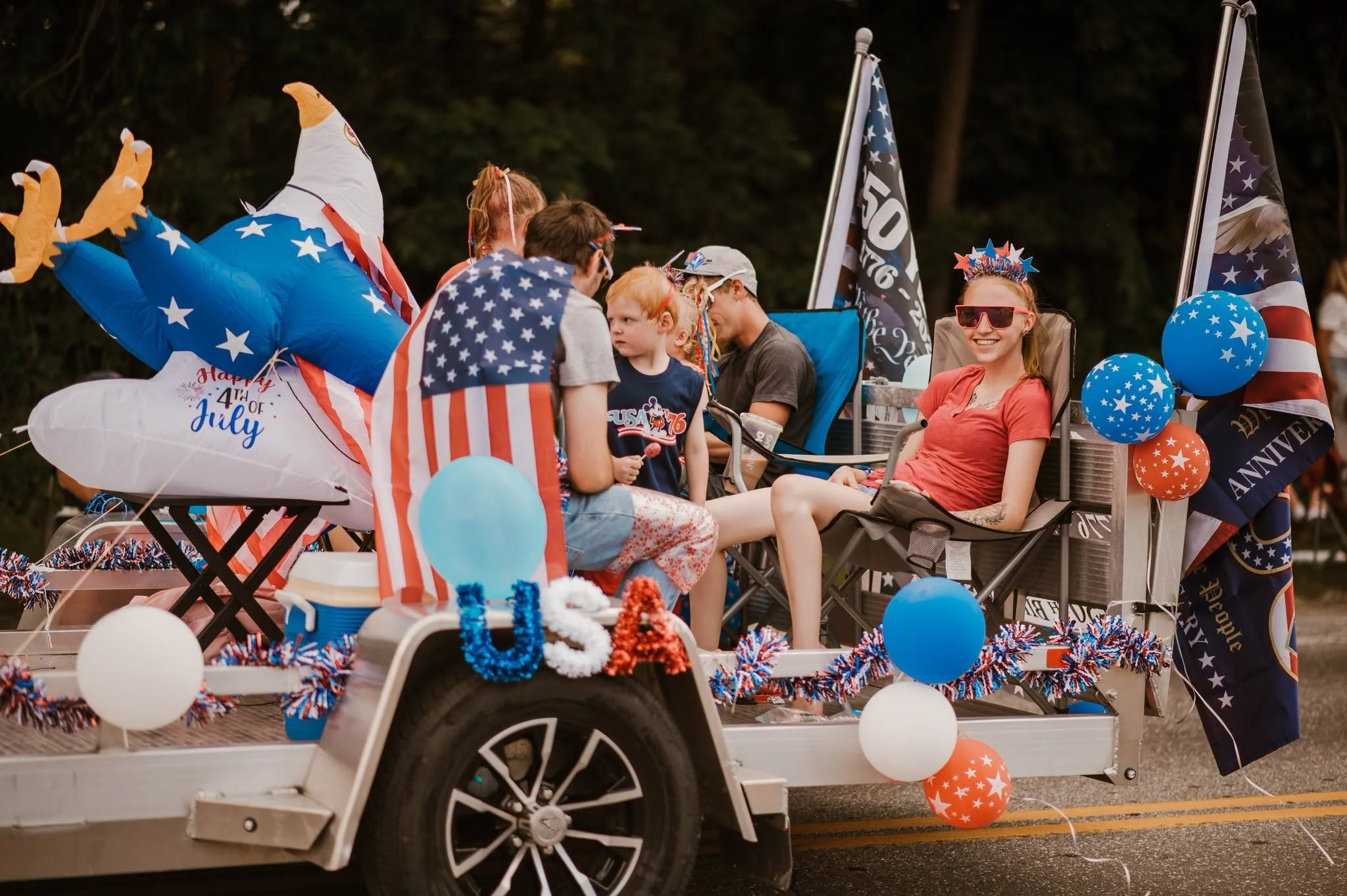
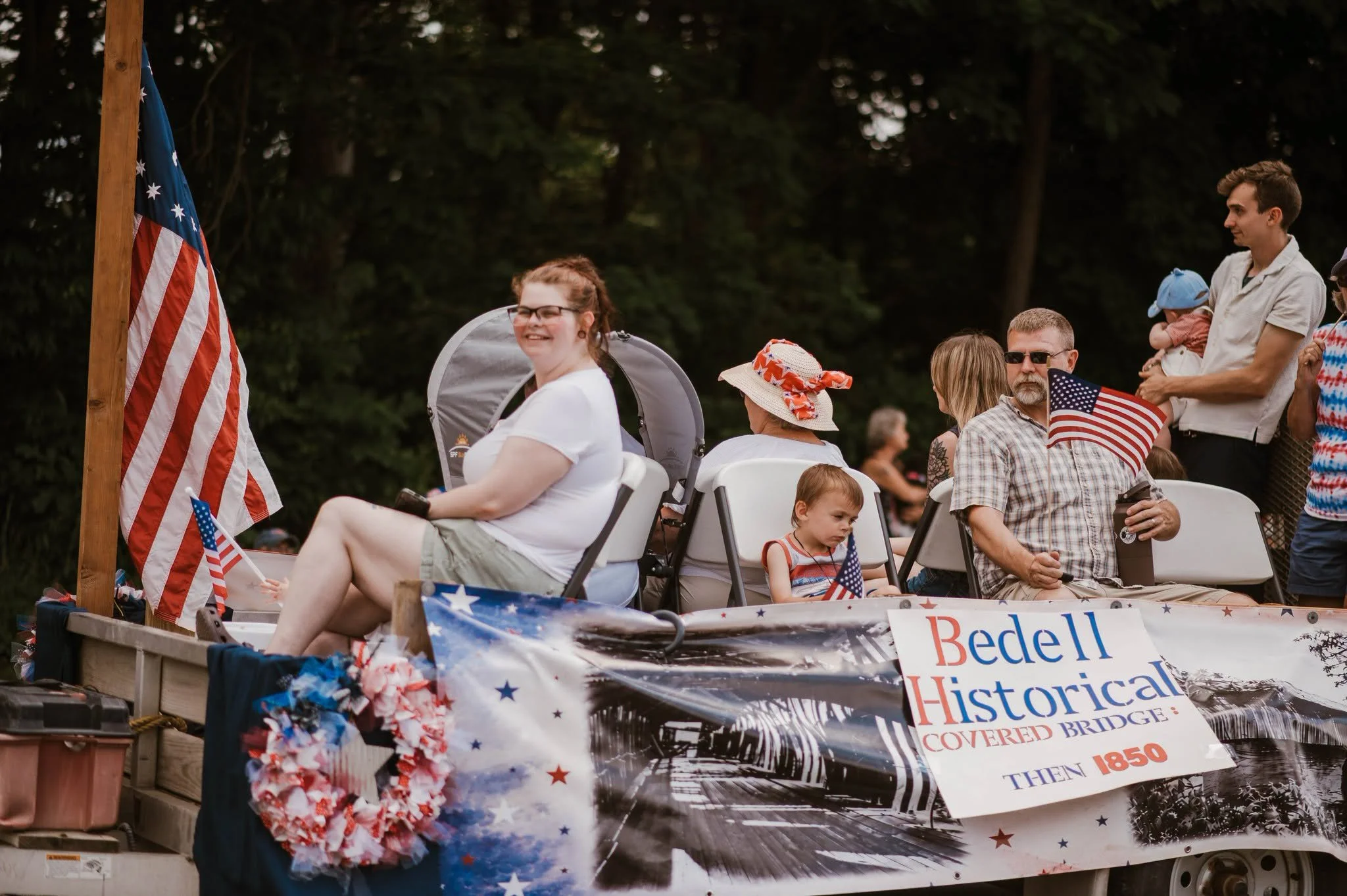
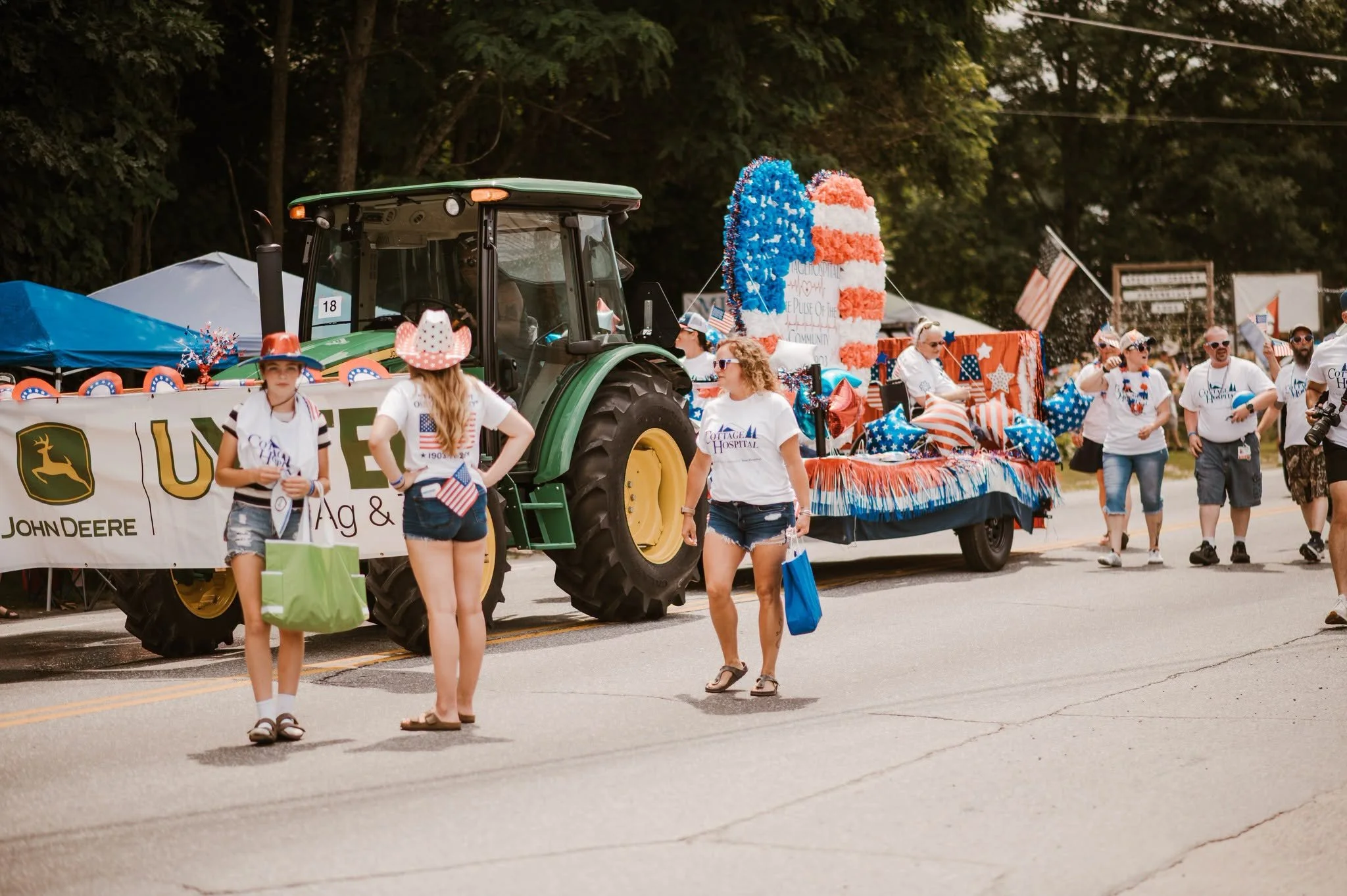
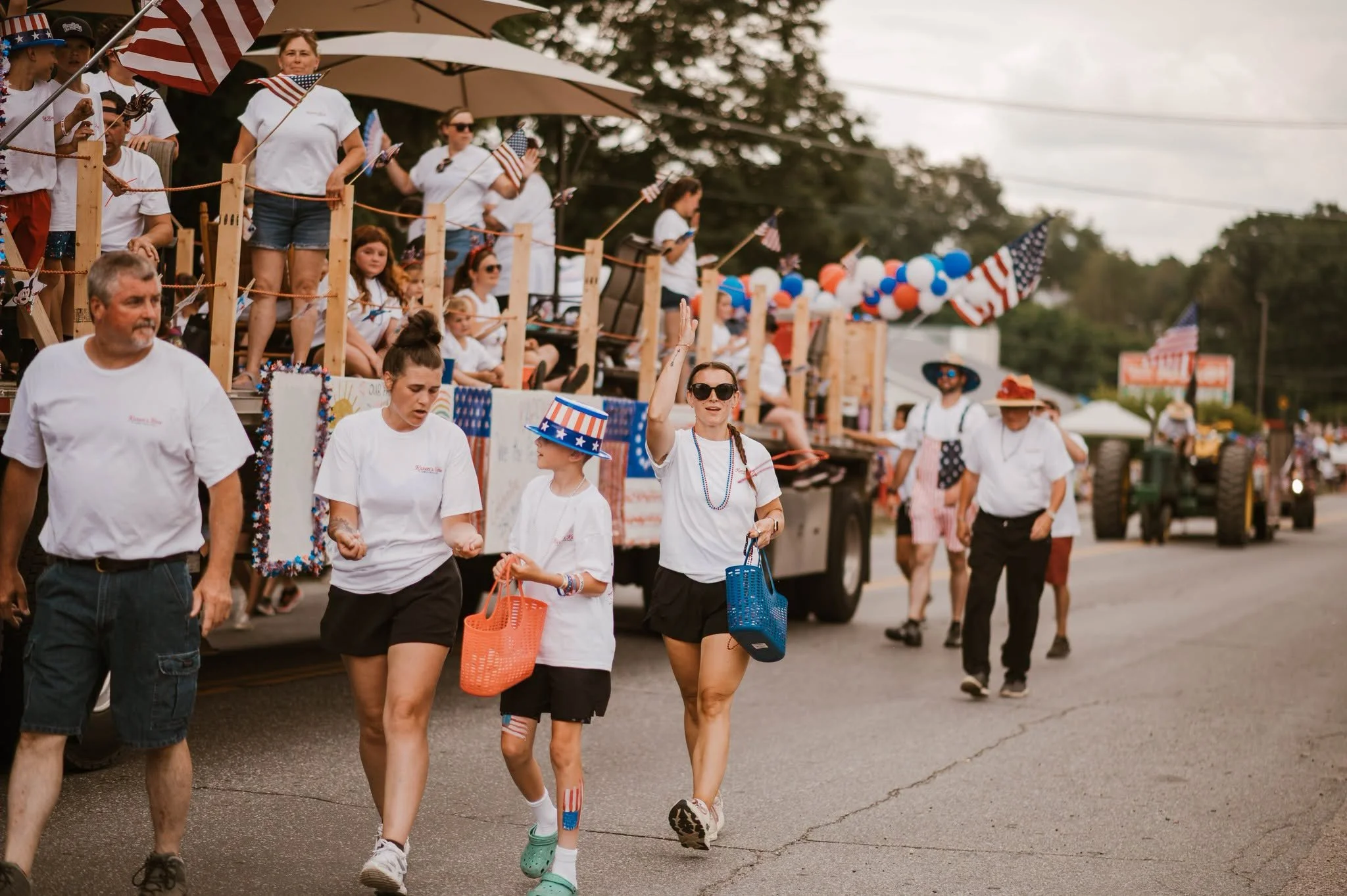
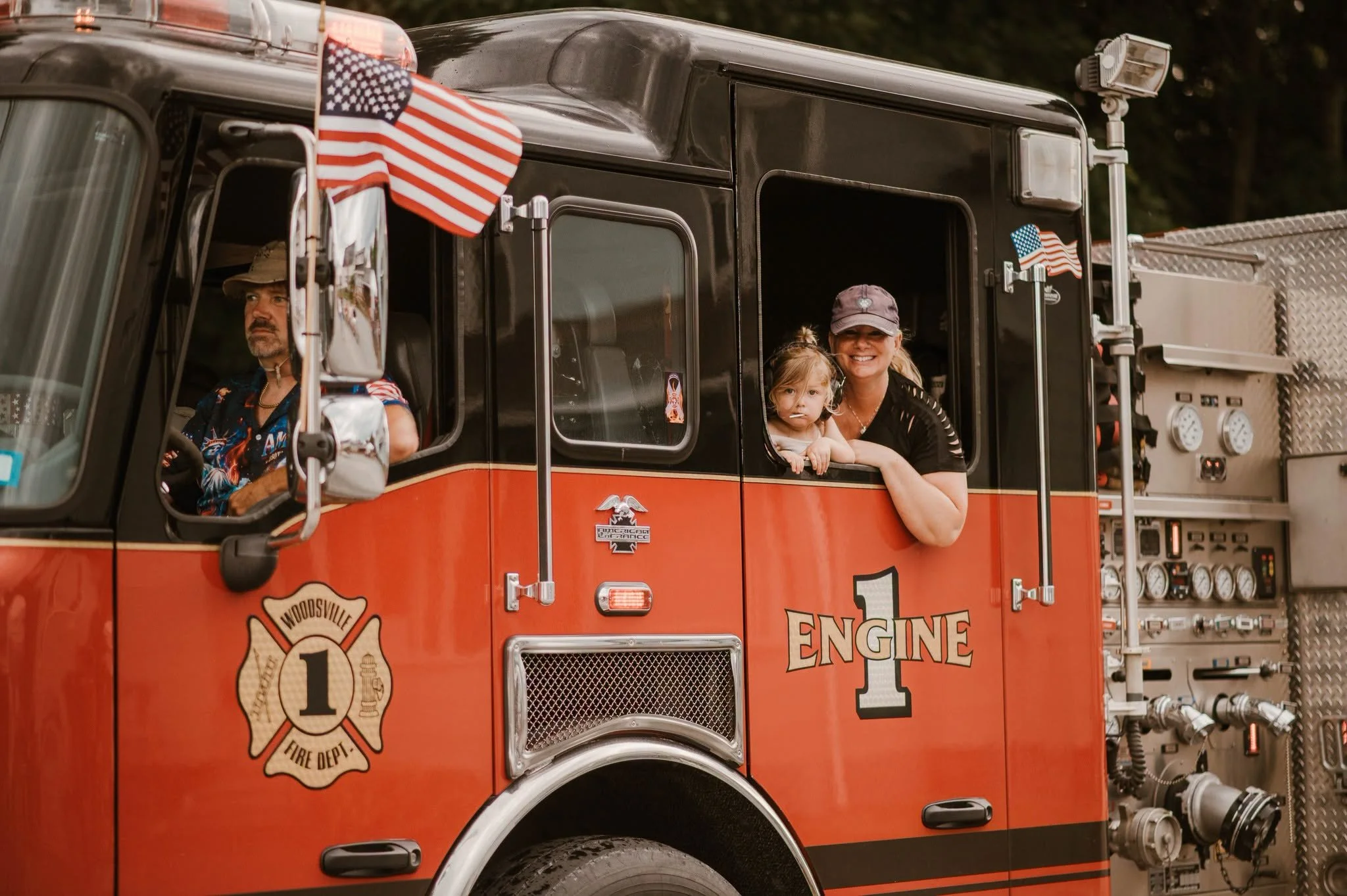
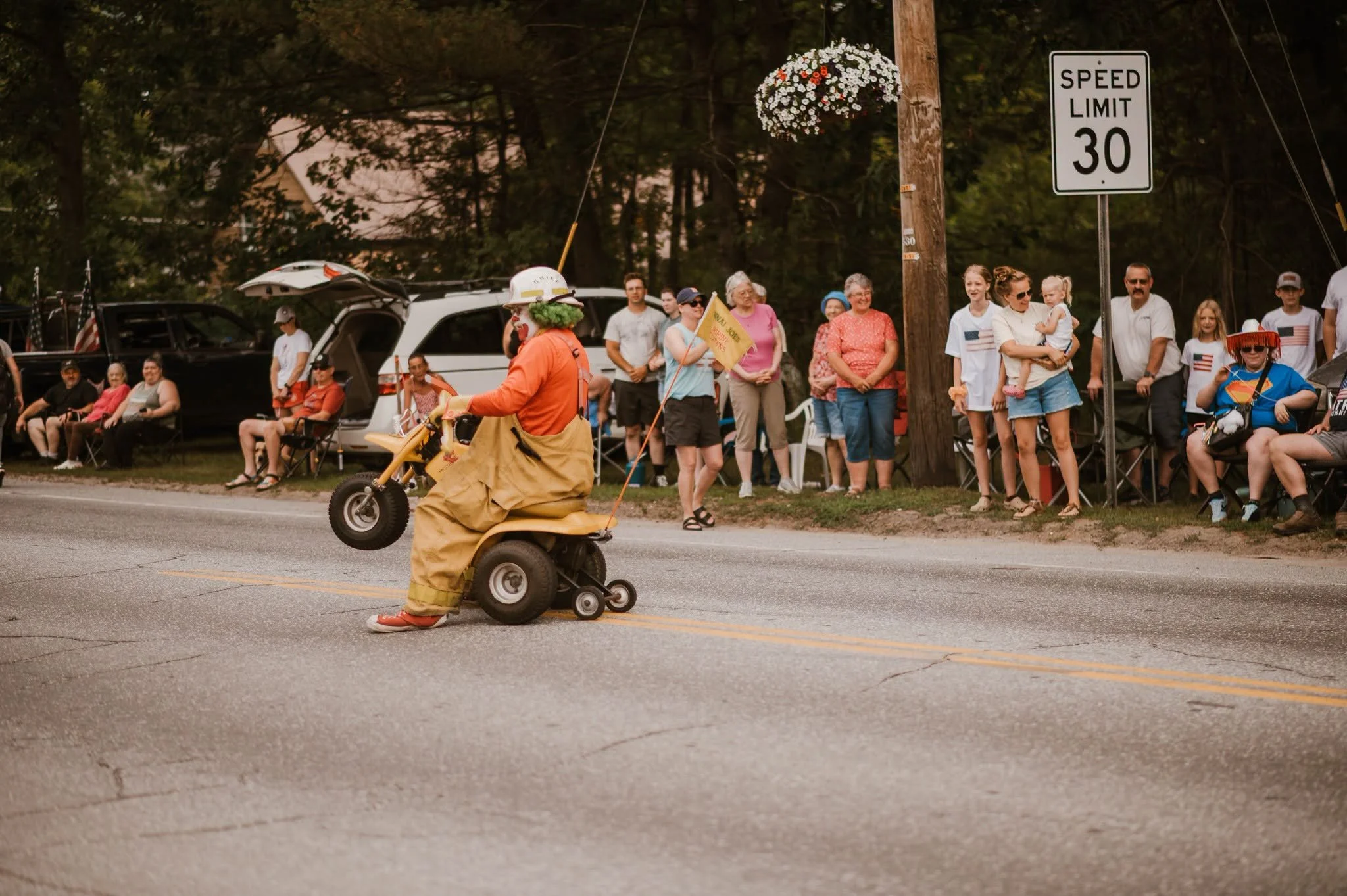
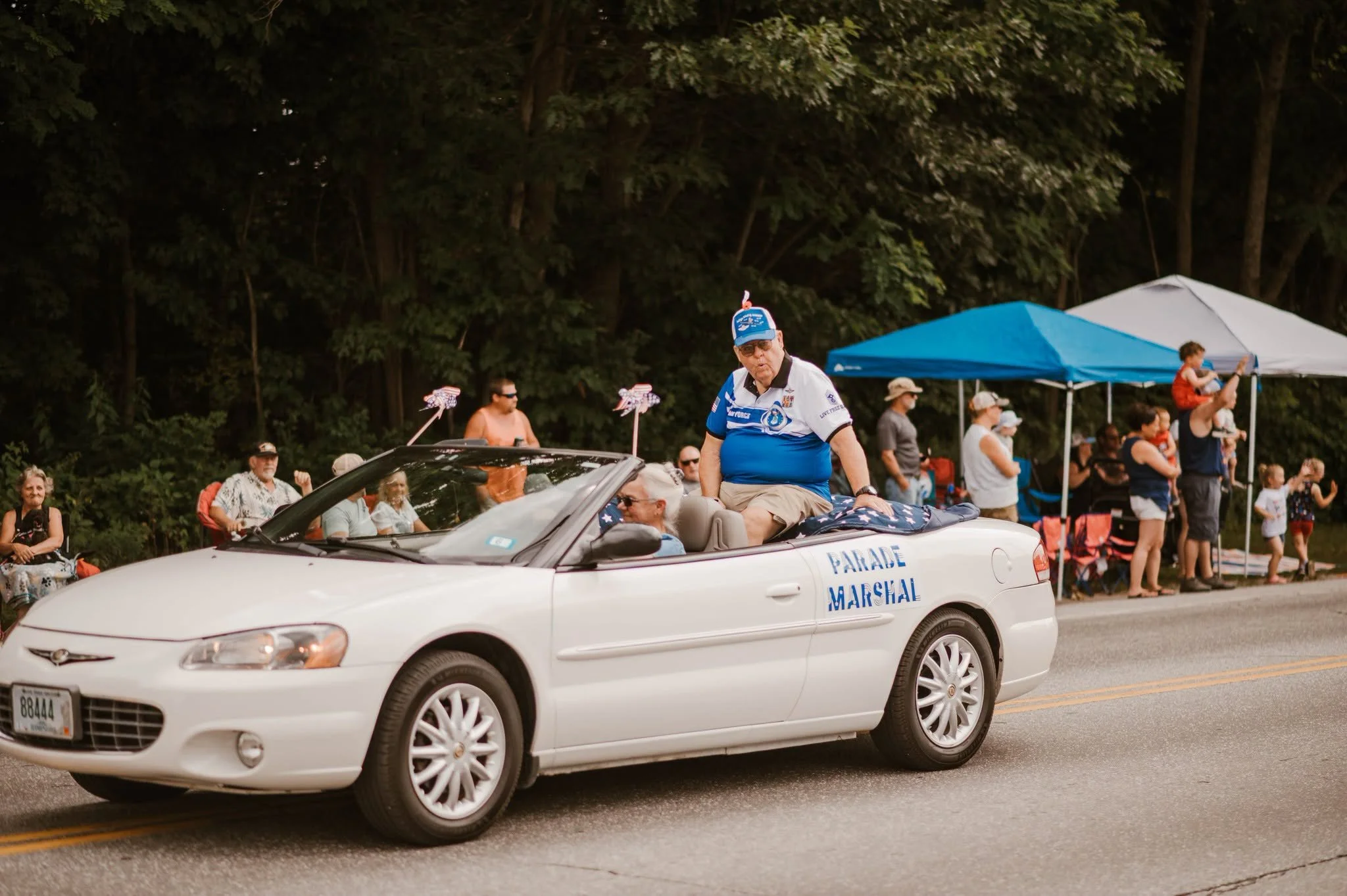
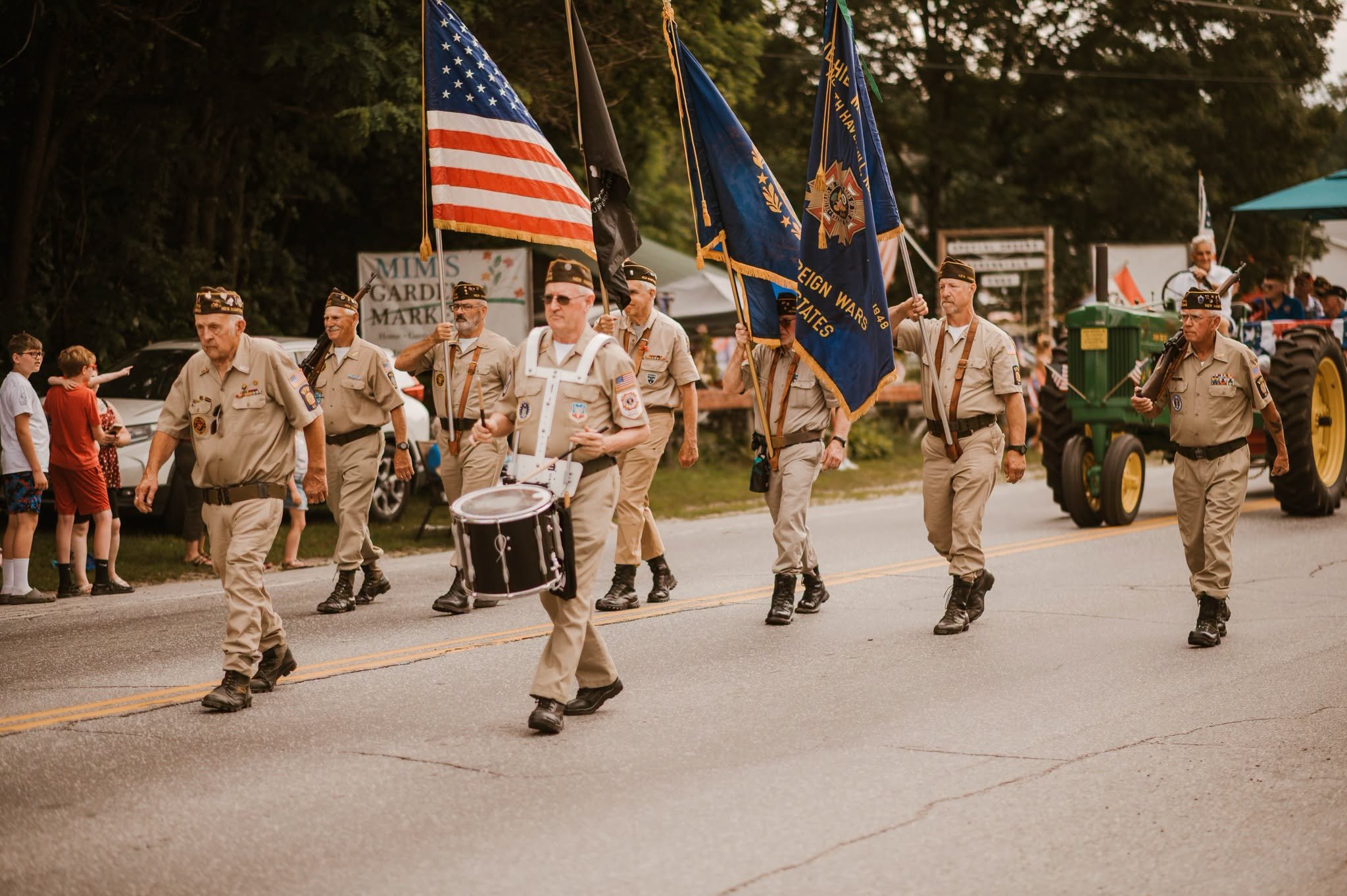
Declaration of Independence
But as with most of the events we celebrate, origin stories get simplified to a point that we often lose the real basis for the hoopla.
Today the Groton Historical Society will obviously not cover the history in depth, but we intend to make a significant scratch on the surface and read the meat of the Declaration itself. There are copies of the full text here if you want one.
By Deborah Jurist, President of the Groton Historical Society
John Trumbull’s painting depicts the committee presenting the draft of the Declaration of Independence to the Continental Congress. Public domain/Architect of the Capitol.
This year we are celebrating the 250th anniversary of the signing of the Declaration of Independence, on July 4, 1776. There will be loads of festivities all year long….One of the benefits to us….are cupcakes!
But as with most of the events we celebrate, origin stories get simplified to a point that we often lose the real basis for the hoopla.
Today the Groton Historical Society will obviously not cover the history in depth, but we intend to make a significant scratch on the surface and read the meat of the Declaration itself. There are copies of the full text here if you want one.
Why DO we celebrate July 4, 1776 as the birthday of the United States?
The Declaration of Independence doesn’t seem to signify the birth of our nation to me, it signifies the beginning of a WAR that led to the birth of our nation.
The War lasted 8 years 4 months and 15 days and ended on May 12, 1784 after the deaths of more than 25,000 Patriots and 43,000 British soldiers. It occurred during a worldwide epidemic of smallpox which caused the deaths of 130,000 people in the colonies, in fact most of the troops on both sides died of small pox, and the number would have been even higher if George Washington had not required his troops to be inoculated in a move that was bold, but not unprecedented, the British too were inoculated. It is commonly believed we would have lost the war completely if he hadn’t done that because we were so outnumbered.
The Declaration came in the stage of birth when labour begins and there is no turning back…. The messy part was only just beginning.
It was a war about ending tyranny and instituting self government, which had never EVER happened before……and the impetus was taxes.
What we call The French and Indian War, the period from 1754 to 1763, was actually part of a World War at the time, in which Britain, France, and Spain, were fighting each other over the land on the American continent where the Indians lived.
It caused a huge debt for the British Government and they were looking for ways to raise revenue. They decided that the colonies should pay more for their defense, even though we were paying taxes already. Since we had no representatives in the English Government, we had NO say. So, the British imposed a new tax, it was called the Stamp Tax, and it was like a sales tax, so everyone felt it. Everything affected by the tax required a stamp to be affixed to it, like a stamp on a letter. There was a tax on paper and pencils for instance, and of course, tea. This is “Taxation without Representation” It was what we would call a “tipping point” now.
One comment before we go ahead and start on the Declaration of Independence.
The Declaration refers to the rights of “men” and it is generally assumed that it means white men who owned property, not laborers, or teachers, or preachers who did not own land, and for the most part this is true. However, voting was controlled by the individual colonies, we weren’t even the United States at that time.
New Jersey allowed widows and unmarried white women of property to vote, and when Vermont became a state in 1791, the vote was given to ALL men regardless of color or property ownership.
Groton, by the way, was not even chartered until 1789. However, there were 15 Patriots amongst our early settlers who came here from Maine and Massachusetts.. Three of them were Batchelders! Four of them are buried in Groton: Jeremiah Batchelder, Dominicus Gray, Jesse Heath and Edmund Welch…
You can find more information about this in Mr. Glover’s Groton, page 223, 224
The Declaration of Independence
When in the Course of human events, it becomes necessary for one people to dissolve the political bands which have connected them with another, and to assume among the powers of the earth, the separate and equal station to which the Laws of Nature and of Nature's God entitle them, a decent respect to the opinions of mankind requires that they should declare the causes which impel them to the separation.
We hold these truths to be self-evident, that ALL men are created equal, that they are endowed by their Creator with certain unalienable Rights, that among these are Life, Liberty and the Pursuit of Happiness.--
That to secure these rights, Governments are instituted among men, deriving their just powers from the consent of the governed.
That whenever any Form of Government becomes destructive of these ends, it is the Right of the People to alter or to abolish it, and to institute new Government, laying its foundation on such principles and organizing its powers in such form, as to them shall seem most likely to effect their Safety and Happiness. Prudence, indeed, will dictate that Governments long established should not be changed for light and transient causes; and accordingly all experience hath shewn, that mankind are more disposed to suffer, while evils are sufferable, than to right themselves by abolishing the forms to which they are accustomed.
But when a long train of abuses and usurpations, pursuing invariably the same Object evinces a design to reduce them under absolute Despotism, it is their right, it is their duty, to throw off such Government, and to provide new Guards for their future security.--Such has been the patient sufferance of these Colonies; and such is now the necessity which constrains them to alter their former Systems of Government. The history of the present King of Great Britain is a history of repeated injuries and usurpations, all having in direct object the establishment of an absolute Tyranny over these States. To prove this, let Facts be submitted to a candid world.
These are grievances:
He has refused his Assent to Laws,
He has forbidden his Governors to pass Laws
He has refused to pass other Laws
He has called together legislative bodies at places unusual, for the sole purpose of fatiguing them into compliance with his measures.
He has dissolved Representative Houses repeatedly,
He has refused for a long time, after such dissolutions, to cause others to be elected;
He has endeavoured to prevent the population to grow in these States; by obstructing the Laws for Naturalization of Foreigners;
He has obstructed the Administration of Justice,
He has made Judges dependent on his Will alone,
He has erected a multitude of New Offices, and sent hither swarms of Officers to harass our people,
He has kept among us, in times of peace, Standing Armies without the Consent of our legislatures.
He has affected to render the Military independent of and superior to the Civil power,
He has combined with others to subject us to a jurisdiction foreign to our constitution, and unacknowledged by our laws; giving his Assent to their Acts of pretended Legislation:
For quartering large bodies of armed troops among us:
For protecting them, by a mock Trial, from punishment for any Murders which they should commit on the Inhabitants of these States:
For cutting off our Trade with all parts of the world:
For imposing Taxes on us without our Consent:
For depriving us in many cases, of the benefits of Trial by Jury:
For transporting us beyond Seas to be tried for pretended offences:
For suspending our own Legislatures,
He has abdicated Government, by declaring us out of his Protection and waging War against us.
He has excited domestic insurrections amongst us,
In every stage of these Oppressions We have Petitioned for Redress in the most humble terms: Our repeated Petitions have been answered only by repeated injury. A Prince, whose character is thus marked by every act which may define a Tyrant, is unfit to be the ruler of a free people.
We, therefore, the Representatives of the United States of America, in General Congress, Assembled, appealing to the Supreme Judge of the world for the rectitude of our intentions, do, in the Name, and by Authority of the good People of these Colonies, solemnly publish and declare, That these United Colonies are, and of Right ought to be Free and Independent States; that they are Absolved from all Allegiance to the British Crown, and that all political connection between them and the State of Great Britain, is and ought to be totally dissolved; and that as Free and Independent States, they have full Power to levy War, conclude Peace, contract Alliances, establish Commerce, and to do all other Acts and Things which Independent States may of right do. And for the support of this Declaration, with a firm reliance on the protection of divine Providence, we mutually pledge to each other our Lives, our Fortunes and our sacred Honor. The Declaration of Independence of 1776 was in many ways a political message to Revolutionaries in the North American colonies and their potential allies in Europe.
But….. somewhat unexpectedly, it also became the center of rallying cries for equality and liberty from its earliest moments, and it has continued to do so to this day.
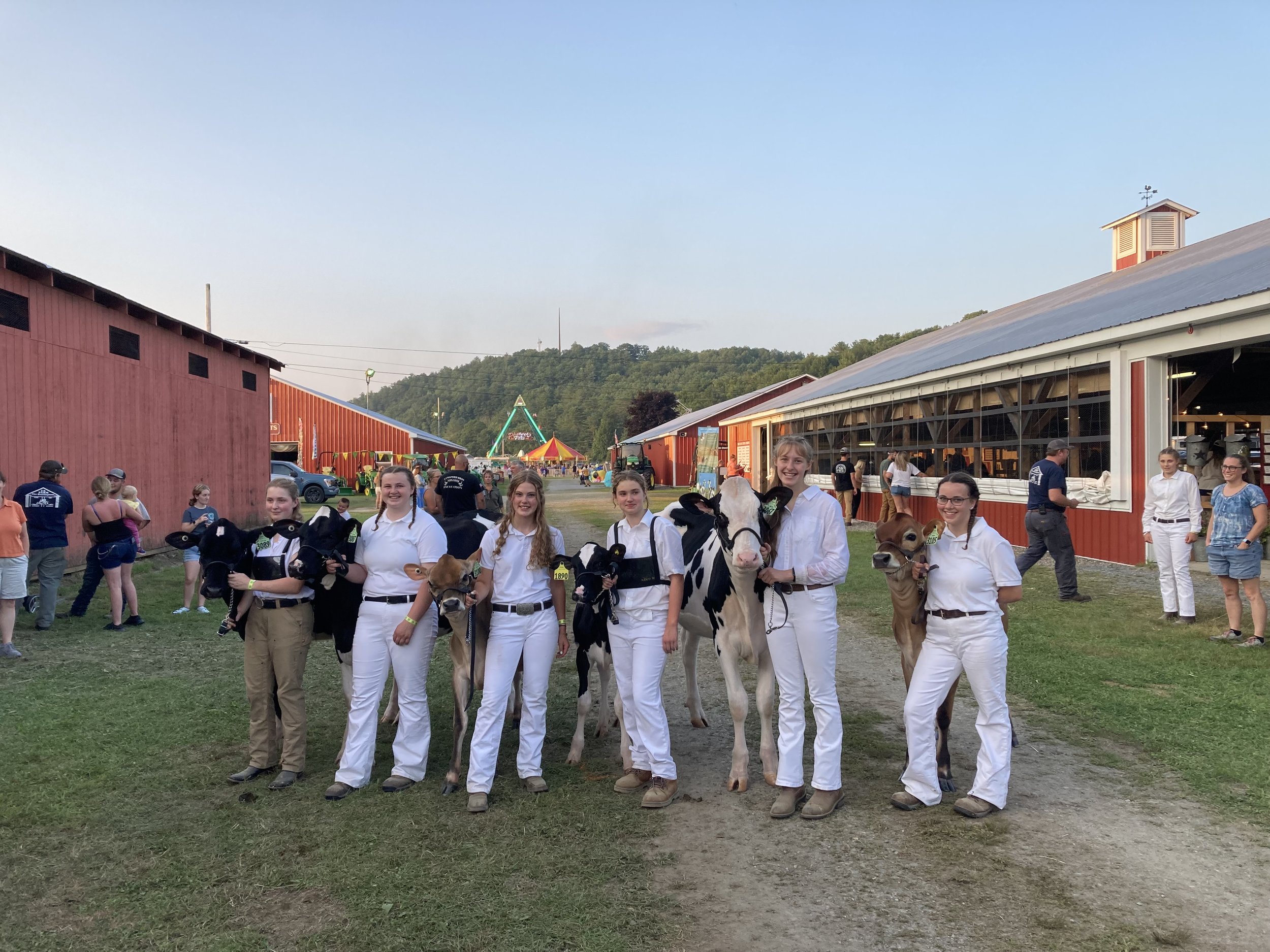
Recognizing Dairy Farms!
We have already mentioned the most popular dairy products, but let’s take a minute to think about the nutritional aspect of dairy. It has 13 nutrients altogether, some of which are calcium, protein, vitamin D, phosphorus, vitamin A, many of the vitamin B’s, zinc, selenium, potassium, and iodine. This just goes to show how much of a positive impact consuming dairy products can have on the body.
By Lydia Clough
Rambling Rivers at the North Haverhill Fair 2024 - left to right Elise Sanders, Amy Vaughan, Mackenzie Pearl, Bryn Nelson, Lydia Clough, Lizzie Vaughan (Courtesy Photo)
As we close the month of June, which is known as Dairy Month, and summer begins, let us take a moment to remember the dairy farms in our community and to recognize all that they do. From providing us with ice cream in the summer to keeping the land healthy, dairy farms do so much more than meets the eye.
Most people enjoy some milk in their coffee or tea in the morning and the occasional bowl of ice cream or some cheese and crackers. Yogurt and cereal are popular breakfast foods, and who doesn’t like a glass of milk with their warm cookie? Dairy products are in so many foods, but how often do we stop to think about the people who work so hard to provide us with the milk? Sure, the milk comes from cows who do the actual job of producing milk, but who feeds them, plants and harvests food for them, cleans up after them, milks them, and pours their entire lives into the farm? Dairy farmers.
Raising and caring for cows is not as easy as it may seem. From the time they are born, they must be carefully monitored both health-wise and diet-wise. As they grow, their diet must continue to change to accommodate their development and maturity, which requires moving them to different groups and tracking each cow’s health and growth to ensure they are thriving. Once they themselves have had a calf and are in milk, it becomes even more crucial to keep an eye on them as they are now production animals. Even with the help of professionals in agriculture, including veterinarians and nutritionists, farmers still have their hands full managing the farm 24/7. Increasing restrictions on farming from the state and federal governments also provide stumbling blocks for farmers as they must continue to run their farms efficiently while complying with the new legislation.
We have already mentioned the most popular dairy products, but let’s take a minute to think about the nutritional aspect of dairy. It has 13 nutrients altogether, some of which are calcium, protein, vitamin D, phosphorus, vitamin A, many of the vitamin B’s, zinc, selenium, potassium, and iodine. This just goes to show how much of a positive impact consuming dairy products can have on the body.
In conclusion, as we move forward in the year and into the busyness of summer, let us take a moment to remember the hard work and dedication of the dairy farmers in our area and around the country. Next time you stop for an ice cream cone or a maple creamie, think about all of the work that went into producing the milk for that delicious treat, and whenever you get the chance, thank a farmer for everything they do to provide food for the community.
To Learn More:
Rambling Rivers 4-H dairy club, based in Newbury, Vermont, currently has six members who are passionate about agriculture and cows. Not all of the members in the club have their own animals, so they lease show heifers from neighboring farms, including Harkdale Farms in Newbury, run by the Carsons, and Scotchburn Farm located in Ryegate and run by the Nelsons, which allows them to have the opportunity to see how different dairy farms are run. When we are not showing at the fair or working with our animals, we participate in State 4-H activities such as dairy quiz bowl, dairy judging, and learning about dairy products through club activities. We also have club officers, which allows us to get a glimpse of how governments and democracies are run. Our goal is to live by the 4-H pledge, which encourages us to pledge our head, heart, hands, and health to better living for our club, our community, our country, and our world. Lydia Clough of Ryegate, the author of this article, is a member of the club.
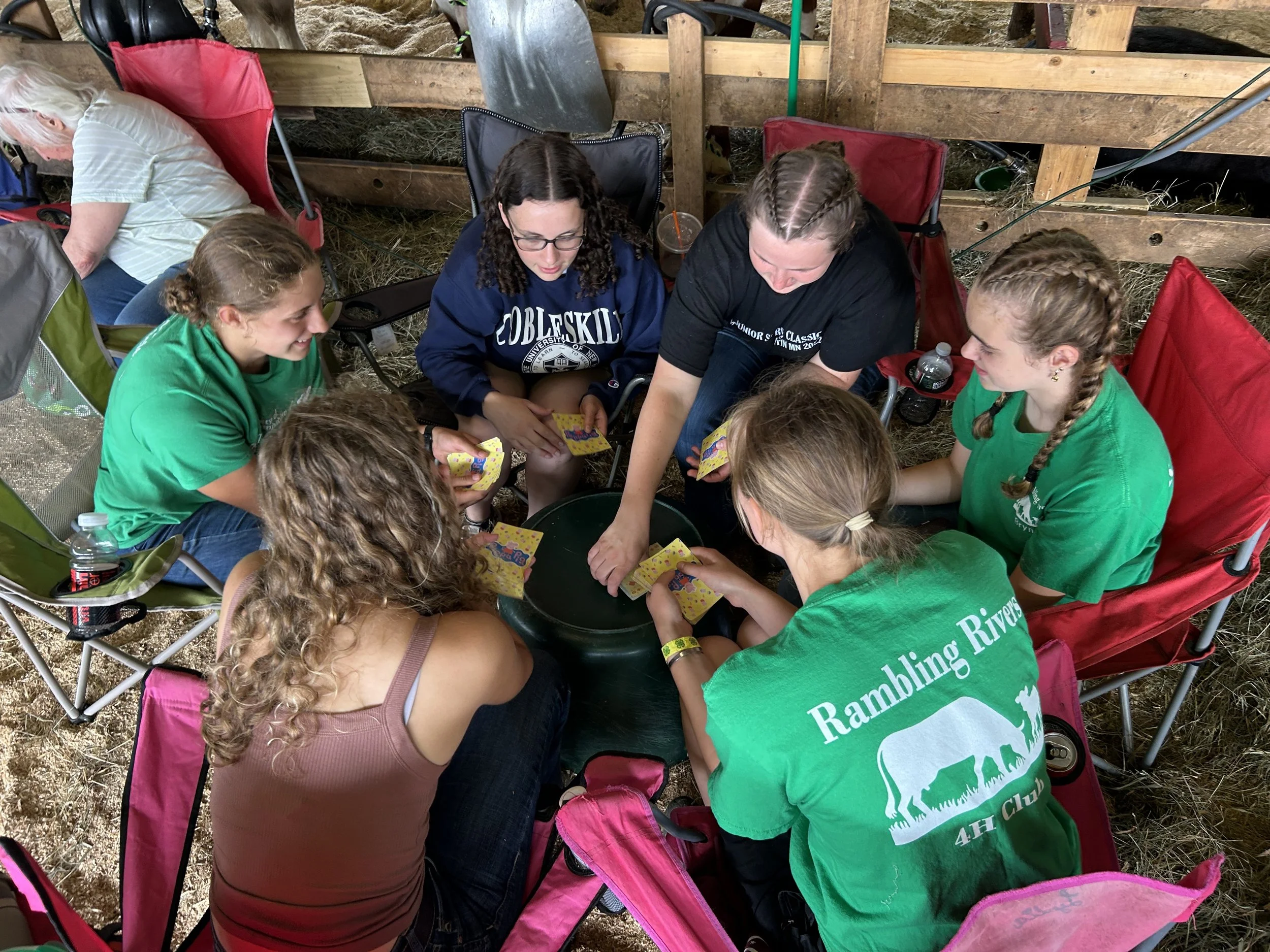
Rambling River club at the North Haverhill Fair 2025: left to right starting in the middle- Mackenzie Pearl, Anna Clough, Lizzie Vaughan, Amy Vaughan, Bryn Nelson, Lydia Clough (Courtesy Photo)
Rambling Rivers at the Vermont County Dairy Quiz Bowl 2024 - left to right Lizzie Vaughan, leader Judy Vaughan, Elise Sanders, Bryn Nelson, Amy Vaughan, Anna Clough, Lydia Clough (Courtesy Photo)
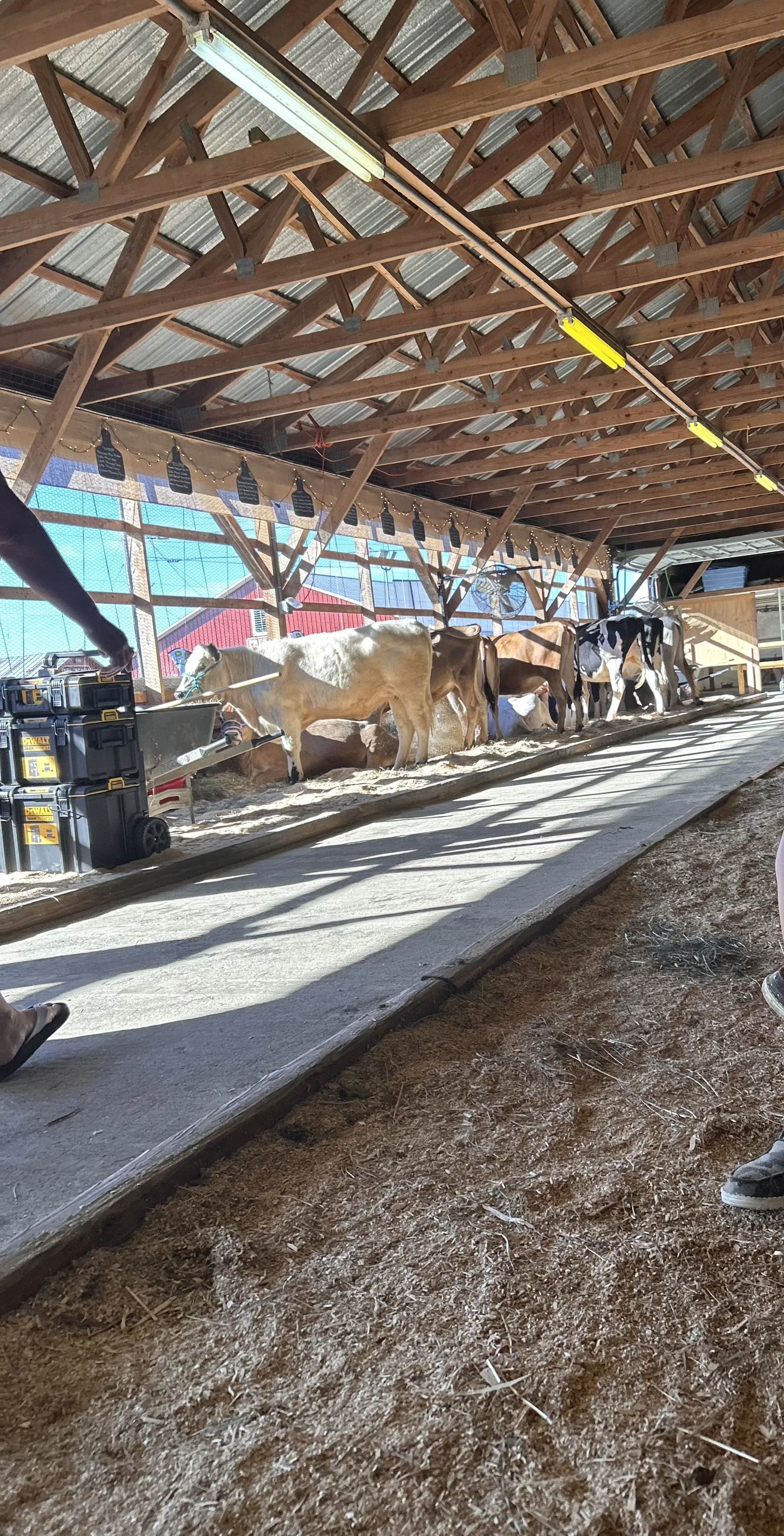
The club’s cow at North Haverhill Fair 2025 (Courtesy Photo)
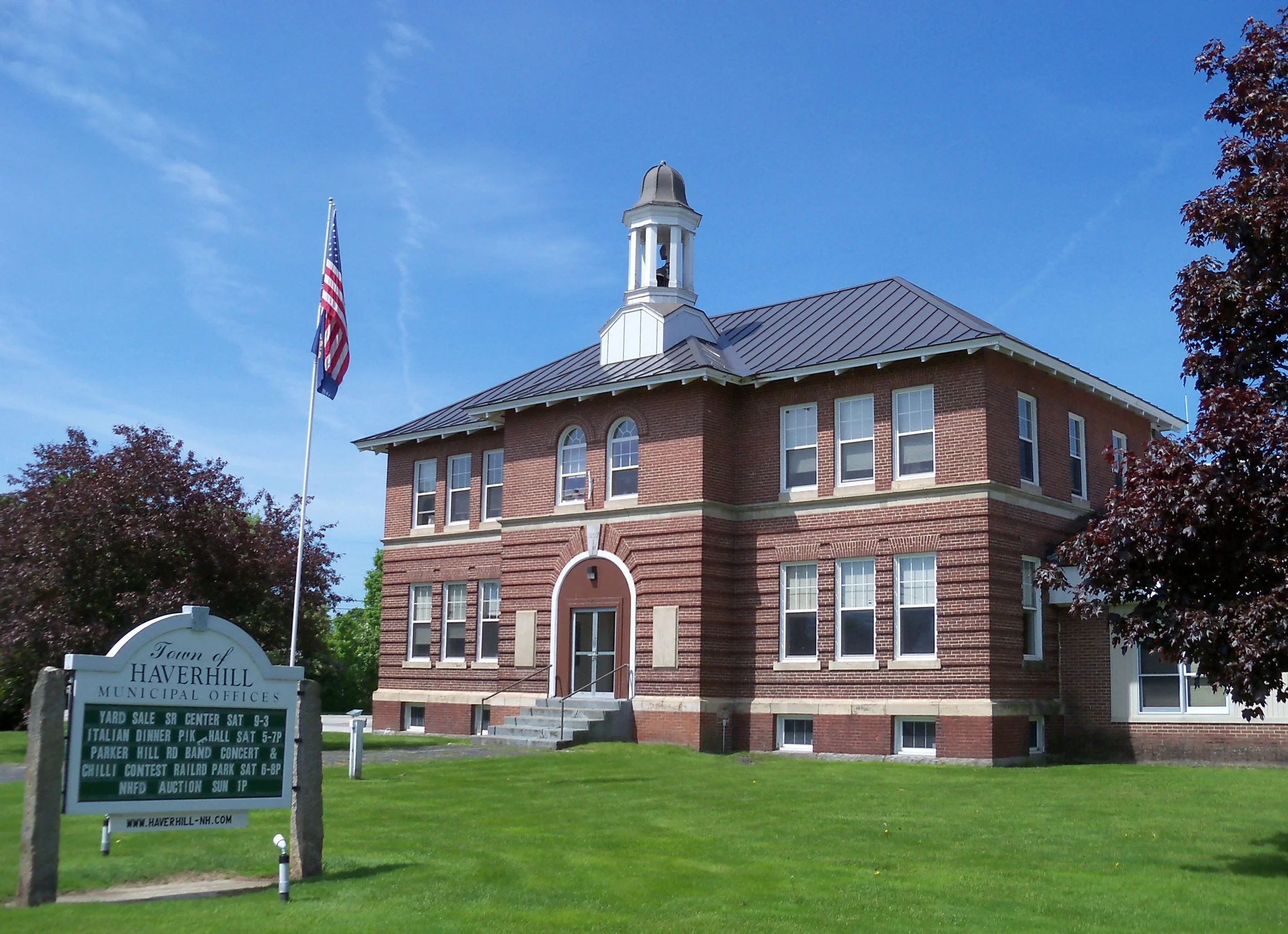
Population Of Area Towns Both Up And Down Between 2020 And 2025, Study Shows
At the same time, growth among the state’s three biggest cities, which include Manchester, Nashua and Concord, has, according to the study, remained static over the past five years of the study. But some smaller suburbs and rural areas have seen population declines.
By Bernie Marvin
Photo by Alexius Horatius, Wikimedia Commons, CC BY-SA 3.0
The US Census Bureau has released a report which indicates that New Hampshire’s population grew by a total of 36,590 people. That is a 2.7 percent increase in the overall population statewide.
Many of the state’s smaller towns and cities and the larger locations led in municipal growth in this most recent study. Not surprisingly, the Lakes Region and White Mountains towns also experienced population increases, probably driven by retired people and remote workers moving to that region.
At the same time, growth among the state’s three biggest cities, which include Manchester, Nashua and Concord, has, according to the study, remained static over the past five years of the study. But some smaller suburbs and rural areas have seen population declines.
This uneven population shift, some say, highlights broader challenges that include the rising cost of living and increased housing costs, which probably are deterring young families from coming to New Hampshire to settle.
An interactive map that accompanied the study shows that area towns including Haverhill, had a 2020 population of 4590 people and in 2025 the population was estimated to be 4667 people. That's a population changed total of 1.7 percent upward growth.
In Bath, the 2020 population was set at 1077 and grew to 1112 through 2025, a 3.2 percent increase. In Piermont, it was a different story between the years of 2022 and 2025. There, the population reduced from 771 in 2022 to 763 in 2025 for a 1 percent decrease in current population.
For the town of Orford, the 2020 population was 1240 and in 2025 the population was estimated at 1229 for a .9 percent reduction in population. In Warren, the population was estimated at 830 in 2020 and reduced to 823 in 2025 for a .8 percent change to less population.
From 2020 to 2025 31 New Hampshire communities, including Piermont, Warren and Orford saw population declines, while 98 others grew slowly, more slowly than the state overall average. During this period 105 municipalities saw growth rates that were similar to or faster growing than the state’s average or overall rate.
And during those five years, 24 communities, which were mostly the low population townships in the northern parts of the Granite State, saw no estimated population changes during that time.
The town of Epping saw the fastest population increase among all of New Hampshire’s towns, adding about 820 residents over the five-year period which is an 11.5 percent increase. Several other communities in central New Hampshire saw some of the state’s largest percentage population gains during the years of the study from 2020 to 2025. These included Epping’s neighbors, like Brentwood, Dunbarton, Boscawen and Salisbury, and Auburn which led population gains. Lebanon, the popular economic area in the Upper Valley just below this location, saw the fastest population increase among the state’s 13 cities with Lebanon adding 1172 new residents.
The report noted that New Hampshire’s uneven population growth pointed to the fact that while more people may be moving to economic centers for employment opportunities and to certain smaller towns for those preferred and amenities, broader affordability challenges and housing constraints may slow down growth in some of the states’ larger communities.
There have been policy approaches, for instance zoning changes, aimed at increasing the availability of housing and other financial investments which could help spur housing development that would possibly attract younger families and have an influence on future population growth across the State of New Hampshire.
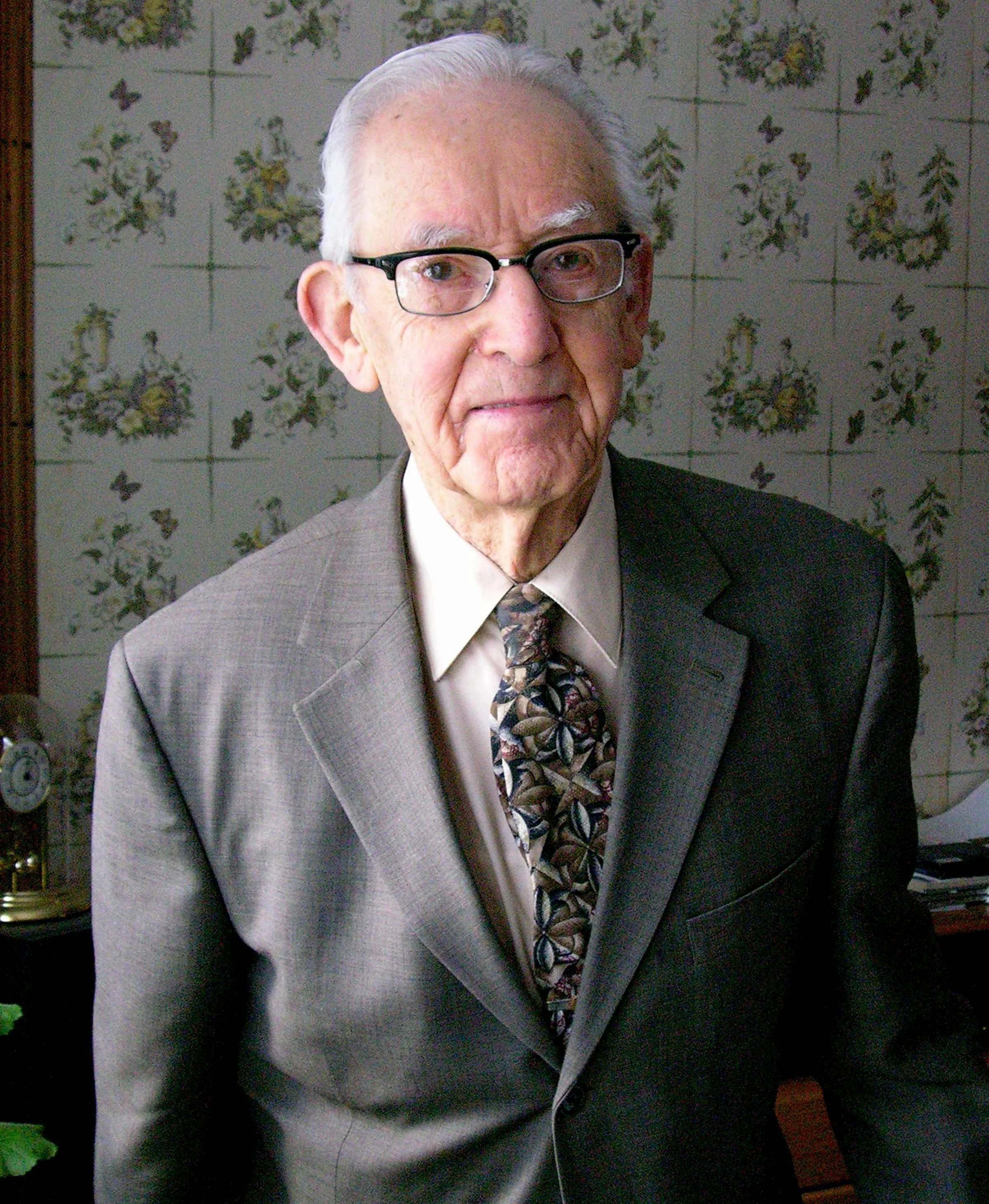
Dr. Harry and Mary Rowe's Wells River Clinic is now in its historic 80th year!
Little Rivers Health Care CEO Andrew Barter said that the Dr. Harry Rowe and Mary story on their bold plan of setting up the original Wells River Clinic after he returned from his difficult war service is a wonderful story.
By Bernie Marvin
Dr. Harry Rowe, photographed in 2000 at his original office of the Wells River Clinic, founded by him in 1946 after his return to the area from his US Army medical officer assignments during World War 2. The Wells River Clinic was the foundation which grew into today’s Little Rivers Health Care, with medical offices in Wells River, East Corinth, Bradford and Newbury. The Bridge Weekly file/Bernie Marvin
Wells River, VT - The Wells River Clinic, now part of the Little Rivers Health Care (LRHC) with offices in East Corinth, Bradford, Wells River, and Newbury, was founded by a Vermont country doctor who had fought in World War 2 and returned to Vermont to continue to take care of the sick and injured in the Green Mountain state he loved. Dr. Harry Morrison Rowe was born in nearby Peacham in 1912. He graduated from Peacham Academy in 1930 and from the University of Vermont in 1936 with his bachelor's degree. While studying at UVM, he met and married Mary Whitney in 1940, and he earned his medical degree in 1943. The popular couple raised a family of six children: David, Betsy, Susan, John, Alan, and Jane. With World War 2 raging, Harry joined the 78th Infantry Division, was promoted to Captain, and assigned to the 303rd Medical Battalion. He eventually served as a Battalion Medical Officer during the furious fight for American troops to enter Germany and bring the war to a close. During his military service, Dr. Rowe served in Texas, Virginia, and West Virginia. Also overseas in England, France, and Germany. Dr. Rowe was awarded a Bronze Star for his service at the Bridge at Remagen over the Rhine River, a battle that lasted 18 days. Americans held their positions at the bridge crossing that, surprisingly, had not been destroyed. The furious fighting in and around the crossing location hastened the American entry into Germany by three weeks. Throughout his 15-month deployment and combat duty, he and his wife, Mary, wrote letters to each other every day. Upon Mary's death in 2002, those precious letters were discovered and read again by Dr. Rowe. These letters, written over the long time she waited for the war's end, and Dr. Rowe's fight in Germany until the war's completion, inspired him to compile them into a personal memoir. Local Vermont authors Terry Hoffer and Beth Champagne collaborated with Dr. Rowe to write and publish a book in 2009 about the letters between Dr. Rowe and his wife, Mary. The book sold well locally because of interest in these two people, who were heavily involved in their community of Wells River and the surrounding towns. The book was published by Athenaeum Press in St Johnsbury. The bulk of Dr. Rowe's life's work up until that time, along with oral histories, tapes, and other researched materials used in the production of the book, is now preserved in the Harry M. Rowe Collection at the Vermont Historical Society. In April 1946, Dr. Rowe and thousands of other service personnel who had served in Europe during the war went home to be with their loved ones. As Harry told it, "I came back to New York by ship," he said, then we were transferred to Boston by train. Mary met me in Boston. Words cannot describe how glad I was to be back in the United States and finally home on leave. We stayed in a rooming house in Boston for a day or two and then went to see friends in New York. A few days later, we headed for Vermont and home in Burlington." According to comments by Little River Health Care Physician, Dr. Steve Genereaux, Dr. Harry and Mary Rowe, with no colleagues and little actual training in rural primary care medicine, settled in Wells River along with their two-year-old son, David. In 1946, they set up a small medical practice in their home, which they purchased just south of Jock Oil on Route 5, which was, at a later time, Attorney John Morale's law office. They started seeing patients in their front room. Later, as the practice grew, they moved to the present larger site of the Wells River Clinic, now Little Rivers Health Care, at 65 Main Street in 1952. During that time, Harry reported in his book, The Grass Grew Greener, "that Mary and I were running the office pretty much alone. She had given up playing the violin with the Vermont Symphony to help. She was doing the bookkeeping, and I showed her how to do some of the lab work. I was seeing patients, and she would come, if necessary, that is, if I was doing a female exam. It became quite a busy practice. Mary was actually my nurse, secretary, cook, assistant, lab girl, and housekeeper." In 1962, Dr. Rowe officially launched his Wells River Clinic with the philosophy of "Anyone who needs to be seen will be seen," meaning that if someone did not have funds for medical services, they still received them from Dr. Rowe. Dr. Elizabeth Berry joined the practice soon after that. She was the first female physician to practice in the area and remained at the clinic until she retired in 1992. She would be seen frequently throughout the area with her husband, Dr. Kenneth Berry. This loving couple presented Wells River with what is now Berry Park, a large grassy area just outside the village, on the south side of Route 5. Dr. Rowe's son, John Edward Rowe, MD, joined his father at the clinic after finishing his medical residency. He practiced with his father for more than 10 years, relocating to North Carolina in 1992. Dr. Rowe was a traditional Vermont country doctor, practicing his medicine with house and office calls, working weekends and nights. He was also the sought-after on-call physician for the nearby Grafton County Nursing Home in North Haverhill. He was very proud to have delivered more than 1,400 babies throughout the area. Dr. Rowe practiced full-time for more than 60 years, finally retiring in 2006 at the age of 93. After that, he continued to lead a busy life, serving others in many capacities and organizations. He passed away in 2012, just short of his 100th birthday. To ensure that the area continued to receive quality medical care, as it had for so many years since the establishment of the Wells River Clinic, others have joined the effort to keep the business going. Dr. Rowe's son, Dr. John Rowe, joined the clinic with his father in 1982, was joined by Dr. Fay Homan in 1993, and, shortly thereafter, Dr. Steve Genereaux came aboard. This added depth to the ranks at the Wells River Clinic and allowed Dr. Harry to step back a bit. According to Dr. Genereaux, in 2006, the business transitioned from the Wells River Clinic to Little Rivers Health Care, and over the past 20 years, offices have been established in Bradford, East Corinth, and at Cottage Hospital in Woodsville. Community members such as Al Stevens, Dr. Sarkis, Harry Rowe, Reverend Jane Wilson, and others submitted grant applications to the federal government so that the three offices could come together for the inclusive medical practice. This action took all of three years and finally included offices in East Corinth, Bradford, Wells River, with another building in Newbury on Route 5, and a new large addition constructed at the Wells River site. This allowed the practice to include behavioral health, plus at a fifth location in downtown Wells, River at the former site of Jiffy Mart, a dental office that will soon include a dental hygienist and eventually, a dentist. LRHC owns all five buildings and the grounds involved in this expansion of what was once a small medical practice established 80 years ago in Dr. Harry and Mary Rowe's living room. As for the new space recently constructed in the Wells River Clinic building, Dr. Genereaux told The Bridge Weekly in a subsequent interview, "Having the extra space here is great." He said there are six personnel working at the clinic, three or four days a week. He said that upstairs in the new wing, behavioral health staff, social workers, and counselors are tending to patients. He noted that the staff upstairs is just as busy as on the first floor. "Over time," Dr. Genereaux said, "we have seen the number of patients here slowly climb." He said that, from an economic viewpoint, the community's salaried jobs for our 90 employees approach the budget numbers of the nearby Blue Mountain Regional School district at about $13 million. Comments from friends and residents of the area about the Wells River Clinic indicated that Dr. Rowe and Mary Rowe, together, were really community-minded and would be at the clinic, along with their first clinic nurse, Betty Minot, to answer every phone call, no matter the time of day or night. They were all there to meet community needs. Mary was eventually named director of the North Country Chorus. She was teaching at the Wells River School, giving music lessons and taking care of the growing family. As Dr. Genereaux said, if anything happened in the community and help was needed, the Rowes were usually the first to know and first to be there to help. Relative to the importance of what was begun 80 years ago by Dr. Rowe and his beloved wife, Mary, is well acknowledged by Madison Culver, a staff member of the Wells River Clinic, which remains an important part of the Little Rivers Health Care organization. She told The Bridge Weekly that: “As a nurse practitioner at the Wells River Clinic, I have seen firsthand the vital role Little Rivers Health Care plays in our community. Having grown up in the North Country and living with a chronic illness myself, I understand the challenges many of our patients face in accessing quality healthcare close to home. One of the things I value most about the Wells River Clinic is our ability to provide comprehensive, evidence-based care locally. Our patients deserve the same high-quality care they would receive at a larger academic medical center, without the burden of traveling long distances. Whether managing chronic conditions, addressing acute illnesses, or focusing on preventive care, we are able to partner with patients to help them achieve their health goals in the community they call home. What makes Little Rivers Health Care especially unique is the breadth of support available under one roof. In addition to primary medical care, patients have access to behavioral health services, case management, a food pharmacy, and other resources that address the social and economic factors that influence health. This integrated approach allows us to care for the whole person, not just their medical condition. I am proud to be part of an organization that has served this community for 80 years and continues to meet the needs of rural Vermonters. -Madison Culver, APRN, FNP-C The influence and community appreciation and love for Dr. Rowe extended well out of the Wells River locus, indeed to the east and across the Connecticut River in Woodsville, his many years of devoted duty at Cottage Hospital while serving a growing community in Vermont, led to Cottage Hospital to name a new medical office building across Swiftwater Road from the Cottage campus as the Rowe Health Center. Little Rivers Health Care CEO Andrew Barter said that the Dr. Harry Rowe and Mary story on their bold plan of setting up the original Wells River Clinic after he returned from his difficult war service is a wonderful story. He said it was typical of community-centered Dr. Harry Rowe who had returned home from fighting a world-wide war and who immediately set his mind to taking care of folks at home through strong community service. Mr. Barter said that Dr. Rowe and his wife “cast the foundation for what is now a health system for the entire area, something that is needed for everyone was his vision of 80 years ago.” He noted that some of the dedicated clinicians who worked with the Rowes are still with the medical practices set up so many years ago, citing the long and dedicated service of Drs. Stephen Genereaux and Fay Homan. “The Rowe’s home in Wells River still provides a base for medical services,” he said in a recent interview. He noted that what the Rowe’s did in serving their community is inspiring “for us today. Their dedication lives in lots of ways, and it can be seen and experienced by so many.” The Little Rivers Health Care organization took three years to become a federally qualified health center, Mr. Barter said, being founded by Drs Genereaux and Homan. “The strength in that beginning was right in Wells River. It is an important part of the area’s history and the legacy of the Rowe family and others who were part of it as it grew over the past 80 years.” “For myself and many others, it is a privilege to be a part of this story, Mr. Barter said.”
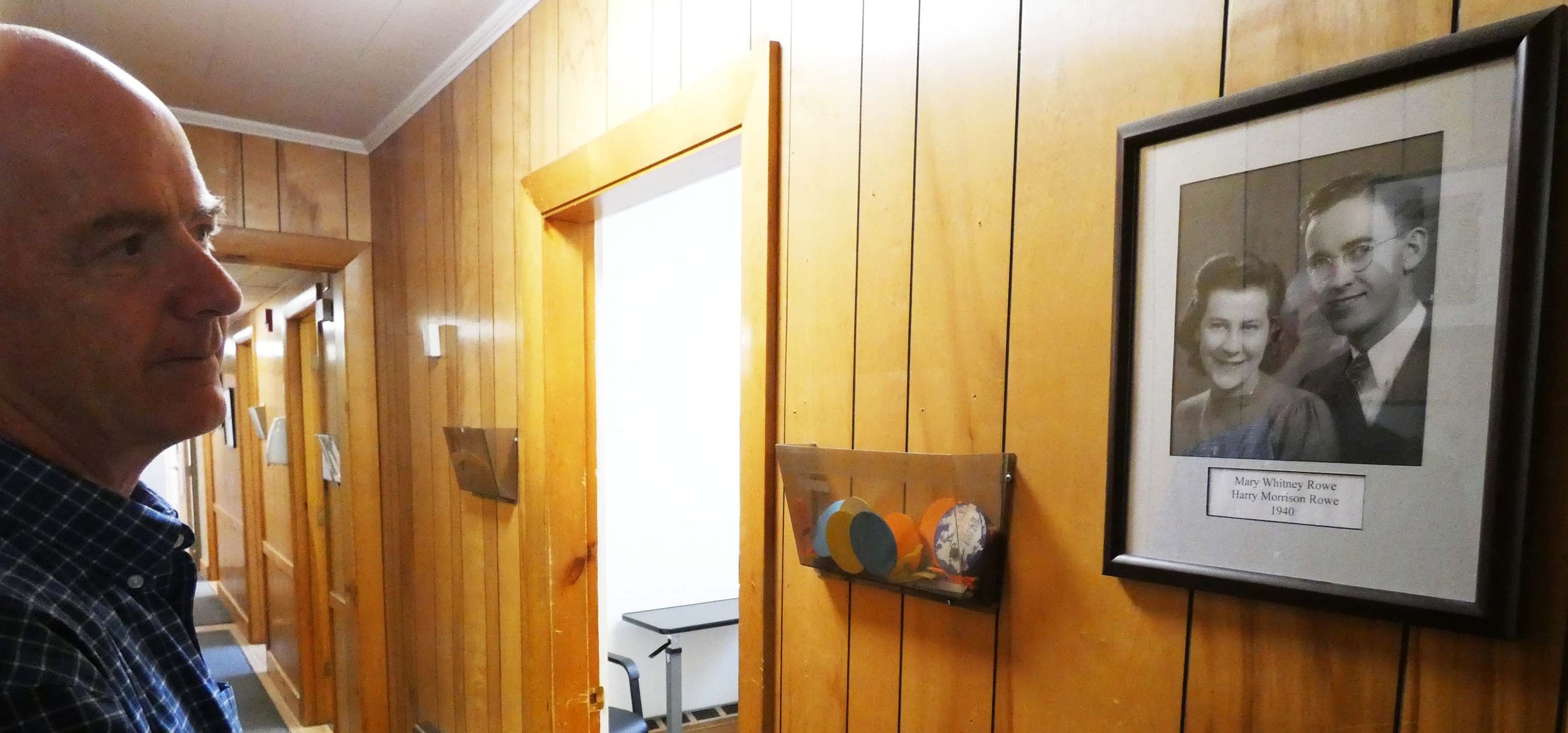
Dr. Stephen Genereaux observes a 1940 photo of Dr. Harry Rowe and his wife, Mary Rowe. The photograph is part of a historic display of photos that is dedicated to the history of the 1946 founding of the Wells River Clinic that is part of the present Little Rivers Health Care organization. The building is on Main Street in Wells River Village. The Bridge Weekly/Bernie Marvin.
The main living room in the Dr. Harry and Mary Rowe home in Wells River Village as it is seen today. It was preserved when renovations were made to convert the home from a private residence and doctor’s office of the Rowe family to one of the medical buildings of Little Rivers Health Care. Although it is a meeting room, it appears much as it did in 1946 when the Wells River Clinic was founded by Dr. Rowe. The Bridge Weekly/Bernie Marvin
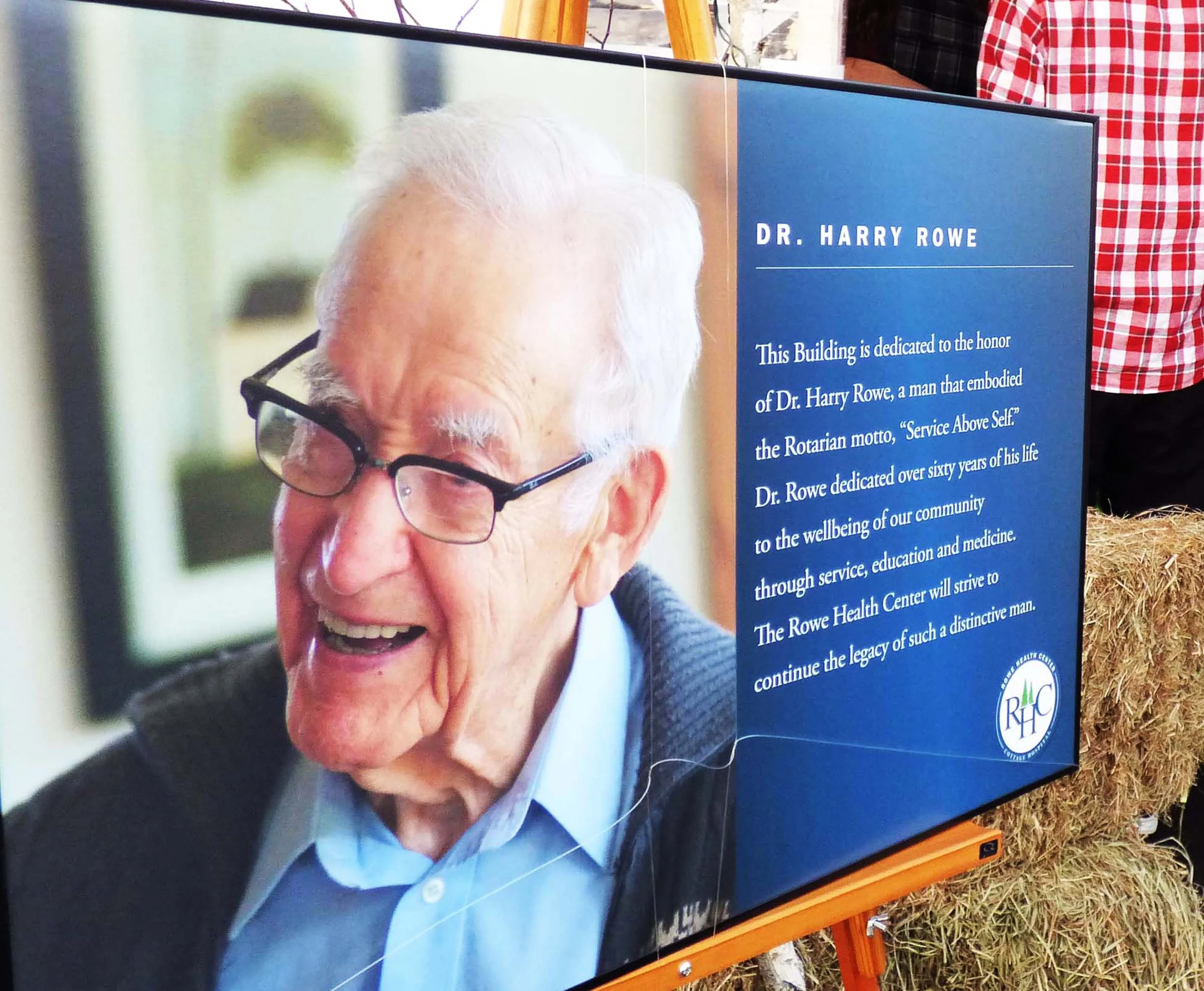
A large poster used during the opening ceremonies of the Rowe Health Center at Cottage Hospital in Woodsville, features the center’s dedication “To the honor of Dr. Harry Rowe, a man who embodied the Rotarian Motto “Service Above Self.” The Bridge Weekly file /Bernie Marvin
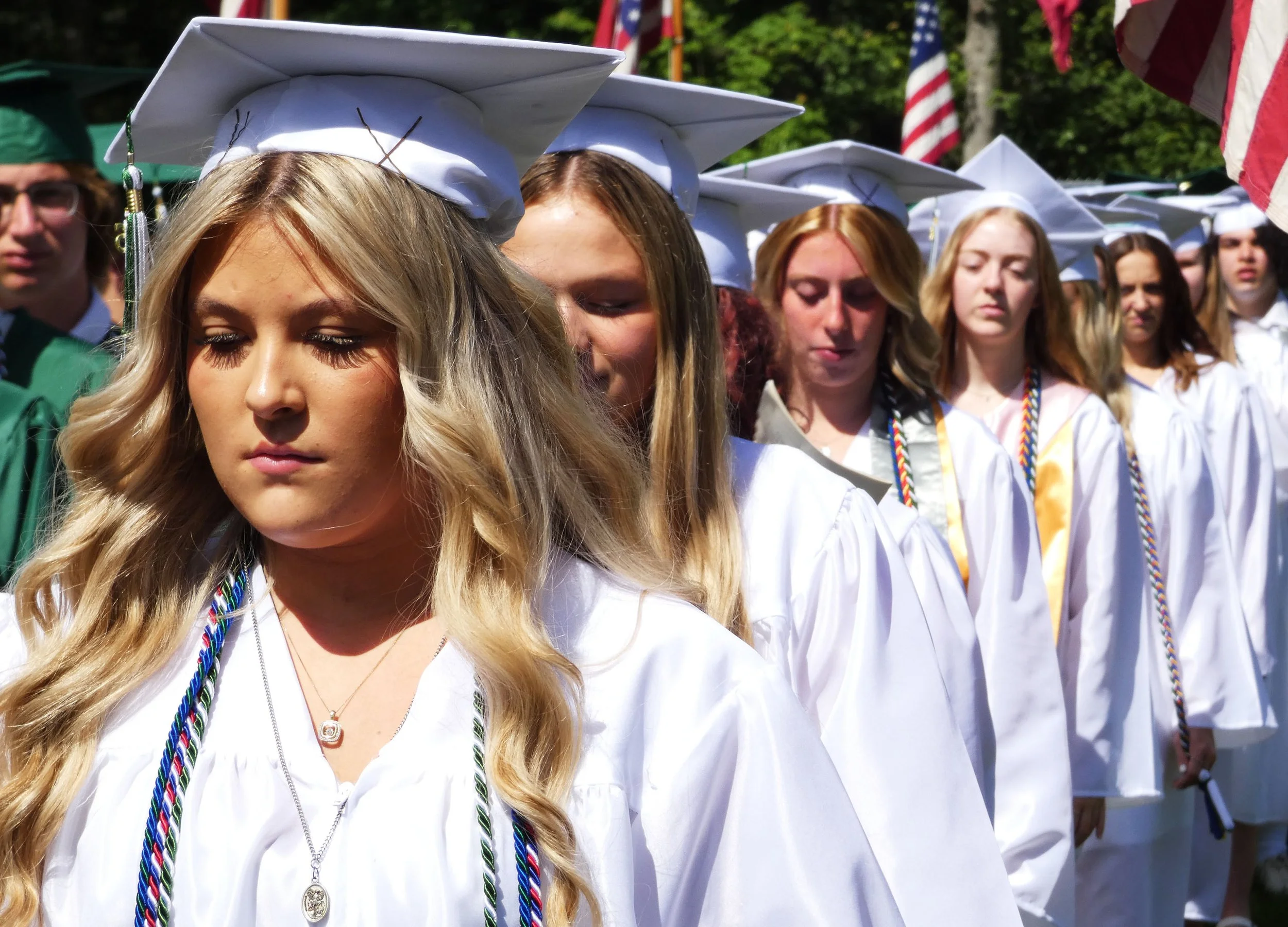
On King's Plain, Woodsville High School graduates its 130th Senior Class
Getting to the center of the graduation ceremony, Senior Elijah Vasconcelos stepped to the microphone to offer his high honors speech, his Valedictory Address. He is the Woodsville Valedictorian for the class of 2026. He plans to study aerospace engineering.
By Bernie Marvin
Outstanding weather greeted graduating Seniors, their families and friends for the 130th Woodsville High School graduation, held at the school last Saturday, June 13, 2026. The Bridge Weekly/Bernie Marvin
Woodsville, NH – The weather held back its pressing humidity for the special day of June 13, 2026, as the proud class of 50 Woodsville High School graduates under the twin batons of Class Marshals Taydin Glynn and Lincoln Williams stepped off for their short walk down the grassed aisle bedecked with high flying American flags, to the front of the gathering of family and friends assembled on the historic King's Plain.
The opening processional of Elgar's Pomp and Circumstance was rousing, as the WHS Band, under the direction of Music Director Will Wright, provided the musical background of a very well-photographed group of handsome graduates as they paraded downfield to their seats facing the audience, their green and white gowns flowing in the gentle breeze that cooled the field.
The National Anthem followed, with opening remarks being offered by Principal Hayden Coon, a welcome by Katherine Houston. Makayla Walker offered the Salutatory Address. Makayla is officially recognized as the Class of 2026 Salutatorian by earning the second-highest academic ranking in the graduating class. She is a scholar-athlete and was recognized for maintaining elite academic standards while competing on the Woodsville Varsity Basketball team.
Ms. Walker, when thinking about what she was going to write about in her salutatory address, said to her mother, “I don't know." After that, she would follow up with a reminder that the speech would not be something she could just come up with; it would take time and meaningful reflection to anchor it all for the big day.
She said she caught herself returning to a specific novel by a novelist she had read, The Alchemist by Paulo Coelho, a story about a young shepherd boy named Santiago, leaving behind routine and comfort in pursuit of the treasure he has only dreamed about, a treasure hidden far from what is familiar to him. His journey, he said, was driven by courage and the willingness to embrace the unknown.
"In many ways, his journey parallels ours," she said, describing how she encountered uncertainty and learned to adapt when expectations shifted. She closed her speech, “So to my classmates, sometimes uncertainty is thought of as something that needs an answer, ideally immediately. What we have learned, though, and what we will continue to learn, challenge that idea.
Ms. Walker offered, "At the start of Santiago’s journey, he is told, “When you want something, all the universe conspires in helping you achieve it.” On the surface, those words may sound like external forces that always guarantee success. But the universe conspiring is about establishing a clear purpose, developing the eagerness to pursue it, and realizing that the universe will not simply hand out what you ask for. Rather, it will respond to those who are committed enough to pursue their goals.
“So, to my classmates: sometimes uncertainty is thought of as something that needs an answer, ideally immediately. What we have learned though, and what we will continue to learn, challenge that idea. What I want to leave with all of you is simple. Value change. Embrace challenge. Trust your journey. Know that fear is ever-present, but manageable. And remember that what is meant for you WILL find you if you continue to move with intention and persistence. Thank you.”
Getting to the center of the graduation ceremony, Senior Elijah Vasconcelos stepped to the microphone to offer his high honors speech, his Valedictory Address. He is the Woodsville Valedictorian for the class of 2026. He plans to study aerospace engineering.
He said, "As I stand here today, I am reminded of a book I first read in 5th grade, my first year in New Hampshire."
“The Giving Tree by Shel Silverstein is a children’s book about a tree and a boy. The boy climbs the tree's branches, picks its apples, and rests in its shade. As the boy grows older, he keeps returning to the tree to ask for things. He picks its apples to sell, takes its branches to build a house, and cuts down its trunk to build a boat and sail away. In the end, the tree, reduced to a stump, offers its now old and frail friend a place to sit and rest for a while. And the tree was happy.”
“I believe we can all relate to the boy. But our trees don't grow leaves and apples."
"Our trees are the ones who packed our lunches and drove us to school before we could do so ourselves. They are the ones who helped us with our homework until we no longer needed help. They are the ones who showed up to soccer games and concerts without fail sacrificing sleep and time for our benefit, never once asking for recognition."
Valedictorian Vasconselos said that after today, “as we step into a larger world, we are not losing our families. Instead, we are carrying them with us in our work ethic, our resilience and our integrity. They are with us in the way we won’t quit when college gets hard. They are with us in our choice of a career.”
His speech was dedicated to the class families. “To the families of the class of 2026 – especially my own – this accomplishment is as much yours as it is ours. Thank you for being our trees.”
Others recognized as outstanding students from the class of 2026, Third Honors went to Ryan Walker, and fourth honors went to Grace McLellan. The top CTE Student was Dylan Marshall.
WHS Principal Coon and Assistant Principal Matthew Kelly presented scholarship awards to the Class of 2026, followed by the presentation of diplomas to the Class of 2026 by Haverhill Cooperative School Board Chair Sabrina Brown and Michelle Reagan.
The combined Class of 2026 and the WHS Band played and sang the school song, “On King’s Plain.” Graduate Ryan Walker offered the Farewell Address, tassels on the students’ mortarboards were turned, indicating that they were now graduates, not undergraduates.
They queued up and marched off the field to the congratulations, group photography and some gifts from parents and relatives. It was a happy occasion for all.
Class of 2026 Graduates include:
Leon Manuel Alcala, Samuel Milton Aldrich, Trenton James Alling, Isaiha Anderson, Riley Elizabeth Boutin, Thomas Gabriel Boutin, Jada Rose Brill, Jayde Lynn Brown-Colby, Trey Edward Colangelo, Morgan Elizabeth Crocker x, Kiarrali Minerva Cruz, Marion Jefferson Cummins Jr , Gavin Joseph Michael Davidson x, Josephine Iza Drake, Addison Jane Eck +x, Riley Marshall Emmerton x, Alyssia Maria Fenn x, Mason Lance Furyes, Felix Demetrio Garcia +, Eyrleigh Sedona Hambrick + x,. Katherine Ellen Houston x, Justin Sean Hutchins, Caleb David Ilsley, Kaleb Joseph Johnson, Cowan Peter Kimball x, Korina Lynne L’Heureux, Gavin Frederick Lakin, Dylan James Marshall +^ x, Taylor Ann McFarland, Grace Mae McLellan ^ x, Anthony Michael Mencia, Madison Leighann Monterosso, Savannah Marie Murray, Ethan Jacob Nalette, Wyatt Christopher Perkins, Michael Patrick Plachetzki , Gabriel Fernand Roy x, Jillian Iona Roy x, Kody Nickolas Sherman, Collin Michael Smith, Jaden Robert Ste. Marie, Shubh Ashishkumar Suthar , Ciarra Jasmine Therrien, Cassidy Ann Thompson , Calvin Staszek Tice, Elijah Roy Vasconcelos ^ x, Makayla Lyn Walker ^ x, Ryan Douglas Walker ^ x, Shawn Gavin Walker, Jameson Stephen Willard.
Key to Honors
*National Honor Society Members, ^ Magna Cum Laude, +National Vocational Technical Honor Society Members, +^Magna Cum Laude for RBCTC, x NH State Pin - Graduate met the requirement for an “Academic Diploma with Distinction.”

A panoramic view of Woodsville High School’s 130th graduation held Saturday, June 13, 2026. The weather was gorgeous as were the 50 graduates who marched in to receive awards and diplomas at the impressive ceremony. The Bridge Weekly/Bernie Marvin
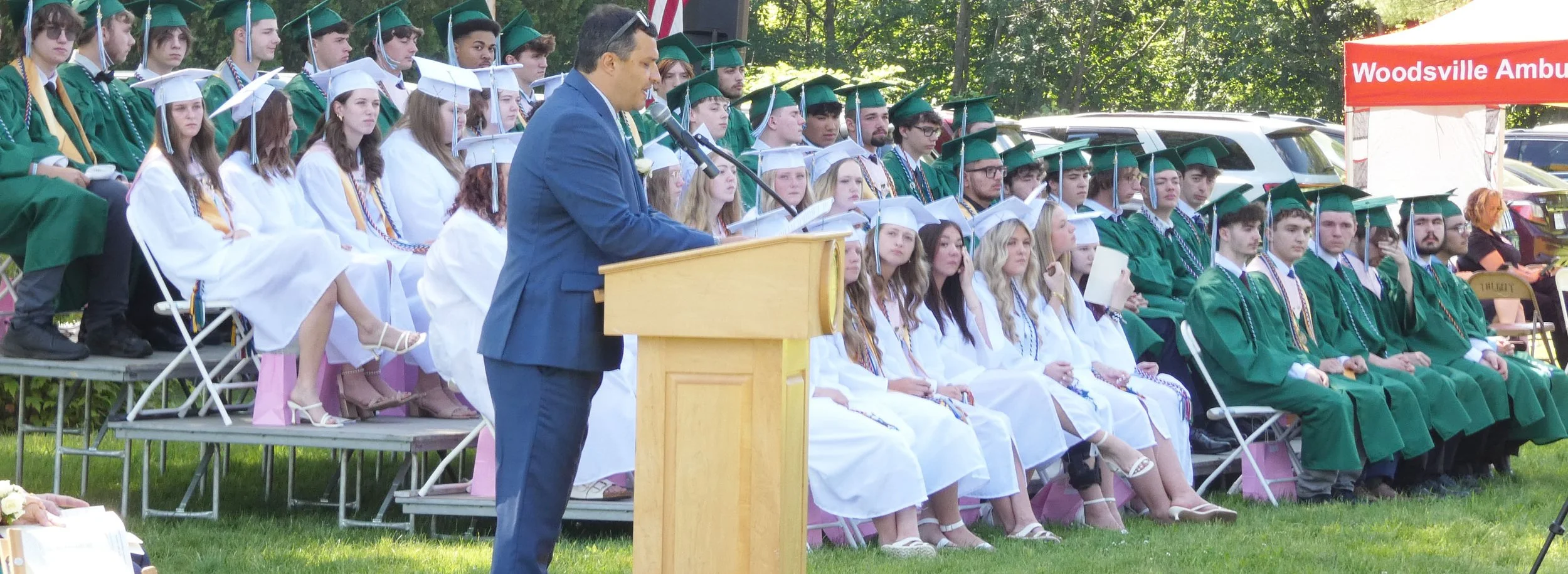
Woodsville High School Principal Hayden Coon gave his opening remarks that began the 130th ceremony for the graduating class last Saturday, June 13, 2026. The Bridge Weekly/Bernie Marvin
Queued up and ready to march into their graduation ceremony on Saturday morning, June 13, 2026, is the Class of 2026. Seen left to right are Class Advisor Robert Scianna, Class Marshals Lincoln Williams and Taydin Glynn, with Class Advisor Jodi Maccini. The Bridge Weekly/Bernie Marvin
Woodsville High School graduating Senior Katherine Houston offers her welcome during the graduation ceremony held at the high school last Saturday, June 13, 2026. The Bridge Weekly/Bernie Marvin.