
2026 Clunker Sled Classic
By the time the gates opened at 7:00 a.m., folks were already rolling in with coffee in hand, bundled up, and ready to make a morning of it. Families got a front-row seat to one of those true North Country events where the laughs come easy, the stories get better every time they’re told, and the excitement builds with every sled that fired up in the pits.
By Joshua Smith
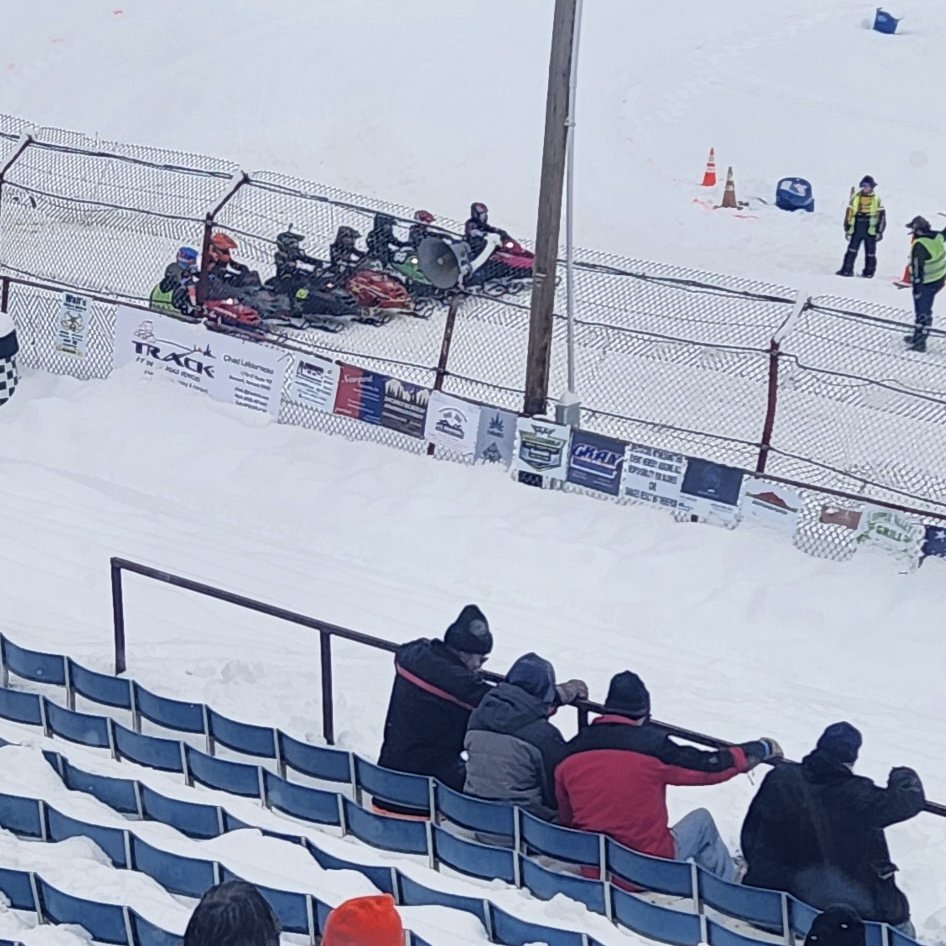
Ready for the green flag is the 120 champ kids heat race at Bear Ridge Speedway in Bradford last Saturday February 21, 2026. (Courtesy Photo)
Bradford VT - With an extra seven inches of snow falling the night before, winter showed up right on cue for this year’s Clunker Sled Classic at Bear Ridge Speedway on February 21—and it made for just about perfect track conditions.
By the time the gates opened at 7:00 a.m., folks were already rolling in with coffee in hand, bundled up, and ready to make a morning of it. Families got a front-row seat to one of those true North Country events where the laughs come easy, the stories get better every time they’re told, and the excitement builds with every sled that fired up in the pits.
A big tip of the cap goes to the organizers from the Connecticut Valley Snowmobile Club, who kept the day running smooth. Dan Ingerson led the charge, and the volunteer effort behind the scenes was a big part of why everything worked so well. Thanks to Butch and April May for the use of Bear Ridge Speedway, Woodsville Bobcat for the skidsteer (run by Derek Graham), Jason Fornwell for two loaders with pushers to open parking areas, and Ryan for bringing over a PistenBully 100 to get the track in shape. Credit also goes to Paul, Jackson, and Alex for snow blowing, shoveling, and setting up safety fence, and to Todd Dunham for keeping the road plowed so everyone could get in and out without trouble.
When the 10:30 a.m. green flag dropped, Bear Ridge turned into a snow-dusted playground of roaring engines and hometown cheering. It wasn’t just racing—it was community, plain and simple, and a family-friendly winter day that reminded everyone why events like this matter around here.
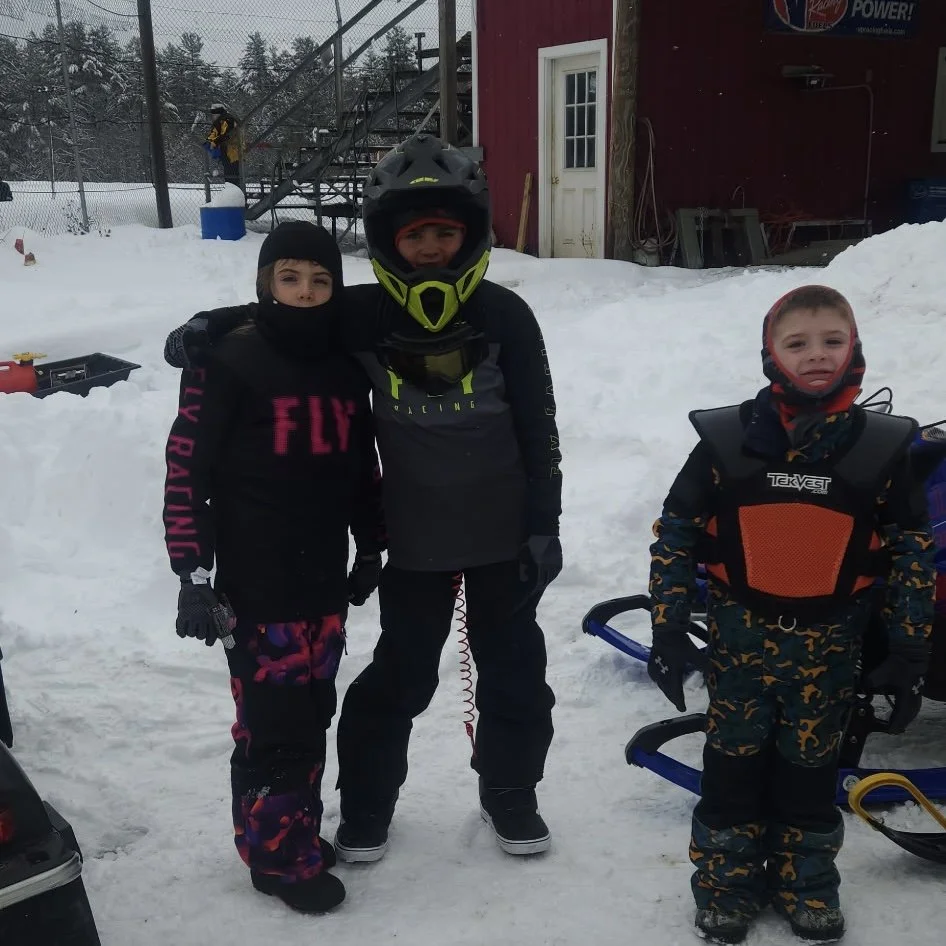
Ready for the 200 Stock Class at the 2026 Clunker Classic at Bear Ridge Speedway in Bradford are :(L - R) Emery, Owen Patenaude, and William Morse.
(Courtesy Photo)
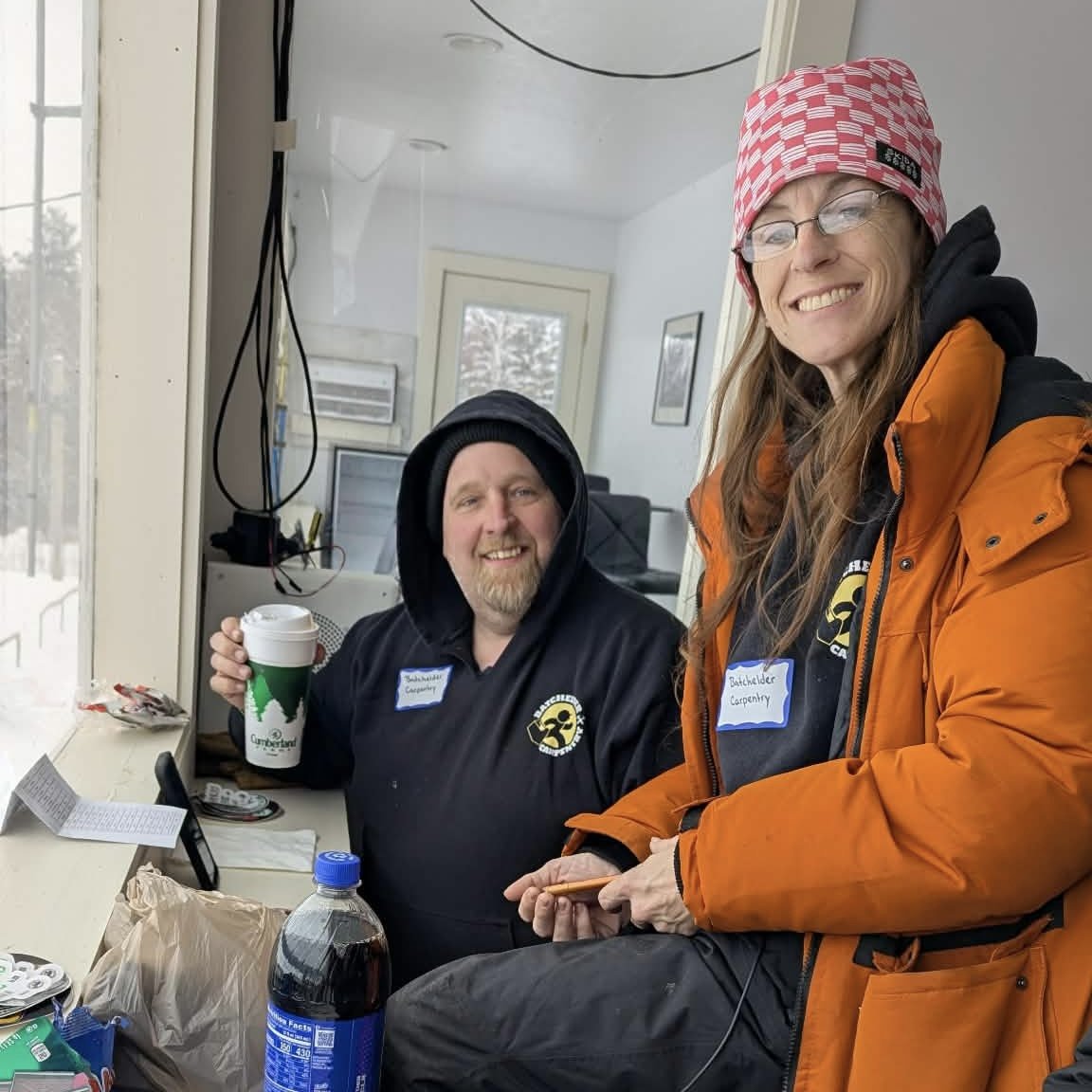
Steve Batchelder and Tonya Palmer of Batchelder Carpentry are shown enjoying the races from the sponsor’s booth at Bear Ridge Speedway in Bradford. on Saturday February 21, 2026 (Courtesy Photo)
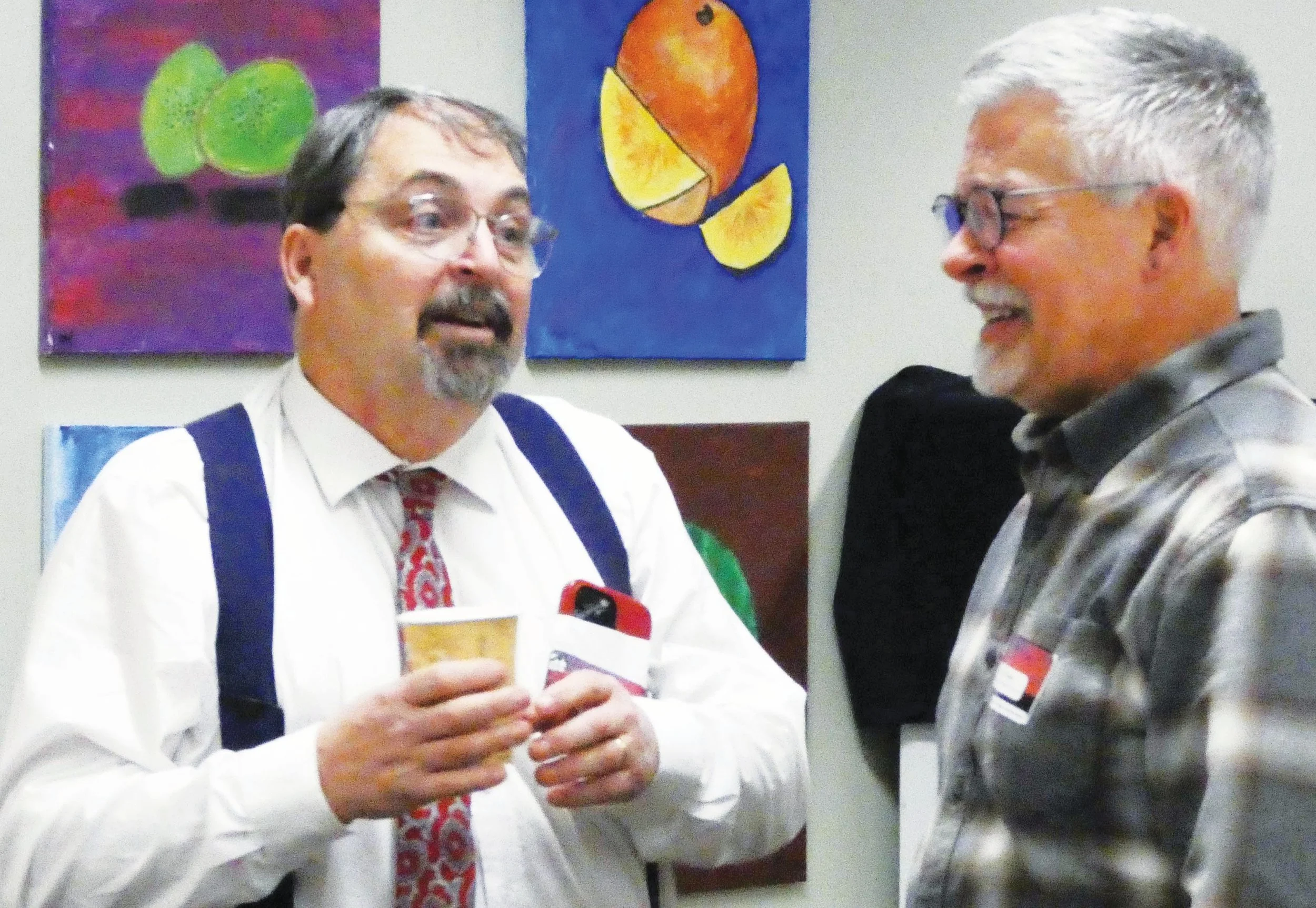
The Cohase Chamber looks at the importance of housing and economic development.
Those boundaries now include, within the Chamber's areas of influence, the Vermont towns of Newbury, Bradford, and Fairlee, and New Hampshire, with Haverhill, Piermont, and Orford.
The event that got underway Tuesday, December 9, 2025 at 5:30 PM included a welcome and intro of those present, and a full dinner prepared by Chef Heidenreich and his Riverbend culinary arts program.
By Bernie Marvin
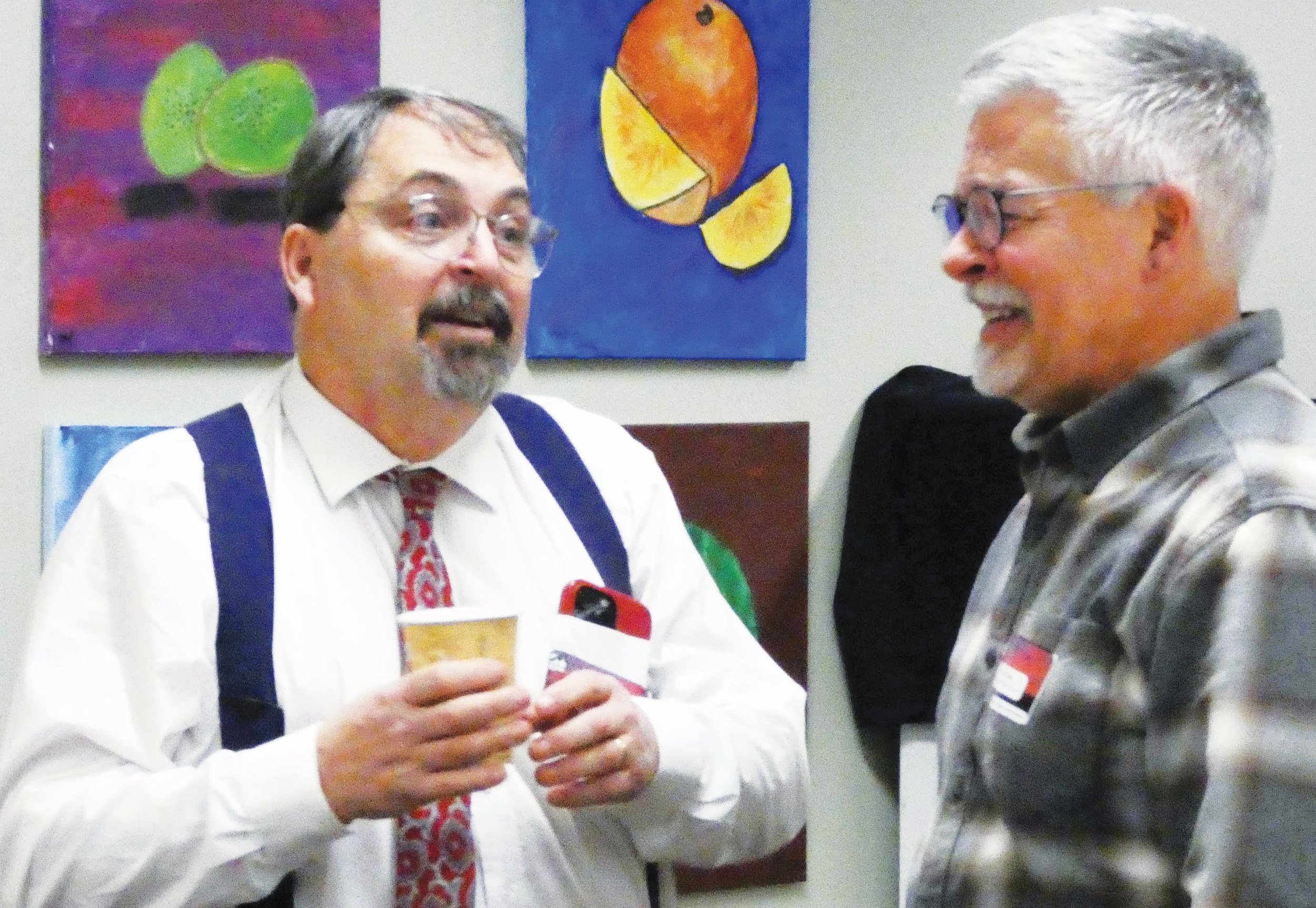
In conversation during the Cohase Chamber of Commerce Economic Summit are, River Bend Technical Center Director Brian Emerson (left) and Two Rivers Ottauquechee Planning Council Executive Director Peter Gregory. The Bridge Weekly/Bernie Marvin
Bradford, VT – Once again, as has happened for many years in the past, the River Bend Career and Technical Center was filled with ideas, programs, municipal government leaders, and enthusiasm, as nearly three dozen business leaders, education officials, and government representatives came together for another Annual Cohase Region Economic Summit.
With the Cohase Chamber of Commerce established for its original four towns 25 years ago and then expanding to six cities, the Chamber serves those six towns through an expanding network of ideas and business promotions.
Those boundaries now include, within the Chamber's areas of influence, the Vermont towns of Newbury, Bradford, and Fairlee, and New Hampshire, with Haverhill, Piermont, and Orford.
The event that got underway Tuesday, December 9, 2025 at 5:30 PM included a welcome and intro of those present, and a full dinner prepared by Chef Heidenreich and his Riverbend culinary arts program.
Then a report session from town representatives was held, plus a short presentation on the technical center by Director Brian Emerson, introduction of the need for a Community Development Concept by Vermont State Representative Monique Priestley, with Michelle Sponheimer and the development team, with a complete discussion of the needs for an Upper Valley Regional Community Development Corporation, and concluding with an ending wrap-up.
Peter Gregory, Executive Director of the Two Rivers Ottauquechee Regional Commission, summed up his comments on the evening's discussion by offering that "I think it was beneficial for the attendees to learn about other ways to enhance capacity to address housing and economic development issues," he provided The Bridge Weekly at the conclusion of the program.
He said, "I was pleased to see that regional organizations like Green Mountain Economic Development Corporation and Grafton Regional Development Corporation will offer guidance on how to complement, rather than duplicate efforts in the area. Two Rivers Ottauquechee Rivers Commission will also participate in discussions and offer assistance to support the needs of its communities," he said.
Haverhill Select Board member Ron Hurlburt attended the session with fellow Select Board member Joe Longacre, as they both did last year. They participated in the evening's discussions and the question-and-answer portion of the three-hour program.
Hurlburt told The Bridge Weekly at the conclusion of the program that it appeared Haverhill was very well received that evening, and there was much interest in them taking part and attending the program.
He said, “Along with the need for multiple unit housing, I like the idea of also partnering with developers to rehab and establish units in existing abandoned buildings.
The idea of a Regional Community Development Corporation seems reasonable and very beneficial. It would just have to be tuned to work for everyone and give people interest."
He added that the main obstacle he saw in Haverhill is all the "NIMBY's" (Not In My Back Yard) being afraid of large amounts of housing coming in. “That is where single large homes could first work. It is difficult to cut out good farmland and convert it to housing. The fellow, Noah Richard, mentioned he gets people from the community to invest in the project. They have guaranteed equity in the property and therefore would have much involvement and interest in the project as it moves along. There might be an avenue under tax takings that would allow developers to then acquire properties for redevelopment.”
Selectman Hurlburt said that everyone at the dinner seemed to be in agreement that there is indeed a housing crisis and something needs to change. “There were a wide range of people attending, being entrepreneurs, builders, selectmen, Chamber Commerce, news/media, finance, conservation to name a few. With that many types of knowledge and occupation, I'd like to think something could move forward.”
He said that “With my table much discussion was made on the new surge of vocational training verses college. People spending the money and time to get a degree are not coming out of college with the pay scale of someone successful in the trades, along with carrying a great deal of debt.”
“Much emphasis is also put on ‘workforce housing’ which is not low income but rather housing trying to meet median income earners to be able to stay in their local town and purchase a home. One builder noted that although he does this for a business, he does not want to just absorb profit off someone's back but also provide affordable type housing for local people.”
One of the major discussions at the meeting was on the subject of “Why the Upper Valley Region Needs a Regional Community Development Corporation.” As pointed out in a White Paper presentation on the subject, the area faces challenges common to many small, rural towns.
Rising housing costs, aging infrastructure, limited economic diversification, and it constrained municipal capacity made large scale community investment quite difficult. These challenges are compounded by small tax basis, limited staff resources and regional housing pressures that can price out residents wanting to come and live and/or work in the community.
A regional community development Corporation (CDC) can fill this gap. By combining local governments with professional management, AC/DC provides continuity, technical expertise, and the ability to coordinate initiatives across multiple sectors and municipal boundaries.
It can help communities throughout the upper Valley plan and implement projects that advance local goals while leveraging federal, state, and by state funding.
It is expected that this discussion of CDC will be ongoing and accompanied by other important topics such as how to better meet childcare needs in the community, a look at zoning and changes that could be made, and looking at a long list of bylaws and ordinances that all of our local communities must now work with.
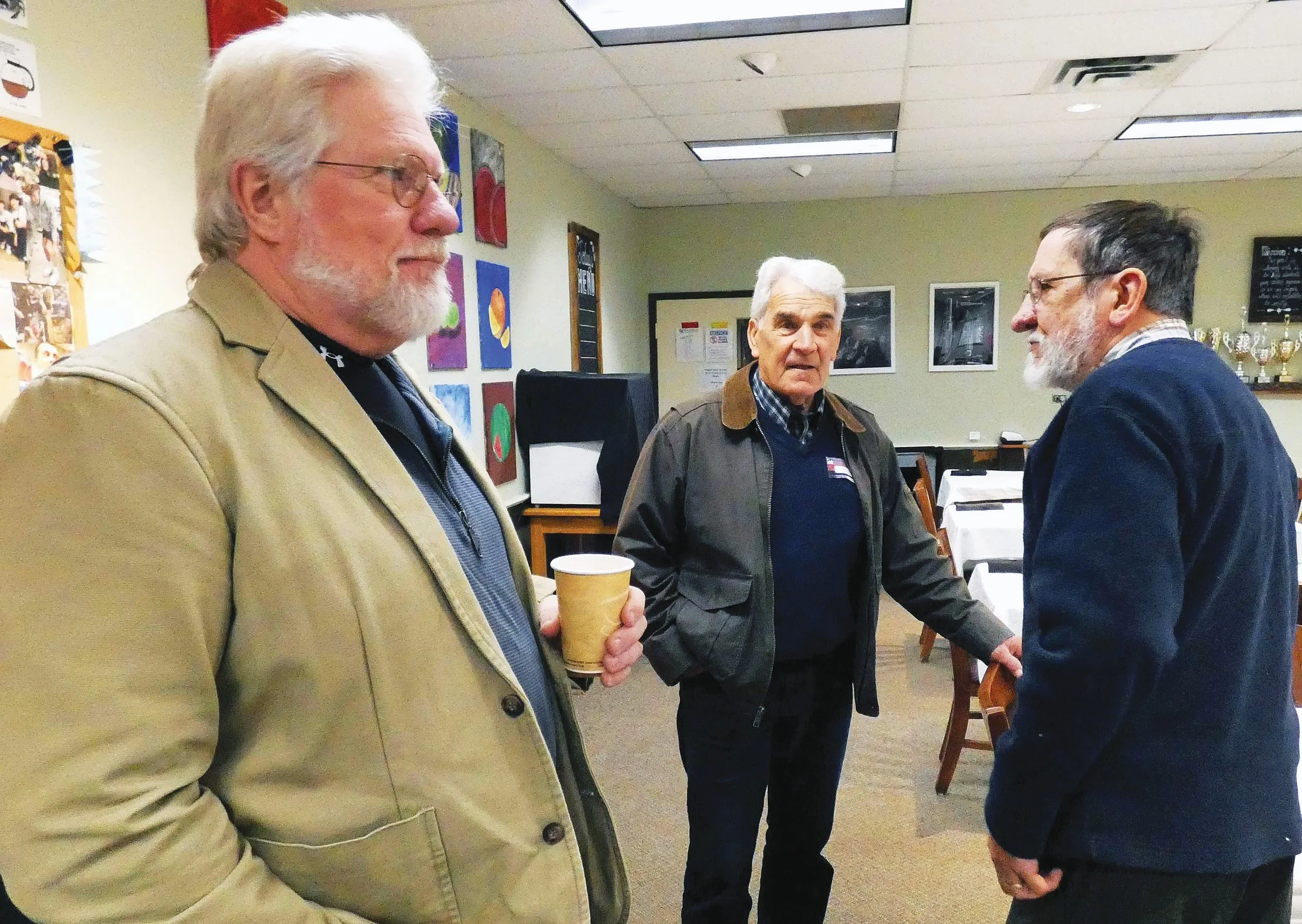
Gathering for the annual Cohase Chamber of Commerce Economic Summit at the River Bend Career and Technical Center recently were, (L-R) Select Board members Ron Hurlburt and Joe Longacre with Chamber Board Member Gary Scruton. The Bridge Weekly/Bernie Marvin
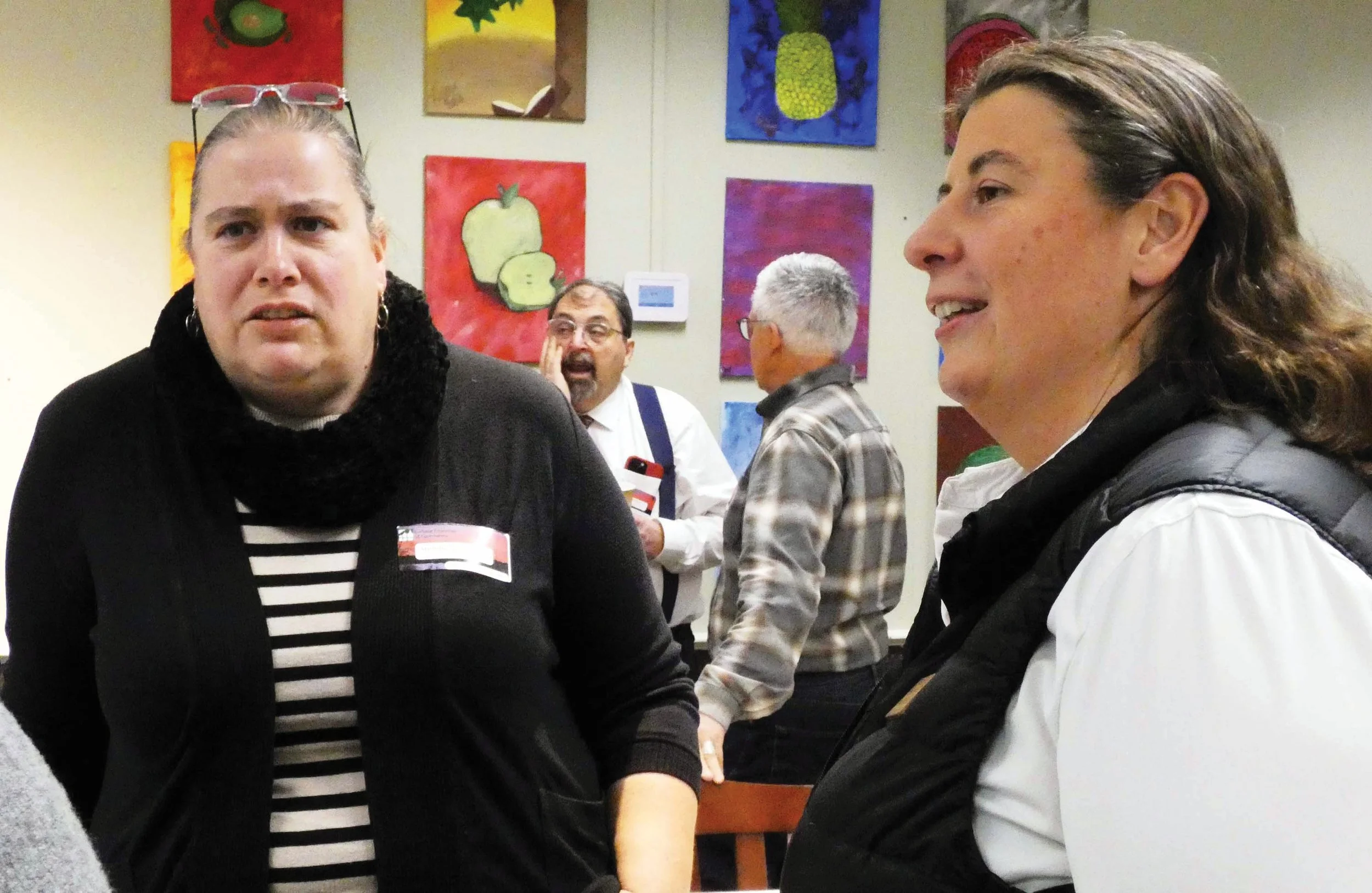
Seen left to right as they talk about a long list of topics presented during the recent Cohase Chamber of Commerce Economic Summit are, Michelle Spohneimer (left) of Vermont ADAADPA and Vermont State Representative Monique Priestley. The Bridge Weekly/Bernie Marvin
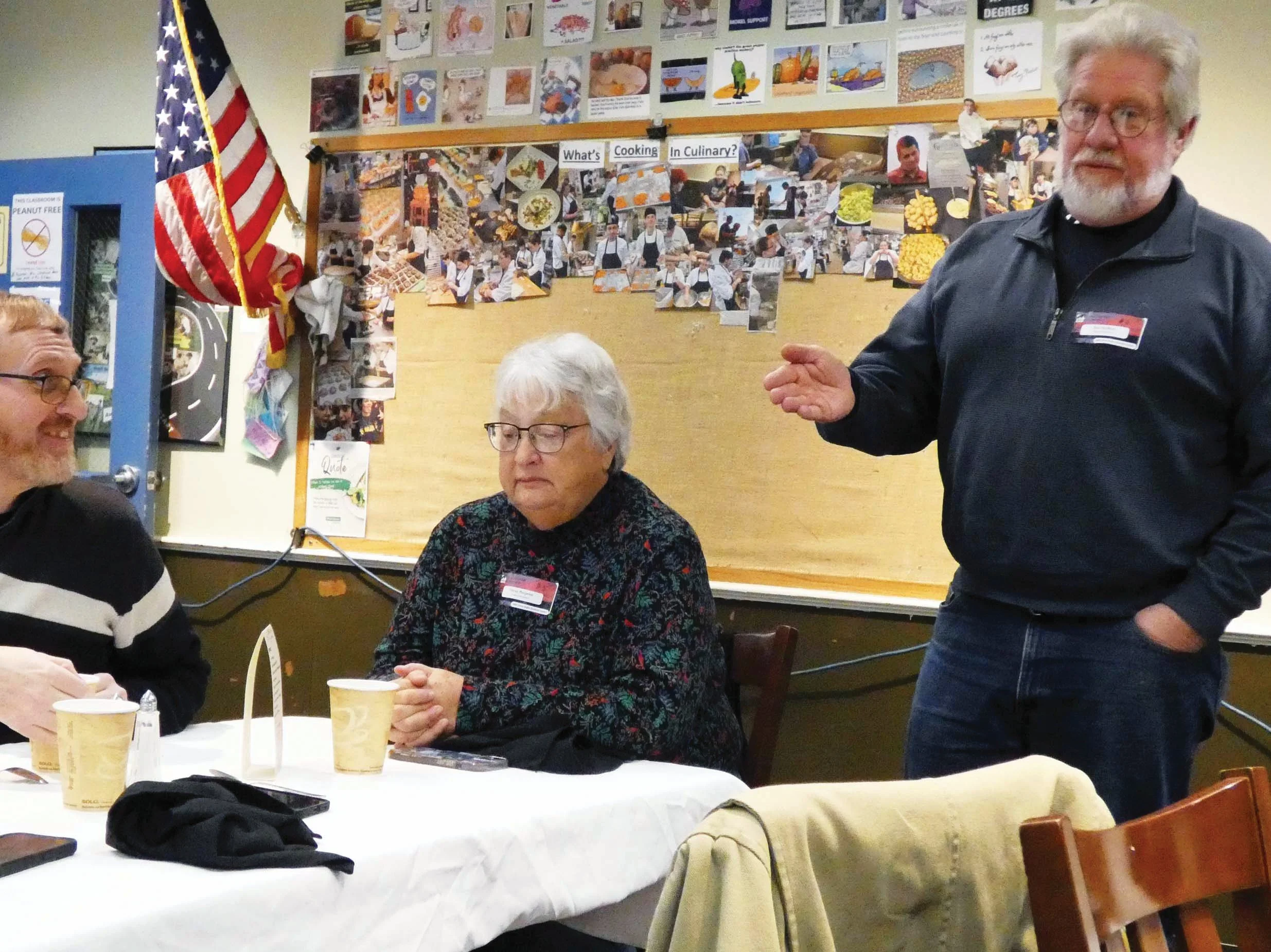
Speaking and listening during the recent Cohase Chamber of Commerce Economic Summit in Bradford were, left to right, Joshua Smith, Owner/Publisher of The Bridge Weekly and Yankee Kingdom Radio, including WYKR Radio, Bradford Select Board Chair Meroa Benjamin, and Haverhill Select Board Member Ron Hurlburt. The Bridge Weekly/Bernie Marvin.
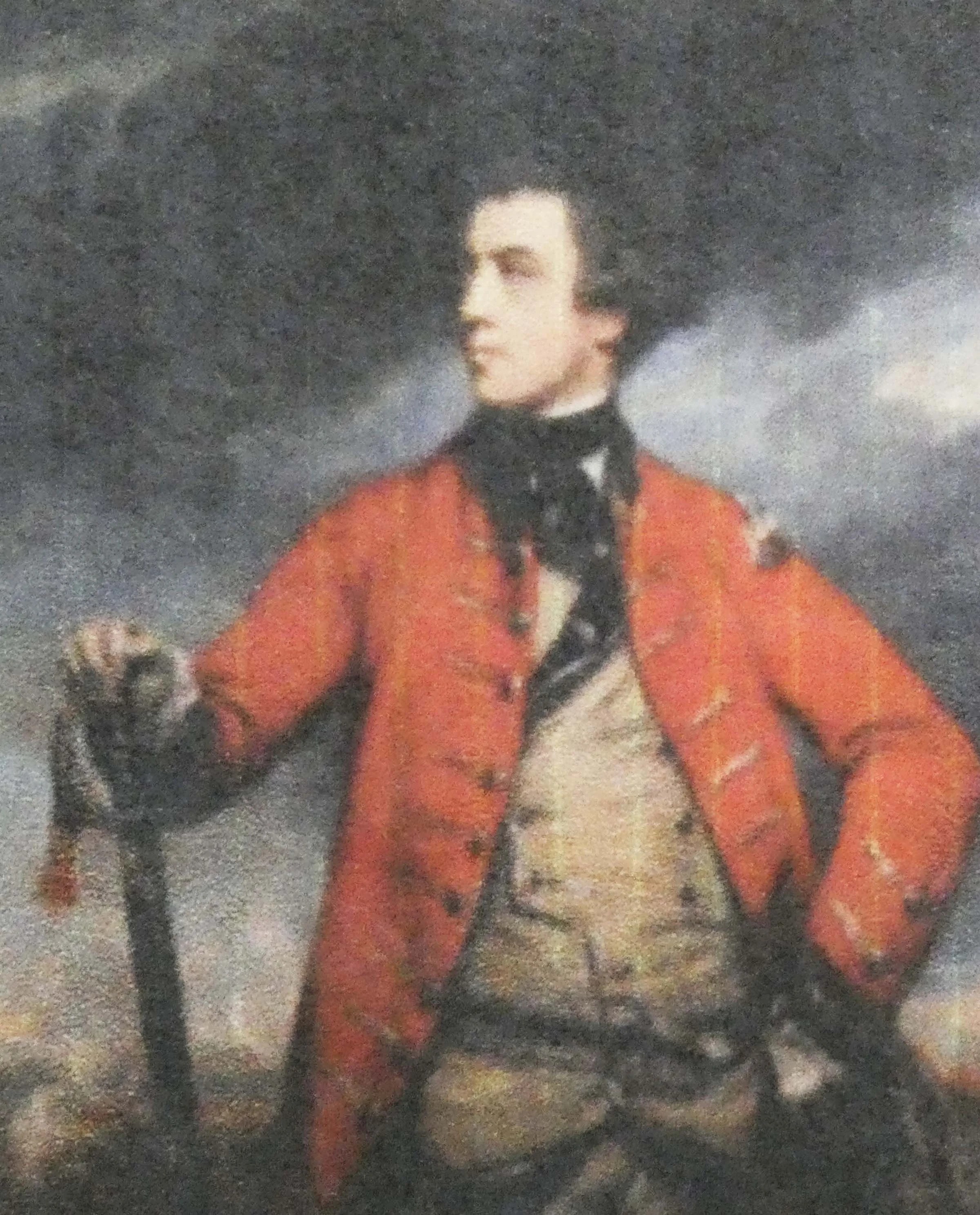
The American Revolution series by Ken Burns featured British Loyalist Col. John Peters of Bradford
Because Colonel Peters was required to travel to the First Continental Congress in Philadelphia in 1774, from time to time, he would be mobbed by the “Liberty Boys” because of his continuing and intense loyalty to the crown prior to the Revolutionary War beginning on April 19, 1775. This, according to Richard M. Ketchum's book “Saratoga, Turning Point of America’s Revolutionary War.”
By Bernie Marvin
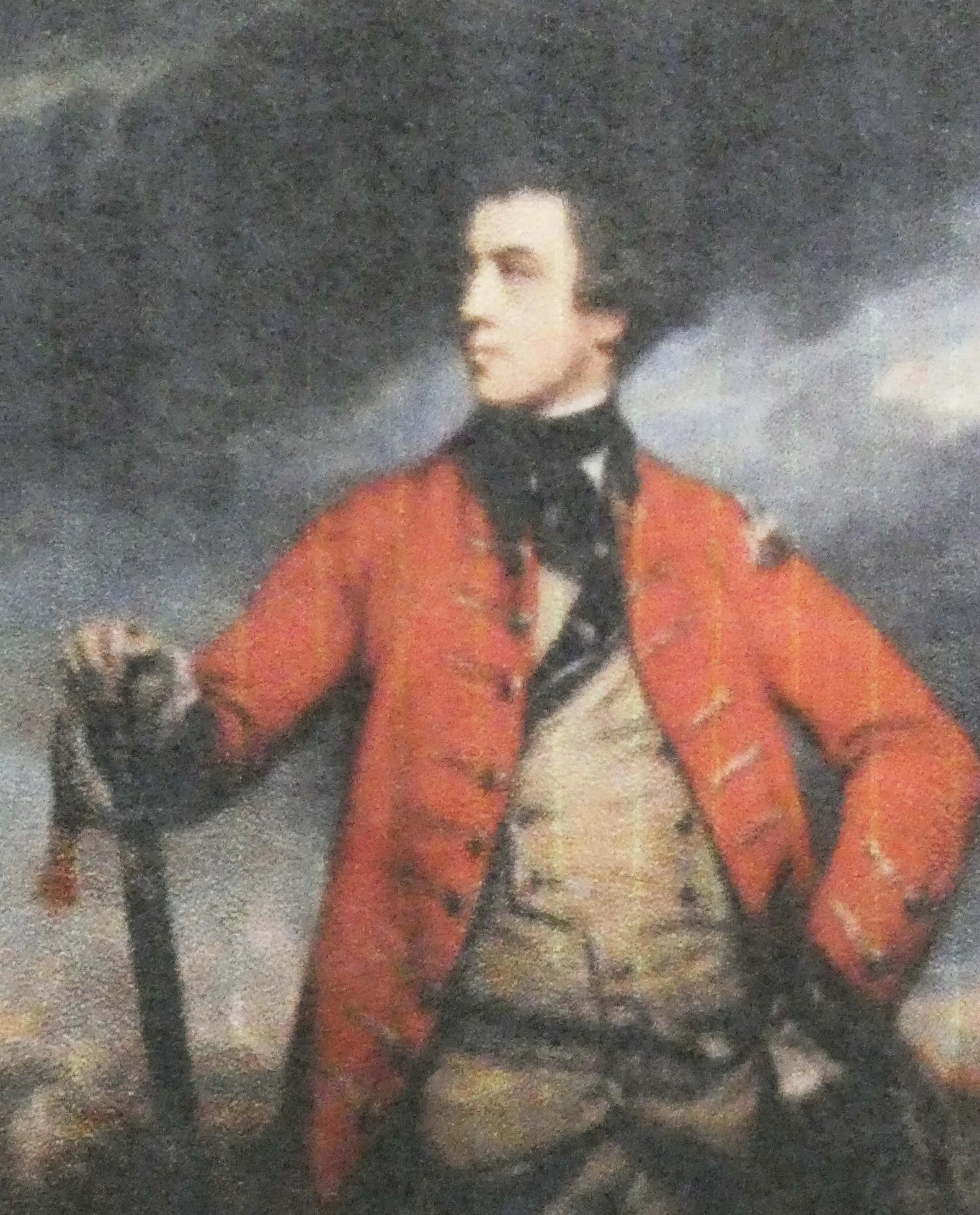
Colonel John Peters of the Queens Loyal Rangers was featured on the new Ken Burns series on the American Revolution. It was premiered last week with six, two-hour shows on Public Broadcasting System for New Hampshire and Vermont. Courtesy photo.
Bradford - The newest Ken Burns documentary is a six-part, 12-hour series on the American Revolutionary War. This television documentary was released to the public just last week and featured in the third section a Mooretown (now Bradford, Vermont) military man, British Colonel John Peters, and his family.
Colonel Peters hailed from Connecticut and settled in Piermont for several years, then moved across the Connecticut River to the town of Mooretown (later to become Bradford), Vermont. The town was established in May 1770 in New York before it became the State of Vermont. The town was known as Waitstown and Waits River Town before adopting its original name, Mooretown. That’s when Colonel Peters lived there. The name originated with Sir Henry Moore, the Royal Governor of New York.
According to Wikipedia, after the American Revolution, residents of Mooretown stated they no longer wanted the name to remind them of a royal governor, so they petitioned the Vermont legislature to rename the town Bradford in 1788.
The television story revealed that Peters, born in 1770 in Connecticut, was a Yale graduate and first settled in Piermont, then later moved to Mooretown on the banks of the Connecticut River, where he owned a considerable amount of land, a large home, several saw mills and grist mills, and a large farm.
He actually lived in New York at that time (it was not yet apportioned to Vermont) and was appointed Justice of the Peace, Colonel of the local militia, Judge of Probate, County Registrar, Clerk of Court, and Judge of the Court.
Because Colonel Peters was required to travel to the First Continental Congress in Philadelphia in 1774, from time to time, he would be mobbed by the “Liberty Boys” because of his continuing and intense loyalty to the crown prior to the Revolutionary War beginning on April 19, 1775. This, according to Richard M. Ketchum's book “Saratoga, Turning Point of America’s Revolutionary War.”
Colonel Peters knew after these experiences that the American countryside would not be satisfied with anything short of total independence from England. On his way back from Philadelphia to Mooretown, another gang threatened to kill him as “an enemy.”
Peters back in his hometown was hated and abused by his neighbors and even his own father turned against him. Peters got a mission to go to Canada with American militia members, where he acted as a double agent, spying on both sides.
Peters was branded as an outlaw; his wife and eight children had been turned out of their home and sent off in a sleigh with only one bed to Ticonderoga, 140 miles through the woods, the snow, and bad roads. The group arrived “more dead than alive.”
The family group was then sent on their way to Canada; they became lost, were discovered by a passing British ship, and were transported to St. John’s, Canada. By that time, Colonel Peters was reunited with his family and taken to Montréal. He was ready to seek revenge, and that month, he began to recruit men for a regiment approved by British General John Burgoyne, who named his unit the Queen's Loyal Rangers.
Later in the war, Colonel Peters returned to Vermont, this time to join the fight with his Queen’s Loyal Rangers at the Battle of Bennington, where the British were soundly defeated. He left the Revolution and returned to England with his family.

Bradford takes aim at ESPN
If you’ve never played or even heard of archery tag, don’t worry. Most haven’t. But that’s changing fast. Players use soft foam-tipped arrows and face shields and score points by hitting players on the other team. It’s an arena-style game that’s as much about timing and teamwork as it is about aim. It’s safe for beginners, challenging for competitors, and a lot of fun both competitively and recreationally.
By Sara Lornitzo
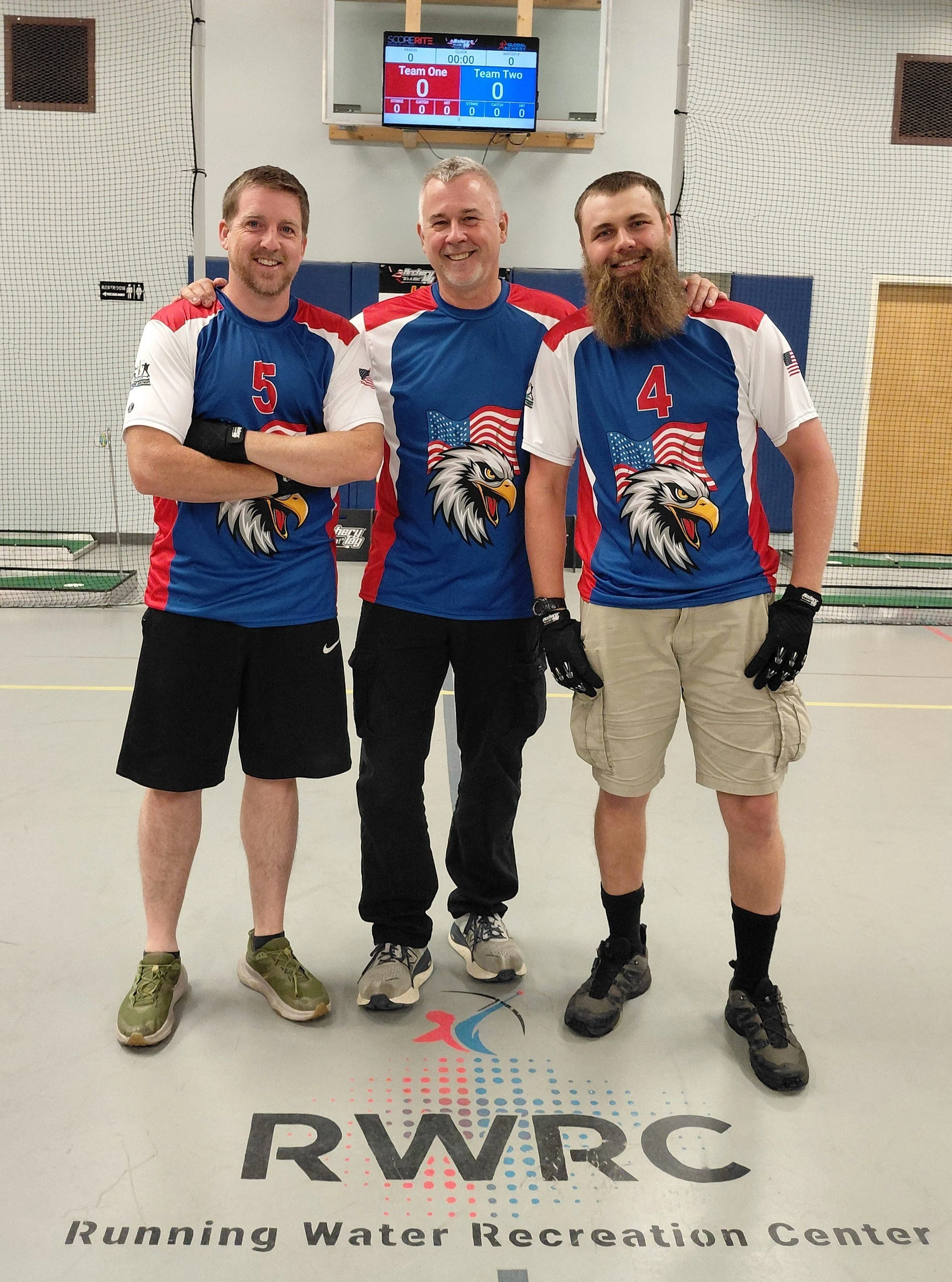
Shown (L-R) are Team USA Member Roger Wholie of East Corinth, VT; Michael Morrissette, Coach and Owner
of Running Water Recreation Center in Bradford; and Team USA member Miky Steele, of Windsor, VT.
Bradford, VT - It starts with a bow, an arrow, and a moving target—and once you try it, you’re hooked. Archery Tag is an action-packed sport that mixes the intensity of dodgeball with the skill of archery. It’s safe, fast-moving, and exploding in popularity.
And on Friday, August 1, 2025, two players from Bradford are taking it all the way to ESPN OCHO.
Only eight athletes nationwide were chosen to represent Team USA in the international Archery Tag match against Canada. Two of those members are Roger Wholie, 36, and Miky Steele, 25. The two have been training at Running Water Recreation in Bradford. Coach and manager Michael Morrissette, who just turned 60, has been working hard to get his team to this point, and he will be joining them in Florida. Michael, along with his wife Kelly, own and operate Running Water Recreation in Bradford. Together, they’ve built something rare: a small-town training ground with national impact.
If you’ve never played or even heard of archery tag, don’t worry. Most haven’t. But that’s changing fast. Players use soft foam-tipped arrows and face shields and score points by hitting players on the other team. It’s an arena-style game that’s as much about timing and teamwork as it is about aim. It’s safe for beginners, challenging for competitors, and a lot of fun both competitively and recreationally.
And it’s not just Archery Tag. Running Water Recreation has bouncy houses, mini golf, and more, and can be hired for events if you want them to come to you. They have hosted games at many of the schools in and around the Upper Valley. Whether you’re planning a birthday, looking for a new hobby, or just want to try something different, they’ve got the gear and the space.
The league is open to players from age 8 to 73 years old, but kids as young as 5 and adults well into their 80s have picked up a bow just for the pure joy of it. It’s one of the few sports where everyone, regardless of age or background, can be part of the action.
League registration for Archery Tag opens again in September, but the center is open for those who just want to play. The center offers drop-in games for those rainy summer days, and it’s a fun after school activity. It’s also a great outlet for kids who need something physical but fun - and for parents who want an alternative to screen time.
The game fits right in with ESPN OCHO’s lineup of quirky, alternative, and adrenaline-pumping sports. It’s a rare chance to see something like this in the spotlight…and to see two local players take the field on behalf of the entire country. It’s a reminder of just how much potential there is right here at home. It’s fun, it’s fast, and now…. it’s local.
Don’t miss the international Archery Tag event on ESPN OCHO, Friday, August 1st. Stream it live on ESPN+ and look for coverage across ESPN’s social media. Bradford’s going national. Let’s show the country how we play.

Roger Wholie and Miky Steele are shown as they practice Archery Tag at the Running Waters Recreation in Bradford recently. The two are part of a team that will represent Team USA in an international Archery Tag match against Canada, which will be shown on ESPN.