
By Tanya Sousa
There’s been an explosion in vegetable gardening since Covid, and with the rising cost of groceries (and living in general) not to mention the fairly frequent food scares, it isn’t a surprise. I too want to know what it is I’m eating, where it comes from, and what goes into producing it, and I began a new way of looking at growing food at least a decade ago.
Flower gardening and preening the landscape seemed to be the explosive form of plant husbandry for years. It also seemed that many people identified themselves as either flower gardeners or vegetable gardeners. There was an interesting divide in the way each kind of person viewed the other camp. Vegetable lovers told me they didn’t have time for non-essential flowers. Flower lovers often viewed themselves as landscaping artists; the world of vegetables seemed too mundane in comparison.
Some people appeared happy growing both, but even they clearly leaned in one direction or another. They may have had massive flower gardens they called “rooms”, frothing with blooms all year, and a tiny spot of edibles, or the other way around.
There were even people I met who planted vegetables and flowers together, intermingled as if they belonged together. Scandalous! These sorts of gardeners were few and far between, but I was interested by the idea that a vegetable garden could be pretty, and a flower garden could be functional.
I fell into the flower camp for years. I’d try to grow a tiny salad garden on occasion, but it just wasn’t as fun. Although I spent hours blissfully weeding my blossoming beds, the lettuce, spinach, arugula and their kin choked and eventually became lost in a jungle of questionable greenery.
As the years wore on, my property overflowed with spaces of flowers so thick and established, it would have been daunting work to make room for edible plants. I still had the idea brewing, though.
My eye likes the color and balance of good landscaping, and my first idea was to mix edibles with flower so I would trick myself into caring for them better. Then I read an article based on a Vermont Public Radio interview with a Master Gardner/horticulturist (who’s name escapes me, I apologize). This man spoke of using fruit bushes, trees, and vegetable plants as flowers and landscaping beauties.
Blueberry bushes come in dwarf varieties that stay petite, have colorful berries in summer, and leaves that color nicely in the fall. Fruit trees flower in the spring and then grace their chosen areas with shade and also the fruits themselves. There are forms of vegetable plants that are downright blazing with color, and who’s to say that the shiny green of basil leaves or the spikes of chives aren’t any less attractive than other ornamental plants that are chosen because their shape and shine offers variety to the eye?
The Master Gardner shared all this, and it made perfect sense to me. It is agri-culture to recognize that there is little more beautiful than the things that feed us. Looking at them can nourish our hearts too.
When well cared for, is there anything more peaceful and lovely than a pasture full of grazing animals, or the sight of chickens clucking on a nest or racing after an elusive insect? What is more pleasant than walking through an orchard, either in bloom or with leafy heads loaded with fruit?
I set out to landscape with edibles. I planted blueberry bushes in front of the house where other ornamental shrubs would have gone, and rows of fruit trees near the driveway. Neat raised beds of vegetables greeted people as they parked, and thornless blackberry bushes and a variety of herbs surrounded the doorway. They were all placed as I would place any flowers I may have had, and look just as wonderful to me. The chives and garlic chives in full blossom right are a vision – and they attract all kinds of pollinators. A flower is a flower, even on an herb plant.
It sounds as if I’ve completely changed camps, but I haven’t really. I still have my flowers. Some of the typical garden flowers, I’ve discovered, are edible and delicious, but that’s an article for another day! I just came to the realization that any plant can be beautiful and used creatively. And guess what? None of them are lost in the jungle.
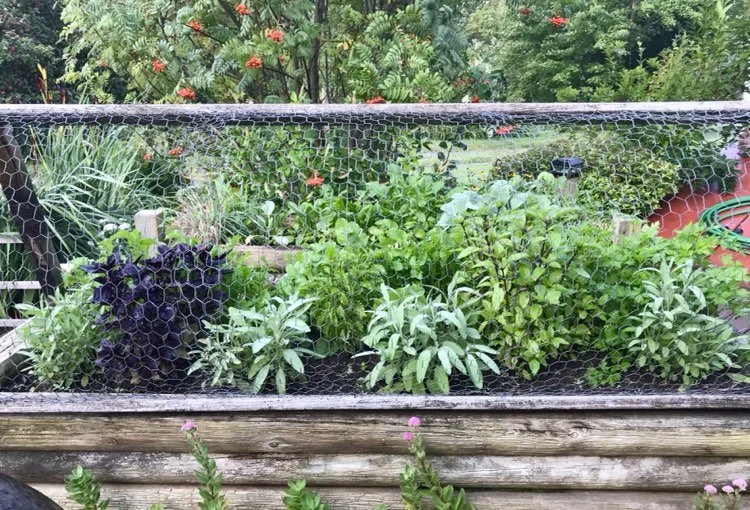
Who’s to say that the shiny green of basil leaves or the spikes of chives aren’t any less attractive than other ornamental plants that are chosen because their shape and shine offers variety to the eye? - Courtesy Photo.