
Along the Logging Trails
By Tanya Sousa

The first time I walked the logging trail, I held my mother’s hand as we entered. A field edge harbored the mouth to the trail, not far from our house. Tall grasses waved in the wind, streams flowed in curves and surprises, and the line of trees between field and forest kept vigil.
It was the one obvious place to access wooded realms, and to my four-year-old mind, it was the only safe way. I had permission from my parents and from something unseen to step foot there. To leave the boundaries of the rutted and leaf-covered trail was unthinkable. Outside the trail was where “everything else” had the right to be.
During that first walk, the wonder of it took hold, and I let go of my mother. The canopy rose above me; limbs reached across to each other like arms with bony fingers. I ran ahead until Mom called me, her voice more somehow, enriched in the midst of everything.
Sometimes after that, my sister and I walked the trail and found partridge nests. Sometimes a deer would peer at us from deeper in the forest. I climbed a few piles of old logs, stacked before I was born, wondering who put them there and what they were waiting for. I’d feel the wild in my blood.
In a few years, we moved; I had to leave my logging trail, but discovered our new home had its own trail running behind it. The entry was surrounded by cedars and more overgrown than the first had been. Older now, I explored first with my sister and later alone. Signs of loggers’ tracks were still there on a narrowed path that was much larger once. I still felt this was where human feet had the right to be.
The trail passed sugarhouse ruins where the steam of sweet boiled sap once rose into the air, men ladling into the boiling liquid to see if it was thick enough – they had domesticated this space. Now boards lay in a heap. Nearby trees sent saplings to grow into and around what had once been their brethren before they had been axed and shaped to our will. The saplings patiently broke the sugarhouse boards into parts that were already being reclaimed, as if the forest had won some kind of battle and welcomed the ancestors back to their roots.
One winter, boys appeared from the trail, riding across white drifts with snarls and power on Arctic Cats. I opened my bedroom window with eyes and ears keened, but the helmets hid their faces until they disappeared. There had been three—maybe four—of them packing down the snow. It made my logging trail accessible in winter for the first time. I stepped gingerly on the washboard snow machine tracks where the field met the road. I reached the mouth of the forest and stopped.
The snow weighted cedar branches, creating an arch I could walk through—a winter princess into a forest of C.S. Lewis’s making. The stillness seemed holy. I scarcely breathed.
The logging trail was transformed.
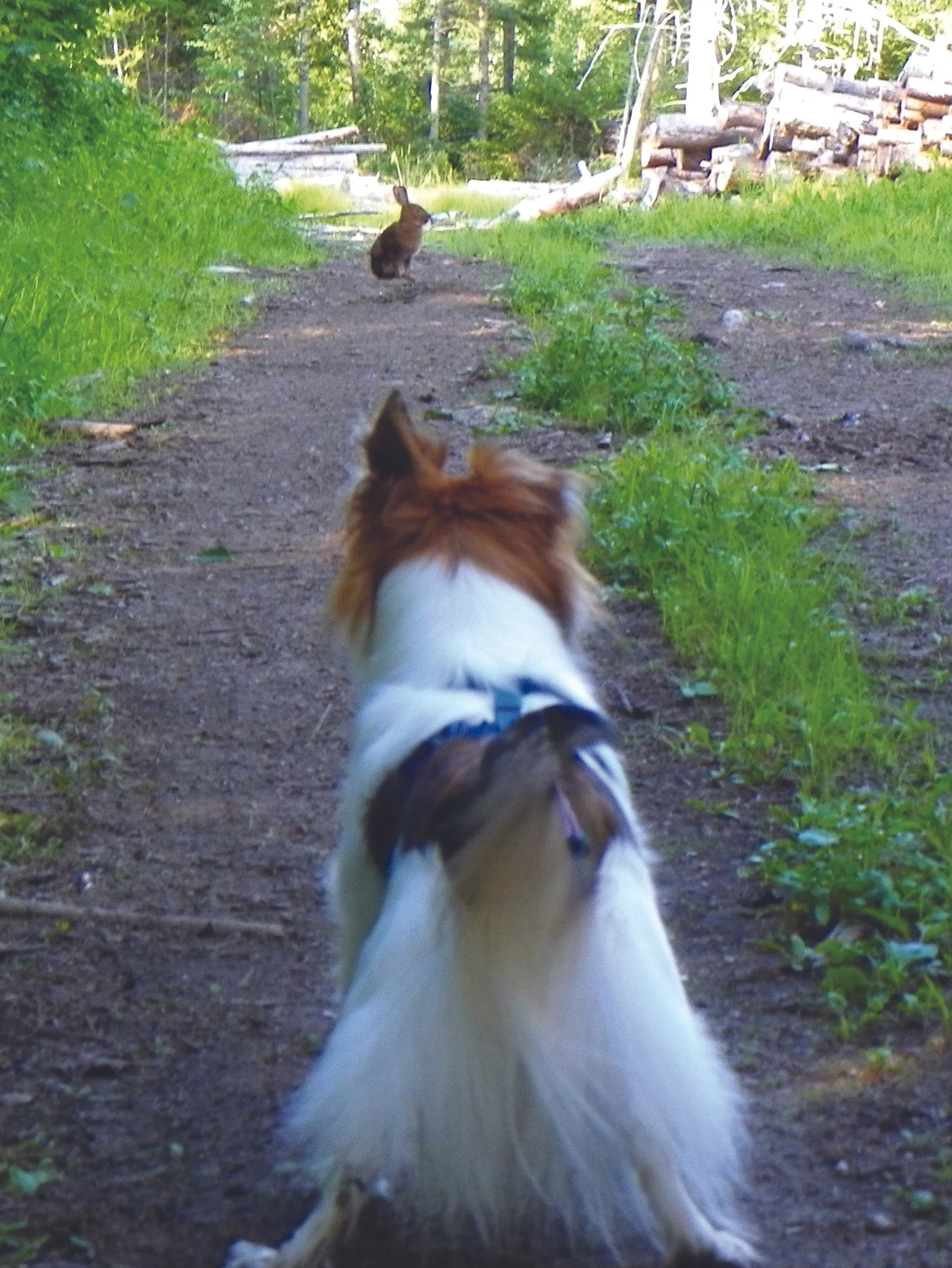
The wild things revealed themselves. Rabbit trails crisscrossed, some suggesting a singular animal, others having so many footprints they obliterated each other. There were large tracks and small ones, and piles of cedar or other dark bits that seemed to have been nibbled. There were piles of brown droppings.
There were tiny trails of squirrels and even tinier tracks of mice. I could see where tails dragged through the snow. There were cat-looking tracks in places.
Deer had their own well-used trails meandering along. There was more obvious life in the winter snows than at any other time. The animals had their highways, and I had mine that moved through theirs.
The faceless boys on Arctic Cats came some winters and not others. If I’d had snowshoes then, I might have joined the rabbits in making tracks on the trail where I felt humans were allowed to tread.
Soon, I left for a college campus on a hilltop where nothing hindered my view of the village below. I not only didn’t see rabbits or deer – I didn’t see evidence of them. I could step anywhere I wished, and there was no natural wonder to say I needed to share the world. I ached.
When I graduated, I visited my logging trail but the cedar boughs and thickets had removed the barely welcoming opening.
I pushed branches, ducking my head and feeling the scrape of tree sentries. I didn’t heed them, but looked around to find the narrow trail. When I finally stepped into a slightly clear space, my breathing hushed. I stilled my body, my mind, my intention. The trail was a thin line where deer walked. Wild things had reclaimed it, and I turned respectfully and left it to them.
Forty years after I walked my first logging trail, I found another; there is a peaceable communing between the farmer and this grove, and it accepts his tenure, although I’m sure it knows a time will come to shed the formality.
Even this active logging trail becomes still and holy in the snows. The wildlife’s heartbeat is clearer in the cold, and I breathe out and watch the frost in the air, feeling part of it all. I realize I can step off the trail if I’m gentle enough.
Who’s to say that the shiny green of basil leaves or the spikes of chives aren’t any less attractive than other ornamental plants that are chosen because their shape and shine offers variety to the eye? - Courtesy Photo.