
New Hampshire Fish And Game’s Mark Beauchesne Highlights Department Activities
By Gary Moore
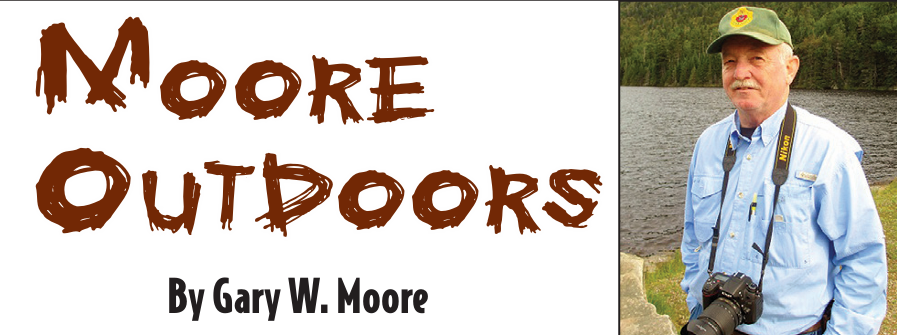
I interviewed Mark Beauchesne, NH Fish and Game’s Landowner Relations Coordinator, for my biweekly show on WYKR and we discussed a wide range of topics of interest to sportsmen and others who live or recreate in New Hampshire.
Beauchesne is a NH native who has also spent a lot of time in Vermont’s Northeast Kingdom as his grandparents live in Derby Line and the family has a camp in Avery’s Gore.
Just listening to him talk, you quickly realize he is an enthusiastic hunter and angler who spends much of his free time pursuing those activities. Bird hunting being one of his favorite sports.
Beauchesne started at Fish and Game as a volunteer 28 years ago and soon became a full time employee holding many different jobs over the years. He is currently Programs Manager in the Public Information and Education Division.
I originally contacted him because of his job as Landowner Relations Coordinator but soon found out he has many other responsibilities, one of which is the Barry Conservation Camp which he is now working to open for the six week summer sessions.
To say he is enthusiastic about Barry Conservation Camp, named after Haverhill resident and long time Executive Director Charlie Barry, his late wife Becky and his father, a retired conservation officer, is an understatement.
The camp is run jointly by Fish and Game and UNH Cooperative Extension 4H and is for girls and boys ages 12-16. Each week has a theme such as fishing, hunter safety and related subjects. In addition to the classes, the students swim, fish, hike, canoe and enjoy being unplugged from phones and electronic devices. Important to all campers, Beauchesne says, “The food is fantastic.”
We also talked about the Owl Brook Hunter Education Center in Holderness. The facility focuses on the shooting sports and offers a wide range of programs and classes, many especially for women.
Landowner relations being the reason for my original contact with Beauchesne and a subject I try to promote in my columns and on the radio, we spent time talking about why it is important that sportsmen respect and show their appreciation for landowners who allow them to hunt, fish, hike, ski or otherwise recreate on their property.
He emphasized asking permission before venturing on the land even if it is not posted and saying thanks after.
I learned that Fish and Game often awards small grants for landowners to improve habitats such as not mowing for grassland birds and apple tree releases. If you are interested, check out the website or contact Fish and Game directly.
This being the time of year many of us focus on fishing, we talked a lot about where and what species.
I learned that Beauchesne frequently targets Northern Pike and says “Pike Fever” often afflicts him.
The Connecticut River being the border between Vermont and New Hampshire and a favorite place to fish for both of us, caused us to reminisce. The big Moore and Comerfford reservoirs offer so many options for anglers as does the river from there to the Massachusetts border.
We also talked about the trout waters of the sections north of Dalton/Gilman to the source in Pittsburg.
Although New Hampshire owns the river to the natural low water mark on the Vermont side, anglers holding Vermont or New Hampshire resident licenses can fish anywhere in the river separating the two states to the first highway bridge on either side.
Space does not allow me to cover all we talked about but you can go to: https://www.wildlife.nh.gov/ and do some exploring on your own.
Vermont Master Angler Program Has Record Year
The Vermont Fish and Wildlife Department has released the Vermont Master Angler Program 2025 Report with 1,222 entries and 90 Master Angler Award recipients.
The Vermont Master Angler program is a length-based program that sets “trophy sized” benchmarks for 37 eligible fish species. While these trophy-sized fish are a challenge to catch, they are attainable for anglers that develop the necessary knowledge and skills.
Anglers catching a fish exceeding the minimum qualifying length in any of the 37 species categories can receive a certificate commemorating their catch. Their names and catches are also included in the Vermont Master Angler Annual Report posted annually on the Vermont Fish and Wildlife website. Anglers demonstrating the skill necessary to catch multiple species that all exceed the minimum qualifying lengths in the same calendar year are recognized as “Vermont Master Anglers” and receive a unique one-of-a-kind lapel pin at the end of the year. To qualify for the annual Vermont Master Angler Pin, an angler must submit qualifying entries for five or more species within a calendar year.
2025 was a record year for the program, with 1,222 entries approved, 361 of which were from youth anglers. There were also 90 Vermont Master Angler award recipients in 2025, 28 of which were youth anglers. Youth anglers have a slightly lower minimum qualifying length for each species.
Fisheries biologist Shawn Good said the program provides the department with information on the quality of fishing throughout the state and helps promote the many fishing opportunities that Vermont has to offer, adding that some new changes for 2026 reflect the increasing interest anglers have in pursuing a diversity of fish species.
Fisheries biologist Jud Krazter, who runs the Master Angler Program along with Good, added that this educational component of the program is one of its great benefits. “We really believe it’s important for anglers to appreciate all the unique and native fish species we have in Vermont, and recognizing the three Redhorse species individually is part of that. The fact that all three readily take flies and bait and provide a fun and challenging fishing opportunity is even better!”
Good and Kratzer also note that minimum length categories for some species like Freshwater Drum and Rainbow Trout have been revised in 2026 to be more in line with “trophy sized” specimens of those species.
To see the full 2025 Vermont Master Angler Program Annual Report, visit Fish and Wildlife’s website.
Bits and Pieces
New Hampshire’s Free Fishing Day is this Saturday, June 6. On Free Fishing Day, you can fish anywhere in New Hampshire without a fishing license. Both state residents and nonresidents may participate. All other fishing regulations still apply and will be enforced, including season dates and bag limits.
For details on fishing rules for various waters, consult the New Hampshire Freshwater and the New Hampshire Saltwater FishingFishing Digests, available at www.wildlife.nh.gov/fishing-new-hampshire/fishing-seasons-nh.
***
Vermont’s Free Fishing Day is Saturday, June 13 this year, and it will be highlighted by a free family fishing festival in Grand Isle as well as opening day of the state’s regular bass fishing season.
“Vermont’s Free Fishing Day gives resident and nonresident anglers the opportunity to go fishing without a license for the day in Vermont lakes and streams,” said Fish and Wildlife Commissioner Jason Batchelder. “Free Fishing Day is a great opportunity for an experienced angler to be a mentor to friends who have not gone fishing before. A day on the water could lead to a lifetime of great experiences and healthy local food.”
Free Fishing Day in Vermont also will be celebrated at the “Grand Isle Family Fishing Festival,” to be held at the Ed Weed Fish Culture Station at 14 Bell Hill Road in Grand Isle. The festival will run from 9 a.m. to 3 p.m.
Designed for young or novice anglers and families, this exciting event offers a variety of activities to participate in, including basic fishing instruction, fish biology and ID, crafts and lure making, and more. It also includes a chance for participants to catch big trout in a hatchery pond. No prior fishing experience is needed, and Vermont Fish and Wildlife will be supplying fishing rods, reels and bait for use by participants.
***
Vermont’s regular bass season also opens on June 13, marking the start of some of the hottest bass fishing action in the northeast. The season opens each year on the second Saturday in June and extends through the last day of November.
***
Remember to brake for moose when traveling on New Hampshire’s roadways. Over the last five years, there were an average of 64 moose–vehicle collisions annually. While moose are active throughout the year, May through October are high-risk months for collisions because moose venture onto roadways to consume the remaining salt residue from winter surface treatments.
***
The Vermont Fish and Wildlife Department urges poultry owners to use electric fencing and follow other precautions to protect their birds from predation.
“We are receiving reports about bears, foxes, raccoons, fisher, coyotes, skunks, and bobcats preying on chickens,” said Jaclyn Comeau, Vermont’s bear biologist. “These calls often come from people who are new and from those who are experienced at keeping chickens but who do not provide sufficient protection for their birds.”
Comeau says, “Vermonters need to expect bears and other predators will find their chickens and take the necessary steps to set up an electric fence before this happens.”
For more information visit BearWise and Vermont Fish and Wildlife’s Living with Black Bears webpage. If you are having a problem with bears, please fill out the Bear Incident Report form on that page. This form will be evaluated, and staff will contact you if assistance is needed.
***
Mark Breen reports in the Fairbanks Museum's Skywatch Almanac that on
June 1, 1986: “Severe thunderstorms pounded the region with damaging winds and hail. North Hartland and Brookfield both reported 1 inch diameter hail. “
June 6, 1984: “Up to 6 inches of rain overnight washed out parts of Rt. 2 and Rt. 302.”
June 8, 1816: “Snow and sleet began the ‘Year Without A Summer’, with drifts to 20 inches in Danville, VT.”
Parting Shots
I and thousands of others who recreate in Pittsburg, Clarksville and Stewartstown as well as the residents of the area are watching and waiting to learn what will happen to the 146,400 acre Connecticut Lakes Headwaters Tract after it was just revealed that Manulife Investment Management, a timber management investment organization, has signed a purchase and sales agreement to buy the property from Aurora.
The state has a right of first refusal on this, the state’s largest land tract, to match the offer in 45 days from last Friday and come up with a 10 percent deposit, state officials said.
Aurora Sustainable Lands LLC, the current owner, enrolled it in the California Air Resources Board Compliance Offset Program in 2013 without the state or local officials being aware.
It was not until about 2023 that North Country political leaders discovered that the land was enrolled in a carbon sequestration program where property owners can get paid to not log to help corporations get to zero emissions goals.
They learned because loggers were complaining that there was little work for them on the tract and Milan Lumber, which had procured logs to process, faced a furlough for a time. Selectmen in the towns also were noticing a drop in timber tax revenue.
Most hope for a return too more active forest management where logging provides jobs and tax revenue to the towns affected.
***
I wrote about Route 66 last week because Memorial Day weekend is traditionally the start of summer in the minds of many. It is a time we think travel and vacations or, when I was in school, the opening of our camp on Nelson Pond, now Forest Lake, in Calais. We kids had to go in the water even though it was bone chilling.
***
I am far behind with my wood this year. It was all cut last year and skidded to various places along my road network but most still needs to be cutup, split and put in two woodsheds. We burn about 7 cords a winter so it takes some time.
Syndicated columnist Gary W. Moore may be reached by e-mail at gwmoore1946@icloud.com or at Box 454, Bradford, VT 05033. copyright 2026 Gary W. Moore