
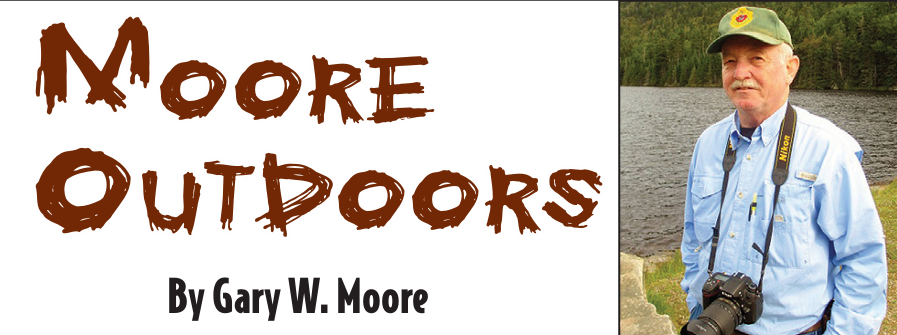
By Gary Moore
Derby native Nick Fortin has been Vermont Fish And Wildlife’s deer project leader for 11 years. I interviewed him for my program on WYKR and our conversation was wide ranging.
Nick was away from Vermont for a few years. For several of those years he was in Idaho working with big horn sheep. He said he enjoyed that, however he was, “Happy to Come Back.”
We lamented the loss of the hunting tradition we grew up with and the declining population of hunters. “Vermont is doing better than a lot of states keeping hunters” he said.
We talked about posted land and how so many areas long open to hunting and other forms of recreation are now posted, some even with no trespassing signs.
Nick said, posted land is “a big challenge” for wildlife managers. We talked about how many new to the state come from areas with no hunting tradition and who immediately post their land. He also said, “Hunters are equally to blame as they often post land to keep it for themselves.”
I stated it is a particular flash point for me. My position is, if your land is posted stay the hell off mine.
The special four day muzzleloader season for those with an antlerless permit ended Sunday, November. The youth and novice season is November 7-8.
The youth season was moved as the earlier dates had been in conflict with many high school fall sports end of season games. We talked about how important it is to expose the youths to hunting in a safe and ethical way.
Another change this year moved the start of the December muzzleloader season to November 30, the day after the close of the traditional rifle season. In the past, there had been a five day period between the two seasons.
Nick pointed out that we have a lot of places where there are too many deer and others where there definitely are not.
“Generally deer are doing pretty well in Vermont” he said. “The deer are reasonably healthy, however if the habitat was better the deer would be heavier and antlers bigger” he added.
Habitat is key to the health of the deer herd. In a mature forest, nothing is growing in the understory so there is no browse for deer to eat.
Biologists try to manage deer numbers using antlerless permits to take female deer.
In areas with deer populations the habitat can not support, they increase the number of permits in hopes of reducing the herd.
This year special areas were opened to archery hunting in September. St. Johnsbury and part of Waterford, Newport and other urban areas around the state were chosen.
Those areas are where the Department receives the most complaints about deer destroying shrubbery around homes and gardens. They are also areas where firearms should not be discharged and where hunting by any means if often restricted.
Nick said, “ It was a good step for first year.”
Nick said the“Big change this year” is that antlerless deer may be taken during the November firearms season by those with an antlerless permit. The permit is for a specific WMU and none are issued for areas where the deer population is at or below desired levels for the habitat such as WMU E. He added, “It is pretty controversial among many hunters.”
As a reader had asked me if the Department still did the spring deer yard searches as they did in the past, Nick said no. He said that with the now significant coyote population it is nearly impossible to find a whole deer to examine in the spring. He also mentioned that with the warmer winters deer don’t yard up as much.
Successful hunters are urged to report their deer at a biological check station if possible so that biologist can collect important data about the condition of the deer. For those that can not get to one of the check stations, Nick asks they send in a tooth as determining age is important.
I asked if he had a prediction for the November season and he said the success rate is weather dependent. If there is snow on ground hunters can better see deer and tracks and that keeps them in the woods longer and increases their chance of taking a deer. The temperature is also a factor for determining how long hunters are in the woods.
Nick said last year snow helped. “If we get a warm November, the kill may drop.”
He told me, the deer are, “super active during first two weeks of November when the rut is in peak. By opening of rifle season many does have been bred although bucks are still looking but there are less encounters.”
With a few minutes left, I asked about moose. Nick said he had staffed the moose reporting station in Island Pond in October for the first few days.
He said the moose he saw were, “Pretty healthy and that they are seeing fewer ticks on the moose each year.”
When asked how they count ticks, he said they use the same four spots each time, year after year. The spots are 10 centimeters and are on the neck, shoulder, ribs and rump.
“Took a few more moose than we predicted but our prediction was intentionally low.” He added.
I next asked about bears and the increasing complaints about bear damage. He stated the obvious, “No shortage of bears in Vermont or in Northeast.”
When I was growing up in the 50s and early 60s seeing a bear was very unusual and talked about with awe. Today that is a common occurrence even in our most urban areas.
Nick stated that where bears once stayed back in the woods and on the mountains, the habitat change to mature forest means less food is available. The easiest place to find food now is in the valleys.
Nick grew up hunting and will be found this season hunting out of a camp in Ferdinand, an area he knows very well.
Lake many of us, he looks forward to time at camp with family and friends, a tradition we grew up with and hope future generations can experience.
He also hunts Maine every year enjoying the time in the big woods.
Bits and Pieces
Tune in to WYKR 101.3 FM or 1100 AM on Thursday at 6 p.m. for The Outdoor Edge. Thoughts on the Out-of-Doors airs as a segment of the program on the 1st and 3rd Thursday of every month. My guest will be Mike Covery Executive Director of the Vermont Traditions Coalition.
***
The New York Department of Environmental Conservation announced that chronic wasting disease (CWD) was recently detected in a hunter harvested deer taken in the town of Sparta in western New York. NYDEC had previously detected CWD in captive and wild deer in Oneida County in 2005 and in captive deer in Herkimer County in 2024. This recent detection marks the first time in over two decades that CWD has been confirmed in a wild deer in New York.
Vermont and New Hampshire wildlife officials are reminding hunters who travel out-of-state to deer hunt they must follow carcass importation regulations and stay up-to-date on the latest list of CWD-positive jurisdictions.
To date, CWD has been detected in wild or captive cervids in 37 states and 5 Canadian provinces
***
If you have information about any illegal activity relating to Vermont’s wildlife, you can anonymously call Operation Game Thief at 1-800-75ALERT (1-800-752-5378). Rewards are paid for information leading to arrests.
You can report violations to New Hampshire Fish and Game’s Operation Game Thief online by visiting www.wildnh.com/ogt or by calling 1-800-344-4262 anytime. You can also use your mobile device to send anonymous tips by downloading the huntregsapp by visiting the Google Play or iTunes App stores. Confidentiality is guaranteed. Rewards are paid for tips that lead to arrest or citation.
***
The Vermont Fish and Wildlife Department issued 85 moose hunting permits this year, resulting in 51 moose harvested in the October 1-7 archery season and the October 17-25 regular season. Moose hunting was only allowed in Wildlife Management Unit E, in northeastern Vermont.
“Moose are more abundant in WMU-E than in other parts of Vermont,” says Nick Fortin, the department’s moose biologist. “This higher density of moose contributes to high winter tick numbers that negatively impact moose health and survival. This hunt helps to reduce moose density and improve the overall health of WMU-E’s moose population.”
Moose management goals were informed by years of monitoring data and extensive research on moose and winter ticks from the northeastern U.S. and Canada.
Of the 85 permits available, 79 were issued by lottery, to which nearly 6,000 hunters applied. The department reserves the first five lottery permits for Vermont military veterans. Three non-lottery permits are reserved for persons with life-threatening illnesses, and three more are auctioned as a fundraiser for conservation.
***
Mark Breen reports in the Fairbanks Museum's Skywatch Almanac that on November 20, 1798: “Severe nor'easter with heavy snow in southern and central New Hampshire, 2 to 3 feet, remaining on the ground in Keene, NH until April. “
November 21, 1916: "Early arctic cold snap plunged temperatures below zero in northern Vermont; -4 degrees in St. Johnsbury marked the coldest so early in the season.”
November 22, 1989: “South Lincoln, VT shovels out from 26 inches of snow; followed by the coldest December on modern record.”
Parting Shots
I found two glaring mistakes in last week’s column after it was published. It is embarrassing when that happens. Thanks to Linda’s proofreading that seldom occurs. Unfortunately, she was not able to proof the column last week nor this one.
***
I experienced two very moving Veteran’s day celebrations put on by students.
The first was on Tuesday and was a breakfast at the Waterford School. The event was truly special. A large number of vets, many friends whom I had not seen for a long time, were treated to the continental breakfast and a program that featured the students.
I was most impressed by the student drawings hung all around the gym thanking veterans for their service. A highlight was the students singing This Land Is Your Land at the end. It drew a well deserved standing ovation from the vets.
Each of us had received an invite in the mail that was handwritten by a student. Mine was from Ella Jones whom I was sorry I did not meet to thank.
Veteran’s Day I attended the annual celebration at Oxbow High School as I usually do. It is always special as the students do a great job in their presentations making us all proud of them.
Following the ceremony in the gym we all go outside to the Oxbow Veterans Memorial where the roll call of those in the Oxbow community who have served is called.
The invitation came from the Oxbow Student Council Co-presidents who assist Oxbow teacher and veteran Barry Emerson each year.
In the case of both Waterford and Oxbow, the students demonstrated their leadership and enthusiasm making us all proud of them and their schools.
Syndicated columnist Gary W. Moore may be reached by e-mail at gwmoore1946@icloud.com or at Box 454, Bradford, VT 05033. copyright 2026 Gary W. Moore