
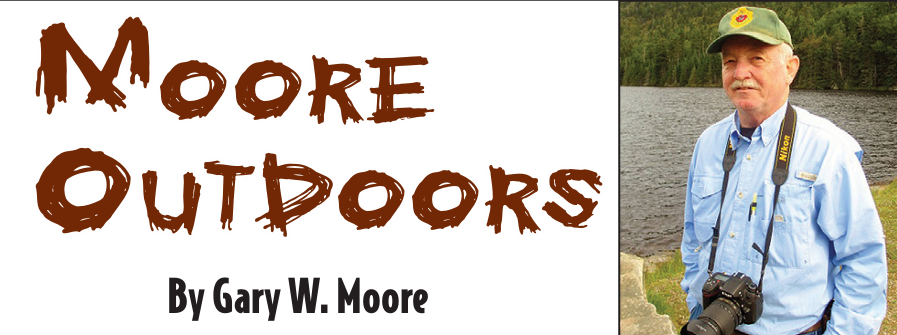
By Gary Moore
Backcountry Hunters & Anglers or BHA as it is best known, is not well known to many, but hunters, anglers and hikers benefit from its work.
I interviewed Matt Breton, Vice Chair of the New England Chapter of BHA for my program on WYKR. I knew a little about BHA and had even attended one of its events in Rangeley, Maine a few years ago and I knew Matt was involved.
Some of what I learned follows.
BHA was started in Oregon in 2000 by a small group of hunters with a focus on access for hunting and fishing. The organization quickly caught on with sportsmen and spread east all the way to New England where the tradition of open lands is strong, although in danger.
Vermont native Matt Breton is Vice Chair of the New England Chapter Board. He grew up in Barton and now lives in Charleston. When not hunting or fishing he has a day job as a physical therapist in Lyndonville.
After first traveling to the Bridger-Teton National Forest in Wyoming and Colorado's Mount Zirkel Wilderness in pursuit of elk and mule deer more than a decade ago, Matt joined BHA to advocate for the places where those experiences happen.
The New England Chapter, representing the six New England states was formed by BHA members who, like their Western brethren, saw the need for a voice that better reflects the traditional backcountry hunting and fishing heritage of the region. New England BHA does that for the sporting community in New England that values solitude, silence, clean and free flowing rivers, and habitat for wildlife.
Matt started going to the family camp in Holland at age 5 and started hunting at age 12. He is now 49 years old and has hunted the opening weekend of the Vermont rifle season out of that camp every year since, except 2005 when he was deployed to Iraq.
He spends as much of the fall as he can pursuing his passion, hunting deer in Maine, New Hampshire and Vermont. Tracking a buck is a challenge he loves. As he said, “I chase snow as much as I can.”
He and some friends rent a camp for a month in Errol that gives them easy access to northern NH and western Maine. The friends come and go as their schedules dictate but enjoy what time they get together at camp.
When I interviewed Matt he had just returned from guiding elk hunters in Colorado. He started hunting out there years ago and now works guiding for the outfitter he hunted with who is from Maine.
He said he enjoys guiding, something that was not on his radar until he started hunting in the west.
He has just passed the test to become a Maine Registered Guide and plans to work on becoming a New Hampshire guide as well.
Back home he loves rabbit hunting in the winter and ice fishing. He also hunts partridge and more recently, waterfowl. Floating rivers in the Kingdom jump shooting waterfowl and sneaking in to beaver ponds in search of ducks is most enjoyable.
Much of his ice fishing is done on Echo Lake which is near where he lives. He also fishes Seymour and Island Pond. In the summer he mostly fly fishes.
When asked what his favorite season is he said, “I am a big fan of rifle season. I am not much of a bow hunter any more as II don’t sit well.”
In addition to being Vice Chair of the New England Chapter Matt is Co-Chair of the Vermont Team.
The other Vermont Team Co-Chair is Craftsbury resident Ethan Dreissigacker. In addition to being an avid hunter, he is known for the sport of biathlon. He competed in the sport for over 12 years, representing the US in international competition for much of that time. Today Ethan lives in Craftsbury where he coaches biathlon, builds biathlon rifles, hunts and fishes.
New Hampshire resident Heather Kusmierz is the chapter Treasurer. She spends a lot of time hunting and exploring the local public lands with her English Cocker Spaniel, Max.
Matt knows how difficult it can be to find land open to hunting in the west as private land is automatically off limits and trespassing is enforced.
Luckily we can hunt private lands unless posted in northern New England.
Matt said, “We take for granted that we can hunt there because we always have. If we don’t pay attention, we loose.”
BHA is focused on keeping lands open. The organization ways in on management plans of public lands and keeps its members informed through social media and action alerts as well as a website.
Matt pointed out they are vigilant about keeping track of town forests and push to keep them open for hunting and fishing. He said kids often get started hunting and fishing on those local lands.
Much land in the region is owned by timber companies and is open to hunting and fishing but that could change. Thus the need for vigilance.
Go to: https://www.backcountryhunters.org/ to learn more about BHA. You can become a member for just $35. Joining the national automatically connects you to a local chapter.
The events page lists happenings of interest to sportsmen such as the one I attended in Rangeley.
You can contact the state team at vermont@backcoutryhunters.org.
Matt said, “Reach out to your legislators to let them know you are interested in hunting and fishing issues.
“We have to be there to keep what we have. It is vital.” He added, “The more you can be involved the better. Establish a relationship with your legislators, officials of the agencies and departments that have authority over lands and what happens on them and Fish and Wildlife Board Members if in Vermont or Fish and Game Commissioners in New Hampshire.”
He said, “Be polite, rational and thoughtful. They don’t need to hear the anger.”

Bits and Pieces
I was contacted by a friend who had encountered Wanted posters in the Kingdom warning of feral hogs and asking those who encounter them to call 802-223-8690.
I contacted Conte Refuge Manager Steve Agius and he told me that each year state and federal wildlife agencies in VT and NH meet to discuss feral swine. USDA APHIS is the lead for tracking feral swine.
He said a few landowners in Essex County have captured images of feral swine on their properties over the last few years and that APHIS put up posters to inform the public about the swine.
USDA APHIS’s Tanya Espinosa said, “We do not currently have a breeding population of feral swine in Vermont. To ensure that a breeding population doesn’t establish itself, we put up the posters in the event people see feral swine so they know who to call so we can remove them.”
To learn more about feral swine go to: https://www.aphis.usda.gov/operational-wildlife-activities/feral-swine
***
New Hampshire Fish and Game says aspiring hunters who would like the option to use a bow as their exclusive method of harvest can now sign up for the new Bowhunter Education class, available online only, to be ready for future hunting seasons. Those interested can learn more or register by visiting https://www.wildlife.nh.gov/hunting-nh/hunter-education. To begin the course, click “Start online course” in the Bowhunter Education section. This virtual class is ideal for new bowhunters, for those interested in only hunting with a bow, and for those who completed their Hunter Education requirements before firearms and bows were combined in traditional classes.
***
New Hampshire is scheduling free in-person Snowmobile Safety Education Classes. To operate a snowmobile or off-highway recreational vehicle (OHRV) in New Hampshire, any person age 12 or older must have either a valid motor vehicle driver’s license or have successfully completed an approved OHRV/Snowmobile Safety Education class. The classes are taught by instructors and staff trained by the New Hampshire Fish and Game Department.
To learn more or to sign up for a class, visit www.wildlife.nh.gov/highway-recreational-vehicles-ohrv-and-snowmobiles/ohrv-and-snowmobile-safety-education.
OHRV/Snowmobile Safety Education classes can also be conveniently taken online. With recent changes to state laws, all online classes will include a combination of practical OHRV and snowmobile safety, and the rules that apply to all trail riders. The cost for the virtual class is $34.95.
To register for an online safety class, visit www.offroad-ed.com/newhampshire.
***
Throughout October and November the New Hampshire Fish and Game Department has stocked trout to bolster this fall’s late-season open water and this winter’s ice fishing opportunities. “Stocked 2-year-old trout will average about 14–15 inches, and surplus broodstock typically range from 2–4 pounds,” said Fish and Game Inland Fisheries Program Supervisor John Magee. “I would encourage anglers of all skill levels to take advantage of this season’s stocked trout opportunities throughout New Hampshire.”
Waterbodies scheduled for 2026 fall stocking of two-Year-Old Rainbow Trout include: Akers Pond, Errol; Cedar Pond, Milan; Martin Meadow Pond, Lancaster; Pearl Lake, Lisbon; Streeter Pond, Sugar Hill; Big Diamond Pond, Stewartstown; and Newfound Lake, Bristol.
Broodstock Brook and/or Brown Trout are destined for: Mirror Lake, Woodstock; Highland Lake, Andover; Manning Lake, Gilmanton; Pleasant Lake, Deerfield; Tewksbury Pond, Grafton; Webster Lake, Franklin and White Lake, Tamworth.
***
Mark Breen reports in the Fairbanks Museum's Skywatch Almanac provided the November Records and Averages.
Warmest: 42.6°F in 1948 Coldest: 27.2°F in 1904
Wettest: 9.34 inches in 1927 Snowiest: 26.4 inches in 1921
Parting Shots
Four or five times a day I get emails advising me someone has looked at my website and can help make it better or attract more hits. Often a day or so later they follow up asking me to reply to their earlier email.
I never respond to any of their emails and quickly trash them but they keep coming day after day.
The funny thing is, I do not have a website nor have I ever had one.
Syndicated columnist Gary W. Moore may be reached by e-mail at gwmoore1946@icloud.com or at Box 454, Bradford, VT 05033. copyright 2026 Gary W. Moore