
19th Annual Mikey Williams Soccer Game: Alumni Leading The Assist
Mikey was 26 years old when he lost his life in a 2006 car accident. Turning grief into purpose, Dave partnered with teammate Matt Ackerman and Coach Ackerman to launch the inaugural Mikey Williams Alumni Soccer Game in August of 2007. With full support from Mikey’s parents, Bob and Darlene, the annual match-up honors his passion for soccer and his love of people.
By Trish Griswold
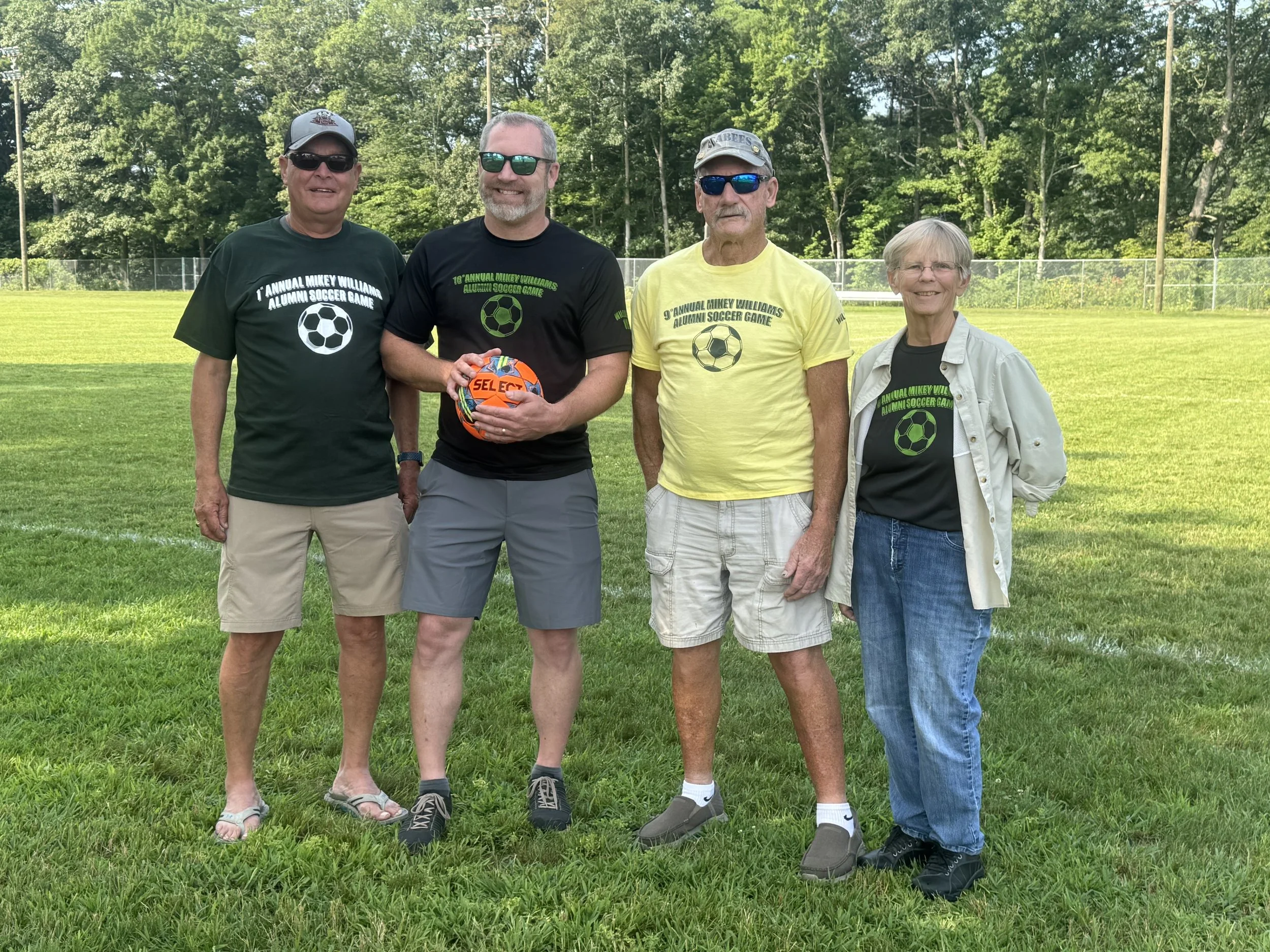
Twenty years ago, the inaugural Mikey Williams Alumni Soccer Game kicked off on King’s Plain in memory of the late Michael “Mikey” Williams. This year marks the 19th annual game, as the event was cancelled in 2020 due to the COVID-19 pandemic. Founders of this memorial fundraiser (L-R) include Mike Ackerman, Dave Robinson, Bob Williams, and Darlene Williams. Missing: Matt Ackerman. TBWS/Trish Griswold
Woodsville, NH—Mikey Williams was a standout soccer player at Woodsville High School (WHS). A four-year varsity player, the outside fullback anchored his team’s defense, helping guide the Engineers to a semi-final bid under the tutelage of Coach Mike Ackerman. Known for his speed, tenacity, and incredible work ethic, Mikey’s prowess on the soccer field earned him the respect of both his teammates and his opponents.
“Soccer meant everything to Mikey,” his mom, Darlene, fondly recalls. “He had a hard time in school. It was a challenge for him academically, but soccer made him feel important. That’s where he shined.”
The fervor and intensity Mikey showcased on the soccer field was a mirror image of his passion for people and for life. Known as an adventure-seeker, Mikey lived life to the fullest. “He was one of those bigger-than-life type of human beings. He was always up for an adventure, and he cared about every human being around him,” remarks Dave Robinson, Mikey’s best friend and teammate. “Everybody loved Mikey. He was just one of those people that everybody gravitated toward. He didn’t judge anybody. He made people who weren’t friends, friends. Mikey brought people together. That was just his personality.”
Mikey was 26 years old when he lost his life in a 2006 car accident. Turning grief into purpose, Dave partnered with teammate Matt Ackerman and Coach Ackerman to launch the inaugural Mikey Williams Alumni Soccer Game in August of 2007. With full support from Mikey’s parents, Bob and Darlene, the annual match-up honors his passion for soccer and his love of people.
According to Dave, the event began as a single contest between WHS alumni and the WHS boys’ soccer team. Within a few years, however, former girls’ soccer coach Ann Loud rallied enough players to add a separate alumni game against the WHS girls’ team. While the event traditionally took place on the last Saturday in August, last year marked a historic shift when games were played under the lights on King’s Plain. The lights, Darlene explains, were paid for through the Mikey Williams Memorial Fund, a 501(c)(3) non-profit organization established to provide financial support for local athletes. “I have been watching soccer on this field since 1960, and it’s always been a dream of the soccer community to have lights here.”
The force behind all of this, Darlene says, is Dave Robinson. “He’s got it down to a science, and he’s done such a wonderful job. He was such a good friend to Mike. That whole crowd of boys—Michael, David, Jason [Roy], and the Ackerman boys [Matt and Ryan]—that whole group, they stayed friends forever, and a lot of it was from growing up playing soccer, being included, and being with the same people. No matter what their ability was in school, they were equal on the field.”
Classmates, family, friends, and community members come from miles away each year to share stories, celebrate Mikey’s legacy, and raise funds to support future generations of athletes, linking the WHS soccer program – past, present, and future. Local businesses generously donate food items for the concession stand as well as gift certificates and other items for a basket raffle. The funds raised through concession sales, 50/50 raffles, basket raffles, and direct donations help provide scholarships for local athletes who wish to attend individual or team camps/clinics, such as Team Week, a weeklong soccer camp hosted by Keene State College.
“Fundraising efforts have ignited opportunities for soccer players, including attending soccer camp. This year, nine players from the girls’ soccer program attended camp in efforts to, what we hope, will reestablish the tradition in years to come,” remarks WHS girls’ soccer coach Sara Lang. “Many thanks to the family of Mikey, who not only strive to keep his memory alive but also support our youth in his honor.”
“This event is about the sport itself, but it’s also about community. It’s about how the community rallies around each other and around something we care about,” Dave adds, explaining that extracurricular activities, such as athletics, band, chorus, etc., can play an important role in a child’s life. “While you can learn in the classroom, [extra-curriculars] teach things that go to the next level. It is leadership, integrity, teamwork… all the things you need in the real world to succeed.”
The 19th Annual Mikey Williams Alumni Soccer Game will be held this Saturday, August 22, under lights on King’s Plain. The men’s game is slated to begin at 6:00 pm, followed by the women’s game at 8:00 pm. For more information or to make a donation, please contact Dave Robinson via email at drobinson3314@gmail.com or by phone at (603) 359-9330. Youth interested in applying for a scholarship should contact WHS Athletic Director Lori Taylor at (603) 747-2781 or ltaylor@sau23.org.
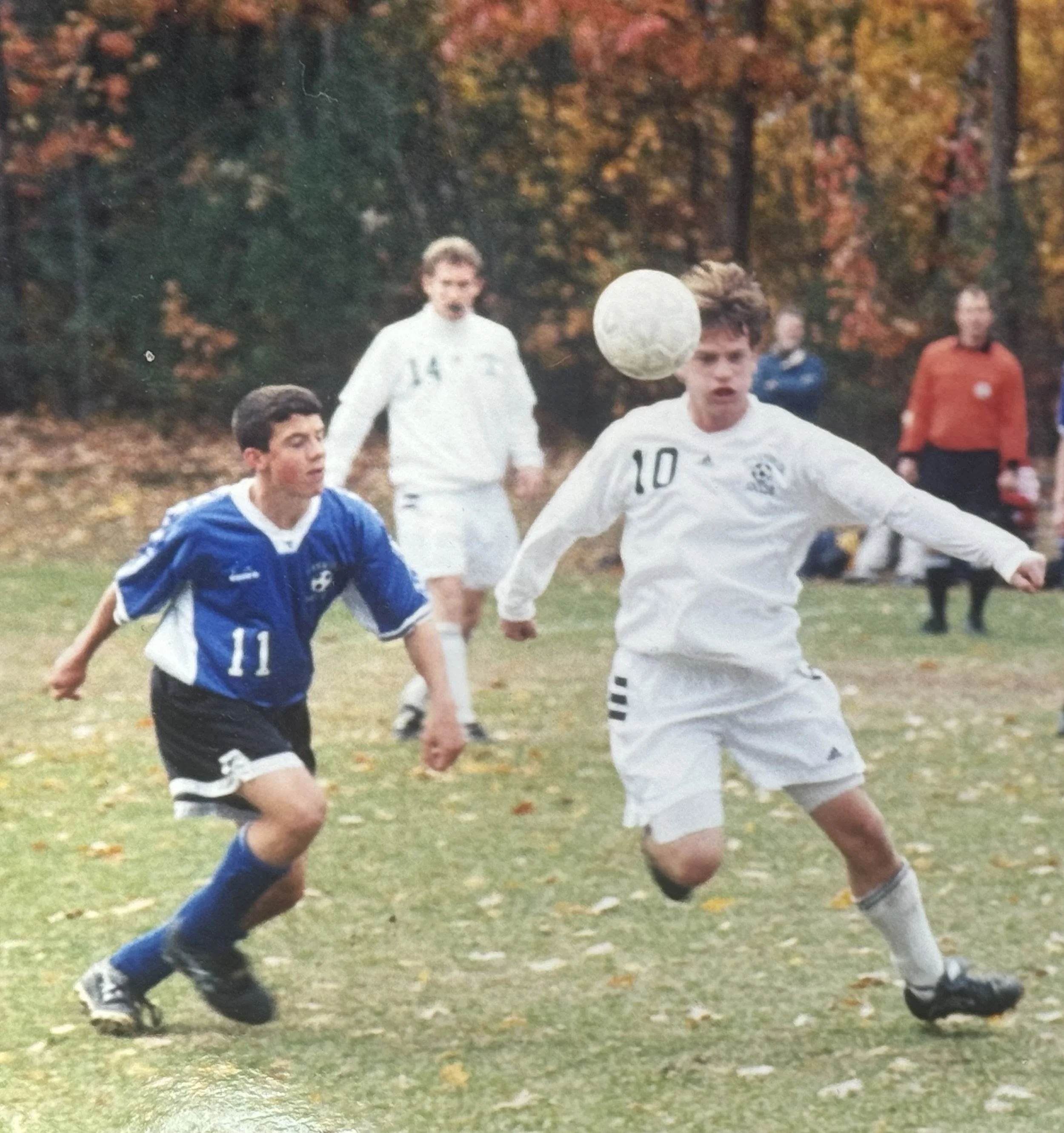
Mikey Williams, seen in his #10 jersey, gave his all every time he stepped on the soccer field. “Mikey played 100% every single practice and game,” Coach Ackerman recalls. “I made him and Dave Robinson captains their senior year because of their work ethic.” - Courtesy photo
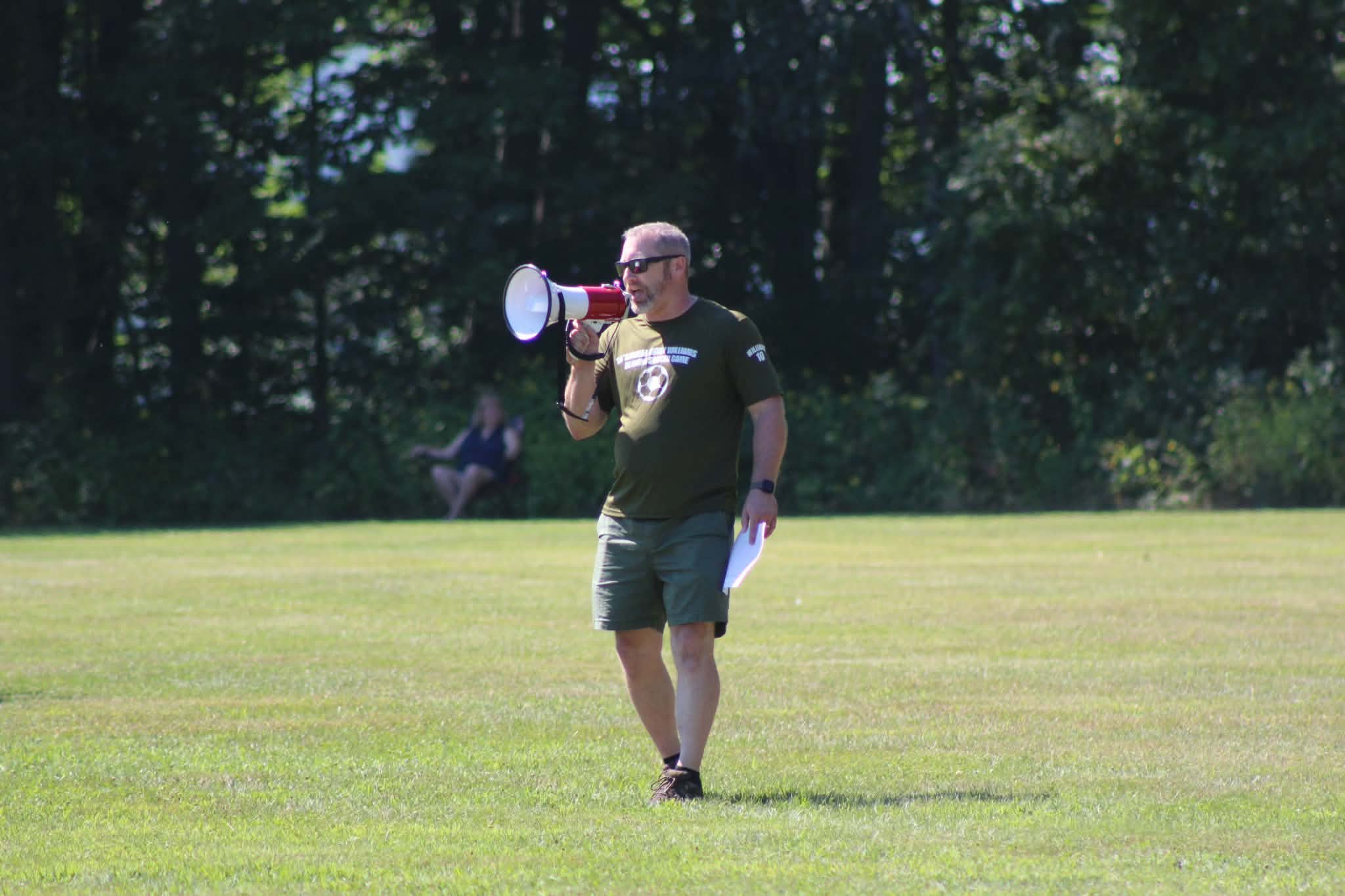
Dave Robinson has spearheaded the Mikey Williams fundraising event since its inception in 2007, doing all of the legwork behind the scenes. “He has done a super job,” Coach Ackerman says, applauding Dave’s commitment. Other volunteers include Regis Roy, Jason Roy, Ashley Roy, Amanda Roy, Zach Smith, Mindy Lusby, Ashlee Robinson, Dave Robinson, Sr., Sara Lang, and the Williams family. -Courtesy photo
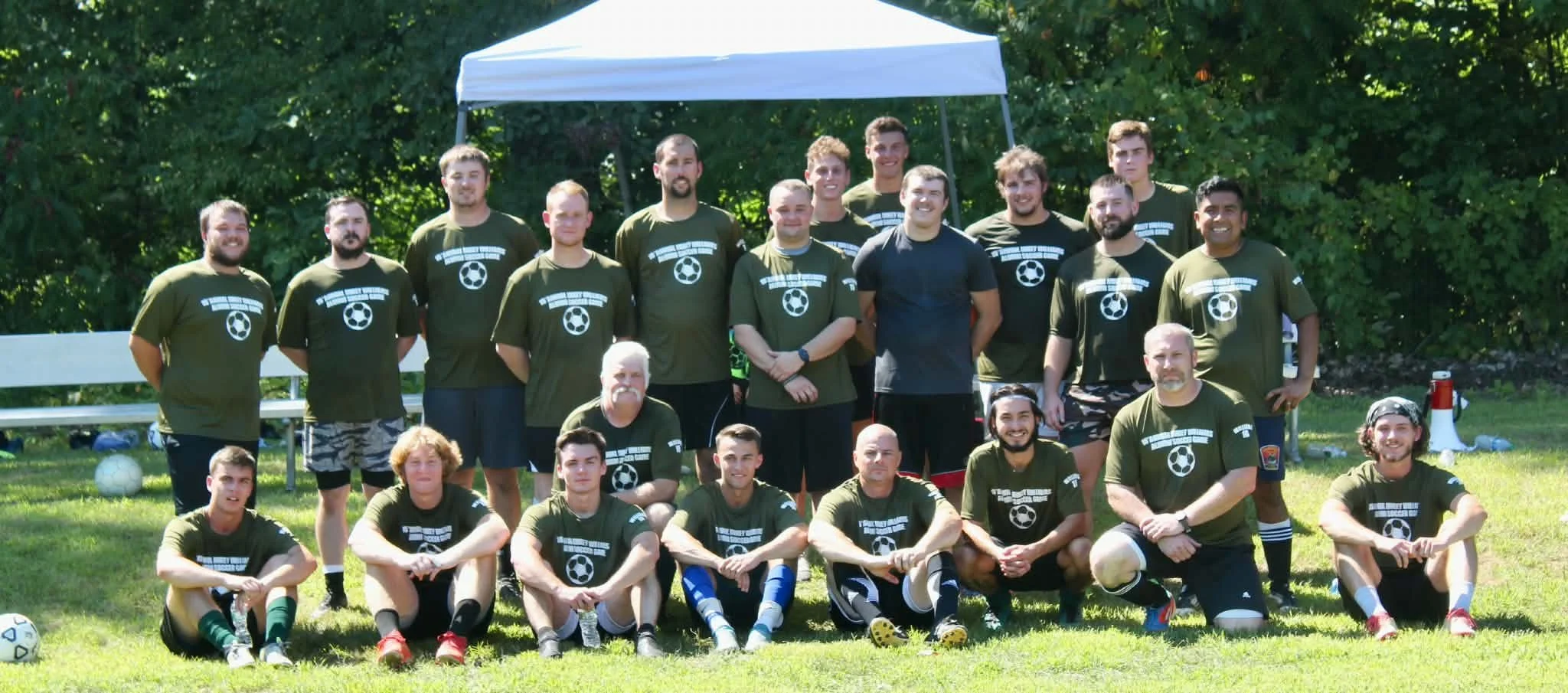
Alumni gather for a team photo prior to the start of the 15th Annual Mikey Williams Alumni Soccer Game. - Courtesy photo
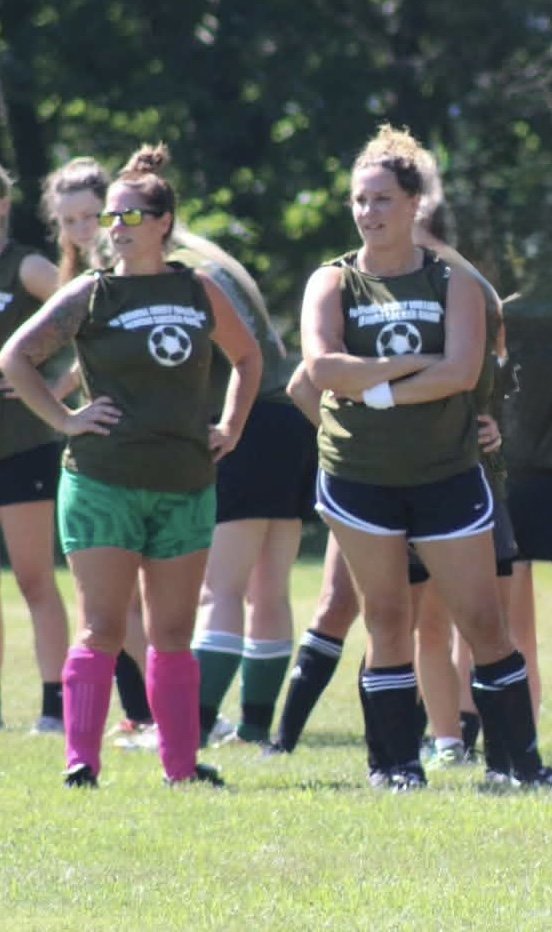
Mikey’s sister, Dana Williams (L), Class of 1997, and Sarah Lyons-Duncan, Class of 1998, talk strategy prior to the start of the 15th Annual Mikey Williams Alumni Soccer Game. - Courtesy photo
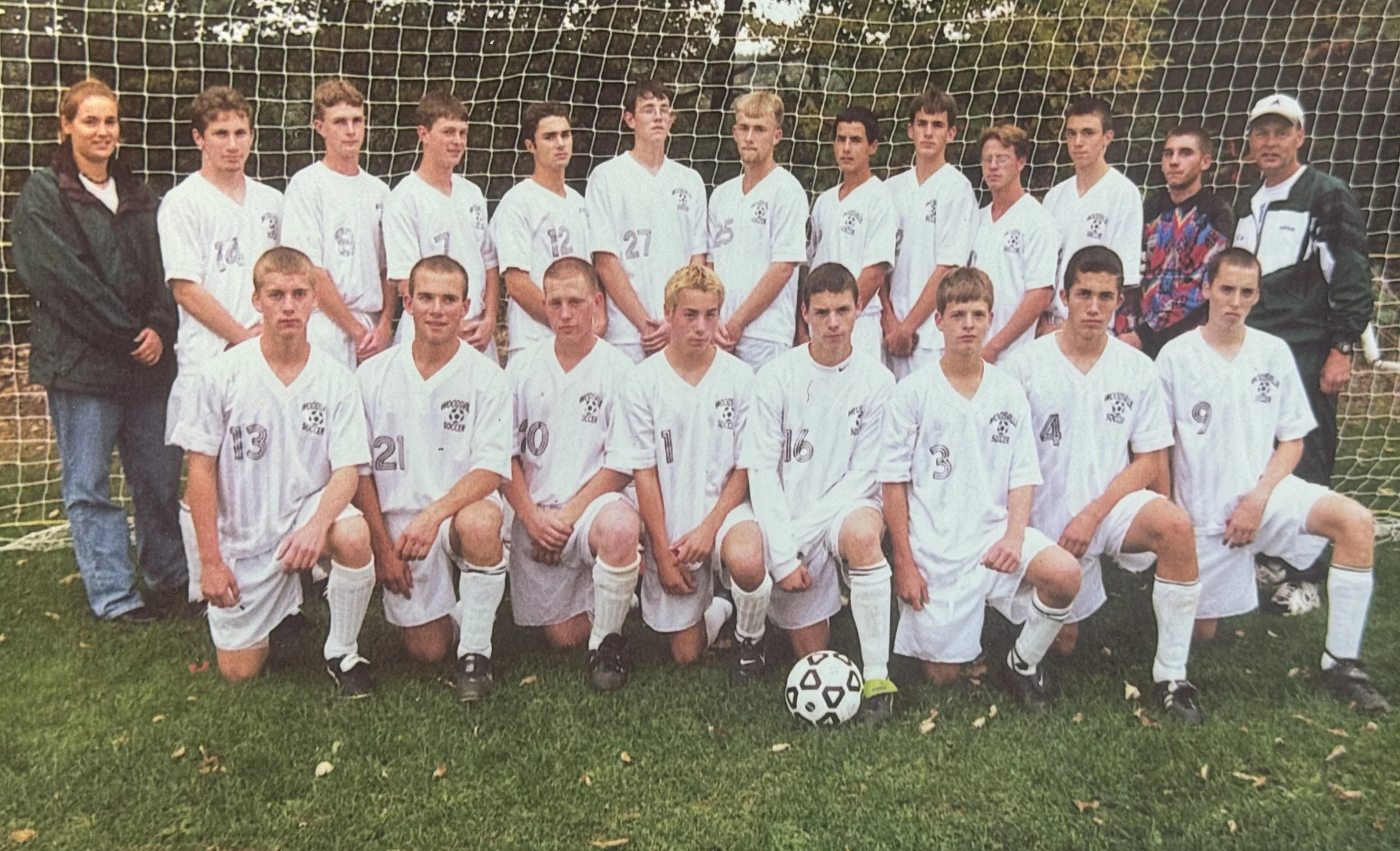
The 1998 WHS varsity soccer team included teammates Mikey Williams and Dave Robinson. The Engineers lost in the semi-finals that year but had a stellar season. - Courtesy photo
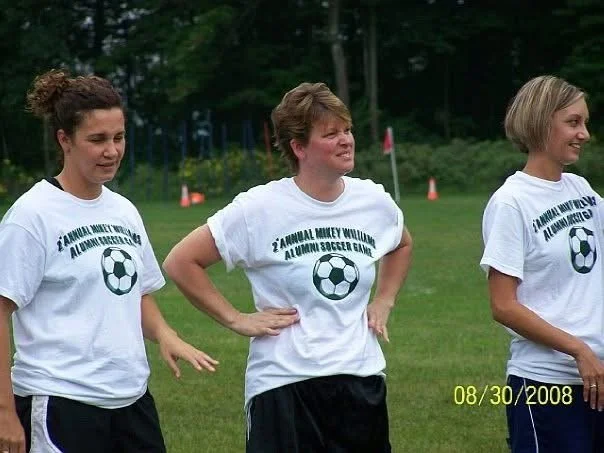
“The Mikey Williams alumni game has become a hallmark in our community,” Sara Lang says. “Over time it has evolved to mark a remembrance dear to us all but also serve as a kickoff to the fall seasons in a way that brings our community together.” Pictured (L-R) are Sarah Lyons-Duncan, Lorie-Ann Noyes, and Sara Lang. - Courtesy photo
Girouard Family Breathes New Life Into Bath’s Historic Brick Store
Built in the early 1800s, The Brick Store has been a fixture in the Bath community for nearly two centuries. Operating as a general store, which also housed the town’s post office until 1943, The Brick Store has served as a social hub for generations. The store closed in 2021 due to the COVID-19 pandemic and was vacant until April of this year, when the Girouard Family reopened its doors, breathing new life into this iconic North Country landmark.
By Trish Griswold
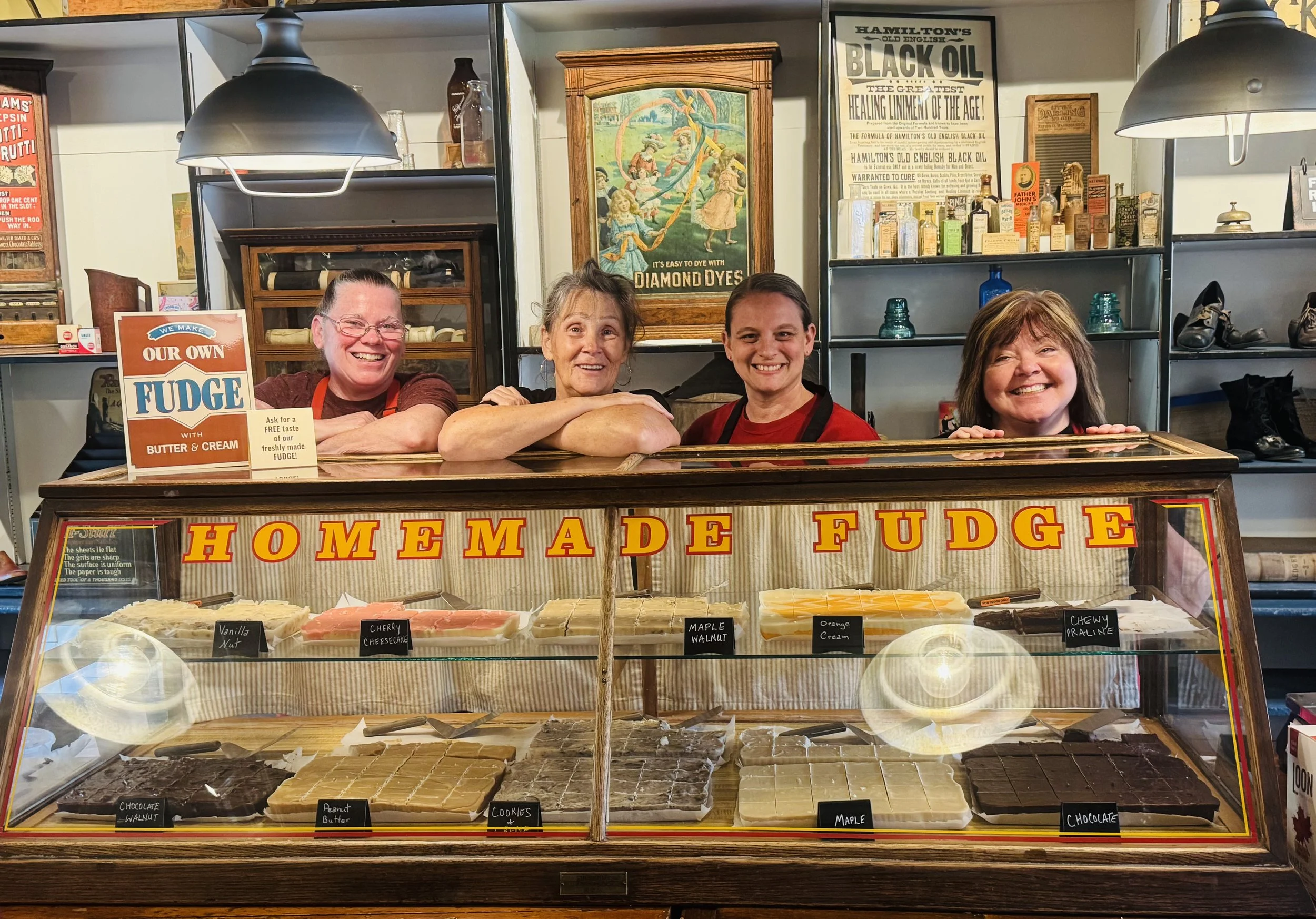
Kelly Nelson, Jeanne Corbinand, Elisabeth Girouard, and Monica Stapleton (L-R) are four of the friendly faces you might see behind The Brick Store’s fully stocked fudge counter. Using former owner Nancy Lusby’s famed recipe, the store offers a variety of fudge options from classic peanut butter and chocolate to more unique and/or seasonal flavors, such as cherry cheesecake and orange cream. TBWS/Trish Griswold
Bath, NH - Built in the early 1800s, The Brick Store has been a fixture in the Bath community for nearly two centuries. Operating as a general store, which also housed the town’s post office until 1943, The Brick Store has served as a social hub for generations. The store closed in 2021 due to the COVID-19 pandemic and was vacant until April of this year, when the Girouard Family reopened its doors, breathing new life into this iconic North Country landmark.
“I think about what the general store was 200 years ago. It was a place for people to gather and connect as a community. It was a place of provision and steadiness,” remarks Elisabeth Girouard, who recently purchased the store, together with her husband, Paul. “Over the last several years, that has not been the case here. We have lost that on this corner, and we really desire to bring that back.”
For the past seven years, the Girouard Family has left their Burlington, MA, home to spend their summer vacations at Twin River Campground, just one mile from The Brick Store at the corner of US Route 10 and NH Route 112. Each year, the Girouards were saddened to see that the store remained closed. Elisabeth’s vision for reviving The Brick Store evolved from there.
“Retail is new for us,” states Elisabeth, who has a degree in sociology and years of experience in business operations, graphic design, and photography. “We felt like this place needed to be saved. Somebody needed to do it, and we wanted to take that step of faith. We said, ‘Let’s try it,’ not just for our family because we wanted to live here, but for Bath. We wanted to give the store back to Bath.”
The past few months have been a learning curve for the Girouards as they talk with customers about the products they would like to see in the store. “We really want to find a balance between serving the tourists, of course, because we need that to keep the store open but also being a place for the locals to stop and not have to travel all the way to Woodsville or Lisbon.”
In response to countless requests, the Girouards have brought back a few signature items, including homemade fudge, smoked cheeses, and smoked meats. Elisabeth says that former owners Mike and Nancy Lusby have been incredibly kind and generous in supporting them with their new business venture.
“Nancy offered them the same advice that we received from a previous owner when we bought the store in 1992,” Mike explains. “Doris Whitcomb, a member of the Armstrong family, said that each new owner puts their own stamp on the store, making it their own, and that's just how it should be. We always strove to honor the traditions of the store while adding our own touches. I would say that, having met with Liz and Paul, we are so happy that they are the ones taking over the responsibility and tradition of owning the store. The village has been so dead, not having the store thriving, so it's wonderful seeing it come to life again.”
In fact, the Lusbys have shared their recipes, vendors, and product lines with the Girouards. Elisabeth is using Nancy’s famed fudge recipe to stock the display with various options from traditional chocolate and peanut butter to more modern flavors, like cookies and cream, orange cream, and cherry cheesecake. Their smoked cheese is also proving to be a hot commodity. Paul smoked 10 lbs. one day, and it was sold out two days later. The specific brand of pepperoni the Lusbys used, however, has been difficult to source. The Girouards have ordered a few samples, and if everything works out, they’ll have smoked pepperoni on the shelves within a week or so. “We’ve been told we aren’t The Brick Store without the smoked goods,” Elisabeth jokes.
Other homemade foods prepared by Elisabeth and her mother-in-law with the help of a few staff include breakfast sandwiches, muffins, donuts, cookies, and lunch sandwiches. The store is stocked with dairy products and shelf-stable grocery items, such as bread, jams, condiments, toilet paper, and freshly ground nut butters. Their New Hampshire-sourced products and memorabilia, including mugs, t-shirts, magnets, keychains, and old-time games, make wonderful gifts and collectibles. New to the store are fresh flower bouquets made by Bath resident Tina Comstock. “I would love to connect with local farms and get some fresh produce too,” Elisabeth says. “I’m still working on the best way to do that.”
The Brick Store will be open year-round from 7:00 am to 7:00 pm Monday through Saturday. They are proud to announce a loyalty program that offers patrons $5.00 off their purchase for every 10 visits. Their ice cream shop, known as The Creamery, will also reopen on Friday, August 7th. They will serve hard and soft ice cream cones as well as floats and sundaes. The Creamery will be open from 11:00 am to 9:00 pm Monday through Saturday.
Stop by The Brick Store or give the Girouards a call at (603) 991-1716. They welcome your support in honoring the store’s heritage and ensuring that it continues to serve the community for generations.
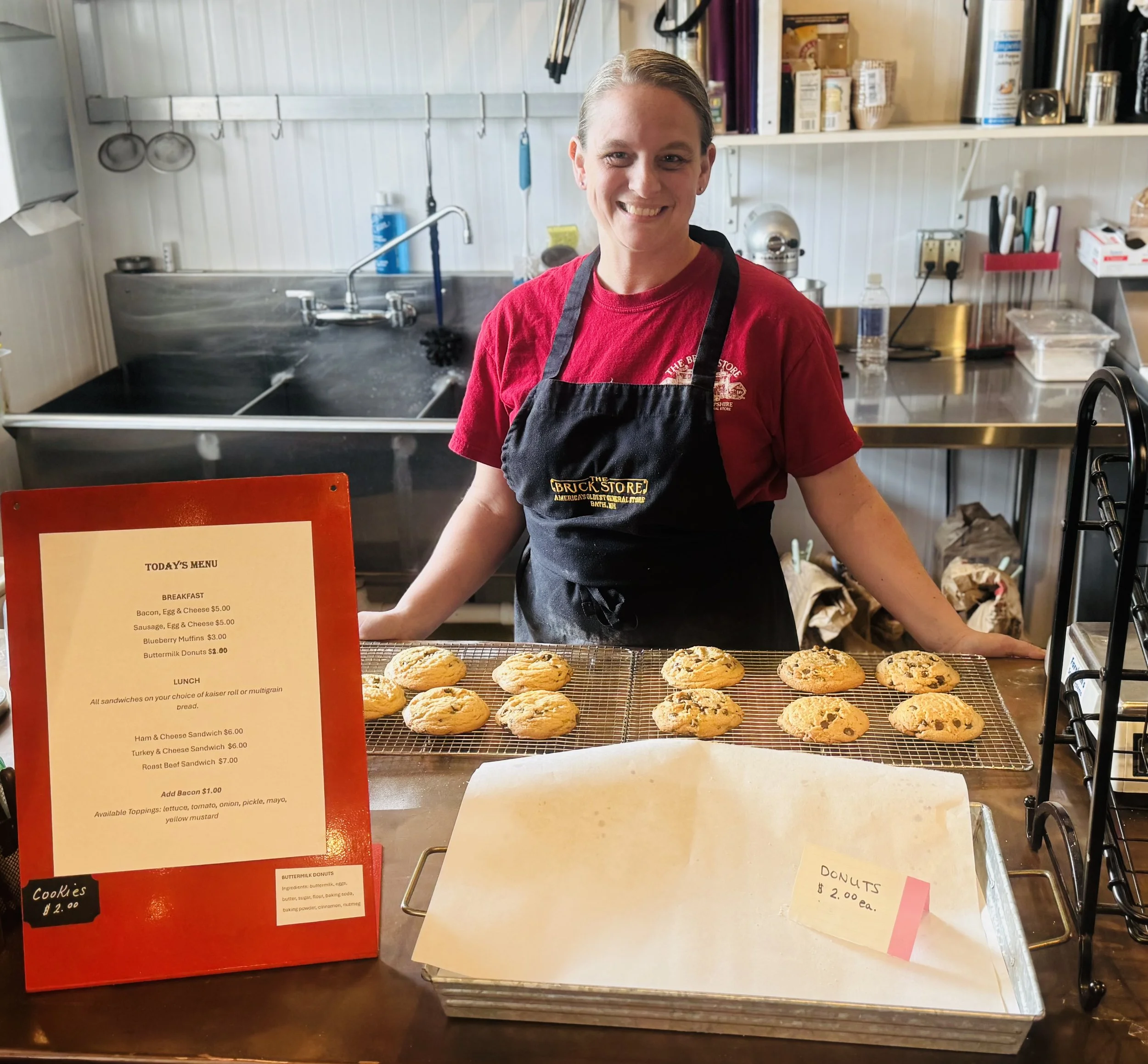
Elisabeth Girouard, new owner of The Brick Store, removes a batch of freshly baked chocolate chip cookies from the oven. Elisabeth and her husband, Paul, purchased the business earlier this year. Together with their four children, the Girouards are reviving the century-old historic store that has been dormant for the past five years. TBWS/Trish Griswold
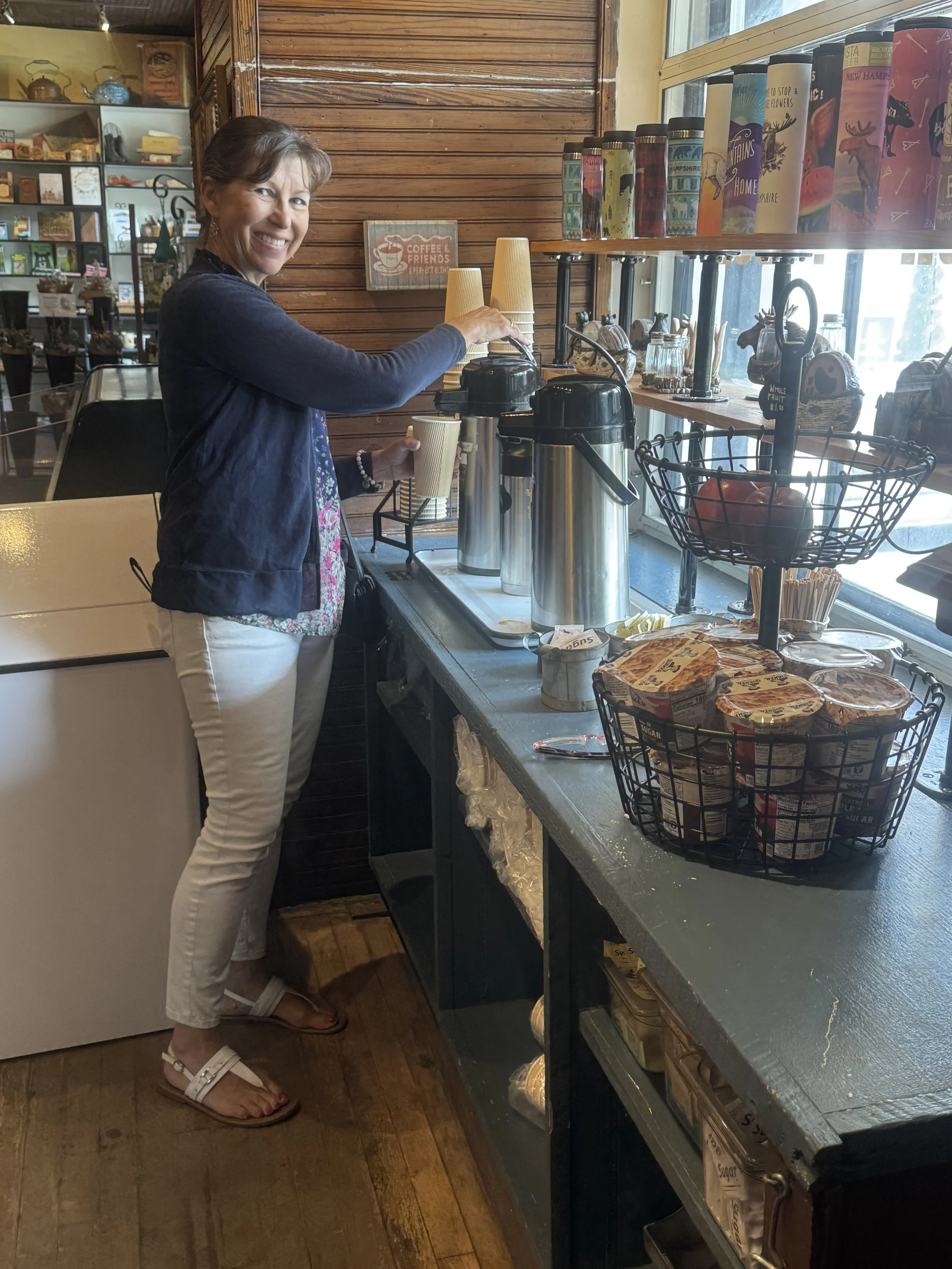
On her way through town, Sandy Parker, owner of Cottage Creations in Woodsville, stops by The Brick Store to make a cup of freshly brewed coffee to go. TBWS/Trish Griswold
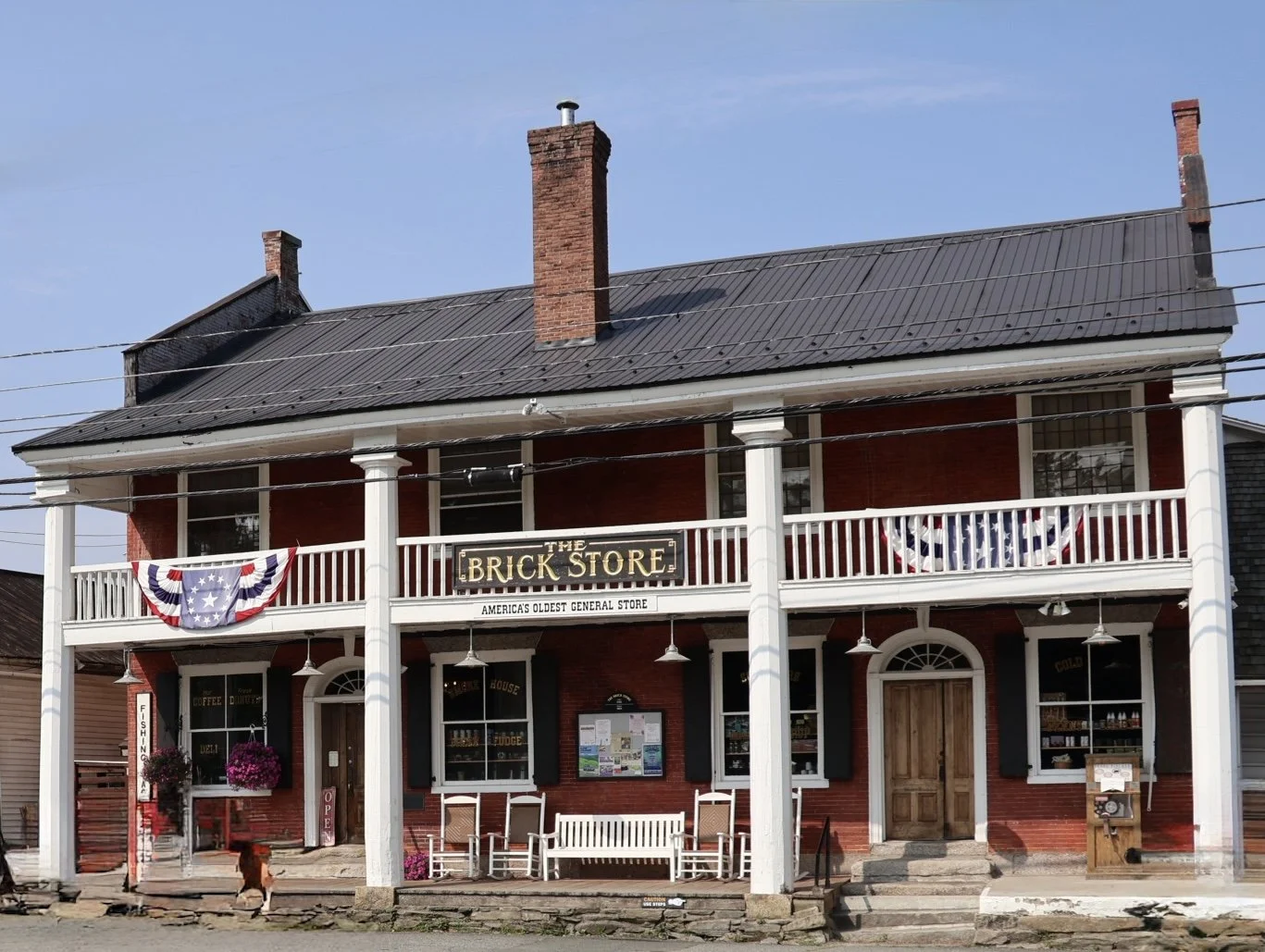
Built in the early 1800s, The Brick Store has served as a community hub for generations. Its proud new owners, the Girouard Family, hope to safeguard the store’s timeless charm and heritage as a general store while introducing new products and giving it their own personal touch. TBWS/Trish Griswold
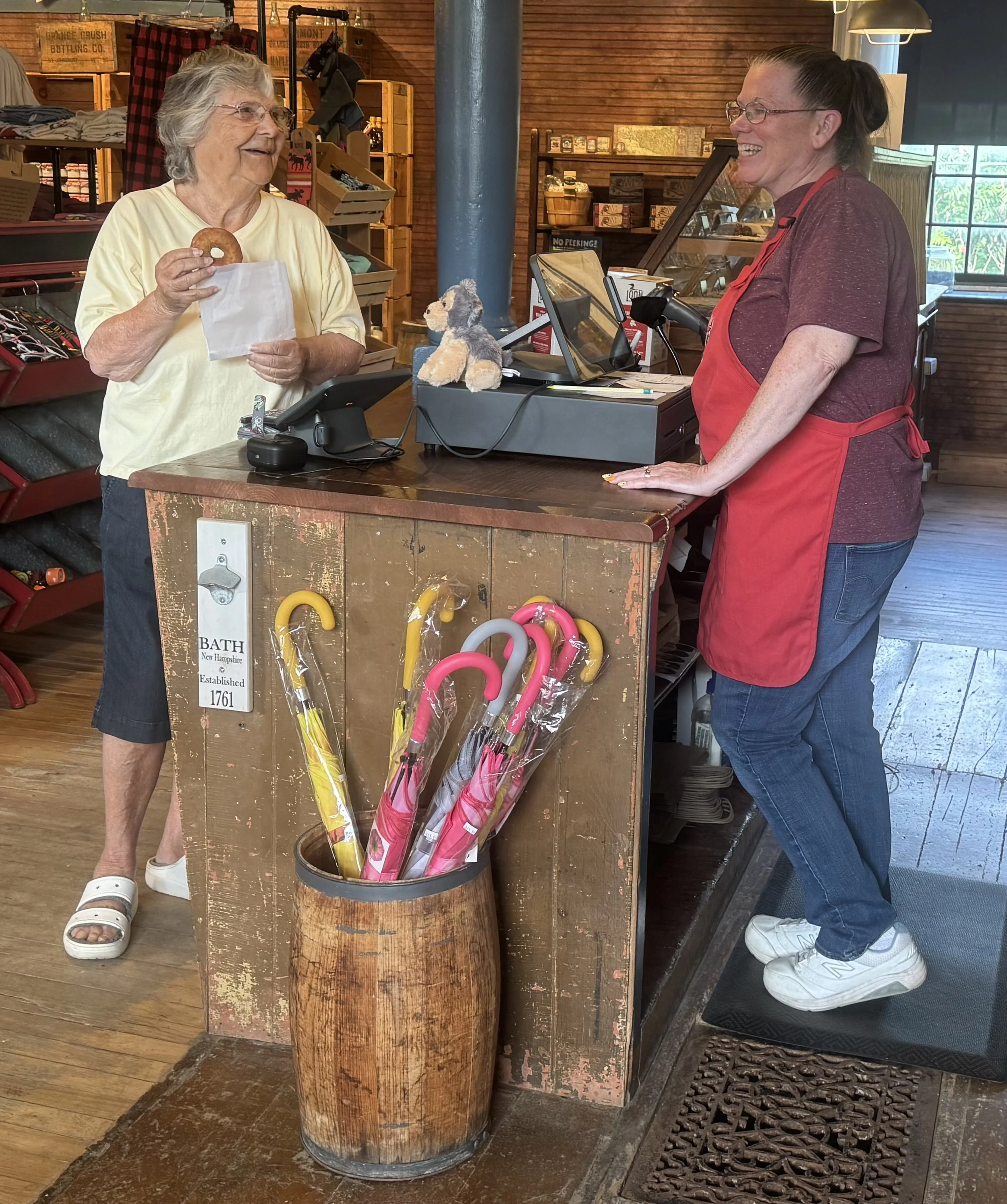
Cashier Kelly Nelson (R) chats with June Paige, of Lisbon, who stopped by last week to purchase a homemade old-fashioned donut—her favorite. “People don’t make donuts the way they used to,” June says. “[The Brick Store] has been closed for too long. I certainly hope they continue to do well.” TBWS/Trish Griswold
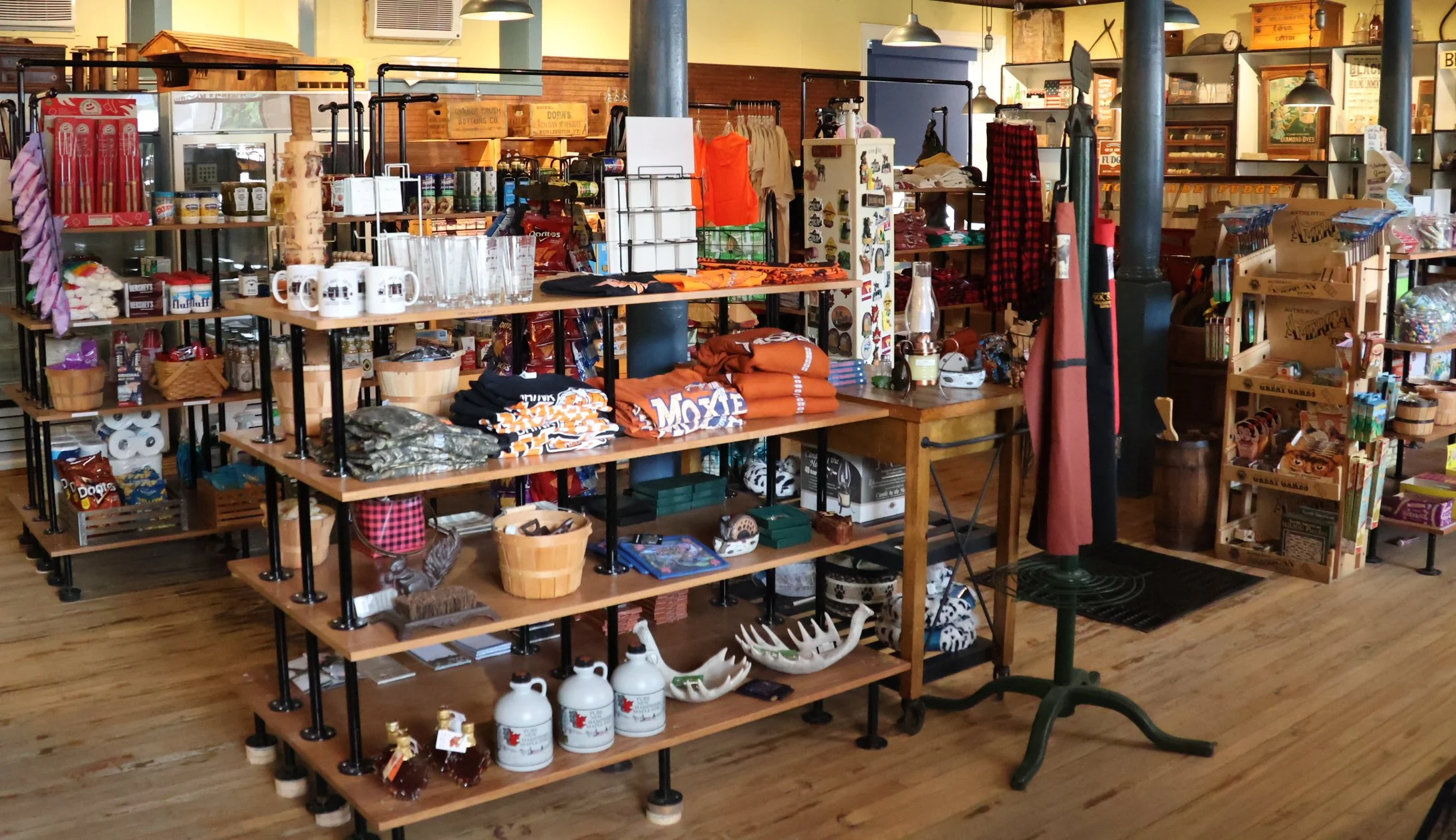
The Brick Store offers a collection of New Hampshire memorabilia, cards, gifts, toys, books, games, jams, honey, sauces, maple syrup, and much more. TBWS/Trish Griswold
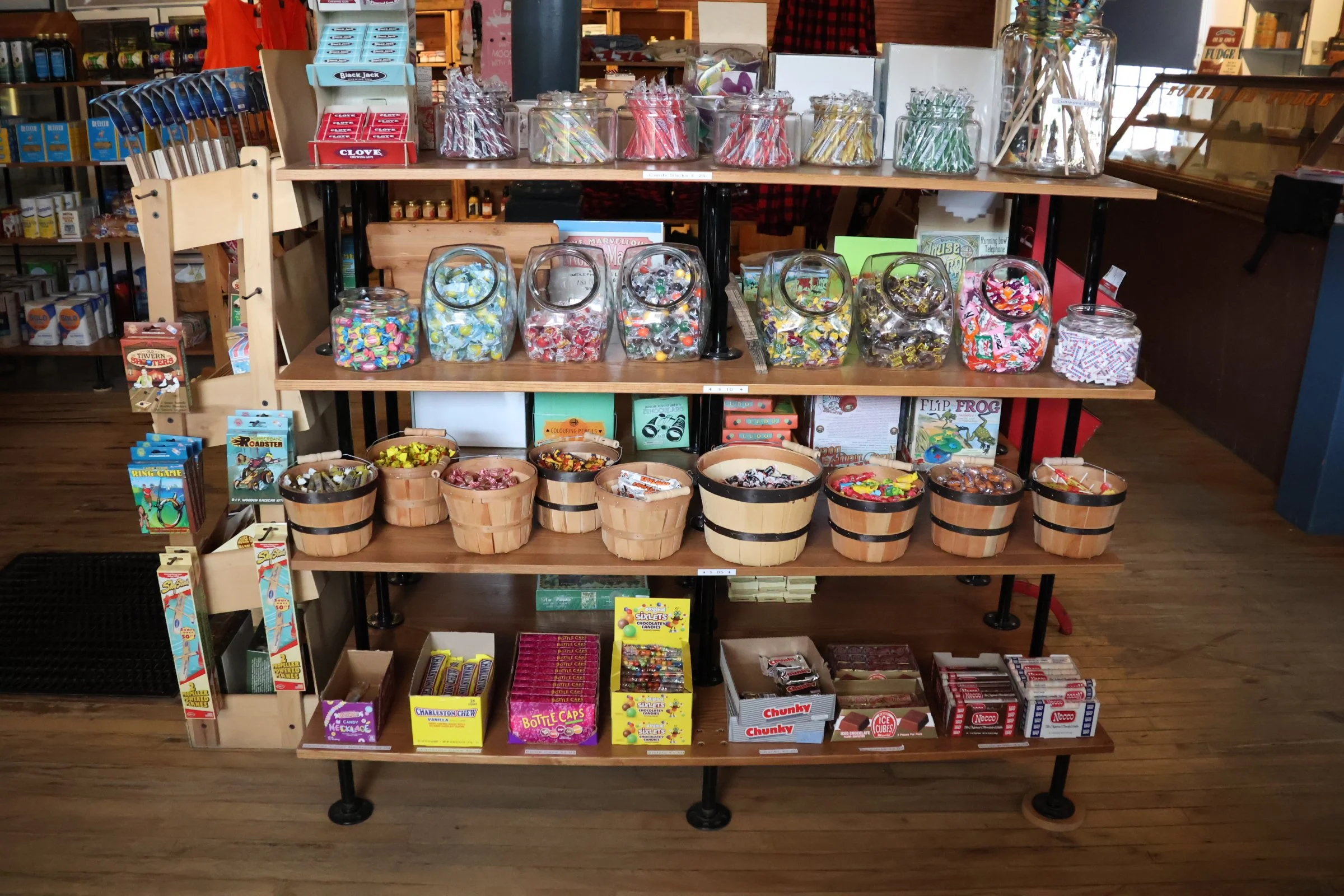
The Brick Store’s ever-popular candy counter is back. Single pieces of candy are available for five and ten cents apiece. TBWS/Trish Griswold
Karen’s Kare: Celebrating A Legacy of Love, Laughter, and Learning
In August, Karen Norcross, owner of Karen’s Kare in North Haverhill, NH, will close the doors to her home-based daycare; however, the legacy of love, laughter, and learning that …
By Trish Griswold
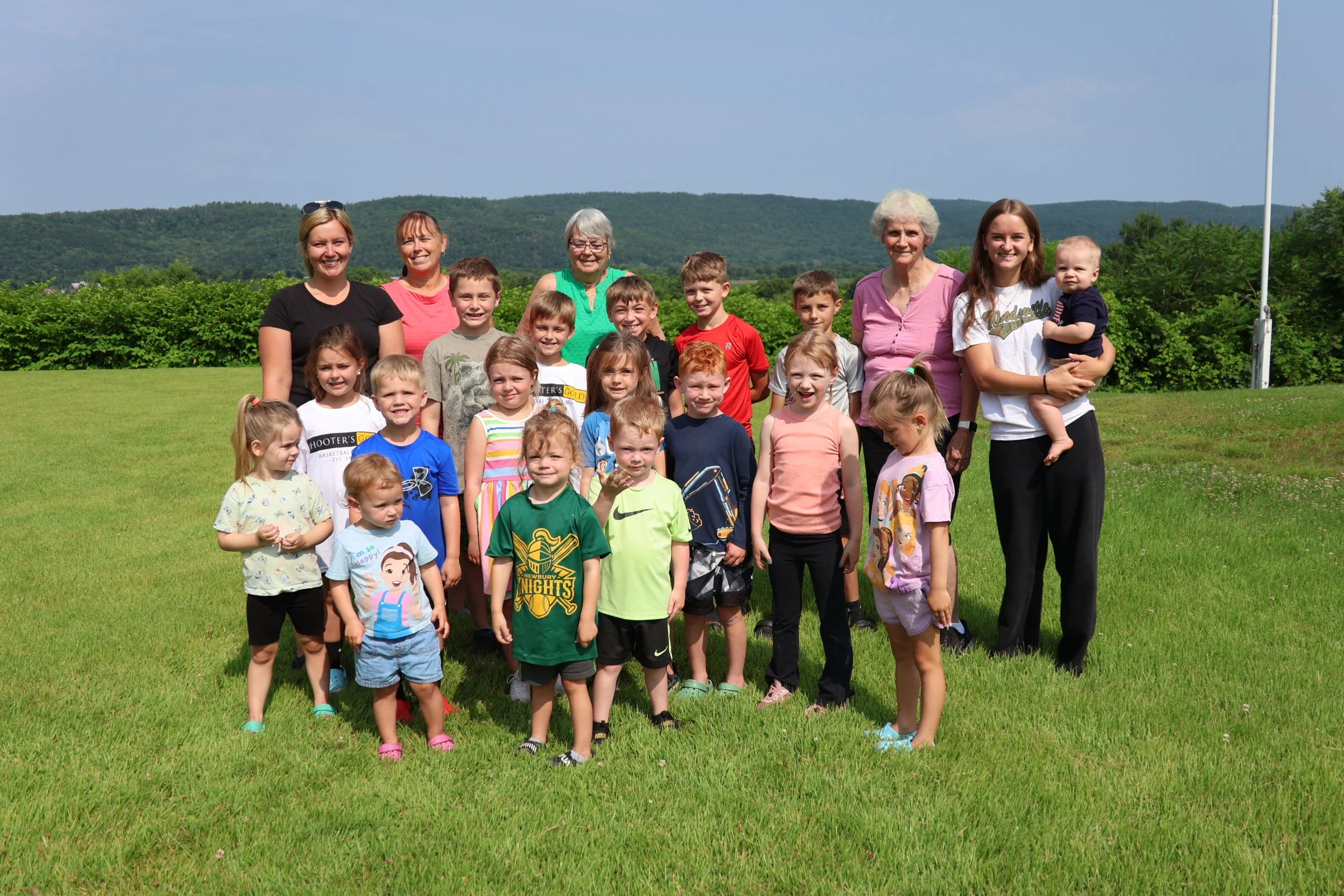
Karen Norcross, owner of Karen’s Kare, has been serving children and families in the North Haverhill area for the past 37 years. Karen’s Kare staff recently gathered for a group photo with current enrollees and a few local alumni on the lawn where so many children learned teamwork, cooperation, leadership, and good sportsmanship through group games and outdoor play. TBWS/Trish Griswold
North Haverhill, NH - In August, Karen Norcross, owner of Karen’s Kare in North Haverhill, NH, will close the doors to her home-based daycare; however, the legacy of love, laughter, and learning that she leaves behind will reverberate throughout the community and beyond, as Karen has been instrumental in helping more than 120 children learn and grow over the past 37 years.
“Few people possess the considerate, unselfish, unconditional, loving heart [Karen] has. She develops a relationship with her kids and her parents. She is honest and straightforward. She provides a ‘nest’ of comfort, belonging, safety, and learning,” remarks Diana Fadden, whose children and grandchildren have attended Karen’s Kare. “Whether it is structured or just in her every day, she has provided a place of teaching, playing, creating, and life lessons. Her expectations are just right! Good manners, discipline, strong values, and cooperation are instilled whether the kiddos realize it or not. None of this happens without love and caring… She raised my kids with me, and I will forever be grateful to her.”
When Karen graduated from Blue Mountain Union School in 1985, she set her sights on becoming an educator, attending the University of Vermont for her freshman year of college. “I wanted to be a kindergarten teacher, but I was very much a homebody. I had a hard time being over there, so I decided to come home.”
Karen worked for three years as a customer service representative at Indian Head Bank, previously located in the unoccupied building next to Bar Harbor Bank and Trust in Woodsville. When her elder son was born in November of 1988, Karen opened Karen’s Kare. “My aunt and my mother-in-law were taking turns taking care of him, and then my aunt decided she wanted the summer off. I said, ‘I don’t know anybody else, and I don’t trust anybody else, so I have to stay home.’”
For the first 15 years, Karen ran her business as a private in-home daycare, which included her sons, Michael and Christopher, as well as a handful of neighborhood children. Karen had accrued a collection of toys and manipulatives to assist with the children's fine and gross motor development. She also planned a wide range of arts-n-crafts projects and other educational activities to help boost the children’s early literacy skills.
“Karen always provided such a safe and fun place for my children,” recalls Vicki Olsen, whose two sons, Ryan and Garrett, attended Karen’s Kare. “As a working mom, this gave me such comfort. I knew that she loved my children as much as she loved her own and gave them a safe, disciplined, and loving environment. She didn’t just ‘watch’ the children, but she engaged with them in countless crafts, activities, field trips, reading, group play, light preschool lessons, and lots and lots of hugs.”
In 2002, Karen went through the process of becoming a fully licensed daycare with New Hampshire’s Child Care Licensing Unit, specializing in children ages 5 and under. The daycare is currently open Monday through Friday from 7:15 am to 5:15 pm. Karen provides two balanced and nutritious meals as well as morning and afternoon snacks for the children. She is a member of the Early Care and Education Association (ECEA), a 501(c)(3) non-profit organization that provides a partnership among childcare directors. Karen attends monthly Zoom meetings and participates in a variety of workshops centered around a broad range of topics, including but not limited to CPR/first aid, Sudden Infant Death Syndrome (SIDS) prevention, administering medications, indoor and outdoor safety, swim safety, fire safety, and shelter-in-place protocols. She also utilizes a play-based preschool curriculum to help ensure that the children are ready for the social, emotional, and academic rigors of kindergarten.
“It’s tricky when you’re doing all ages in a family daycare, but it’s fun. It’s a good challenge,” Karen says, explaining that she believes children learn best through play. “I have to do a lot of modifications because I want my two-year-olds to be able to do [projects] with us. We also do a lot of dramatic play, clay, and Play-Doh, which is really good for their fine motor skills.”
However, the best part of caring for the children, Karen says, is the children themselves. “It’s the connection I make with them. I just love them! I love seeing the excitement when we do things, and I like that they feel comfortable with me when they're injured or sad or anything.”
Woodsville High School standout Mikayla Walker is one of many area youth who have benefited from Karen’s love, compassion, and expertise. In fact, the Karen’s Kare alumnus currently works alongside Karen at the daycare. “It’s so sad [to see the daycare closing]. I’m just grateful,” Mikayla says, reminiscing about her childhood experiences. “I’ve basically grown up here. It’s my second home, and I get to work with someone who helped raise me.”
Karen’s Kare kiddos, past and present, rave about Karen and the care she has provided them over the years. Mikayla maintains that “Karen’s food is the best!” In fact, she says, her twin brother, Ryan, still talks about it.
“And if you ask my children (even to this day), no one was better than Karen,” Vicki says. “Her cinnamon toast, her macaroni and cheese, and her cookies. It was always requested at my house. ‘Can you please make it like Karen?’ I’d always laugh and say, ‘But it’s toast!’ Apparently Karen‘s toast was always much better than mine. My youngest son even asked one year if Karen could come to our house and make macaroni and cheese and hotdogs for his birthday dinner. I was never offended but always laughed. I just love the connection that they had with her.”
When asked what they love most about their daycare experience, the children’s answers are similar and range from cupcakes and birthday celebrations to arts-n-crafts projects, playing outside, napping, and spending time with friends. Eight-year-old Trent’s immediate, heartfelt response, however, is short, sweet, and to the point. “Her.”
Anyone who enters Karen’s Kare will see the children everywhere, laughing, playing, creating, and connecting with their daycare family. The love, the excitement, and the joy are palpable. Karen’s Kare is truly their home away from home. So why is Karen’s Kare closing after 37 years of incredible service to children and families in this community?
“It’s been my life,” Karen explains, “but it's time to get my house back. I’m open 10 hours a day, but then you add the cleaning and shopping and all of the other stuff. It’s a huge commitment, but I have loved it. It’s been perfect for me because I just love the kids, but I’m also excited to maybe try to do something different.”
Karen is still considering her options, but substitute teaching and baking are among the possibilities. “…I like the idea of having the freedom to take my grandkids to things or stay home with them if one of them is sick so their parents can still work. I want all that, but I’m still looking for the perfect piece, I guess.”
As she ponders her next steps, Karen is working diligently to ensure that safe, loving childcare opportunities continue to be available to local children and their families in the future. According to Karen, the ECEA has asked her to serve as a mentor for childcare providers who are interested in opening new daycares and as a substitute in daycares throughout the area. Karen is committed to ensuring that two and three-year-olds have access to the socialization they need prior to entering kindergarten.
Whatever the future holds for Karen, one thing is certain. The profound impact she has had on area youth is beautifully woven into the fabric of this community. It can be seen in the bright, smiling faces of our kindergarteners on their first day of school; in the drive and determination of our high school athletes as they step onto the basketball court or baseball field; and in the hearts and minds of young parents who aspire to raise their children with the same love, safety, discipline, and family values Karen bestowed upon them.
“The happy childhood memories her daycare has given [to our children],” Vicki contends, “are priceless.”
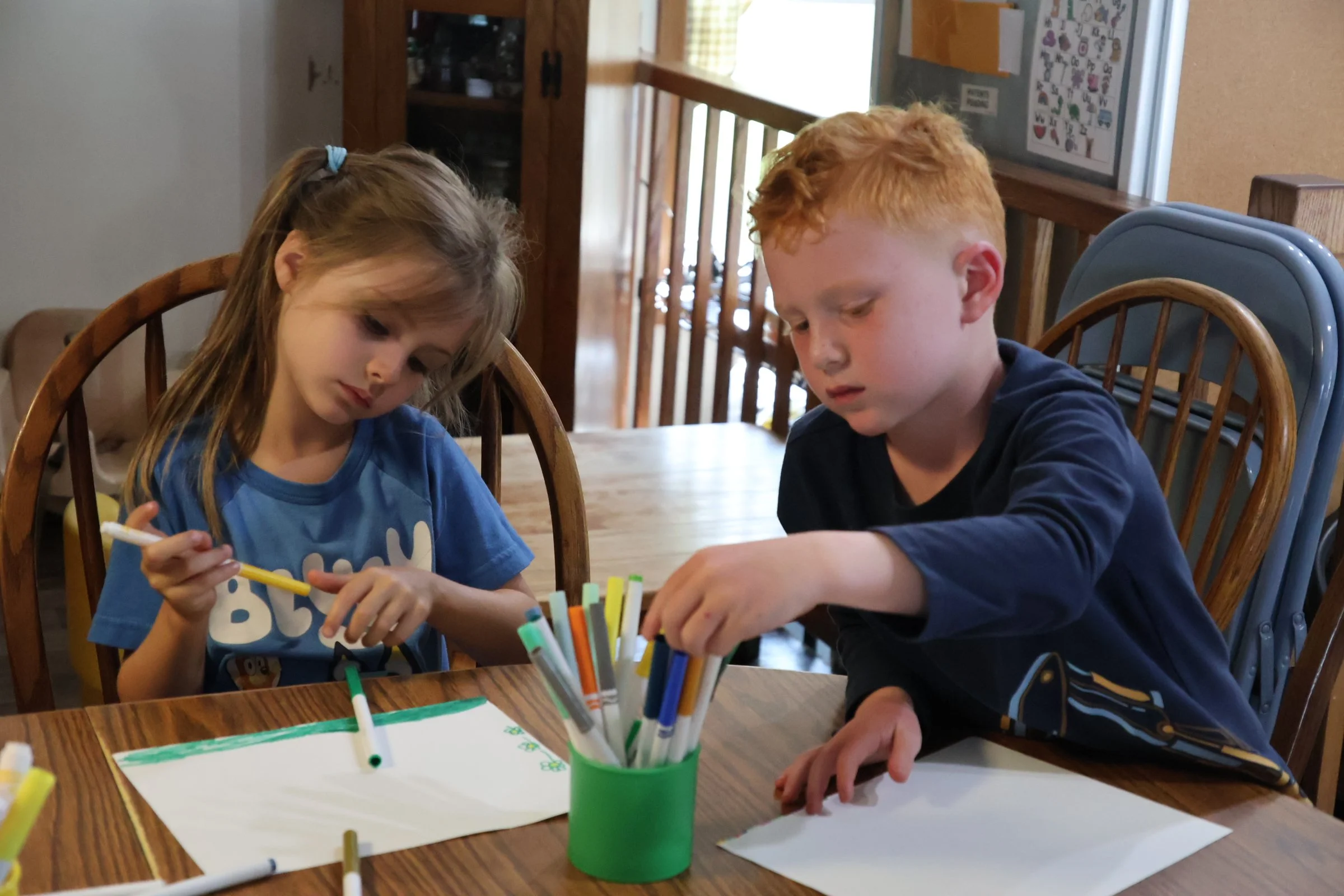
Payton (L) and Lincoln turn their blank pieces of paper into colorful works of art as they imagine, share, and create ideas together. TBWS/Trish Griswold
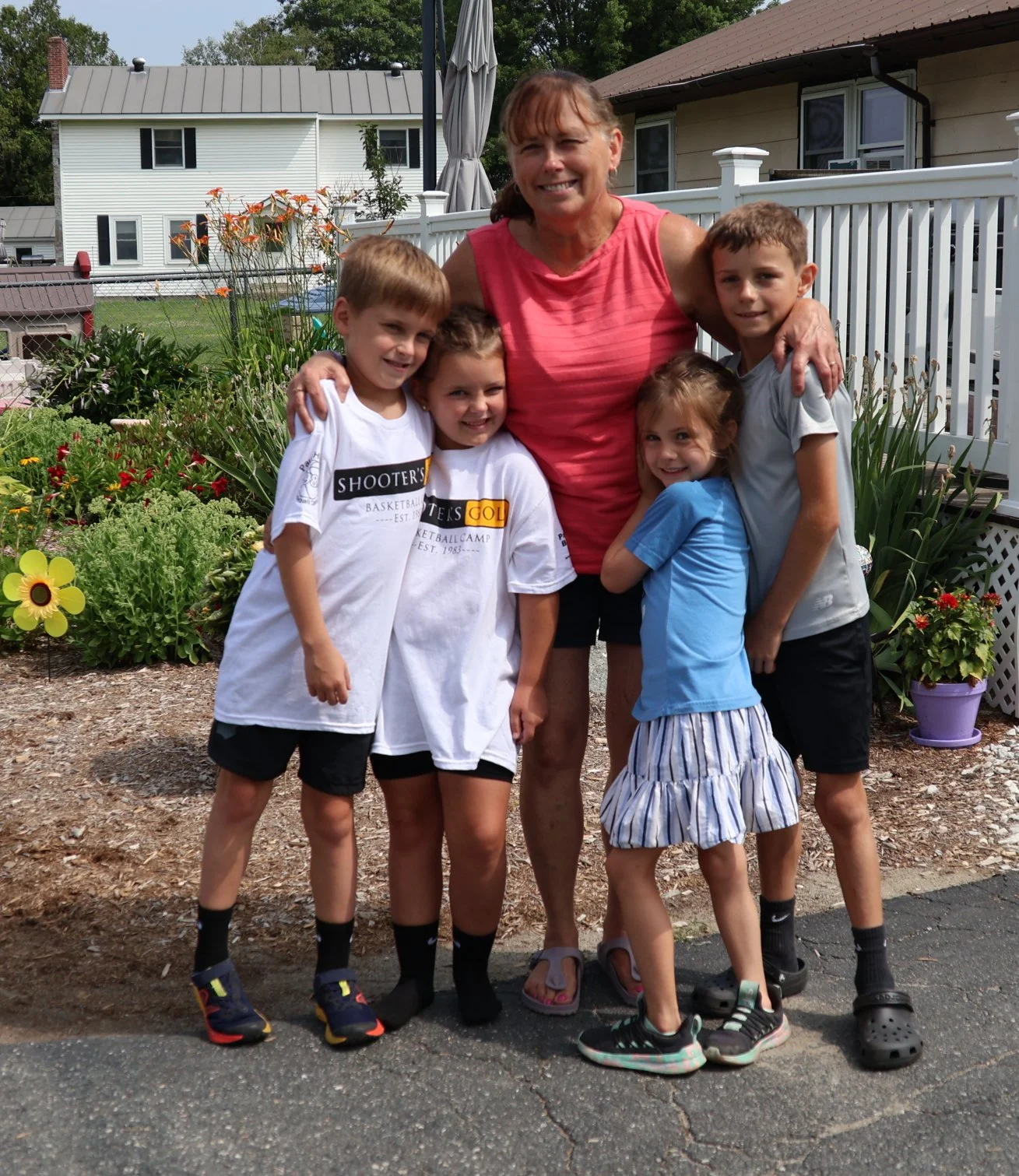
Karen Norcross opened Karen’s Kare in 1989, but now that her children are grown and her grandchildren are attending school full-time, she is ready to embark on new adventures. Karen is pictured with her four grandchildren (L-R): Trent, Hayden, Payton, and Hunter. TBWS/Trish Griswold
Local Singer-Songwriter Karli Blood Headlines At North Haverhill Fair
Karli’s journey into the music spotlight is beyond inspirational. She is ambitious, passionate, humble, and kind. She is also a positive role model and a beacon of inspiration for those who have the courage to dream big dreams. Karli’s advice to budding young artists is simple and genuine.
By Trish Griswold
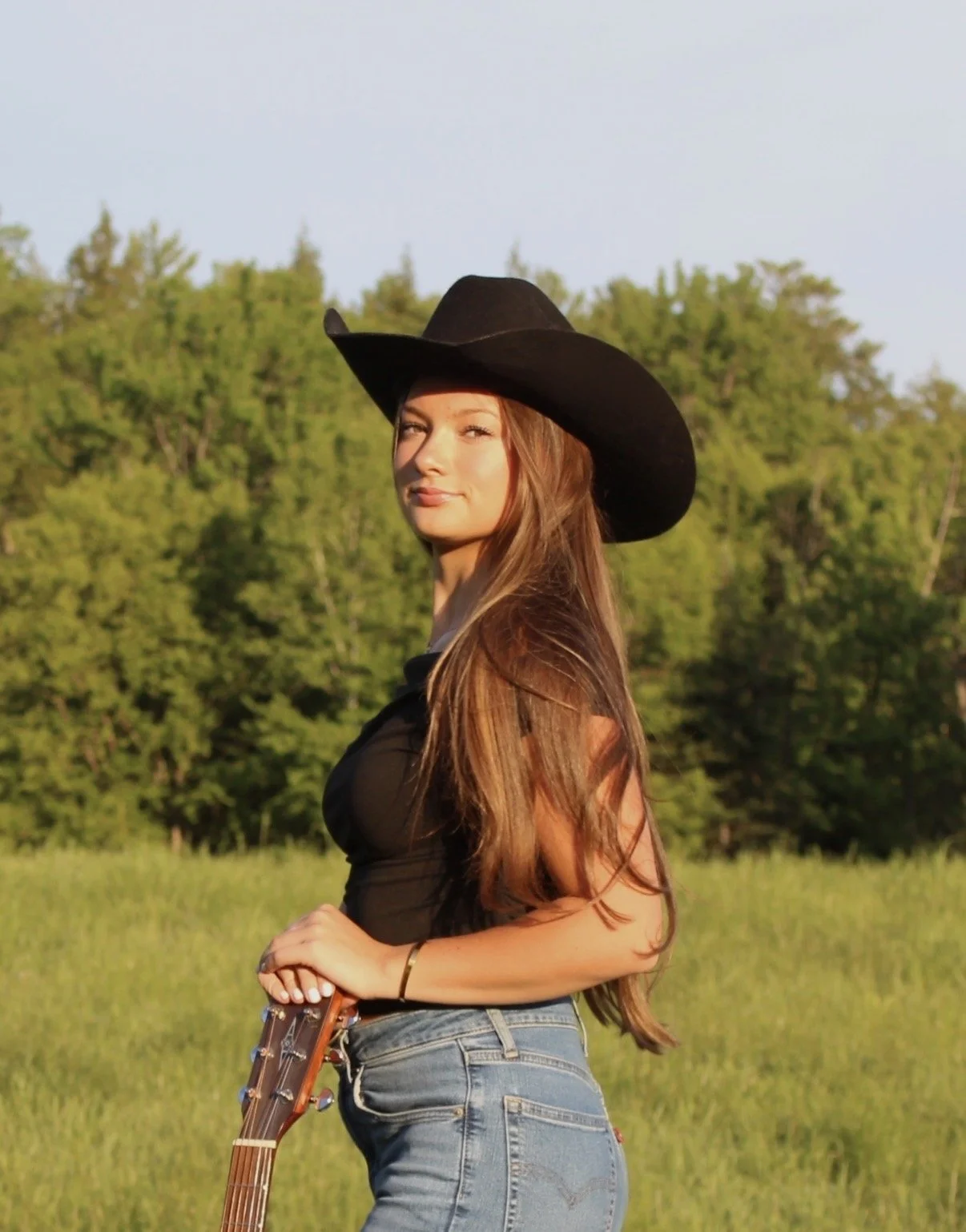
Karli Blood is the featured performer at this year’s 82nd Annual North Haverhill Fair. Karli is a Ryegate, VT, resident and a Blue Mountain Union School graduate. She is currently enrolled as a public relations major at Belmont University in Nashville, TN, where she is also pursuing a career in country music. - Courtesy photo
North Haverhill, NH - On Saturday, July 25th, Ryegate’s very own Karli Blood will light up Thayer Stage at the North Haverhill Fair with her positive energy, musical talent, and country vibe. For the 20-year-old college student, this opportunity is one she never thought possible. “Growing up, I never imagined I’d get the chance to take the main stage at such a special event,” Karli says, “and I’m so grateful for the opportunity.”
Karli’s passion for music began at an early age, giving private performances for her family. Ironically, however, it was the COVID-19 pandemic in 2020 that sparked her drive to create music. Like many people, Karli found herself struggling with the lack of social interaction outside her immediate family, so she turned to music as an outlet. Karli set up her dad’s old DJ equipment in a loft above her parents' garage, a cozy little space she fondly dubbed “the barn,” and began belting out a myriad of well-known hits from country to pop, rock, and even theater music. She started teaching herself to play the ukulele and began writing songs as an emotional escape, transforming her negative feelings into something more positive.
“[The pandemic] was definitely a hard time,” Karli says, reflecting on the perils of quarantine. “I found that music really helped me through that. It was definitely an outlet for me to express how I was feeling, and I was able to put some of those feelings into lyrics.”
A few years later, at age 16, Karli gave her first public performance—a duet at her school’s spring concert. In August of that same year, with her dad running sound and lights, Karli gave her first solo performance when she opened for Bad Horsey at Sunset Rock RV Park in Isle La Mott, VT. “I couldn’t have done it without my parents, brother, aunts, uncles, grandparents, and friends,” Karli says. “They never fail to show up and support me. Without them being there, I probably wouldn’t have the courage to get up on stage.”
From that moment on, Karli’s music career blossomed. Bryce McNall, the lead singer of Bad Horsey, connected Karli with a producer, who is originally from Vermont but travels back and forth to Nashville helping find up-and-coming talent and assisting them in the process of producing tracks with in-studio bands. This introduction was a catalyst for what came next.
In October 2022, during her sophomore year of high school, Karli ventured off to Nashville, the heart of Music City, where she recorded her first original song, titled “What We Used To Be.” The following February, Karli played her first official gig with a backing track and her guitar at the Iron Rail in Woodsville. She continued to perform locally at bars, campgrounds, and various community events before returning to Nashville three months later to record “Nashville Cowboys,” one of her most popular songs to date. According to Karli, “Nashville Cowboys” was released in September 2023 as part of an extended play mini-album with a collection of songs from her two recording sessions. To date, Karli has released eight songs in total.
When asked to choose her favorite original song, Karli ponders for a moment. “I think ‘Nashville Cowboys’ because it’s fun to dance to, and that’s the kind of music I’m hoping to release if I ever get more opportunities to record. But I also like ‘Doin’ Good.’ Those are probably my top two.”
Without question, Karli Blood’s music career has skyrocketed since those early years of belting out KIDZ BOP-type playlists for her family. Following her graduation from Blue Mountain Union School in June of 2024, Karli moved to Nashville, where she currently attends Belmont University while simultaneously forging her path in the music industry. Karli originally enrolled as an education major, as she was uncertain about her long-term career aspirations. “I needed to start somewhere,” she remarks. “I thought that might lead me into music education or becoming a teacher, but I went into it knowing that I was probably going to change my major.”
While networking with other students through various organizations that she had joined, Karli learned about public relations (PR). “I didn’t even really know that was a thing when I was searching for majors in high school, and then I talked to a lot of other students who spoke so highly of the program and the professors and explained what PR was. I said, ‘I need to try this.’”
At the beginning of her sophomore year, Karli switched majors and is pleased with her decision. “I had a reflection moment of, ‘Why am I in Nashville spending so much money for an education degree when I can do that anywhere for a lot cheaper?’ I feel like I should be taking advantage of the connections and the professors and the programs related to music.”
Though PR is not an official major within Belmont’s School of Music, Karli explains, public relations is certainly an integral part of the music industry. “PR is important from an artist’s perspective with the age of social media, but there’s so much that you can do with PR even beyond music. If I wanted to learn how to promote myself or other artists and stay in the music industry, I 100% could, but if my goals in life change, I will have job security in other parts of the workforce because PR is so broad.”
The life-changing opportunities afforded to Karli in Nashville, both personally and professionally, have been plentiful. As part of Dolly U, a partnership between Belmont University, Dolly Parton and CTK Enterprises, Karli recently took a class called “Dollyology: Branding, Leadership & Strategic Communication to Customer Relationship Management in the Dollyverse.” This course focused exclusively on Dolly Parton’s branding as an artist and her journey in the public eye.
In addition to a rigorous course schedule, Karli is a member of Phi Mu, the second-oldest female sorority in the United States, as well as Towering Traditions, an orientation council that supports incoming Belmont University freshmen on move-in day and throughout the school year. She co-leads the Belmont Boulevard Team, a small group of students who create all of the social media content for Belmont’s Instagram and TikTok pages. Karli also spent 16 days with a group of fellow PR majors traveling through Europe, starting in Madrid, Spain, with additional stops in Lisbon and Porto, Portugal.
In her spare time, Karli is on stage in Nashville. In April 2025, she auditioned for the Honky Tonk School, a highly acclaimed training and development organization. Karli earned a spot filling in for singers who perform on Broadway. She plays consistently with a multitude of bands on the “Tootsies Circuit,” a network of venues that include Tootsie’s Orchid Lounge, Kid Rock’s Big Honky Tonk, Honky Tonk Central, and Rippy’s Honky Tonk. Karli performs at various times of day and in different environments. She also “runs the bucket,” taking song requests and accepting tips from the audience. “It has been a great way to connect with people in the music industry in Nashville and artists that are chasing the same dream that I am.”
Karli’s journey into the music spotlight is beyond inspirational. She is ambitious, passionate, humble, and kind. She is also a positive role model and a beacon of inspiration for those who have the courage to dream big dreams. Karli’s advice to budding young artists is simple and genuine. “Keep going if music is something you truly love. It won’t always be easy, but it is so much better to take the chance than to look back years later wishing you'd been brave enough to try.”
While Karli is chasing her dreams in Nashville during the school year, she spends her summers in Vermont with her family, pursuing those same dreams here at home. Karli recently opened for Waterbury, VT, native Jamie Lee Thurston at The Dispensary in St. Johnsbury. Other venues on her summer tour included 98 Mill, McIndoes Academy Community Center, Sunset Rock Lake Shore, and Kingdom Campground, with her final stop being Thayer Stage at the North Haverhill Fair.
“I feel nothing but pride to represent my community and put on a really fun show for everyone who shows up and supports me,” Karli says. “I think it’s going to be a great time, and I’m really looking forward to it.”
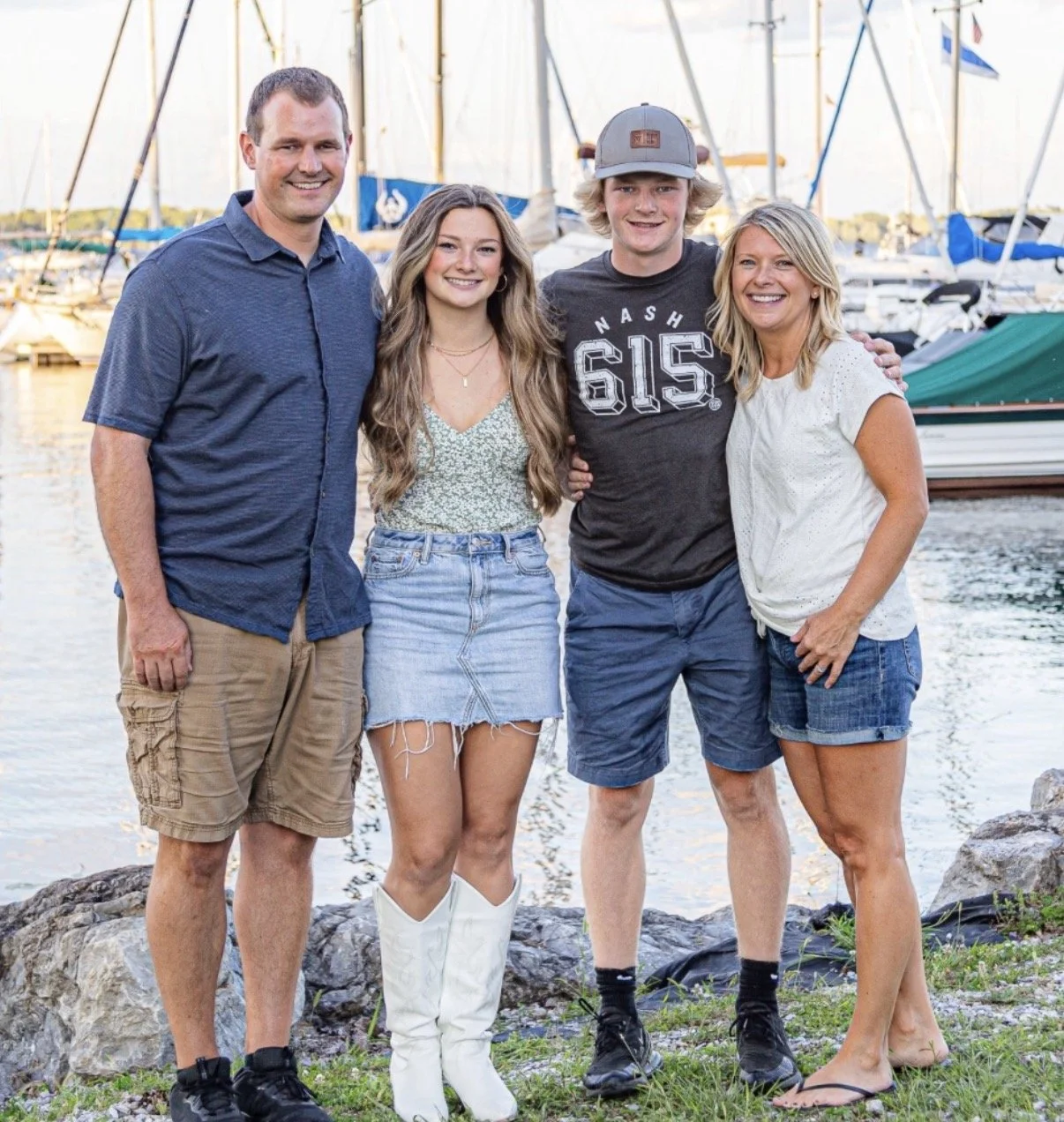
Karli Blood (second from left) has received unwavering support from her family throughout her musical journey. Her dad, Scott (far left), is her lighting and sound technician. Her mom, Melissa (far right), is her manager, and her younger brother, Kason (second from right), helps Scott with set-up and tear-down.“It’s definitely not a one-woman show, even if it appears that way,” Karli says. - Courtesy photo
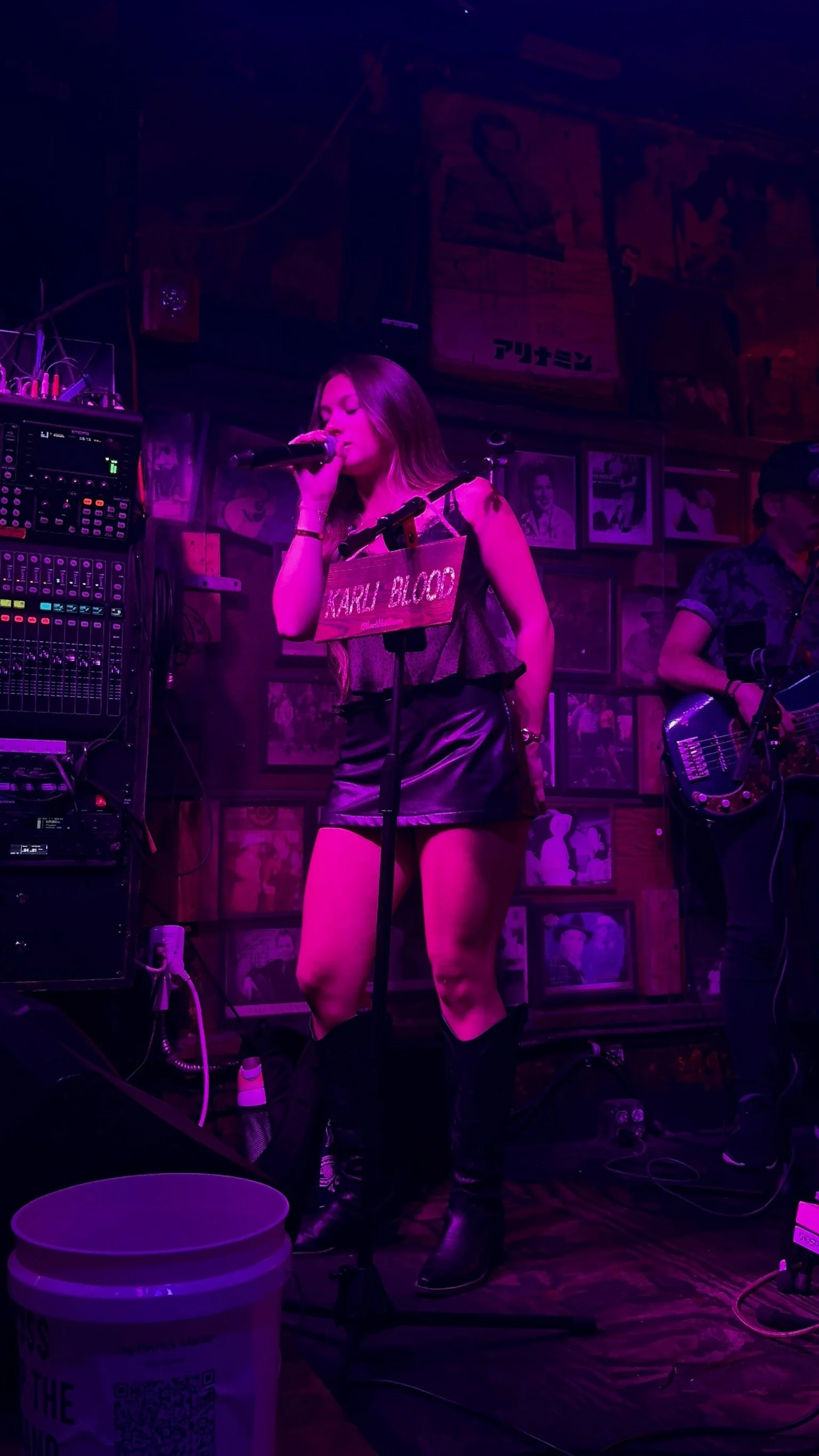
Karli Blood serves as a “fill in” for singers who perform on the “Tootsies Circuit,” a collection of honky- tonks in Music City. She is seen singing on stage at the legendary Tootsie’s Orchid Lounge on Broadway.- Courtesy photo
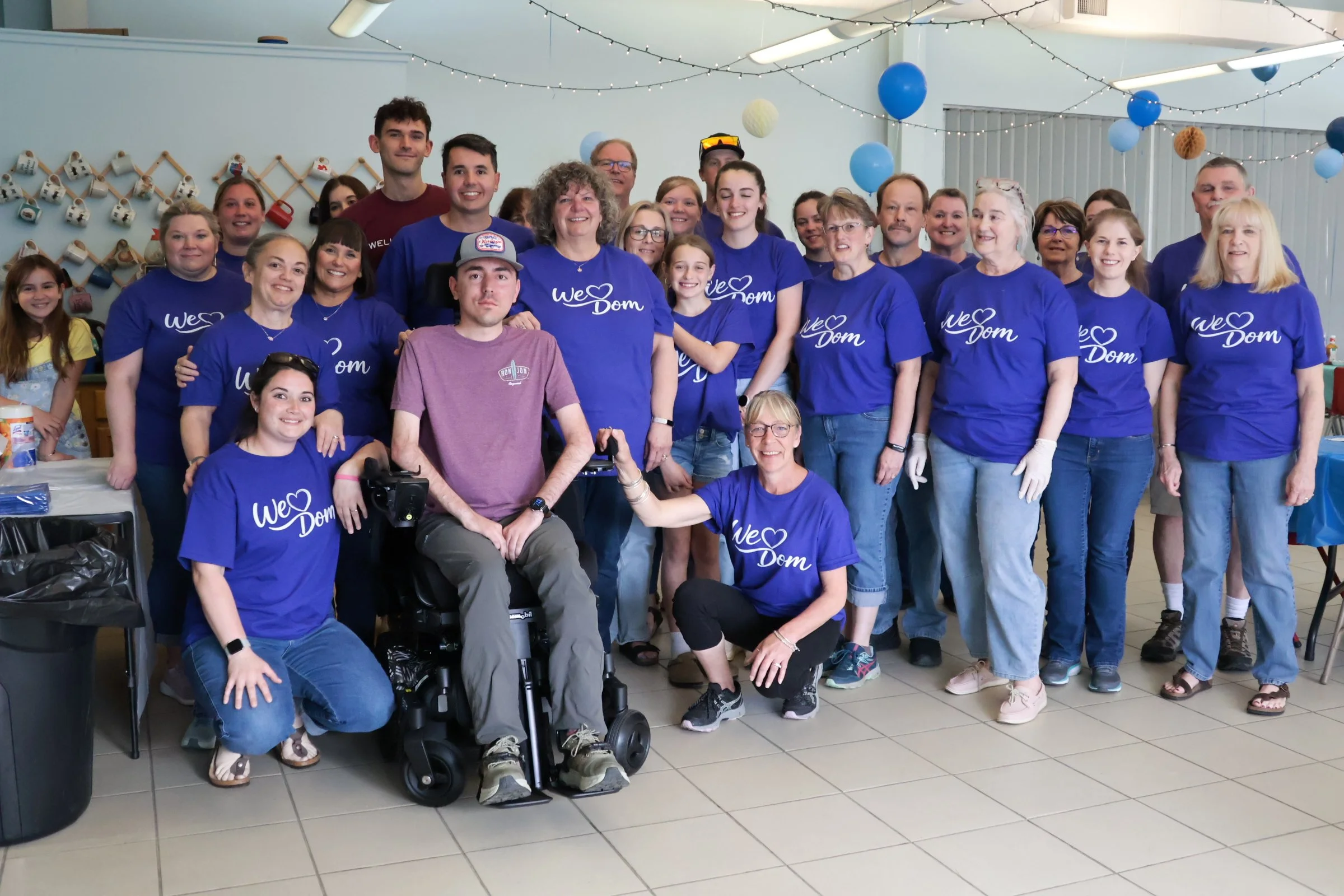
Domenic Castaldi’s Pursuit of Independence
Earlier this week, Aly Richards officially announced her campaign for Vermont governor. She is pictured with her husband, James Pepper, their twin sons, Beau and Wesley, and their beloved pup, Eleanor “Ellie” Roosevelt. Aly currently resides in Montpelier but is deeply rooted in the Newbury/Bradford community.
By Trish Griswold
Wells River Savings Bank employees hosted a benefit dinner and raffle in honor of their beloved colleague, Domenic Castaldi. “No matter what he has going on, he treats every customer like they are the only thing in the world that matters,” says Branch Manager Patti Clark. “When he is working with a customer, nothing matters except that person and making sure he is taking care of their needs no matter what they are.” - TBWS/Trish Griswold
Bradford, VT - On Saturday, May 16th, Wells River Savings Bank (WRSB) employees and hundreds of people from the surrounding communities gathered together at the Orange East Senior Center in Bradford to support Domenic “Dom” Castaldi, a remarkable young man whose courage, strength, resilience, and work ethic serve as an inspiration to others.
“Domenic is the most incredible person I have ever met. He is such a strong person. Despite his health challenges, he comes to work every single day and never complains,” remarks WRSB Branch Manager Patti Clark. “I have had the privilege of working with Dom for eight years, and I can honestly say that I have never heard him complain about anything. But, aside from his amazing work ethic, he is genuinely the nicest person you could meet. He has such a wonderful relationship with our customers; everyone loves him.”
Born in Concord, NH, and raised in Belmont, Dom was an active child. He enjoyed school and played a variety of sports, including soccer, basketball, baseball, and track. From an early age, Domenic was an avid fisherman and a “gearhead,” passionate about trucks, cars, and all-terrain vehicles (ATVs). At age 11, Dom and his mother, Gretchen (Clough) Moulton, moved back to Gretchen’s hometown of North Haverhill, NH.
During a physical education class at Haverhill Cooperative Middle School (HCMS), Dom’s teacher, Pat Riggie, noticed something peculiar. Despite Dom’s relative strength and athleticism, he was unable to do a push-up. Dom had recently experienced a significant growth spurt, and his body was going through many changes, Gretchen recalls, but Mr. Riggie knew there was something more.
As it turned out, Dom was suffering from scapular winging, a condition in which the scapula (more commonly known as the shoulder blade) sticks out rather than resting flat against the rib cage. Follow-up blood tests were also positive for the enzyme creatine kinase, an indicator of muscular dystrophy, a genetic disorder marked by degeneration of the skeletal muscles.
By his sixteenth birthday, Dom had undergone three surgeries, including scapular fusion on both sides. This is a procedure wherein surgeons fuse the scapula directly to the ribs. The nature of the procedure forced Dom to give up physically demanding activities and refocus his energy. As part of the recovery process, Dom was homebound for months. “I saw Dom struggle to be who he wanted to be when he was in middle school,” Pat recalls. “He had a great attitude, and he tried to persevere, but his body was not cooperating.”
Domenic finished middle school and enrolled at Woodsville High School, where he graduated in 2018. Dom also completed the 21st Century Media and Design program as well as a customized architectural design program at Riverbend Career and Technical Center (RBCTC). He had always dreamed of pursuing a career in the automotive industry but accepted that this would be extremely difficult due to physical constraints. That led to an unexpected but life-altering internship at WRSB. In fact, Dom attended Lakes Region Community College while working part-time at WRSB. He earned an associate’s degree in business management and has been employed as a full-time customer service representative ever since. “I’m very grateful for my job,” Dom says. “I love the people [at WRSB], my co-workers, and the customers. Never in a million years did I see myself as a banker, but I wouldn’t trade it for anything in the world.”
In 2022, ten years after his initial diagnosis, Dom says, the State of New Hampshire revoked important health insurance benefits when he began working full-time. His mobility continued to decline, so he sought genetic testing to pinpoint which subtype of muscular dystrophy he has. Dom presented with all of the symptoms of Facioscapulohumeral Muscular Dystrophy (FSHD), a slow but progressive form of muscular dystrophy that primarily affects the face, shoulder blades, and upper arms; however, a full sequence of genetic testing did not confirm the diagnosis. Even Dom’s parents participated in genetic testing to help find some answers, but “nothing showed up,” Gretchen says. Despite the medical community’s best efforts to garner a diagnosis, Domenic’s medical condition is officially unknown.
“As a mom, you have dreams for your kids,” Gretchen reflects, “but when you have a child in Domenic’s position, it’s no longer about your dreams. It’s about them not being able to fulfill theirs.” Gretchen’s feelings of helplessness are exacerbated by a system that has, without question, failed Domenic. The only way to solidify an FSHD diagnosis is through genetic testing, but without a formal diagnosis, Dom is ineligible for clinical trials that could offer him access to medications, treatments, and therapies that might help reduce, slow, and/or potentially remediate some of his symptoms.
Additionally, the one or two programs that might be available to him without a formal diagnosis, Dom explains, will not accept his application because he “makes too much money.” The only way Dom can access any state or federally funded support(s) is to stop working full-time, despite the fact that he is fully capable and wants to work full-time. His only option is to go part-time or give up work altogether and apply for disability benefits. This isn’t feasible either, Dom says, because he requires personal care and lift assistance at home. If he goes to work part-time, Gretchen would need to reduce her work hours to care for him, which would have a significant financial impact on the entire family, which includes his 14-year-old sister, Lily.
Dom’s greatest challenge right now, however, is mobility. This past winter, Dom gave up driving due to the cold weather, as his progression of decline has accelerated. “I’ve gone downhill pretty fast over the past year,” Dom shares. “The winter was brutal.” The cold snap in December caused persistent muscle stiffness, which made it nearly impossible for Dom to steer his Dodge Ram pickup truck. Since then, his grandparents have been driving him to work in the mornings, and Gretchen or one of his co-workers has been driving him home.
At some point, Dom concedes, the physical and mental toll of New England’s long, harsh winters will likely force him to relocate to a warmer climate, but he is not ready to make that change yet. Lily will start high school next year, and she has a passion for agriculture - particularly her horses, chickens, and beloved pets. “She needs to get what she deserves too. I wouldn’t want to leave her.”
In an effort to help Domenic maintain his independence, Pat, with assistance from Mary Cataldo, the mother of one of Dom’s longtime friends, created a GoFundMe page in Dom’s honor. “I've known Gretchen for a long time and Dom since he was in middle school… I just wanted to help,” Pat states. “People came to my hour of need when I was diagnosed with brain cancer, so I wanted to pay it forward… I had everything taken away from me for a brief time. I couldn't drive. I couldn't coach. I couldn't teach. I couldn't work out. So, I can connect with how Dom is feeling. He loves his truck. He loves to drive. I also understand that he was reluctant about receiving help. I felt the same way when people donated to my cause. I simply told him that this is a way for people to help. Let them help you.”
While Dom is eternally grateful for the kindness and generosity bestowed upon him, accepting assistance from others is difficult. “This isn’t me crying for help. This is help that was offered to me,” Dom says. “It’s very hard to accept all the help because I’m an independent person. It’s also hard because I want to give back, but I feel like I can’t, and that’s hard.”
The money raised through fundraising efforts will be used to purchase a motorized wheelchair that will increase Dom’s mobility both at home and at work. Funds will also be used to purchase and modify a vehicle so that Domenic can drive himself to and from work. The cost is well over $100,000, as the modifications that he requires include joysticks and voice command technology that is only compatible with newer vehicles. Domenic is already taking driving lessons twice a week to learn how to maneuver the joysticks. He has done extensive research and has a keen eye for engineering. “I have a vision of what can be done,” Dom contends. “Anything is possible.”
Author’s Note: It is not too late to join Team Domenic and the fundraising efforts to support his mobility and independence. His GoFundMe page will remain open until July 1st. WRSB has also established a savings account in Dom’s name. Contributions can be made directly to this account at any of their five locations.
“It’s so heartwarming that people see him for who he truly is, not his disability,” Gretchen says. “We’re not sure how to even begin to say ‘thank you.’”
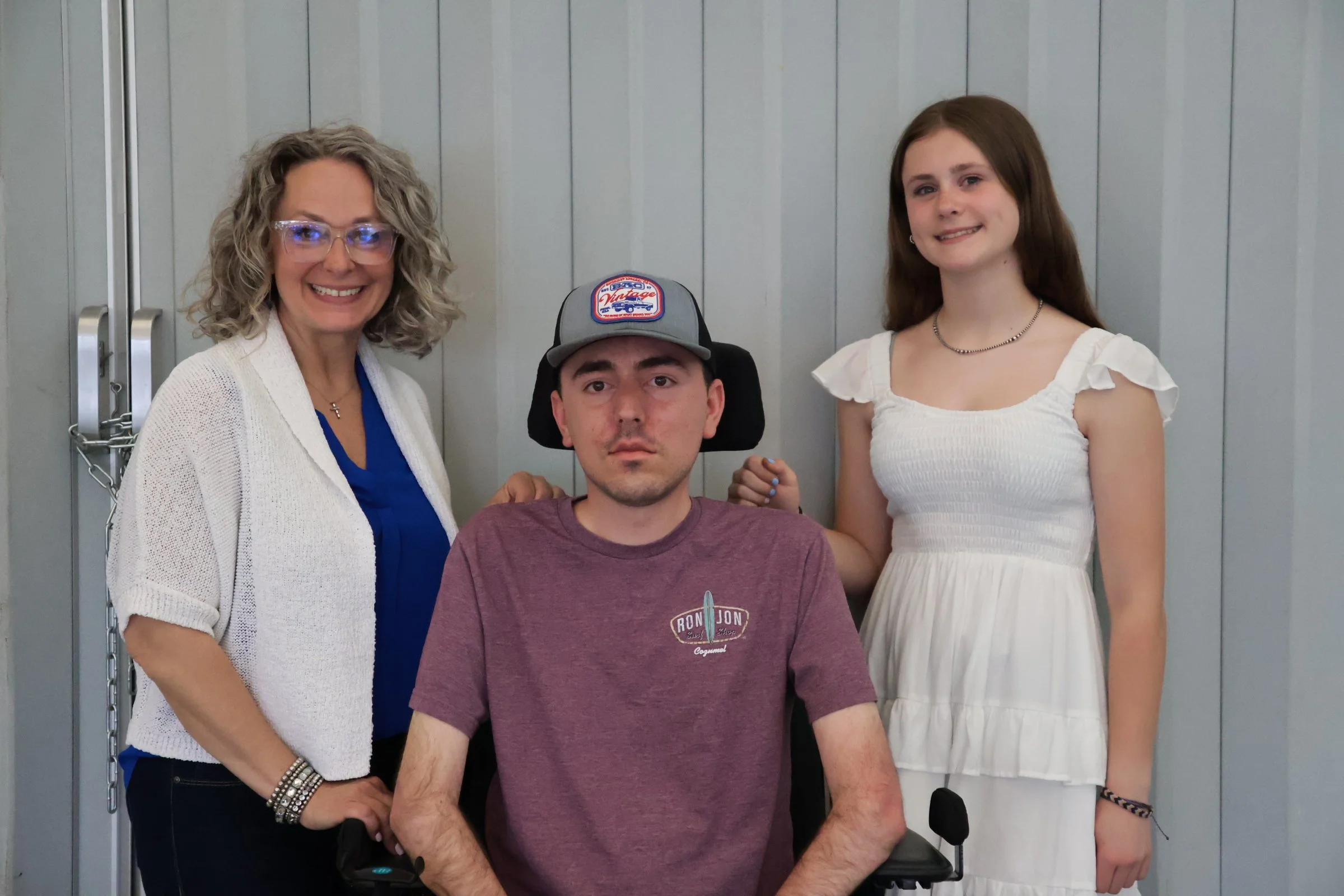
Words cannot begin to express how appreciative Domenic Castaldi (center), his mother, Gretchen (L), and his sister, Lily (R), are for the kindness, compassion, and generosity Dom has received from his Wells River Savings Bank colleagues and customers, family, friends, and community. “I am so lucky to have all of these people by my side,” Dom says. “I don’t know what I would do without them.” - TBWS/Trish Griswold
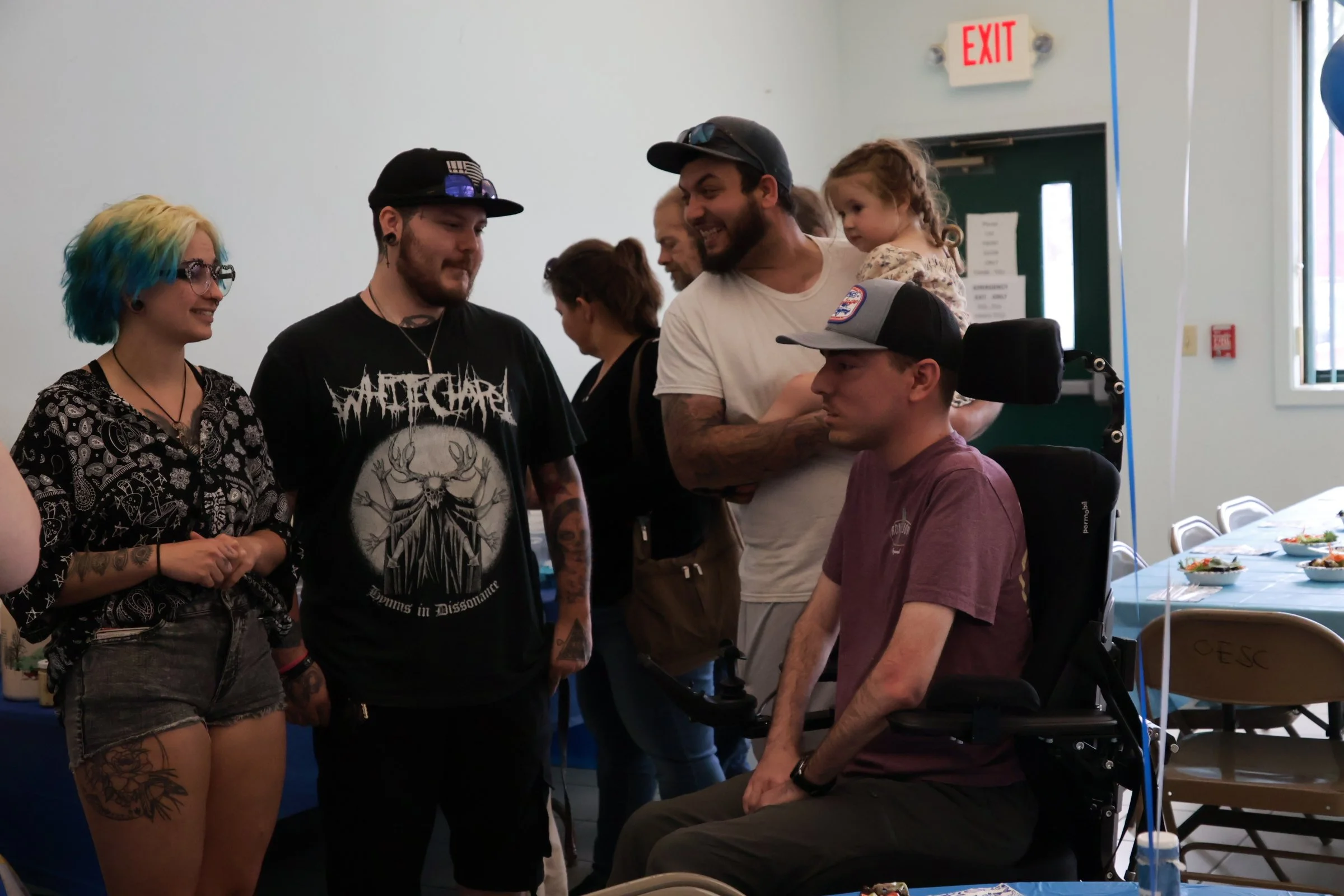
Kate Hamilton, Dakota Hernandez, DJ Tabor (holding his daughter, Ella), and Domenic Castaldi (L-R) reminisce during Saturday night’s fundraising event. Domenic, Dakota, and DJ graduated from Woodsville High School in 2018 and remain close friends. - TBWS/Trish Griswold
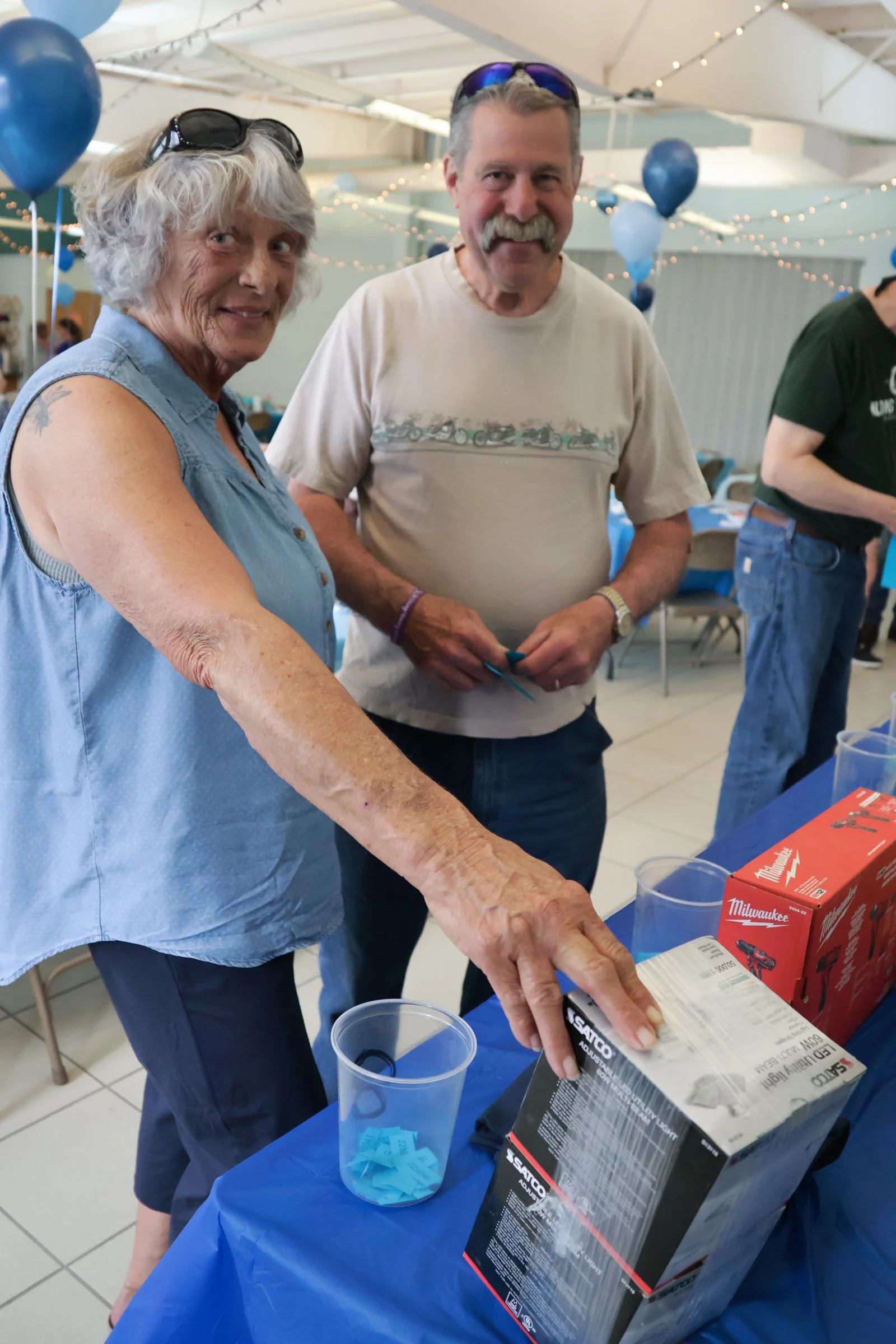
Irene (L) and Ron Fournier purchased raffle tickets for a chance to win an adjustable LED utility light. Other raffle items included: gift baskets, gift cards, power tools, grills, Red Sox tickets, mittens and an air conditioner, all donated by individuals and local businesses. - TBWS/Trish Griswold
Community Rallies To Revitalize The Groton Rail Trail
The Gateway Project has been a collaborative effort, states Nahmias, who has spearheaded much of the Project in recent years and shares a common vision for the future of Groton with Gary Lamberton from the Buckaroos of 302 Snowmobile Club, Groton Recreation Commission’s Mike Gaiss, and Greg Western, Executive Director of the Cross Vermont Trail Association (CVTA). “This project was the genesis of several like-minded, hardworking Groton residents who were in the right place at the right time.”
By Trish Griswold
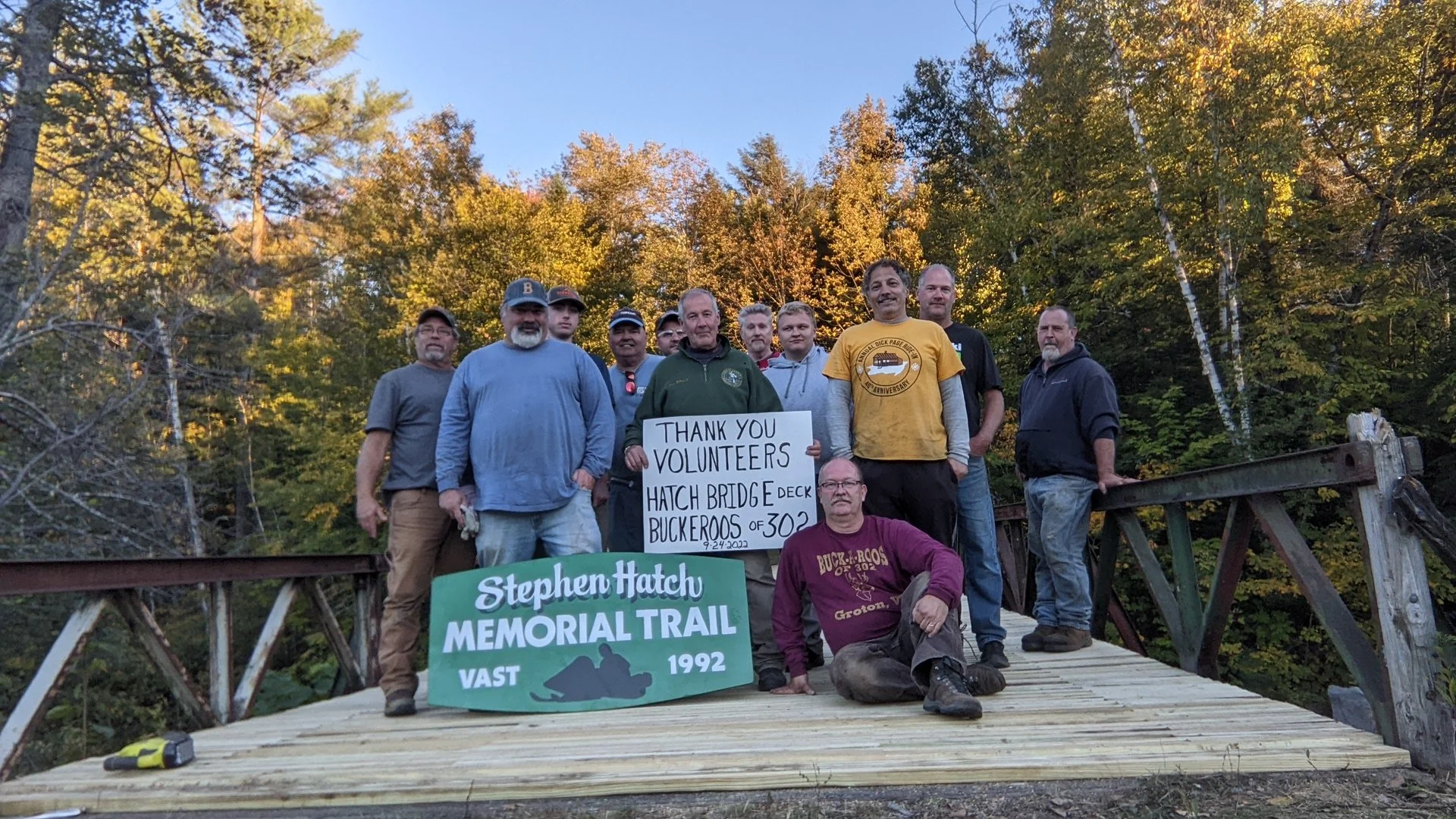
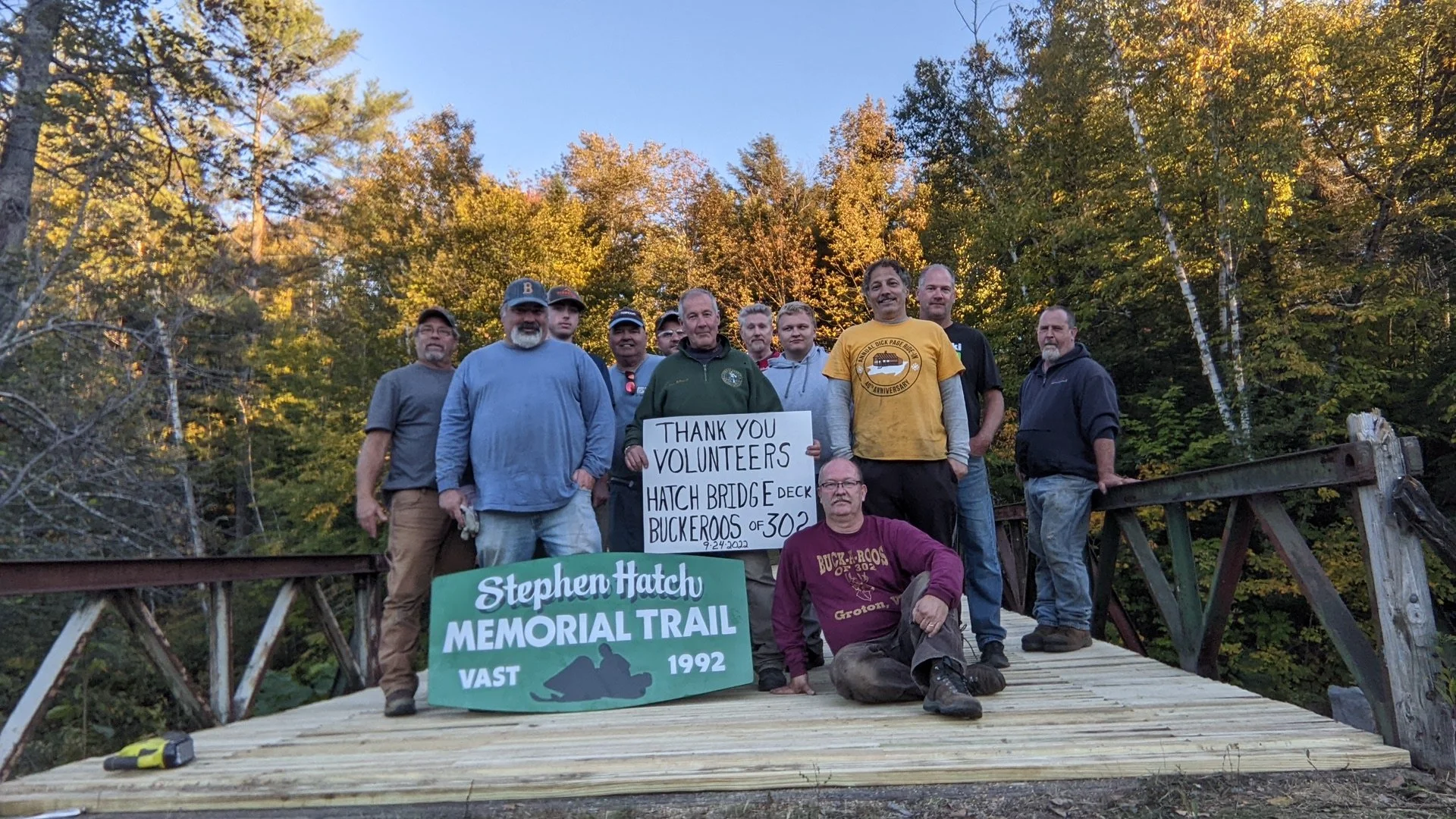
Members of the Buckaroos of 302 Snowmobile Club repaired the Stephen Hatch Memorial Bridge, providing safe, dependable snowmobile access to the Cross Vermont Trail.
GROTON - Neighbors helping neighbors has been a long-standing tradition in the small, rural community of Groton, VT, and newly-elected Selectman Mike Nahmias, who moved to the area in 2017 and has served as Planning Board Chair for several years, has had the privilege of experiencing first-hand the power of many hands making light work for the Town.
“Groton has got a lot of heart,” remarks Nahmias, who estimates that, over the last 50+ years, 250 of the town’s 950 citizens have been directly involved in helping Groton’s Gateway Project, a grass roots economic growth initiative, come to fruition. The intent of the Gateway Project was to upgrade Groton’s portion of the Cross Vermont Trail (CVT), a four-season, multi-use trail network that spans the State of Vermont, east to west from the Connecticut River at the Vermont/New Hampshire border in Wells River to the shores of Lake Champlain in Burlington. The CVT follows the railbed in Groton for 10 miles, the longest segment of the CVT in any town.
“Groton is located at the highest elevation on the trail, the summit, and we are a destination for trail users as we have campgrounds, lakes, ponds, hiking trails, and the forest,” explains Nahmias. “I see us as one of the anchor communities along the trail. Having the new surface in both the town and the forest, we really have the best segment at this time along the trail.”
The Gateway Project has been a collaborative effort, states Nahmias, who has spearheaded much of the Project in recent years and shares a common vision for the future of Groton with Gary Lamberton from the Buckaroos of 302 Snowmobile Club, Groton Recreation Commission’s Mike Gaiss, and Greg Western, Executive Director of the Cross Vermont Trail Association (CVTA). “This project was the genesis of several like-minded, hardworking Groton residents who were in the right place at the right time.”
Nahmias also credits previous Groton Selectboards, Planning Commissions, and other Town Officers for “their forethought in acquiring the railbed from the State of Vermont when it was offered to the Town in the 1980s, for putting an ordinance in place to preserve the railbed as a recreational property with limited access for vehicles, and for drafting a Town Plan with goals and strategies that laid the groundwork for the Town to continue to maintain and improve the trail and embrace its presence as an economic driver for town businesses.”
Funding for the Gateway Project was made possible through a $225,000 grant from the Vermont Outdoor Recreation Economic Collaborative (VOREC), a state-run program managed by the Vermont Department of Forests, Parks and Recreation (FPR) in partnership with the Vermont Agency of Commerce and Community Development (ACCD). One of VOREC’s primary goals is to “strengthen connections between Vermont’s outdoor recreation resources and the benefits that come from participation in outdoor recreation.”
According to Nahmias, the Gateway Project is multi-faceted with many different segments. One portion of the project was to regrade sections of the existing railbed, install and replace eight culverts along the railbed, and install two barrier gates. A landslide in 2023 and a major flood in 2024 caused delays to this portion of the project, but townsfolk and volunteers have persevered despite these challenges.
Another key component of the Gateway Project was to build a 60’ by 100’ all-season parking area near the Village Center (at the old stump dump) and a trailhead with 10 parking spaces, making the CVT fully accessible to snowmobilers, bikers, snowshoers, cross country skiers, horseback riders, walkers, runners, dog sledders, etc. Crucial to the project was acquisition of the lower Groton hydroelectric power station property, a 3-acre parcel of land formerly owned by Green Mountain Power, and the development of a master plan for the proposed 12-acre Groton Gateway Park, which includes the former stump dump and gravel pit as well as retention of its current emergency management use.
Signage and wayfinding for the project were completed in collaboration with the CVTA. This included the design and installation of 50 directional signs on the railbed trail, 6 wayfinding signs, one sign on the road, 2 kiosks, 12 winter trail maps, and a digital map of the railbed trail for the Town’s website. Separate from the grant, Nahmais says, the Buckaroos of 302, whom he refers to as “the unsung heroes of the project,” also repaired the Stephen Hatch Memorial Bridge. These repairs have improved trail accessibility for snowmobilers in the winter months and helped get bikers off Route 302 and onto the trail, increasing safety for everyone.
According to CVTA Board Chair Mike Thomas, the hope is that the newly revitalized rail trail will provide an inviting, safe recreational opportunity for everyone to enjoy the benefits of nature and an active lifestyle. “The Park will be a draw for people to the area, and locals can take advantage of it too with access to the Village of Groton. It ties the community together.”
Former Selectboard Member Deb Jurist is one of many Groton residents who have utilized the CVT for years. “I have been riding my bike on the railroad bed since 1984 when I bought the Stoneshed in Ryegate and built my business, Mountain Meadows Pottery. I have seen a lot of changes over the years for sure. But it still holds true that there is always something to discover on the railroad bed. It might be a green heron, the sound of croakers in the spring, or sumac with leaves in green, yellow and red. The railroad bed never disappoints.”
The revitalized trail, Jurists says, makes for a smoother ride. She recently shared that, decades ago, she and her then 3-year-old daughter nicknamed one of the biggest puddles on the old trail “Sinker.” Thankfully, “Sinker” and the other puddles are gone. “[The railroad bed] is vastly easier to ride on now that it has been upgraded, which makes it much more accessible to me at 75 years old.”
Many local businesses, Vermont-based companies, and community volunteers, including: Berry’s Forest Products, Blue Mountain Excavation, Oliver Landworks, Rise and Run Timber Frames, Robco, SE Group and the Buckaroos of 302, have been instrumental in bringing the Gateway Project to life. “Over 1000 volunteer hours were put into this project,” Nahmias says, “and we couldn’t have done this work without them.”
More information about the CVT, including up-to-date trail maps, are available online at https://crossvermont.org/. Additional information is available on the Groton, VT, website at https://grotonvt.com/.
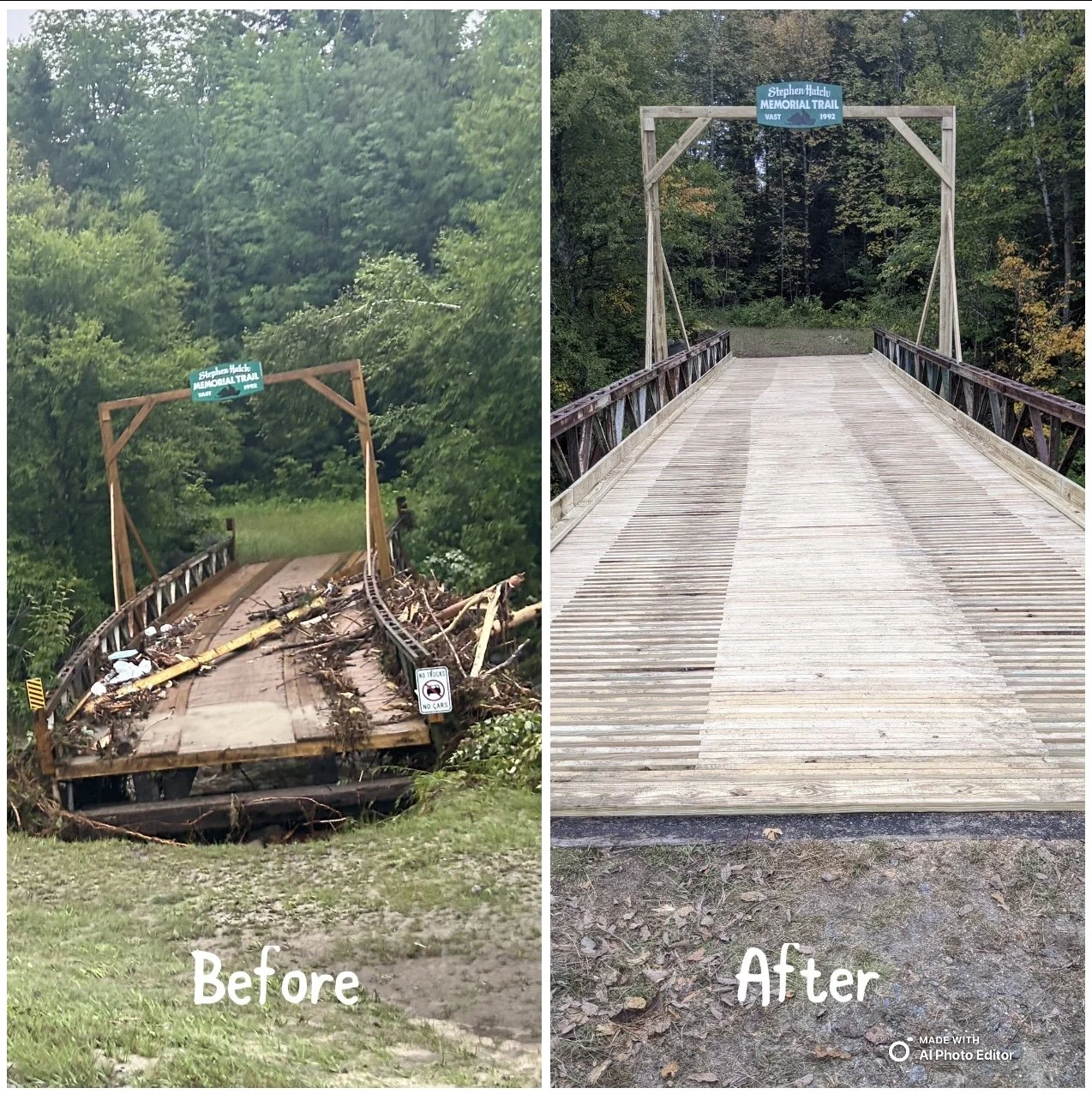
Repairs to the Stephen Hatch Memorial Bridge have increased safety for nature goers by getting bicycle traffic off the roadway and onto the Cross Vermont Trail.
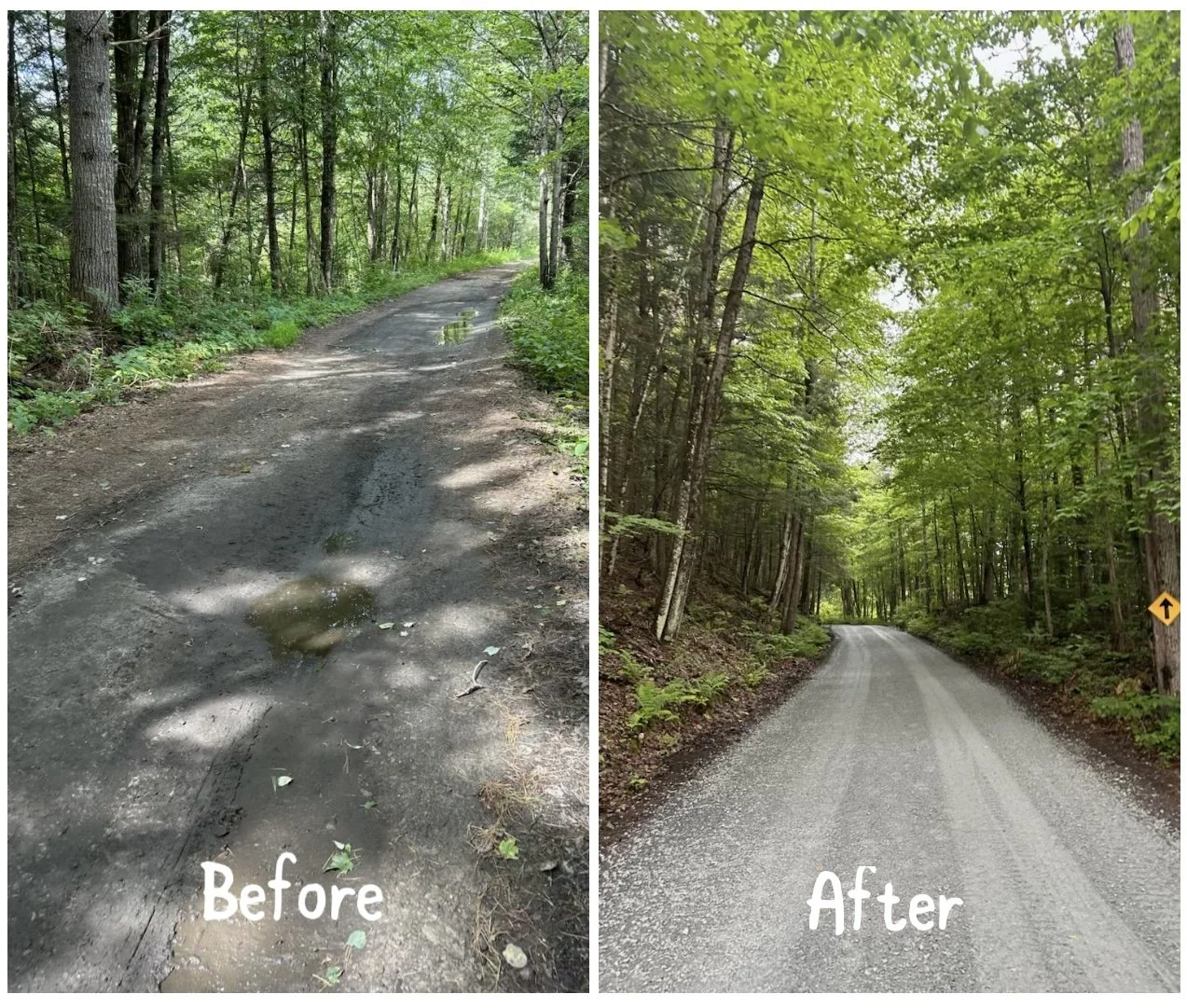
The “before” picture on the left shows the surface of Groton’s rail trail (between the Village and Pine Mountain) prior to recent changes. The “after” picture on the right shows the revitalized trail roughly one mile east, closer to Pine Mountain.
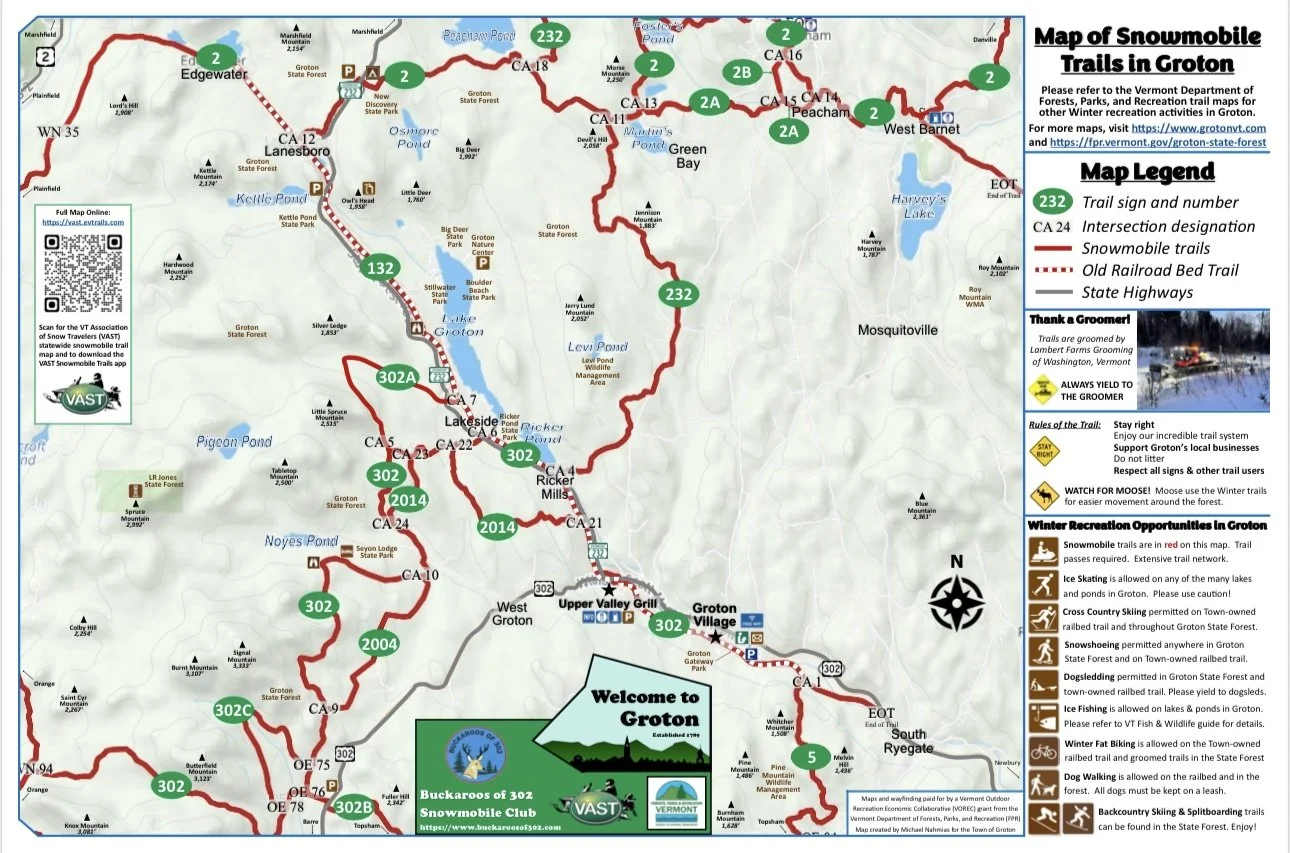
The newly designed Buckaroos of 302 Snowmobile Club trail map showcases snowmobile trails in Groton as well as other noteworthy landmarks and reference points.

The Rocking Chairs’ Last Street Dance Curtain Call
Given their popularity and overwhelming success, one might question why The Rocking Chairs would call it quits after nearly two decades of performing for the community they love. “Unfortunately life changes,” Mike says, citing increasing costs, travel expenses, arthritis, and other health issues as the main reasons.
By Trish Griswold

Mike Lusby has created The Rocking Chairs’ next album cover, an animated picture collage that depicts the band’s current members. Pictured (clockwise from top left) are: Bobby Caffey, Alex Valliant, Mike Lusby, Jim Lusby, and Ron Barale. - Courtesy photo
Bath, NH - Last Saturday night, The Rocking Chairs’ soulful classic rock music reverberated for miles as townspeople, young and old, congregated on the Bath Common one final time to sing, dance, and celebrate.
The Rocking Chairs, a local band comprised of close friends and family, has been the heart and soul of the Bath Firefighters’ Benefit Concert/Street Dance for the past 17 years, with the exception of 2020 and 2021 when public venues throughout the state were shut down due to the COVID-19 pandemic. The band, which currently features brothers Mike and Jim Lusby on drums and bass guitar respectively, Ron Barale and Bobby Caffey on guitar and Alex Valliant on lead vocals, makes it their mission each year to share their passion for music with family, friends, and neighbors. Their annual concert is free and doubles as an opportunity to help raise funds to support the town’s 17-member volunteer fire department. “[Chief] Donnie Bowman has said to me many times that, even if we didn’t raise any money or get any donations, the Fire Department loves giving the town something to do together,” Mike explains. “I think that’s perfectly worded because that’s what it’s all about.”
According to Mike, former Fire Chief Willy Minot was receptive when he approached the Fire Department in 2007 with a philanthropic proposal to cultivate community spirit and raise much-needed funds. The Rocking Chairs’ relationship with the Fire Department evolved from there. Monies raised have provided numerous college scholarships for local seniors and helped off-set the cost(s) of big ticket items, such as equipment, so that firefighters have access to the tools they need without over-burdening tax payers. “It was Ron’s idea to do a benefit for some entity, and we’ve been doing [the concert/street dance] ever since.”
From January to August each year, a considerable amount of work happens behind the scenes. Mike handles most of the event planning, from scheduling and advertising to production and sponsorships. He has developed a network of local businesses that donate goods and services, including WMUR meteorologist Kevin Skarupa, who provides up-to-the-minute forecasts starting one week before the event. “He’s our lucky charm,” Mike quips. “We haven’t been rained out in 17 years.”
In order to “pull this off,” Mike says, it requires an incredible amount of support from a myriad of community partners. Strawberry Farm Band opens for The Rocking Chairs, Don Vogt from Audio Farm Productions provides sound and lighting, and the Bath Police Department, with assistance from surrounding departments, provides crowd control and emergency services. “People have really respected it,” Ron comments. “We’ve never had any problems. Nobody ever disrespected it.”
Other sponsors include: WYKR, Amoskeag Beverages, The Little Grille, Jamie Lynn’s Kitchen, Red’s Auto Spa, Heathen Design Co., and Fresh Coat Finishes. In addition to holding a raffle, the Fire Department prepares a barbecue luncheon consisting of burgers, hot dogs, potato chips, and soda. They also “took over a lot of the heavy lifting” several years ago when assembling the stage, risers, etc. became too much for the band members. “We do the benefit for them, but they do a lot of the work.”
Given their popularity and overwhelming success, one might question why The Rocking Chairs would call it quits after nearly two decades of performing for the community they love. “Unfortunatley life changes,” Mike says, citing increasing costs, travel expenses, arthritis, and other health issues as the main reasons. “We will still record and do parties on the grass [at home] during the day when it’s warm, but we’re getting too old for this.”
When asked about the future of the Street Dance, Chief Bowman replies, “It’s tremendous what Mike has done. I don’t think it’s the right thing to do to have someone take Mike’s spot at the Street Dance because it’s Mike. It’s his doing. It’s The Rocking Chairs. It’s their thing. It just doesn’t feel right.”
The Rocking Chairs may have had their last curtain call, but fans can still purchase their music, including originals and covers, on a variety of platforms, such as Amazon Music and iTunes.