

Don’t Let Your Friends Go Without You: Vermont’s Sci-Fi, Fantasy & Horror Expo Returns
The 7th annual Vermont Sci-Fi, Fantasy & Horror Expo returns to the Champlain Valley Exposition in Essex Junction on Saturday–Sunday, April 25–26, 2026, and it’s shaping up to be the kind of event you don’t just “drop by.” You plan around it. Because once you’re inside, you start realizing how big it is, how much there is to do, and how quickly the weekend fills up.
If you’ve ever seen someone’s convention photos afterward—kids grinning in Jedi robes, a parent holding a freshly signed poster, a group of friends who clearly had the best weekend—and thought, Wait… that was in Vermont?—this is your heads-up.
By Joshua Smith
Green Mountain Turtles will be there
The 7th annual Vermont Sci-Fi, Fantasy & Horror Expo returns to the Champlain Valley Exposition in Essex Junction on Saturday–Sunday, April 25–26, 2026, and it’s shaping up to be the kind of event you don’t just “drop by.” You plan around it. Because once you’re inside, you start realizing how big it is, how much there is to do, and how quickly the weekend fills up.
Jeff Folb—owner and general manager of Vermont Gatherings, the team behind the Expo—calls it Vermont’s own version of a Comic-Con experience, “our local Comic-Con, without calling it a Comic-Con.” And that’s not just a fun line—it’s a pretty accurate description of what the Expo has become. It began as a Vermont Sci-Fi & Fantasy event, and Folb says “a couple years ago we added horror,” then “officially unofficially added paranormal and pop culture.” In other words: it’s not one niche. It’s a whole universe of niches—under one roof, for one weekend.
Three buildings. One problem: you can’t do it all.
The most important thing first-timers don’t understand is scale. This Expo isn’t a single hall with a handful of tables. Folb says the event runs across “three attached buildings,” covering “about 80,000 square feet.” That layout is part of the fun: you can bounce from sci-fi to fantasy to paranormal to hands-on workshops to gaming—without ever feeling like you’ve “seen it all.”
And yes, you can do it in one day—technically. But Folb puts it plainly: “You could certainly get through the show in a day, but if you really want to… experience it—meet guests, get autographs, go to panels, do gaming—“you could certainly very easily stretch that out into two days.” Translation: if you only come for one day, you’ll probably spend the next week saying, Next year we’re doing both.
What’s on the floor? Pretty much everything.
So what is it, exactly? Folb describes it as an expo “featuring all kinds of guests” and “almost any medium you can think of” within sci-fi, fantasy, horror, paranormal, and pop culture.
This year’s guest lineup includes Bruce Boxleitner and Claudia Christian from Babylon 5 (Folb notes Boxleitner was also in Tron), plus Adam Berry from Ghost Hunters and Kindred Spirits, and Brett Wagner, known for portraying Leatherface.
But guests are only one piece of the weekend. Folb says there are “over 150 authors and artists, comic creators, game designers… cosplayers… crafters… vendors, gaming panels.” If you like browsing, you’ll be in heaven: art for your walls, handmade fandom merch, costume pieces, props, jewelry, books, comics, and the kind of “I didn’t know this existed” stuff you only find at conventions.
He also breaks down how the buildings feel different. One area is “a little more horror focused and paranormal focus,” while another includes what he calls the “old Star Wars section,” with costuming groups and Star Wars-themed vendors. It’s the kind of variety that lets different members of a family or friend group split up—and still all come back excited.

Bruce Boxleitner will be there

Claudia Christian will be there
The experiences people remember
Beyond shopping and autographs, this Expo leans hard into things you can do.
There’s a dedicated building for “panel rooms, food and beverage and gaming,” with scheduled and pickup games “all day, both days,” including role-playing, board games, and more. Folb says you can expect “10 or 12 panels and workshops a day,” ranging from paranormal topics to creative sessions like “how to create a comic book… how to create a character… how to get published.”
There’s also a professional photo setup with scheduled sessions for guests—and Folb notes attendees can book photos in costume, too.
“Horror” doesn’t mean “not for kids”
If you’re a parent reading the event name and hesitating at the word horror, Folb is clear about the tone: “All of our shows… are family friendly and family focused,” and even when a guest is known for scarier roles, the Expo doesn’t cross the line into adult-only content.
Costumes are encouraged, but not required—Folb estimates “probably 40 or so percent” of attendees show up in some form of costume. And there’s a built-in incentive: the Expo gives out “awards and prizes for costumes” throughout both days. So whether your kid has a full superhero outfit or you’re rocking a last-minute wizard cape, you’re part of the fun.
The “FOMO” truth: this is the weekend people talk about afterward
Folb says the bigger mission is creating events where “you can bring the grandparents and the grandkids and everyone in between, and everyone’s gonna have a great time.” That’s what makes this Expo different: it’s not designed for just one age group. It’s built so nobody’s bored—because there’s always another building, another panel, another game, another photo op, another aisle you haven’t explored yet.
Or, as Folb sums it up: “It’s an event… an experience for everyone.”
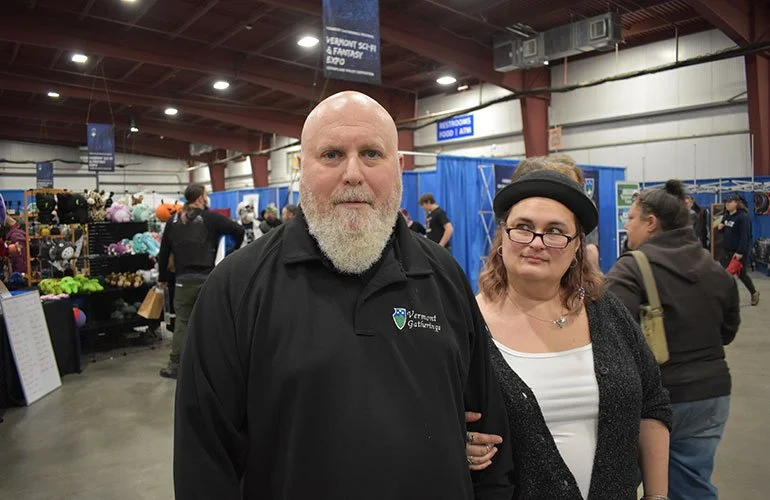
Jeff Folb is the Owner and General Manager of Vermont Gatherings - Courtesy Photo
Sugaring Season: Patience, Weather, and a Little Bit of Luck
For those who don’t sugar, here’s the quick version of how it works. When temperatures drop below freezing, the tree essentially pulls moisture up from the ground. When it warms up, that pressure reverses, and the sap flows out—right into buckets or tubing systems if you’ve tapped the tree. It’s like the tree is breathing in and out.
No freeze? No recharge.
Too warm for too long? The season can start slipping away.
What this year is teaching us about maple season in our neck of the woods
By Joshua Smith
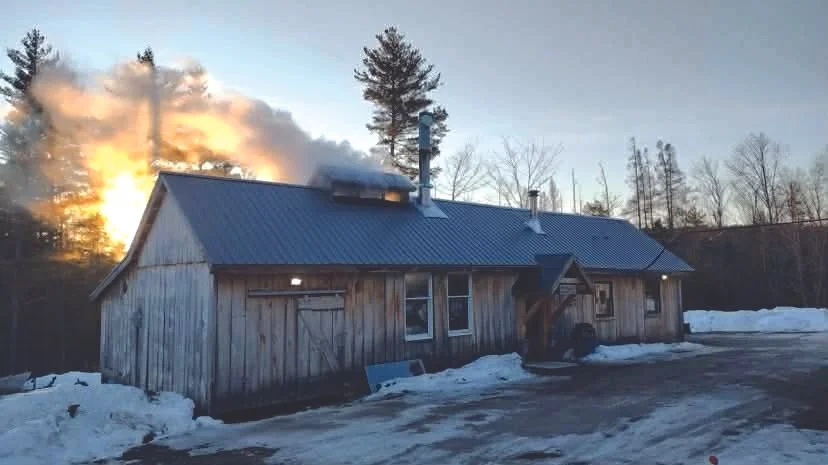
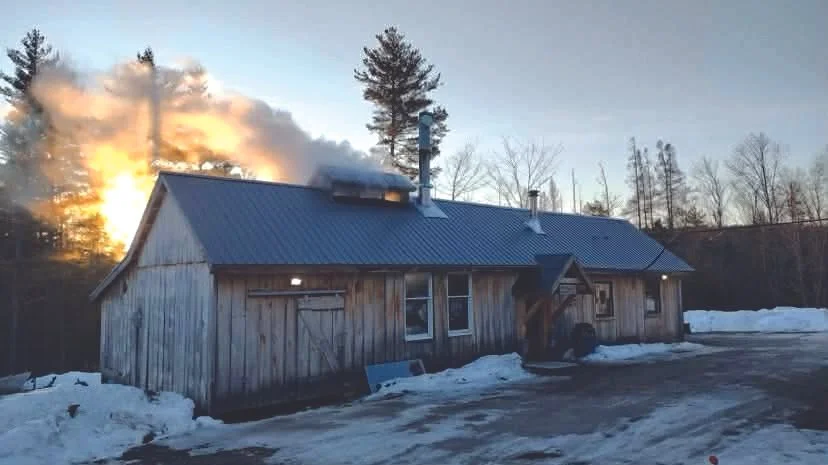
Boiling sap at sunrise at Oliver’s Sugarhouse in Groton, VT.
There are a few things you can count on this time of year. Mud season is coming whether we like it or not. Someone’s already put the snow tires on the “maybe next weekend” list. And across towns like Groton, Bath, Corinth and Peacham, there are folks watching the weather with the same level of trust they give a used snowblower.
Because it’s sugaring season.
Now, if you’ve ever made maple syrup—or even just helped out for a day—you know this isn’t a hobby for the impatient. It’s part science, part tradition, and a whole lot of hoping the weather cooperates.
I recently had the chance to talk with Mark Isselhardt from the Proctor Maple Research Center, and if there’s one takeaway from this year so far, it’s this: no two sugaring seasons are ever the same.
A Season That Keeps You Guessing
If you’ve been out in the sugar woods this year, you’ve probably already felt it. This season got off to a slower start than what we’ve seen the past few years. Colder temperatures early on meant things didn’t get moving right away.
Then came the snow—which looked promising—but it didn’t stick around long. A stretch of warm weather, some rain, and a little wind took care of that pretty quickly.
And here’s the thing a lot of folks don’t realize: too much warmth can be just as much of a problem as too much cold.
Sugaring depends on that classic New England rhythm—freezing nights and warmer days. That’s what gets the trees to move sap. Without that back-and-forth, things slow down.
As Mark explained, sap flow doesn’t just happen steadily over time. It comes in bursts. You might have a few days where everything lines up perfectly and you make a big chunk of your syrup all at once. Then you might go several days with almost nothing.
It keeps you humble.
Why the Weather Matters So Much
For those who don’t sugar, here’s the quick version of how it works. When temperatures drop below freezing, the tree essentially pulls moisture up from the ground. When it warms up, that pressure reverses, and the sap flows out—right into buckets or tubing systems if you’ve tapped the tree. It’s like the tree is breathing in and out.
No freeze? No recharge.
Too warm for too long? The season can start slipping away.
And that’s where things get tricky this year.
We’ve already had a stretch of warmer-than-average temperatures. For some producers, especially those in warmer areas or with trees facing the sun, that can impact how productive their taps are. The tap holes can start to seal up earlier than expected, meaning less sap when conditions improve.
So far, reports across the region—and the state—are all over the map. Some producers are just getting started, while others are already a good way into their season. That’s sugaring. It’s never one-size-fits-all.
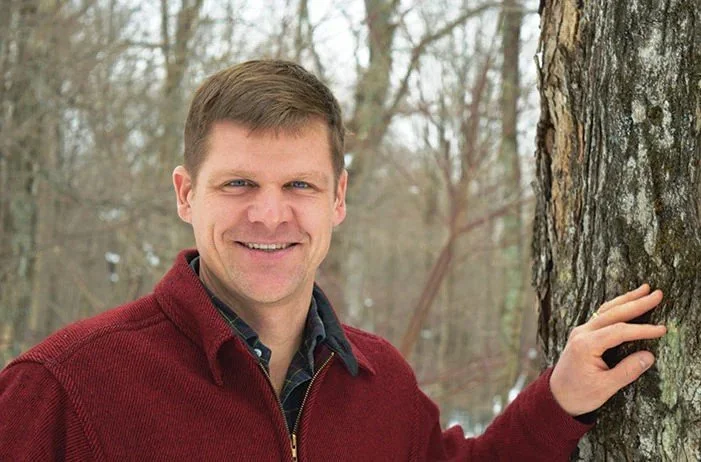
Mark Isselhardt is the UVM Extension maple specialist. He has been based at University of Vermont Proctor Maple Research Center since 2016. Photo courtesy of UVM Extension
The Good News
It’s not all uncertainty. One thing Mark pointed out is that the quality of syrup this year has been strong. Producers are reporting good flavor and color, and sap sweetness seems to be right where it should be.
That’s a big deal. There was some concern going into the season that last summer’s dry conditions might affect sugar content in the sap. So far, that doesn’t seem to be the case.
And while it’s still too early to call the season one way or the other, there’s a sense of cautious optimism out there. As long as we don’t get a long stretch of unseasonably warm weather, there’s still plenty of opportunity for good runs.
Buckets, Tubing, and Tradition
If you grew up around sugaring, you probably have your own version of how it was done.
For me, it was buckets, a tractor, and a whole lot of lifting. You’d go tree to tree, dump the sap, haul it back, and repeat until your arms reminded you exactly how much sap weighs. And for the record—it’s heavy.
These days, a lot of larger operations use tubing and vacuum systems, which allow them to collect sap more efficiently and at a larger scale. In fact, Vermont now produces over half of all the maple syrup in the United States, and production has grown dramatically over the past few decades.
But whether you’re running thousands of taps or just a handful in your backyard, the heart of sugaring hasn’t changed. It’s still about paying attention. Showing up. And working with what nature gives you.
For Those Who Don’t Sugar
Even if you’ve never tapped a tree, sugaring season is still part of life around here.
It’s the steam rising from sugarhouses on a cold morning. It’s the smell of boiling sap drifting through the woods. It’s the quiet understanding that spring is getting closer—even if it doesn’t quite feel like it yet.
And if you’ve never tried it, even tapping a couple trees with your family can give you a whole new appreciation for what goes into that bottle on your table.
Because it’s not quick. It’s not easy. And it’s definitely not predictable.
A Season Built on Optimism
Talking with Mark, one thing stood out more than anything else. You have to be an optimist to be a sugarmaker.
Every season brings its own challenges. Every year is a little different. And no matter how much experience you have, you’re still at the mercy of the weather. But that’s part of what makes it special.
So whether you’re out there collecting sap, boiling late into the night, or just enjoying a stack of pancakes with the finished product, this season is a reminder of something simple. Around here, we don’t just wait for spring.
We tap into it.
And if you’re not out there in the woods yourself, this is the perfect time to go find the folks who are. Take a drive. Follow the steam. Stop in at a sugarhouse if you see one open, or plan a visit during Vermont Maple Open House Weekend. You can also find local producers through the Vermont Maple Sugar Makers' Association at vermontmaple.org or the New Hampshire Maple Producers Association at nhmapleproducers.com.
And when you do—buy a bottle. Maybe two. Because behind every jug of syrup is a season like this one: unpredictable, a little stubborn, and made better by the people willing to stick with it.
That’s what you’re really bringing home.
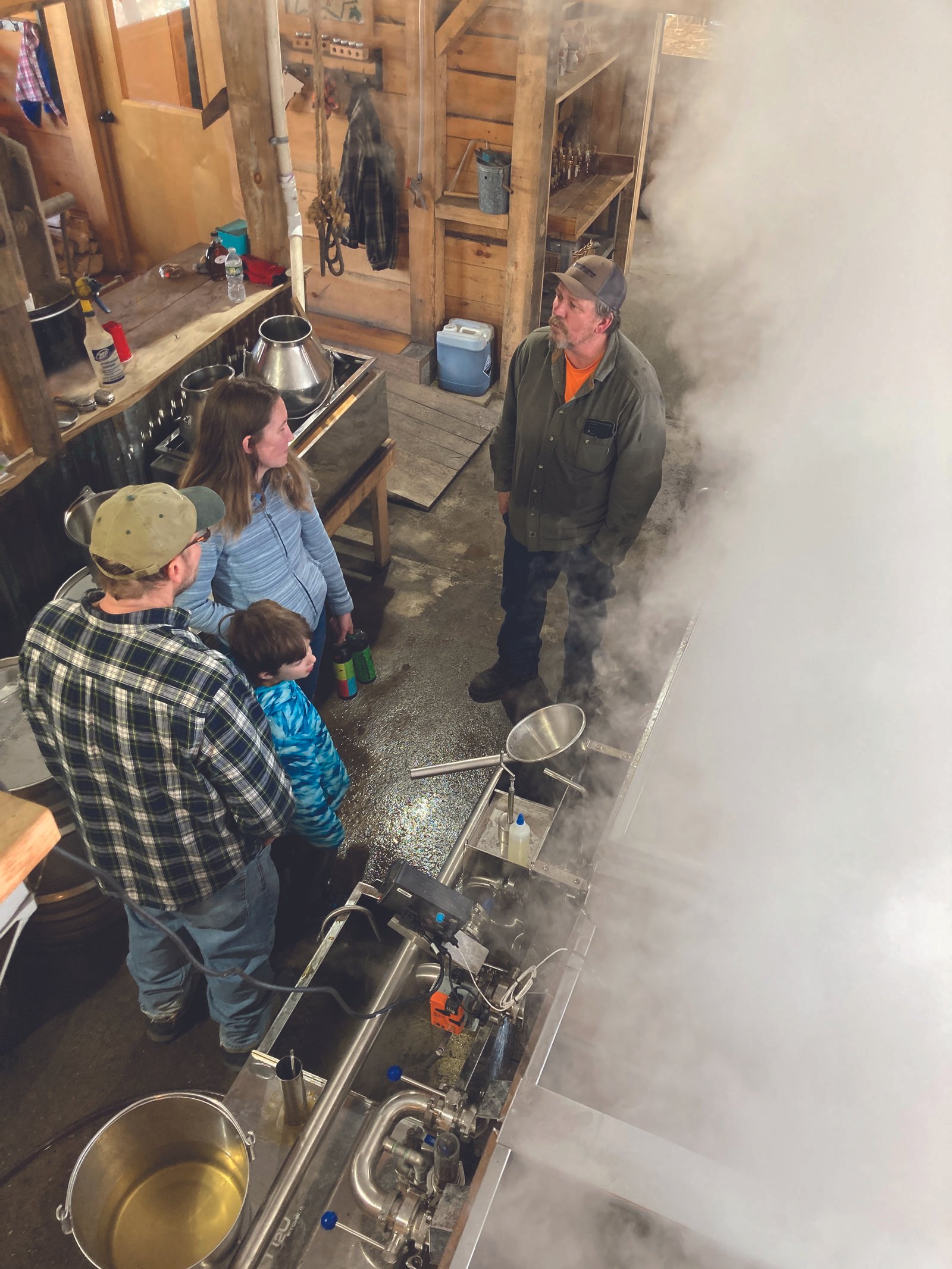
Troy Oliver (top right) explains the boiling process to visitors (bottom left) Kirk Morrison, Connor McCord and Kori McCord at Oliver’s Sugarhouse.