
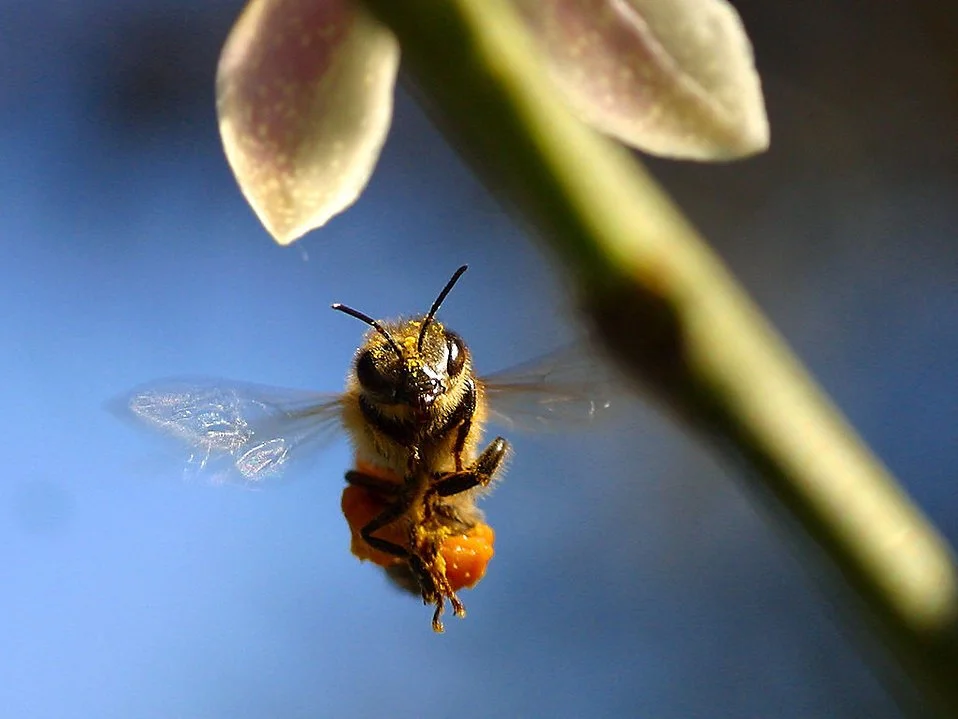
The Bombardment of Bees
Climate change and pollution have a profound impact on bees. Bees cannot smell flowers covered in pollutants. These flowers are visited by insects 70% fewer times versus untarnished flowers, showing a clear sign that pollution directly impacts a bee’s ability to find food.
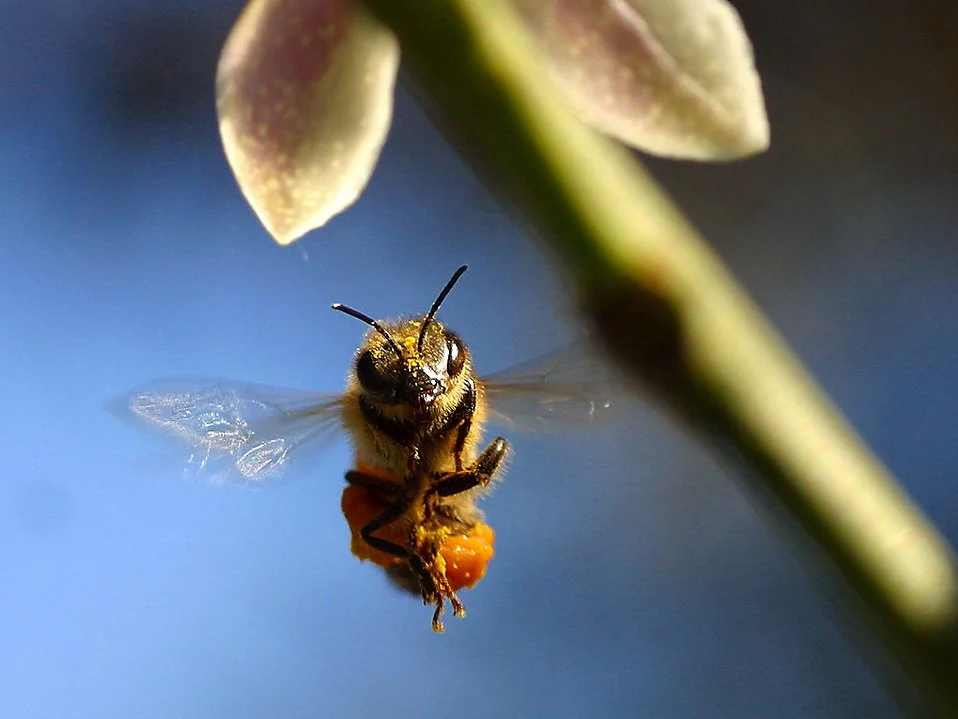
Many people are scared of bees, mistakenly perceived as dangerous when in reality, bees are the ones in danger. In the winter of 2024-2025, in the U.S., honeybee losses totalled between 60% and 62% – the highest winter losses ever recorded. For context, normal winter honeybee losses run within the range of 30% - 50%. Sadly, wild bees are under just as much strain as honeybees, with “about half the bee species that have been monitored… in decline” says Bee Regenerative Board Secretary Bridgett Burns.
This percentage is important because bees are an indicator species, which means they represent the overall health of all pollinator insects. More specifically, when bees struggle - all pollinators struggle. Currently, bees -- both commercial and wild – are dying at an unsustainable rate, placing themselves and all pollinators at equal risk of extinction.
Why should you care? Approximately 35% of all food requires pollination to grow. Here in Vermont which has a rich farming history, (note the myth that Vermont has more cows than people.), farms rely on pollinators. To better address this crisis, it is important to understand the causes for the bee population decline, including: parasites, pesticides, invasive species, climate change, and their struggle to recover.
Parasite Pandemic
Within the last few decades, the spread of Varroa Mites has become a dangerous problem for bees. Varroa mites originated in the United States bee population when the Asian Honeybee spread them to Italian Honeybees, the most common species for making commercial honey. This invasion is so serious that nearly (if not all) hives are currently infested with mites. They target the larvae of the hive and “suck the energy out of the brood,” says Burns. When mites feed from the larvae, many larvae die, impeding population growth within the hive.
Another common problem associated with mites is the diseases they carry; mites can spread diseases such as the Deformed Wing Virus, which disables the bee’s ability to fly. Hence, they are unable to provide for the hive. However, the biggest problem varroa mites present is carried out by humans who use pesticides to keep their numbers low. These poisons are harmful to the localized environments bees use to feed themselves.
Pesticides = Poison
Another recent issue bees face is neonicotinoids. Neonicotinoids, also known as neonics, are “derived from a neurotoxin,” explains Burns. This pesticide is not applied directly to bees and instead has a secondhand effect on the bees that come into contact with it. Neonics are applied directly to plants like crops, seeds, lawns, and the soil to keep insects considered “pests” away. When bees land on these plants, they absorb some of the insecticide and are poisoned from the inside out. This poison can kill bees and make the bees’ daily functions difficult to achieve. Neonics are especially harmful because they impact both wild bees and honeybees and the pesticide can take months to years to break down. The largest use of neonics that we still have in Vermont relates is used for soybeans and cereal grain seeds.
Invasive Species
Invasive species have a crippling impact on many animals, including bees. Invasive species are particularly harmful threats to bees because there is no way to “stop” or fully contain these plants. They spread like wildfire, collapsing entire ecosystems. Why? Invasive species often have few to no natural predators in environments where they do not originate. They also have an easy time outcompeting native species for food and space because the competing species are not adapted to protect themselves from invasive species. Some common invasive species in Vermont are: Japanese knotweed, bush honeysuckle, buckthorn, and purple loosestrife. These species reduce the amount of flowering plants that bees can feed from, making it difficult for bees to get enough food to sustain them through winter.
Pollution and Unstable Winter Conditions
Climate change and pollution have a profound impact on bees. Bees cannot smell flowers covered in pollutants. These flowers are visited by insects 70% fewer times versus untarnished flowers, showing a clear sign that pollution directly impacts a bee’s ability to find food.
Climate change itself also negatively impacts bees. Bees survive the winter by surrounding their queen and vibrating all winter to keep the queen in the center warm. When winters become warm, bees wake up and begin searching for flowers. Because they spread out and are not surrounding their queen, when the temperature drops again, the queen is susceptible to freezing to death. This destroys the only way that bees have to repopulate once the worker bees die.
At the same time, the change in temperature can cause flowering plants to bloom prematurely, leaving fewer plants blooming for when the bees begin looking for them. This is a serious problem because at this point in time, it is nearly impossible to completely avoid the effects of pollution and climate change. In Vermont, we have experienced the fluctuation of winters going from freezing temperatures to warm and back to freezing again overnight. Sadly, the destruction caused by pollution may never be undone.
Continual Deficit
Both wild bees and commercial honeybees face a new struggle: recovery of their recent population loss. Over time there has been a “45% increase in human managed bee colonies globally over the past 50 years” (Coallier et al.). Many of these beekeepers buy new hives every year and by the end of the season, they create new hives out of what they bought. With the recent heightened loss of hives, there are not enough bees to go around, making it difficult for beekeepers to repopulate. If the trend of bee deaths continues, bees may never see a full recovery.
Unless Vermont winters become safer for bees, the population may continue to drop. The same trend holds true for wild bees. When there are fewer wild bees, they have a difficult time repopulating and recovering from their losses. This is dangerous because it is the culmination of all of the threats bees face, causing a situation that could be the sign of a decline for years to come in pollinator health and population.
You Can Help
How can you help Vermont bees? Some of the simpler and easier ways to help can still make a difference. 1) Plant native flowering plants such as: Wild Geranium, Wild Bergamot, Goldenrod, and New England Aster. 2) Leave old stumps, stems, and leaves in your lawn because “70% of all bee species are ground nesting species” (“10 Ways to Save the Bees”). This allows bees an ideal environment to create homes for the summer and winter. 3) Raise bees yourself and/or buy local honey from one of our many independently owned apiaries. 4) Lobby for change to help bees. Contact your state representatives and tell them that you are against pesticides and want money allocated toward Vermont’s invasive species problem. 5) Support local bee conservation efforts to preserve our local wildlife. Some local organizations that participate in research and efforts to conserve bees are: The University of Vermont’s Vermont Bee Lab, the Vermont Pollinator Working Group, and the Vermont Beekeepers Association.
Your effort in conserving bees can make all the difference in whether these necessary creatures will continue to support us and the environment. Remember that while bees have stingers, they are the ones being stung.
Kurtis Brooks is a Senior attending Blue Mountain Union High School. He is a native Vermonter who lives on a three acre field with many kinds of bees.
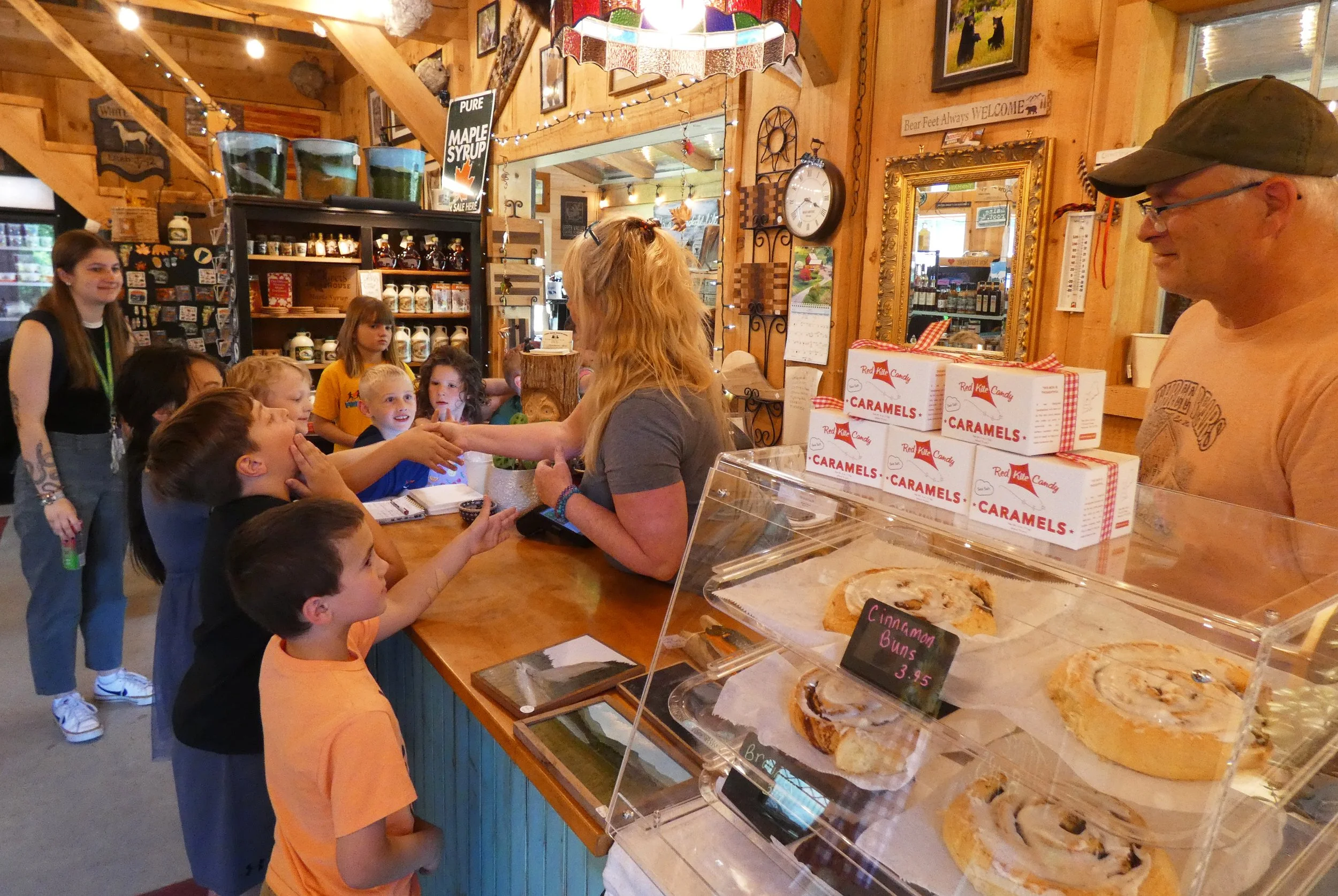
NES and BMU After School Programs learn about starting up a business
Director Jewett said the exercise was an opportunity to open their minds to different ways of looking into and pursuing a career when they were older. The 3 Bears Country Barn was an ideal way to learn more about the Drews and how they work closely with the community to make their store a success.
By Bernie Marvin
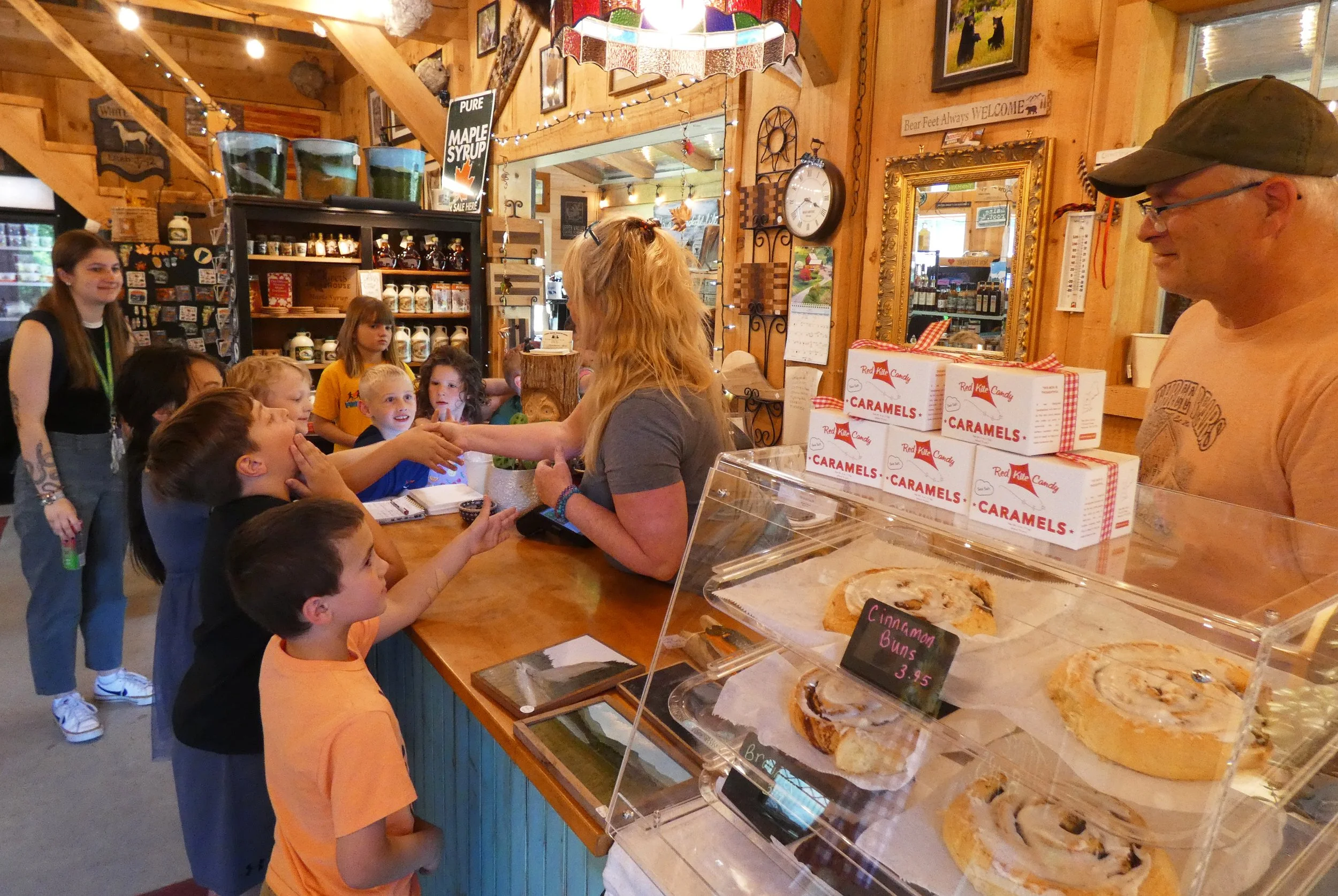
Newbury, VT – When the students of Newbury Elementary School and the Blue Mountain After School Program wanted to learn about starting their businesses, they chose to study how Don and Shelly Drew founded and now operate their popular Three Bears Country Barn on Route 302 in Wells River.
The best way for kids to explore career options when they are older is to learn more about a retail establishment, and for this, they chose the Three Bears Country Barn. That began with a trip to the store, an interview with the Drews that provided the kids with information and answers they had formulated during a session with After School Director Paul Jewett.
Director Jewett said the exercise was an opportunity to open their minds to different ways of looking into and pursuing a career when they were older. The 3 Bears Country Barn was an ideal way to learn more about the Drews and how they work closely with the community to make their store a success.
Director Jewett said the students’ questions were interesting, as they probed just what it would take to start a business similar to what Don and Shelly Drew had done to launch their store.
Director Jewett said, “We had a spirited discussion during a recent afternoon with the children about starting a store! I thought I would pass on some specific questions they would like the Drews to think about before their visit from BMU and NES After School Students.”
1. How did you come up with the idea of running a store?
2. How did you come up with a name for the store?
3. Have you considered expanding the store?
4. How do you determine the prices for the items you sell?
5. How much money do you have to bring in to cover your costs?
6. What steps do you need to take to secure the store?
7. Where does your store's stock come from, and do you store extra stock somewhere?
He said, “As you can see, lots of questions which will lead to a good discussion and understanding of all the things that go into making and successfully carrying out a business! Everyone involved was looking forward to a fun and learning experience,” he said.
Don and Shelly Drew told The Bridge Weekly they are presently operating their fifth season at their store. They offered that it all started after they bought the lot, cleared it, and then built the country barn. They had some assistance but did most of the work themselves. It is a beautiful building, reminiscent of a timber frame structure, and packed with a fantastic array of merchandise found in a typical small Vermont Country store.
They are locals, in that Shelly lived in Woodsville as a youth, and Don lived in Woodsville. Before opening the store, he was the head maintenance director for the Precinct of Mountain Lakes for 18 years.
They said during a tour and interview in the store that After School Program Director Jewett asked them about working with the students on what they did to set up the store, stock it, and maintain it as a country store.
The kids said they were amazed to find such a diverse assortment of foods, cheeses, wood products, books, music programs, and even a café featuring fresh coffee, baked goods, and other types of refreshments.
As the children toured the store, the variety of goods on display made it easy for them to ask Don and Shelly plenty of questions about starting the store.
Director Jewett said that the exercise provided an opportunity to open the students’ minds to different ways of pursuing a career in the future. He said the store was an ideal place for the kids to visit in order to find a well-managed, successful retail store in the area that was open from May through December each year.
Before their visit, the After School group gathered to discuss ways available to plan for a successful venture, similar to Drew’s store. Each After School Program group visited the store and was given time to wander around, examine the items for sale, and ask questions of the Drews who were on hand for the visits.
While in the store, Jewett had allowed each student to make a $5.00 purchase so they could appreciate some of the value of what the store carried and just how important it was for them to make a purchase and to talk about how the merchandise got onto the shelves, where it came from, the price markup and other considerations a store owner must have when carrying the hundreds of items that the Three Bears Country Store has available for the public to consider.
Jewett said that about 30 After School Program students, between the ages of five and 12, participated in the exercise. There have been many other types of life experiences that the students have or will explore. For instance, they investigated their ability to fly and use drones. They spent time with the magician and entertainer, Marko, and will travel to a local medical office to speak with a general practitioner about their educational needs, the process of seeking medical training, and how they plan to operate a medical business.
They have also worked on the required phases of constructing various wood projects, including a small library for Wells River and recreating a historic water box that was installed for cattle over 100 years ago. The after-school classes have successfully rebuilt one to replace the old one.
They will also learn what it takes to be a helicopter pilot, as a relative of the class is the owner of a local helicopter company. The students will learn from a local author and writer about the importance of reading books and writing stories, starting at the age of five or six years.
As the After School Program for BMU and Newbury Elementary School grows, so does enrollment from other towns, Jewett said. He will be including a new group of Bradford students in those programs that will be featured during the next school year and will also start a six-week summer program that will run into August.
The program, he said, is new and will include students from five to 12 years old, who will take field trips every week to something or somewhere different. He said it will provide an opportunity for the students to have new experiences in the area and learn something new over the summer, something kids from BMU, Newbury, and Bradford will enjoy doing.