
Rail History In Haverhill
By Bernie Marvin
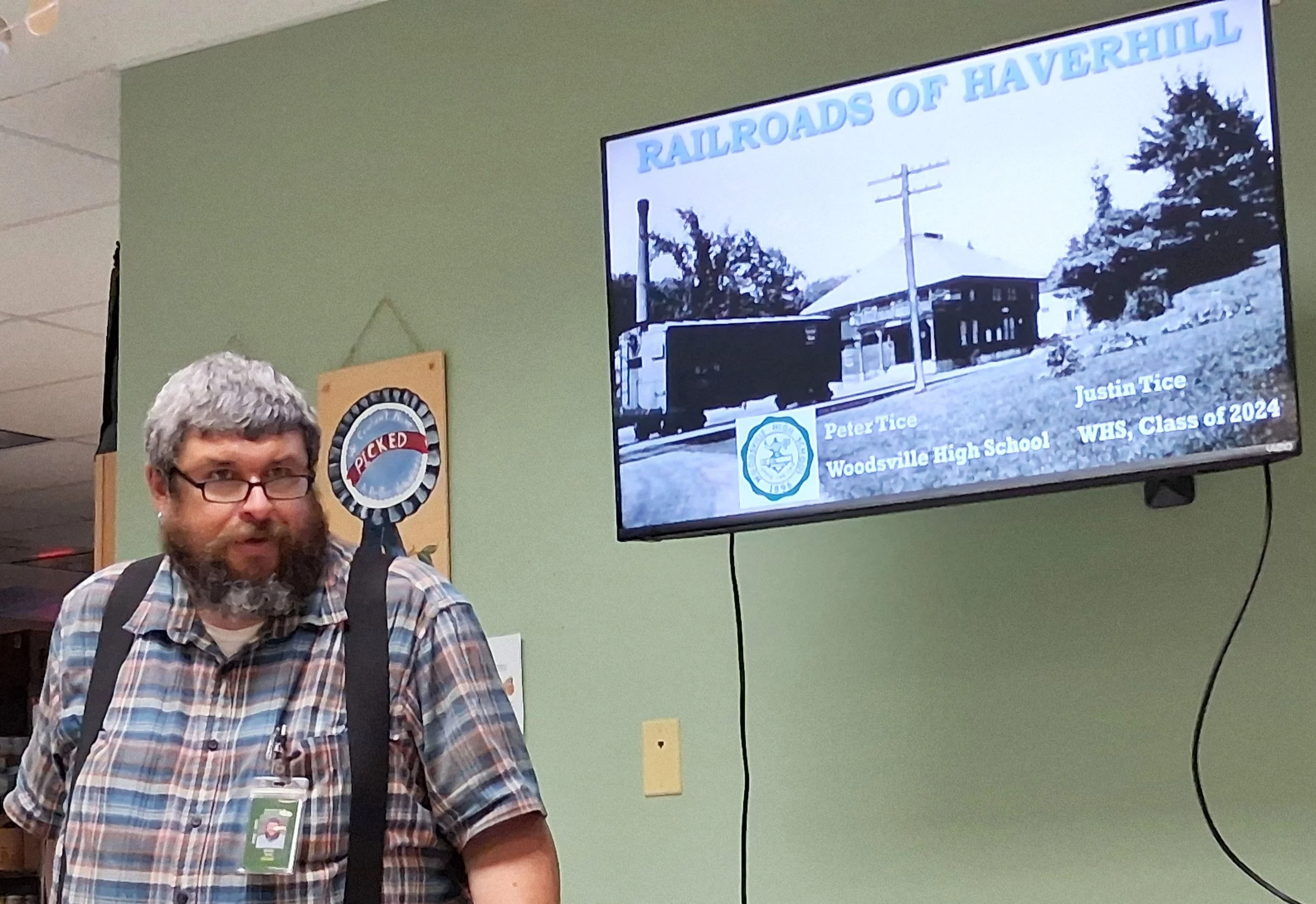
Woodsville High School Science Teacher Peter Tice explains to Horse Meadow Senior Center listeners the rail system that snaked through the area, forming a now-abandoned route for passengers and freight that lasted about 100 years. He presented a program that reviewed the construction and location of various busy railroad stations scattered throughout the area. The Bridge Weekly/Bernie Marvin
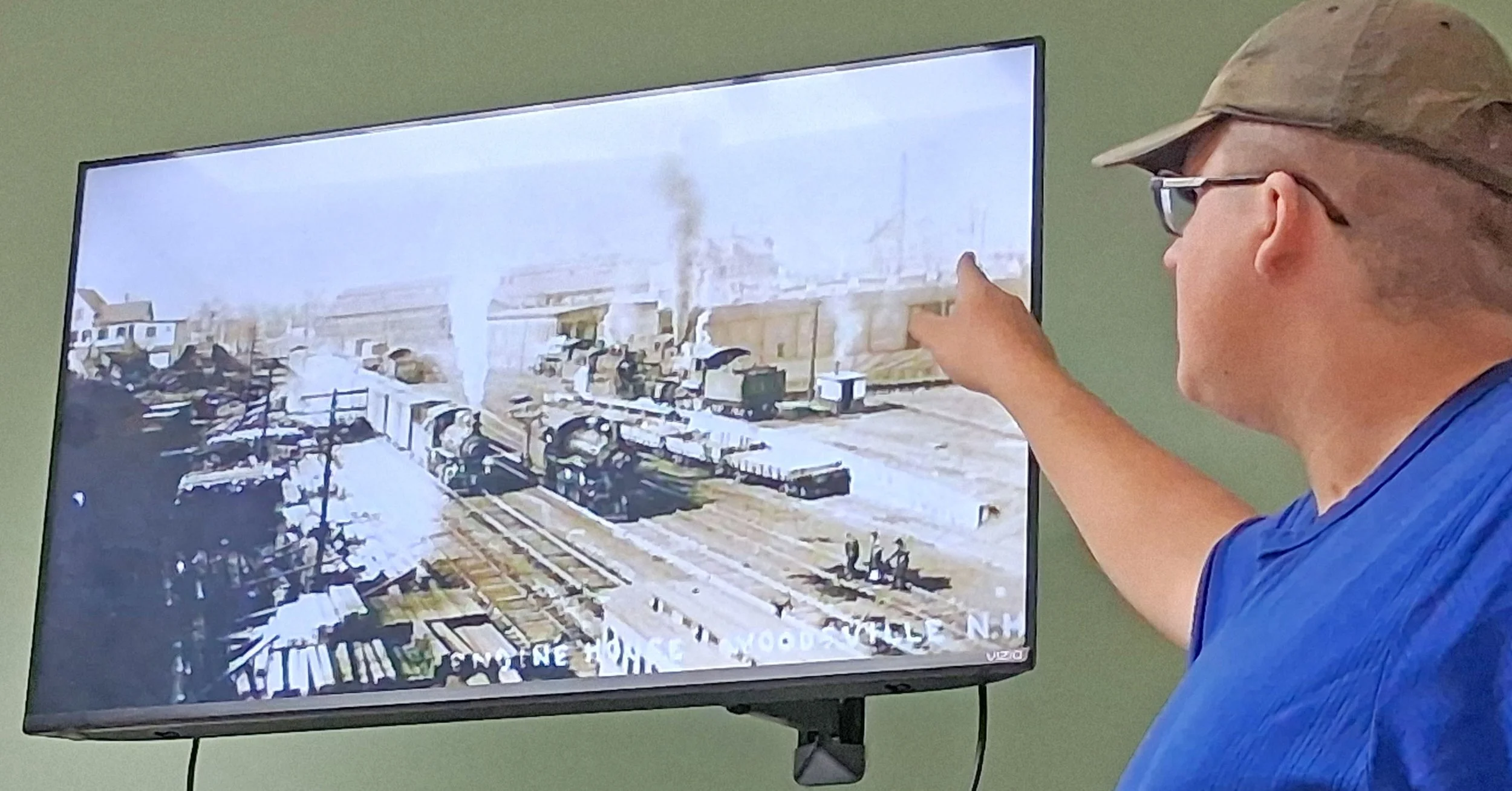
Peter Tice's son, Justin, on the right, assisted his father with the comprehensive railroad presentation they made last week at a BBQ meal in the Horse Meadow Senior Center in North Haverhill. He is shown explaining the track and rail facilities along Central Street in Woodsville. The Bridge Weekly/Bernie Marvin.
The Horse Meadow Senior Center has been providing quality meals and excellent programming for a wide area since it opened 26 years ago. It is a wonderfully functional building and has continued to provide space for different types of activities for many residents in the surrounding area.
For instance, Director Lisa Adams and Activities Director Wanda Sawyer recently announced that future speakers for their ongoing schedule will include programs where the public can come by the center to enjoy a nutritious meal and listen to entertaining topics. These are fun nights out for many.
Last week, Woodsville High School Science Teacher Peter Tice and his son, Justin, spoke to the center's guests who had come for a BBQ dinner and a comprehensive talk on railroad stations in the Haverhill area that includes Haverhill Corner, Pike, Oliverian, East Haverhill, North Haverhill, County Poor Farm, Horse Meadow, and Woodsville locations, each hosting its own rail station.
Peter, the former President of the Haverhill Historical Society, prepared, with his son, a superb railroad program that included maps, photos, and a good deal of footwork to figure out where some of the old stations were located at certain times during the last century.
Mr. Tice included a selection of photos that helped viewers orient themselves and relate to the exact locations of the various train stations over the years the railroads operated.
It appears the growing rail circuit reached East Haverhill in 1852 and wound its way to Woodsville, arriving a full year later in 1853. Tice and his son traced the route of the tracks, noting how construction crews looked for solid, flat ground to lay the tracks that would carry commercial freight and passengers from faraway locations to the local stations built along the way to Woodsville.
He wanted to tell the story of his own discovery and learning paths, drawing on his experience as a geologist to show how the land shaped the railroad and how the railroad then shaped the Town.
For example, after studying how the sites of the villages of Haverhill relate to the topography of the Town, he concluded that Woodsville was the ideal location in the Town of Haverhill for a major rail facility due to the extent and shape of the landforms in that area, as well as to its water-level location near a significant confluence of the two rivers, the Ammonoosuc and Connecticut, as they flowed through town, one from the direction of Littleton, the other straight down from Monroe and the far reaches of the New Hampshire and Vermont North Country.
Tice told me he had invited his son, Justin, to do research with him for the presentations he does on the rail history project. They went out with a collection of old photographs and hunted for where they were taken. Some were pretty straightforward, he said; the old Blackmount station in North Haverhill is obviously a former railroad station, even if you didn't know that the tracks used to run right past it.
But others, like the location of the Oliverian Station in East Haverhill, sparked lengthy debate as they walked back and forth along the old rail bed, comparing photographs with the scenic areas around them.
The final program they came up with is very well done and sorts out the many routes the rail system took to get around the area to deliver, for example, freight in the form of a pre-manufactured barn kit for a farmer on Jeffers Hill Road in Pike, or happy customers who rode the rails from far away Boston to their destination at the handsome rail station, where they finally got to have that family get-together in a place called Woodsville, New Hampshire,
Today, nothing much exists of the former major rail head in northern New England that Mr. Tice and his son spoke about in their presentation at the Horse Meadow Senior Center, where, just a hop, skip, and a jump away from where he made his presentation that night. was a little train station known as "Horse Meadow."